
Clamp and Rove
MANIPULATION + NAVIGATION — move yourself to the thing, and move the thing itself; together they let a robot fetch, carry, and change the world.
Loading audio…
Press play to listen along. The line being read lights up as you go.
Show full transcript
Loading transcript…
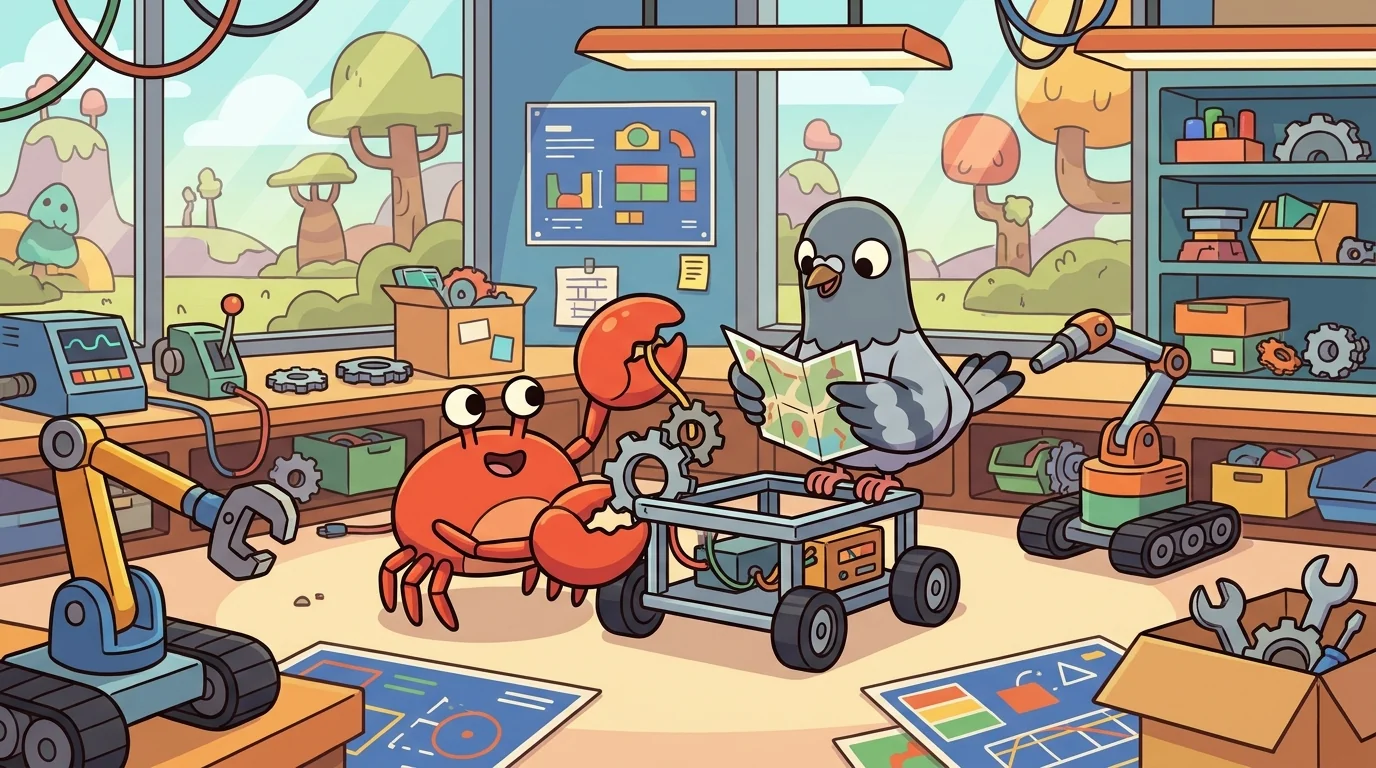
A young builder wanted a robot to fetch a cup from across a cluttered room, and had bolted a fine gripper onto a robot that couldn't navigate — when Rove flew down with his map-pouch and Clamp scuttled up clicking, each seeing that the builder had solved only half the task.
The robot sat frozen at the room's edge, gripper opening and closing on empty air, the cup far out of reach.
"A great grip," said Clamp, "reaching nothing."
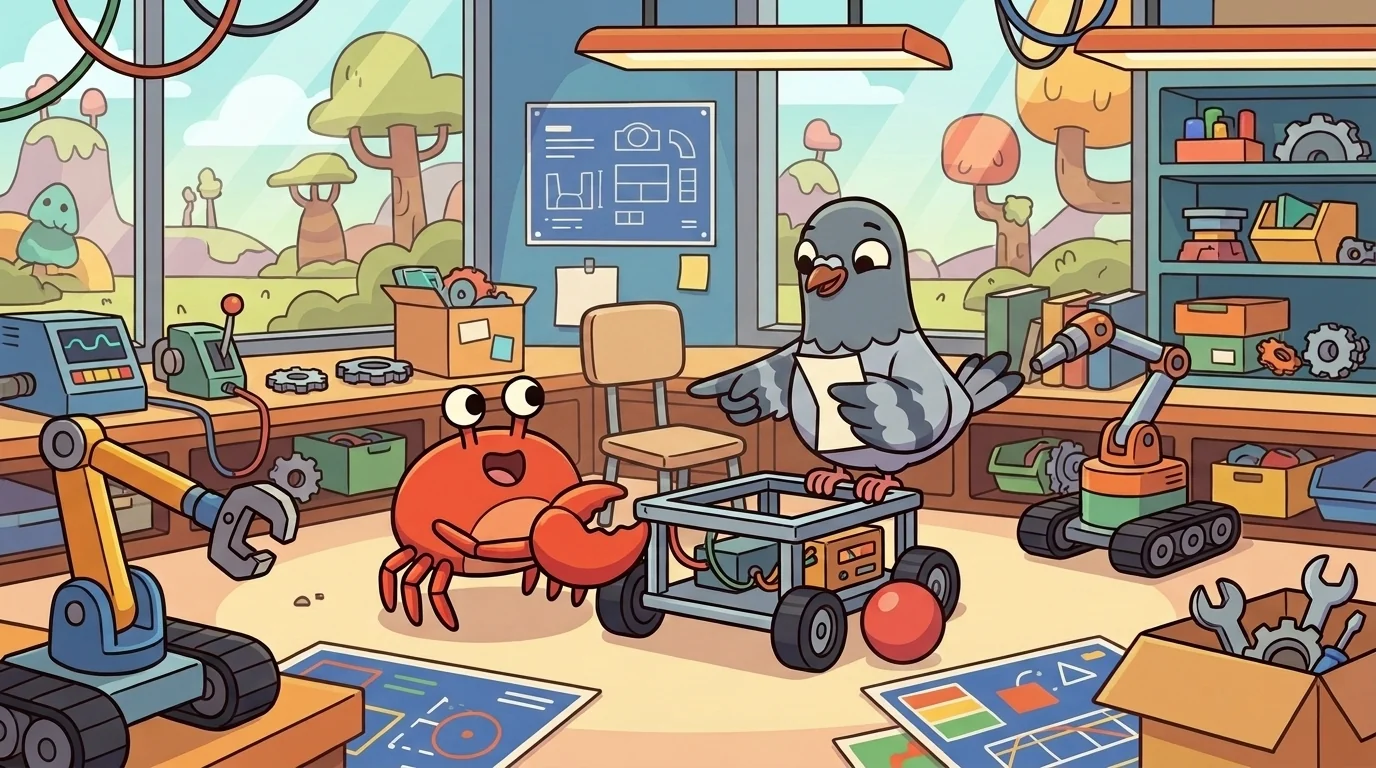
"Because fetching is really two acts," said Rove, "and most people only build one. The first is navigation — moving the whole robot to the thing. Your gripper is perfect, but the cup is across the room behind two chairs. Until the robot plans a path around them and drives there, the best claw in the world just grabs air. Getting to the workspace comes first."
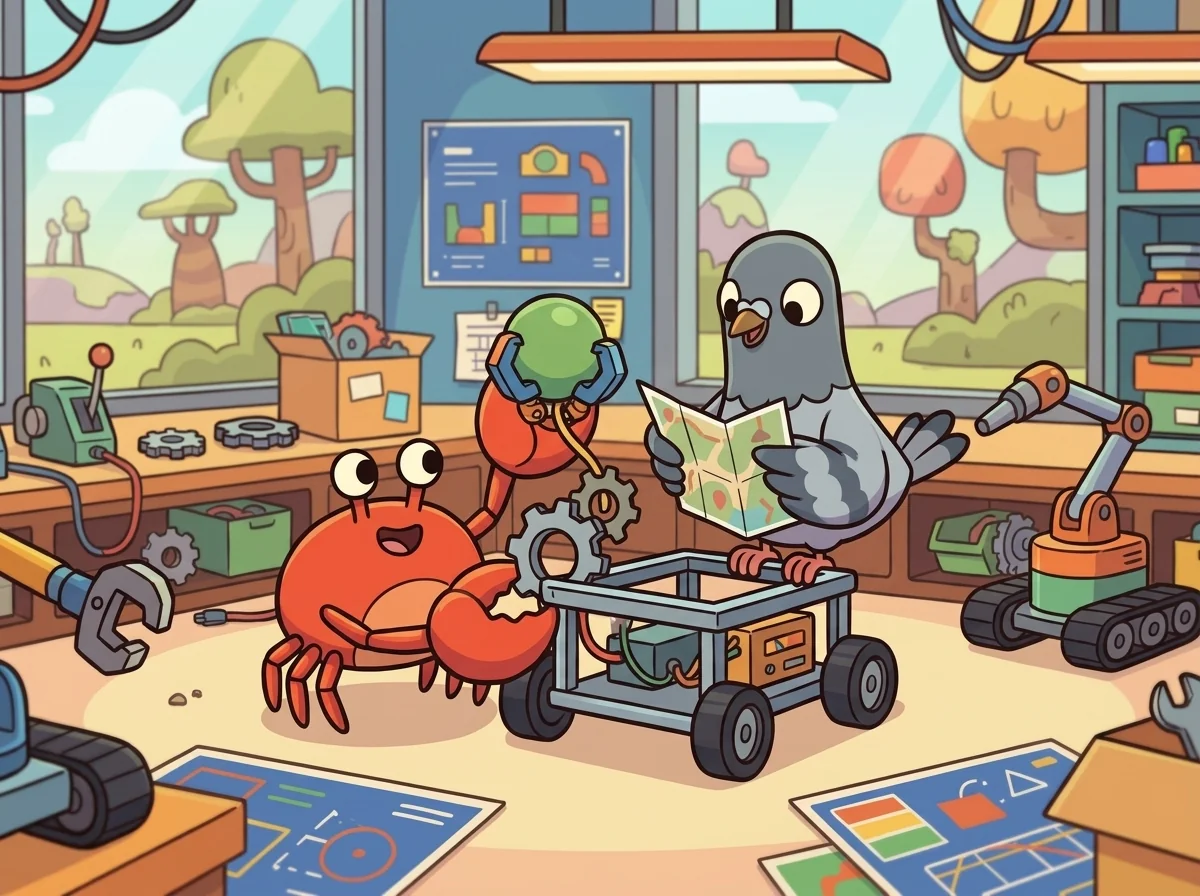
"And the second act is manipulation — acting on the thing once you're there," said Clamp. "That's my half: the closed-loop grip, the whisper-for-a-cup pressure, the slip-catch. But here's what the builder missed — the two acts have to cooperate, not just take turns. A robot arm can only reach so far: that's its reachable workspace. So Rove can't just get me 'roughly near' the cup. He has to place the base so the cup lands inside my arm's reach — not too far, not so close the arm folds up on itself."
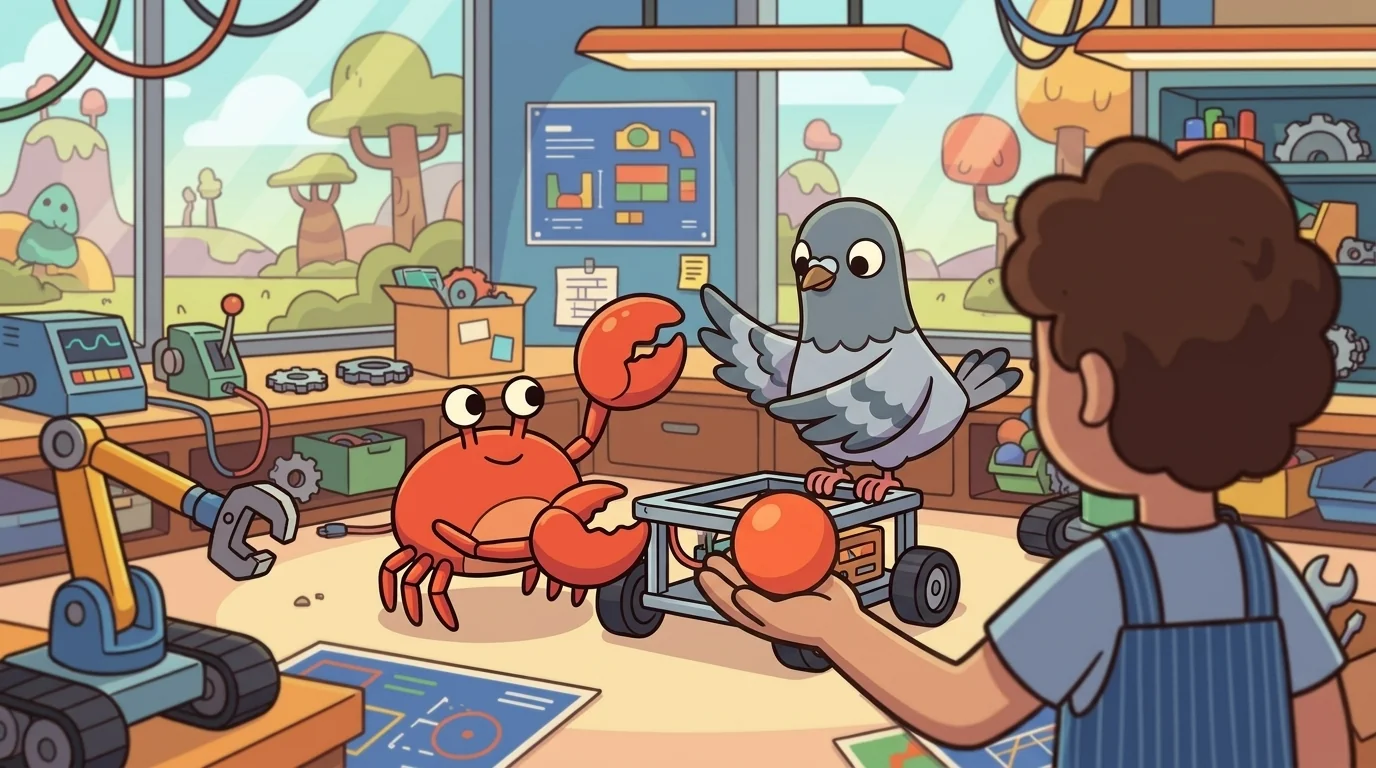
"So we coordinate," said Rove. "This is mobile manipulation: base and arm as one system. I plan a path that ends with the robot parked in the sweet spot where Clamp's arm can comfortably reach the cup. Then Clamp takes over — reaches, grips to the right force, lifts. And if the cup's now somewhere new, I re-plan and re-position, and we go again. Move to the thing; then act on the thing; and choose the where of the first so the second is possible."
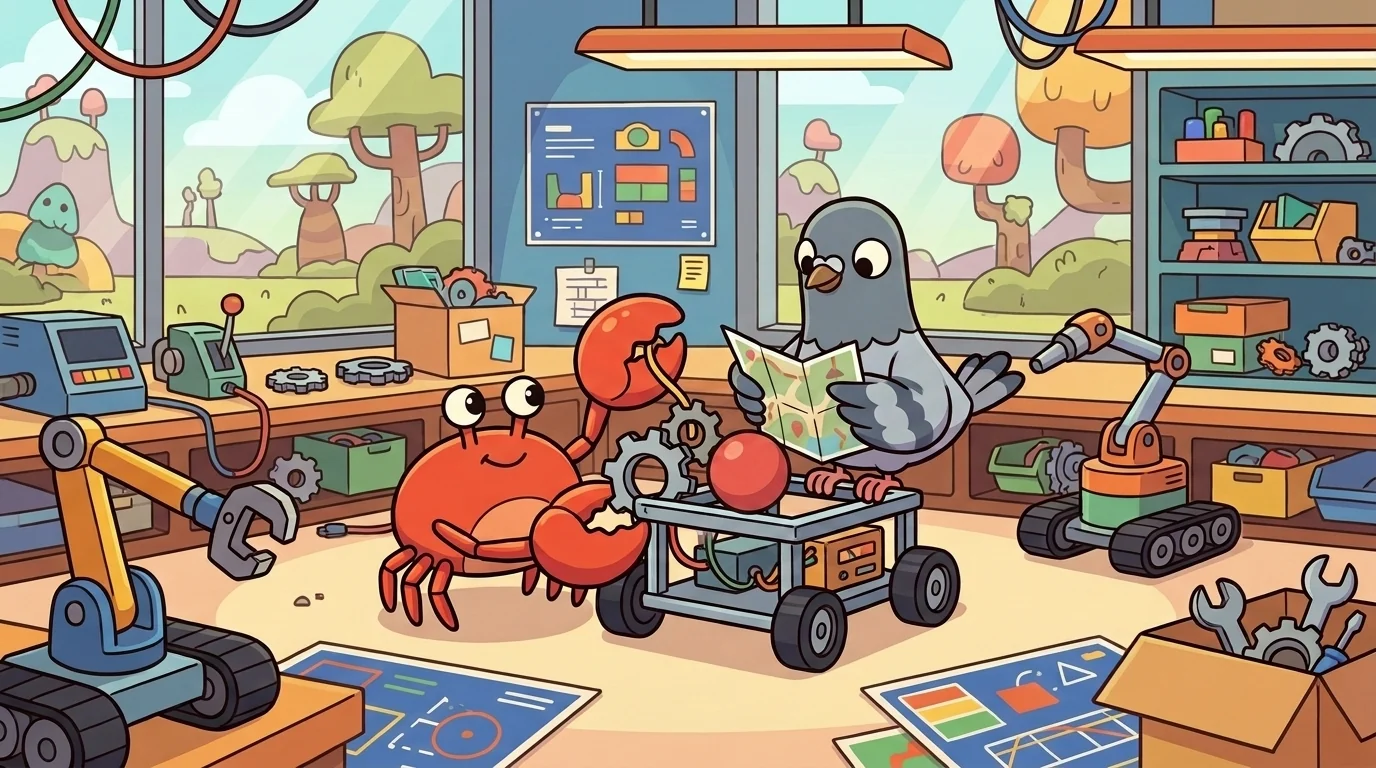
The builder looked at the frozen robot. "So one of you gets it there, and the other does the job — but you have to agree on where 'there' is."
Clamp and Rove clicked and cooed the same laugh. "The two ways a robot acts on the world," said Rove. "I move the robot to the thing —" "— and I move the thing itself," said Clamp. "Navigation without manipulation just arrives and stares; manipulation without navigation just grabs at air. Together —" "— fetch, carry, and change the world," finished Rove. And they ran it together: Rove planned a route that parked the base with the cup squarely in reach, Clamp reached and cradled it to the right pressure, and the robot turned and carried it home. A warm, capable satisfaction settled over the builder — the gladness of a whole task done, getting-there and handling-well folded into one smooth act.
The RoboForge ensemble
Clamp and Rove is part of RoboForge's distributed-narrative cast. Each character embodies a different curricular primitive; together they teach the full subject.
-

Bolt
Chassis + mechanical structure — 'the frame holds everything; build the chassis like you mean it'
-

Sense
Sensors + perception — 'the robot only knows what it can sense; choose the senses for the job'
-
Drive
Motors + actuators + movement — 'motors turn power into motion; balance speed and control'
-
Loop
Iteration + sensor-driven control loops — 'read. decide. act. repeat. that's the whole robot brain'
-
Tune
Testing + calibration + iteration — 'first run fails. that's information. tune + run again' (closes cast arc)
-
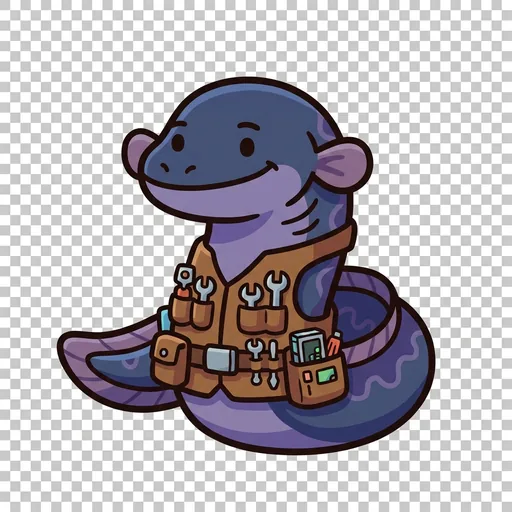
Charge
Power budget + energy management — 'every part sips power; know your battery budget or your robot dies mid-mission'
-
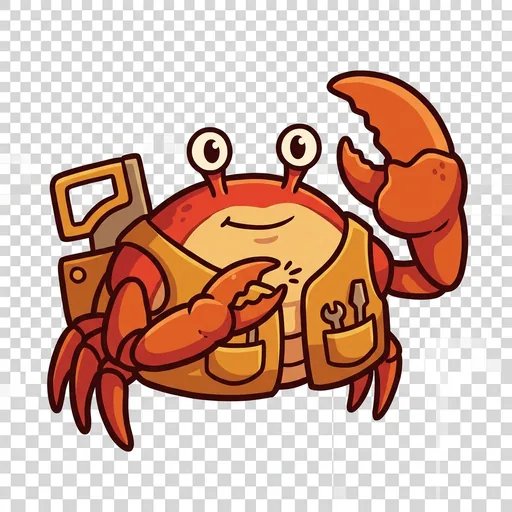
Clamp
Grippers + manipulation — 'grabbing is harder than it looks; hold firm enough not to drop, gentle enough not to crush'
-

Hail
Communication + signals — 'a robot alone knows only its own corner; robots that talk share what they each can see'
-
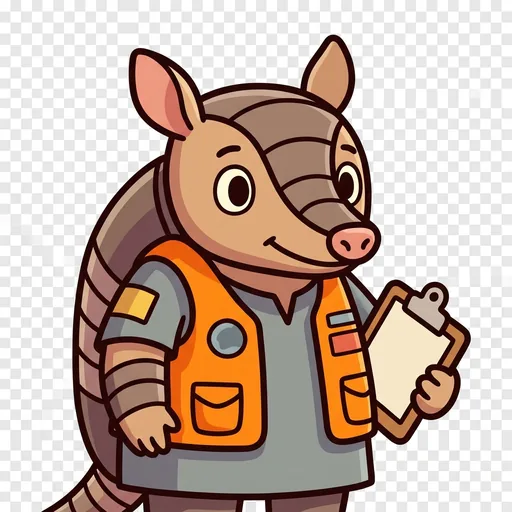
Halt
Fail-safe + safe failure — 'everything breaks eventually; plan for it — fail safe, not dangerous'
-
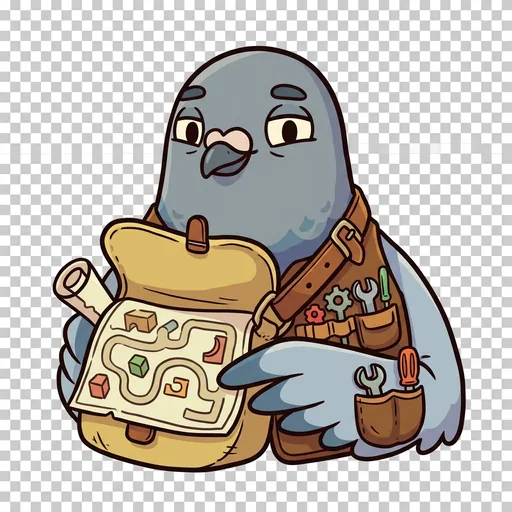
Rove
Navigation + pathfinding — 'don't just go toward the goal; find a PATH around what is in the way'