Coincide
Two things moving together doesn't mean one causes the other
Loading audio…
Press play to listen along. The line being read lights up as you go.
Show full transcript
Loading transcript…
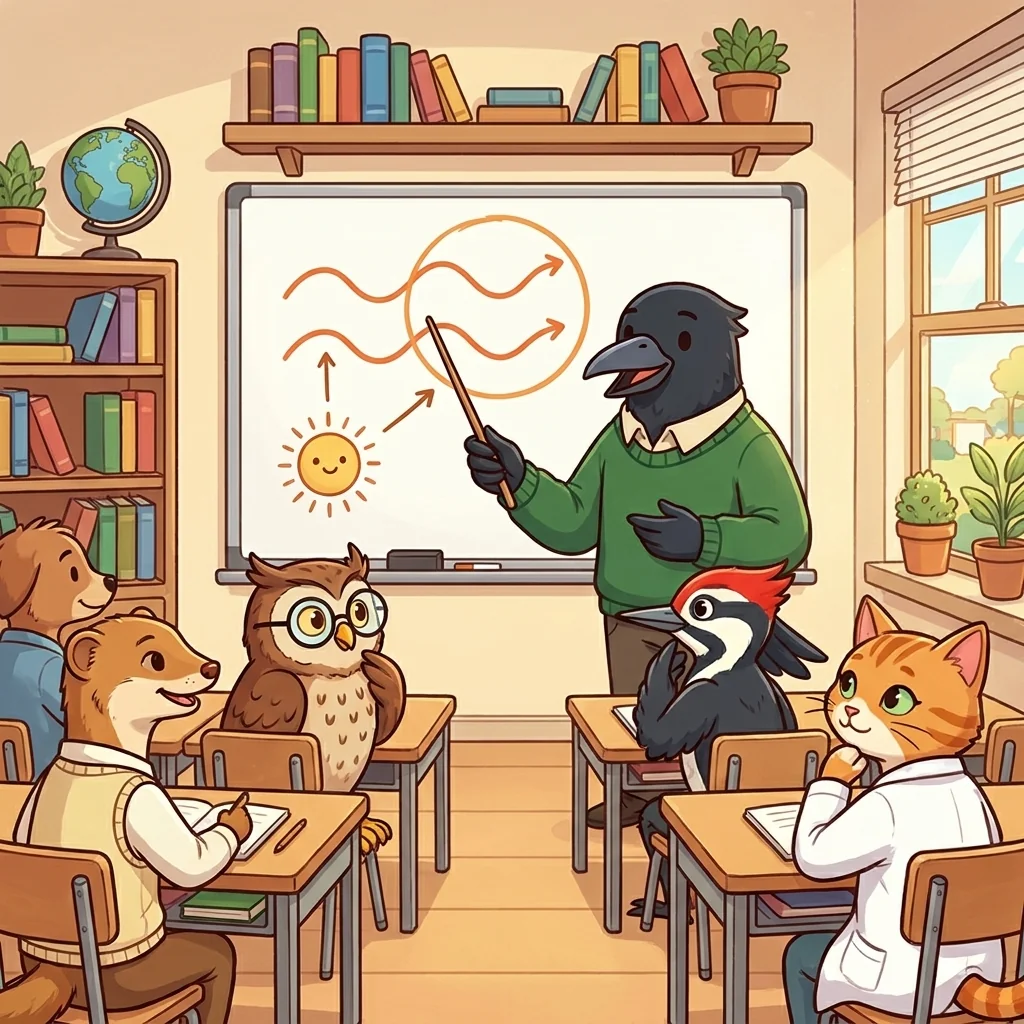
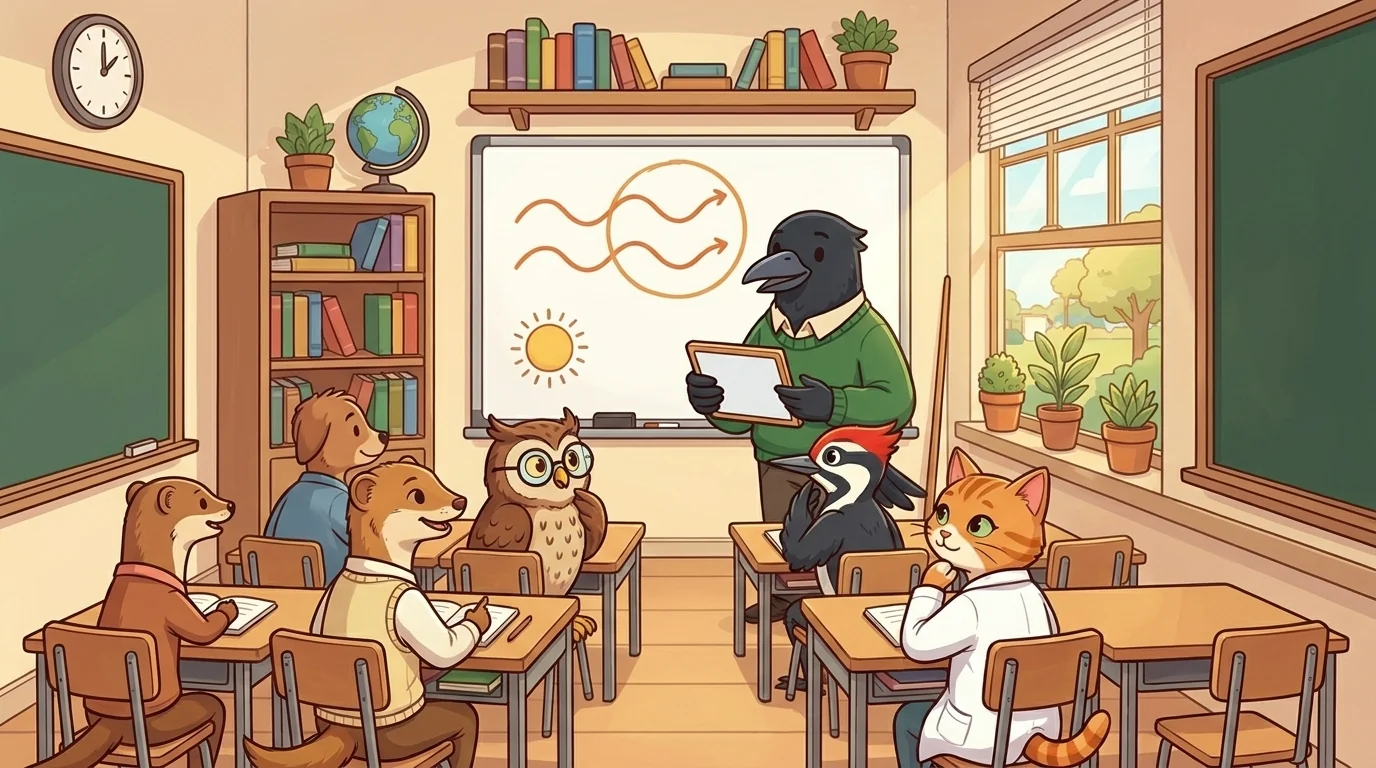
At the whiteboard, a thoughtful crow named Coincide drew two wavy lines that rose and fell exactly together — and asked the class the trickiest question in all of science.
His whole craft is telling correlation from causation — whether two things that move together are actually connected, or just coincidence. "Watch this," he said, tapping the two matching wavy lines. "Ice cream sales go up—" one line rose "—and shark attacks go up—" the other rose with it "—at the exact same times, all year. They move together perfectly. So!" He fixed the class with a beady eye. "Does eating ice cream make sharks attack? Do shark attacks make people buy ice cream?" The kids giggled — obviously not. "Right! So what's going on? They move together, but neither causes the other. There's a third thing—" he drew it "—hot summer weather. When it's hot, more people buy ice cream and more people swim in the ocean where sharks are. The heat causes both. Ice cream and sharks just... travel together, because they're both children of the summer." He circled the two lines. "That's the trap. When two things move together, your brain screams 'one must cause the other!' But so often, they're just both caused by a third thing you haven't noticed. Two things coinciding is a clue to investigate — never a conclusion to trust."
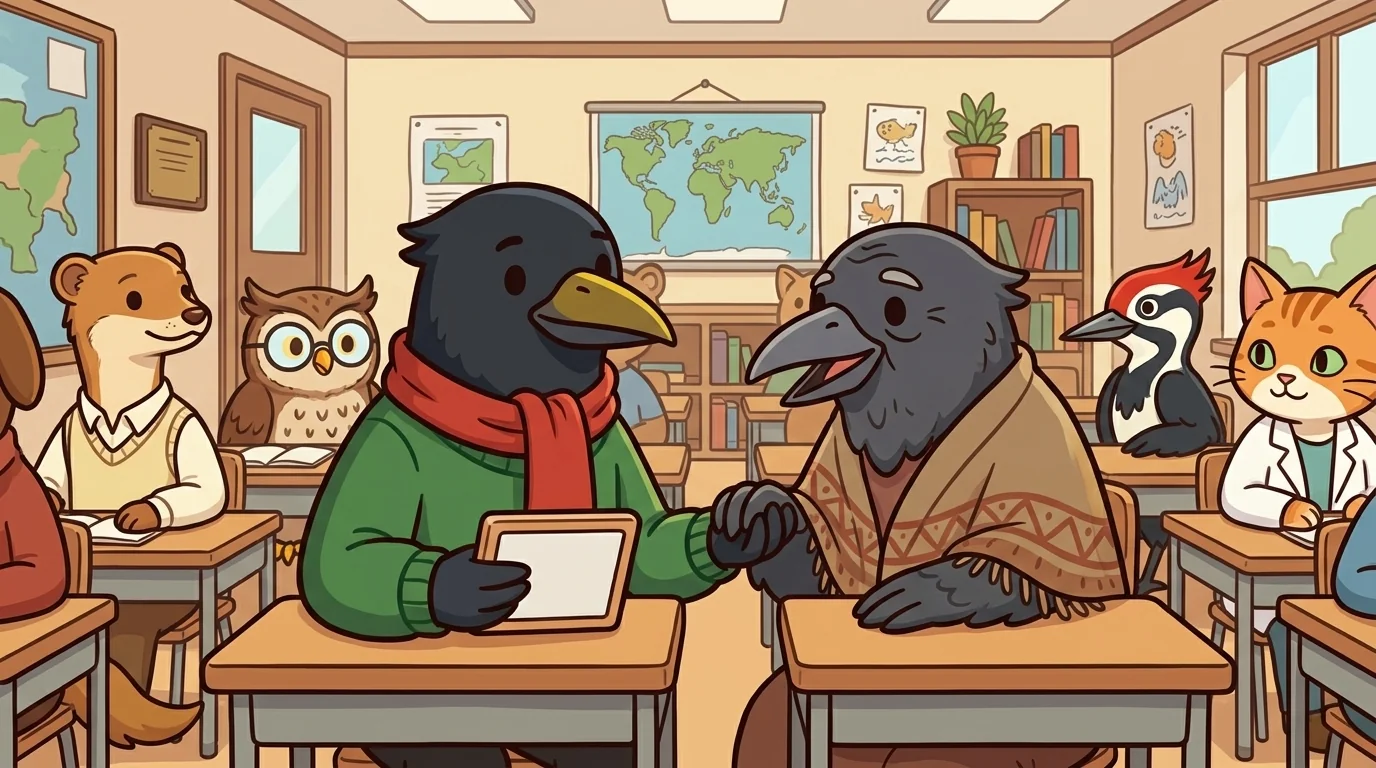
Coincide learned the trap the day he blamed the wrong thing entirely.
He was young, and he'd noticed that every time he wore his lucky red scarf, his team won. Red scarf, win. Red scarf, win. Every single time! So he concluded, absolutely certain, that his scarf had magic winning powers.
His grandmother, an old crow with a wise, tilted head, asked one question. "Why do you only wear the scarf on winning days?"
Young Coincide paused. "...Because I only wear it on big game days. When it's cold. In the championship season."
"And is your team better in championship season?" she asked.
"...Yes," he admitted slowly. "We practice harder for the big games."
"So," his grandmother said gently, "the scarf didn't cause the wins. Big-game season caused both — you wore the scarf and your team played better, because both happen on important cold days. The scarf and the wins just traveled together." She smoothed his feathers. "This is the trap that fools almost everyone, little one. Two things happen together, so you grab the nearest one and call it the cause. But you have to ask: is one really making the other happen? Or is some third thing making them both happen? Or is it just luck, a coincidence that'll break the moment you check?" She winked. "The only way to know one thing causes another isn't to watch them move together. It's to change one on purpose and see if the other follows — an experiment. Watching two lines match is a question. Only an experiment is an answer."
Young Coincide wore his red scarf to a summer practice game — and they lost. The magic "broke" the instant he tested it. He never again mistook two-things-together for one-causes-the-other.
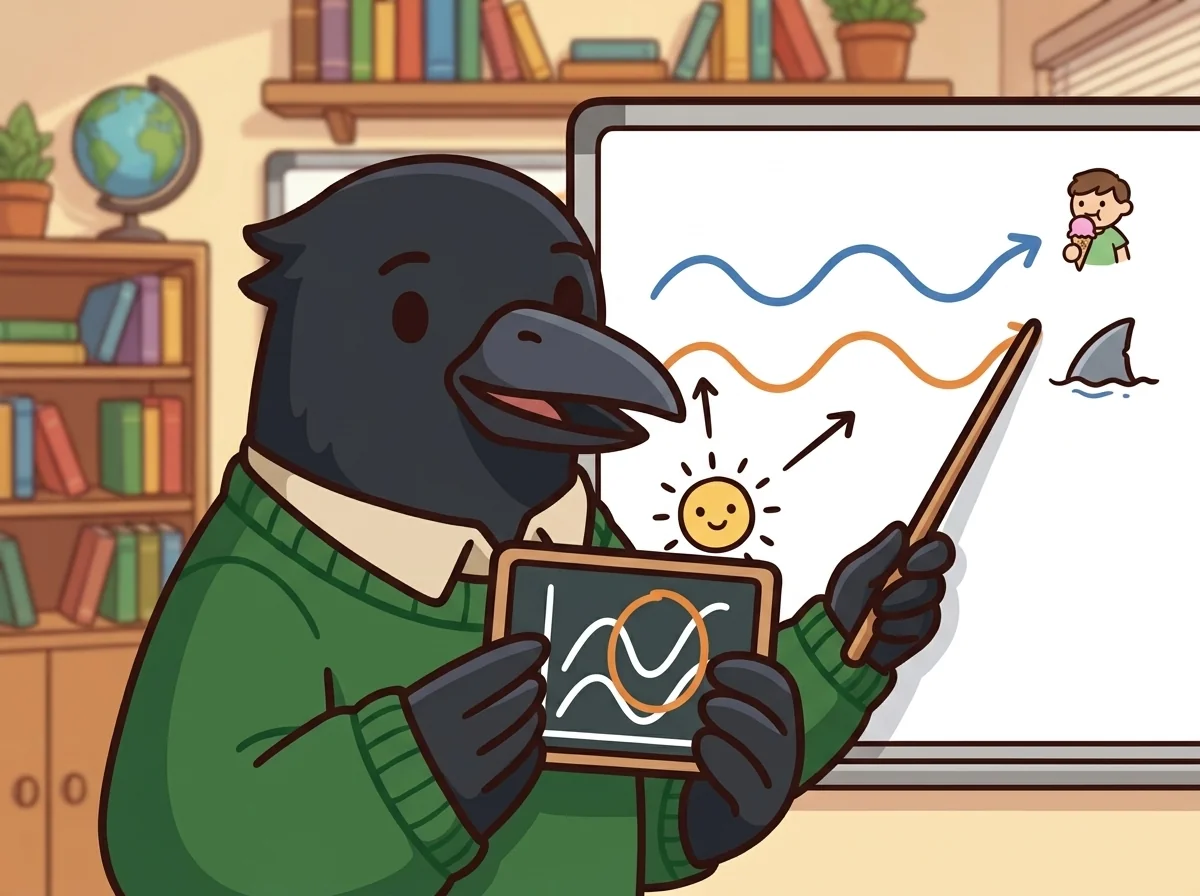
He walked to ScienceForge, because a place that hunted for truth ought to know that things that travel together aren't always connected.
Prism, the leader, met him and asked, "If two things always happen together, does one cause the other?"
Coincide didn't answer with a speech. He showed two lines that rose and fell in perfect step — the number of pirates in the world going down while the temperature of the Earth went up, over centuries. "They move together perfectly," he said, "so a careless mind says 'fewer pirates makes the world hotter!' But that's silly. They just both happened to change over the same centuries, for totally separate reasons. Moving together isn't causing. To know if one really causes the other, you don't watch — you test: change one, and see if the other follows."
Prism looked at the pirates-and-temperature lines. "You are appointed," he said.
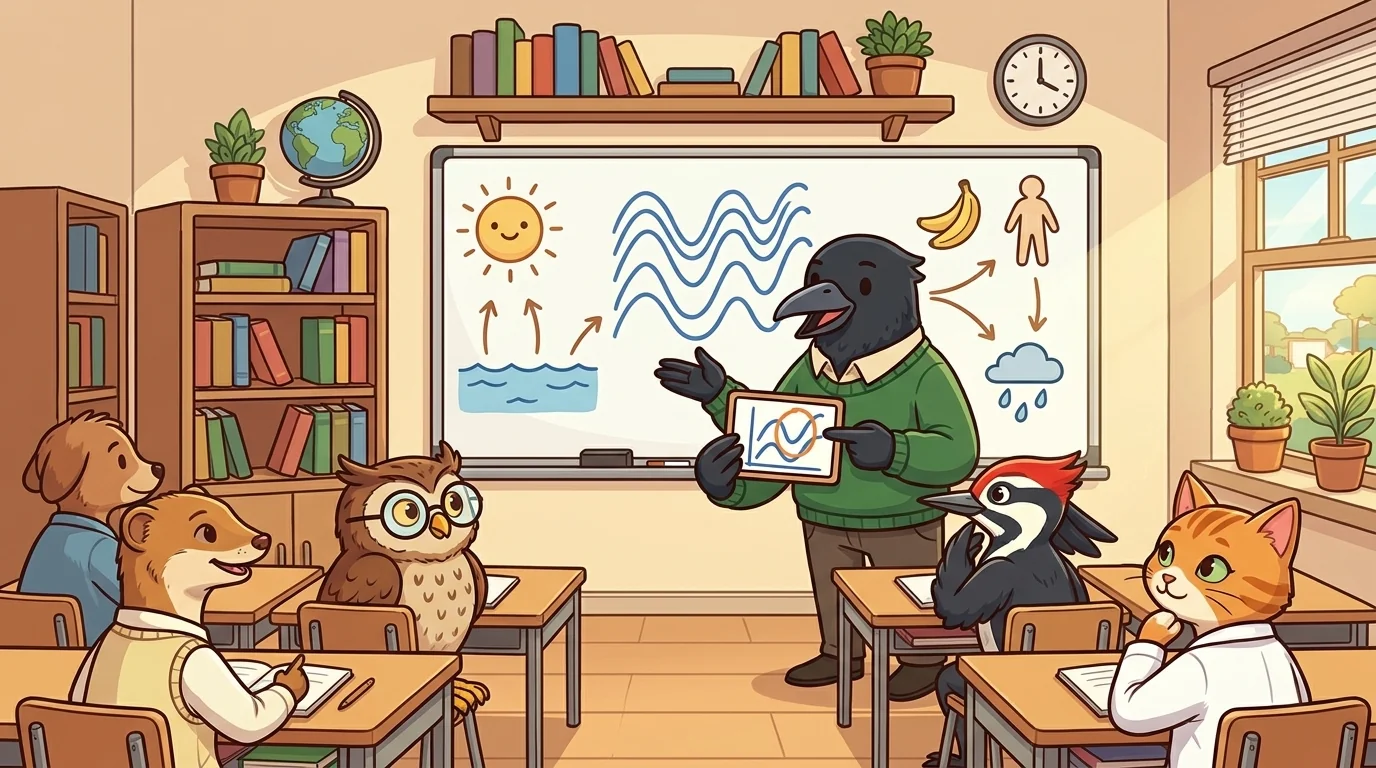
At the whiteboard, Coincide taught the trap with funny matched-up lines (ice cream and sharks; pirates and temperature; the number of storks and the number of babies) and one question each: "Does one cause the other, or does a third thing cause both, or is it just luck?" Then he'd show how to actually find out: change one on purpose (an experiment) and see if the other truly follows. Then he gave the working rules: two things moving together (correlation) does not mean one causes the other (causation) — your brain will insist it does, so slow down; when two things travel together, always ask whether a third thing might be causing both (like summer causing ice cream and swimmers), or whether it's just coincidence; and the only way to know one thing causes another is to change it on purpose and see if the other follows — watching is a question, experimenting is the answer. "A student was sure his new study snack was making him ace tests, because every snack-day was an A-day,'" Coincide said. "But he only ate the snack on days he'd also studied hard. Studying caused both the snack and the A. He tested it — ate the snack without studying — and flunked. The snack traveled with the A's; it never caused them. Don't trust two things that move together. Ask what's really pulling the strings — and then test it."
"So two things happening together might have a hidden third cause — or be pure luck?" a student said slowly.
"Together isn't because," Coincide agreed, and he settled by his whiteboard of funny matched-up lines, delighting in the deep clarity of a mind that no longer leapt to blame the nearest thing, but paused, and looked for the hidden cause, and tested before it believed. There was a warm, clear-thinking happiness in it — the settled gladness of a crow who had learned to resist the brain's loud, insistent "one must cause the other!", to look calmly for the third thing pulling both strings, and to test instead of assume — a quiet superpower against being fooled. It made him feel sharp, and careful, and hard to trick. That together-isn't-because, look-for-the-hidden-cause, test-before-you-believe warmth — the clear-thinking gladness of a creature who wouldn't be fooled by a coincidence — was, to Coincide, the sharp gift hidden inside telling correlation from cause. "Two things moving together," he said softly, by his wavy lines, "is a question — never an answer. To know what causes what, you have to test."
The ScienceForge ensemble
Coincide is one of the friends in ScienceForge. Each friend shows you one idea by how they act; meet them all and you have the whole subject.
-
Question
Question-formation — 'what do we want to find out?' (curious wren)
-

Predict
Hypothesis-formation — 'I think... because... so we should see...' (steady fox)
-

Setup
Experiment-design — 'one thing changes, everything else stays' (methodical beaver)
-
Sample
Data-collection + measurement — 'many measurements; then we see the shape' (patient cat)
-
Conclude
Data-interpretation + revision — 'the data shows... but maybe... let's check' (thoughtful owl)
-
Rerun
Replication / reproducibility
-
Stray
Anomaly / the surprising result
-
Dare
Falsifiability
-
Grill
Peer review / critique