Stray
The result that doesn't fit isn't an error to hide
Loading audio…
Press play to listen along. The line being read lights up as you go.
Show full transcript
Loading transcript…
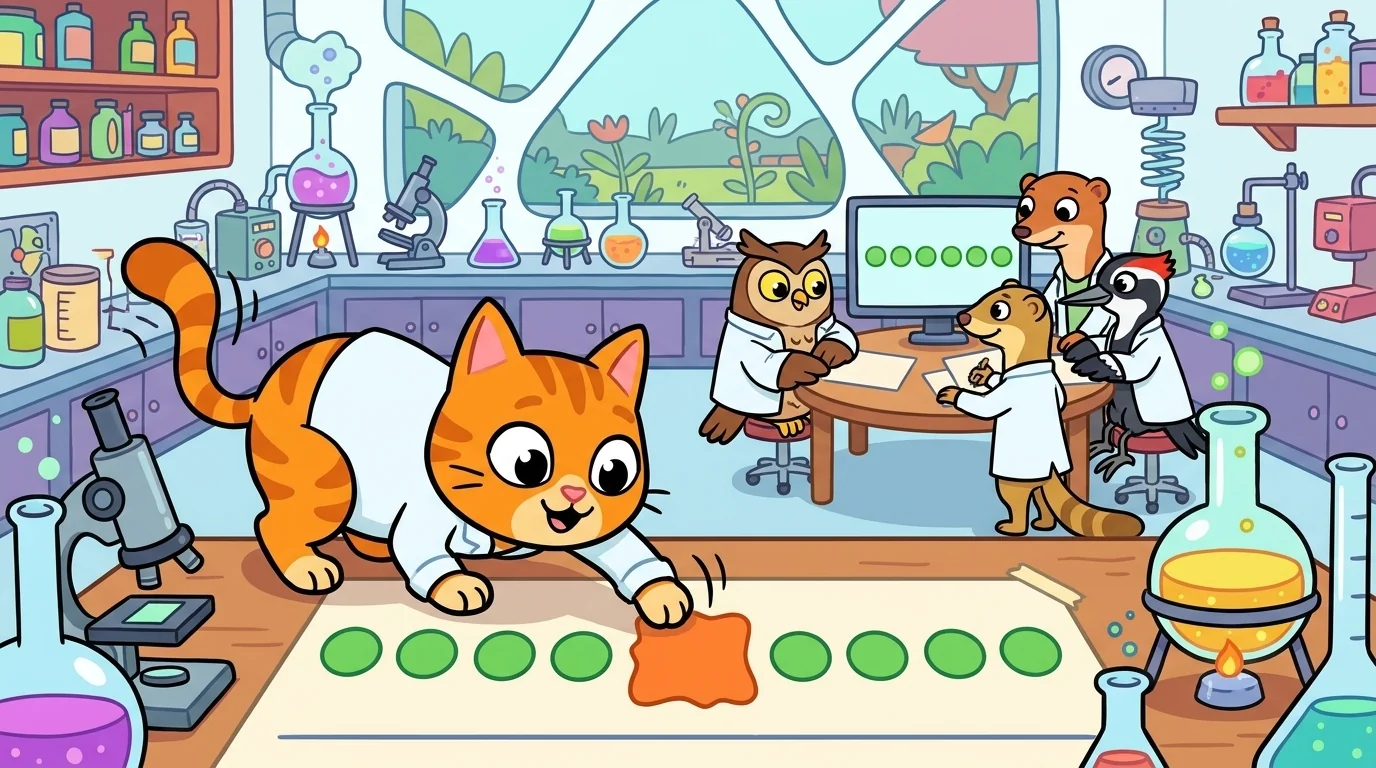
At the back of the lab, while everyone else crowded around the expected results, a bright-eyed cat named Stray was crouched over the one measurement that didn't belong — the odd one out — purring with curiosity.
Her whole craft is the anomaly — the surprising result that doesn't fit. "Watch what most people do with a weird result," she said, batting at a chart. "There's a whole row of numbers that all agree — nice and neat — and then one number that's totally different. And most people go, 'huh, that one's wrong,' and cross it out." She pounced gently on the odd number. "But why is it wrong? Maybe it is a mistake — a slip, a smudge. Or maybe—" her eyes went wide "—maybe it's not wrong at all. Maybe it's the most interesting number on the whole page — the one place the world did something nobody expected." She flicked her tail. "That's where discovery hides. Not in the results that match what you already thought — those just confirm you were right. In the result that surprises you. The one that makes you go 'huh, that's odd...' — that's the door to something new. So I never throw away the odd one. I get curious about it. Because the most important sentence in all of science isn't 'I was right.' It's 'huh, that's strange...'"
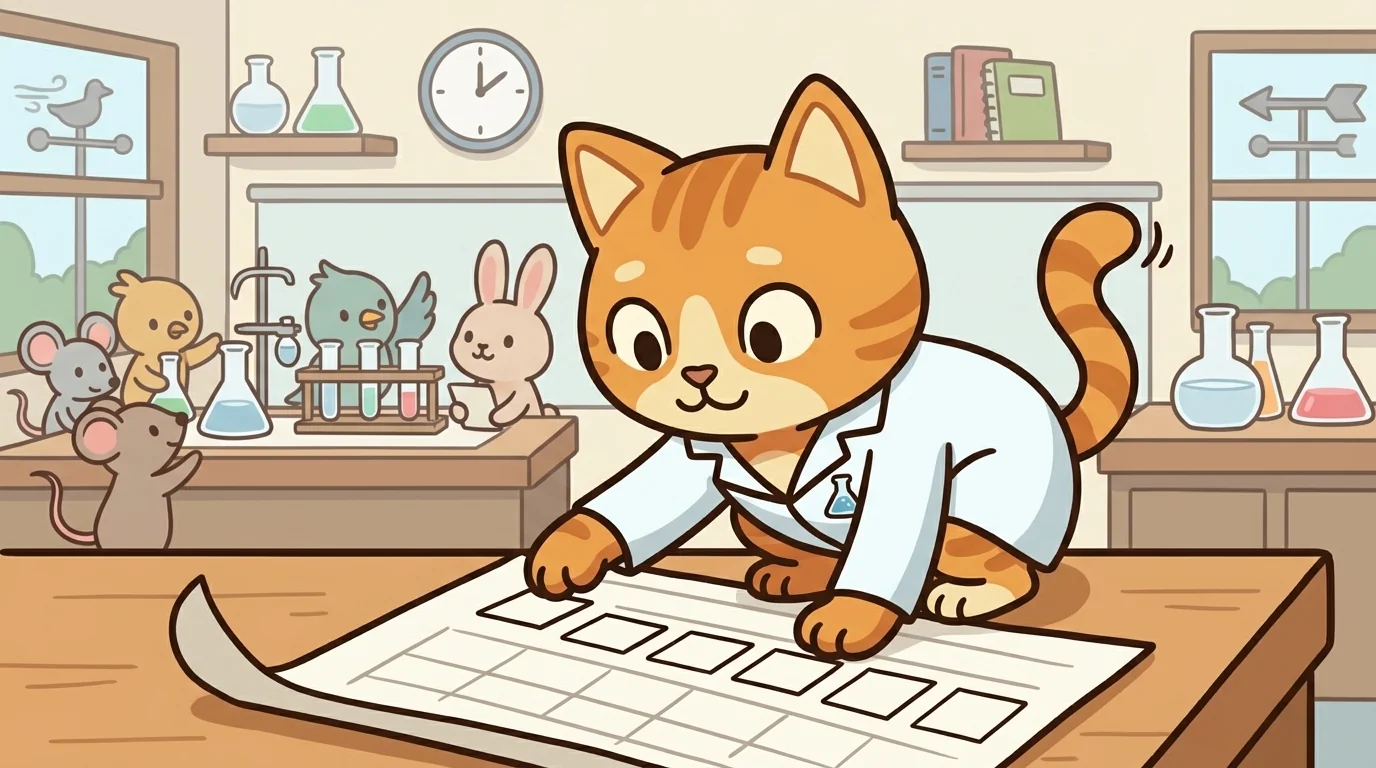
Stray learned to chase the odd result the day she almost threw away a treasure.
She was young, and she'd run an experiment where all her plants grew the expected amount — except one, which grew strangely, wildly different. Annoyed that it messed up her neat results, she started to cross it out as "a bad plant."
Her grandmother, an old cat with knowing, mismatched eyes, stopped her paw.
"Wait," she said. "Why did that one grow differently?"
"It's just... weird," young Stray said. "It ruins my chart."
"Or," her grandmother purred, "it's trying to tell you something." They looked closer — and found that the odd plant had, by pure accident, gotten a completely different amount of light. "So it's not a bad plant," her grandmother said, eyes bright. "It's a clue — that light matters more than you thought. The result that didn't fit your idea just showed you your idea was incomplete." She patted Stray gently. "That's the secret almost nobody learns, little one. The results that match what you expected teach you nothing new — they just pat you on the back. It's the results that surprise you — the ones that don't fit, the odd ones you're tempted to erase — that carry every real discovery. So when a result strays from what you expected, don't reach for the eraser. Reach for your magnifying glass. Ask why." She winked. "The scientists who change the world aren't the ones who ignore the strange result. They're the ones who couldn't stop thinking about it."
Young Stray never crossed out an odd result again. She learned to love the one that didn't fit — because that was the one with something to teach her.
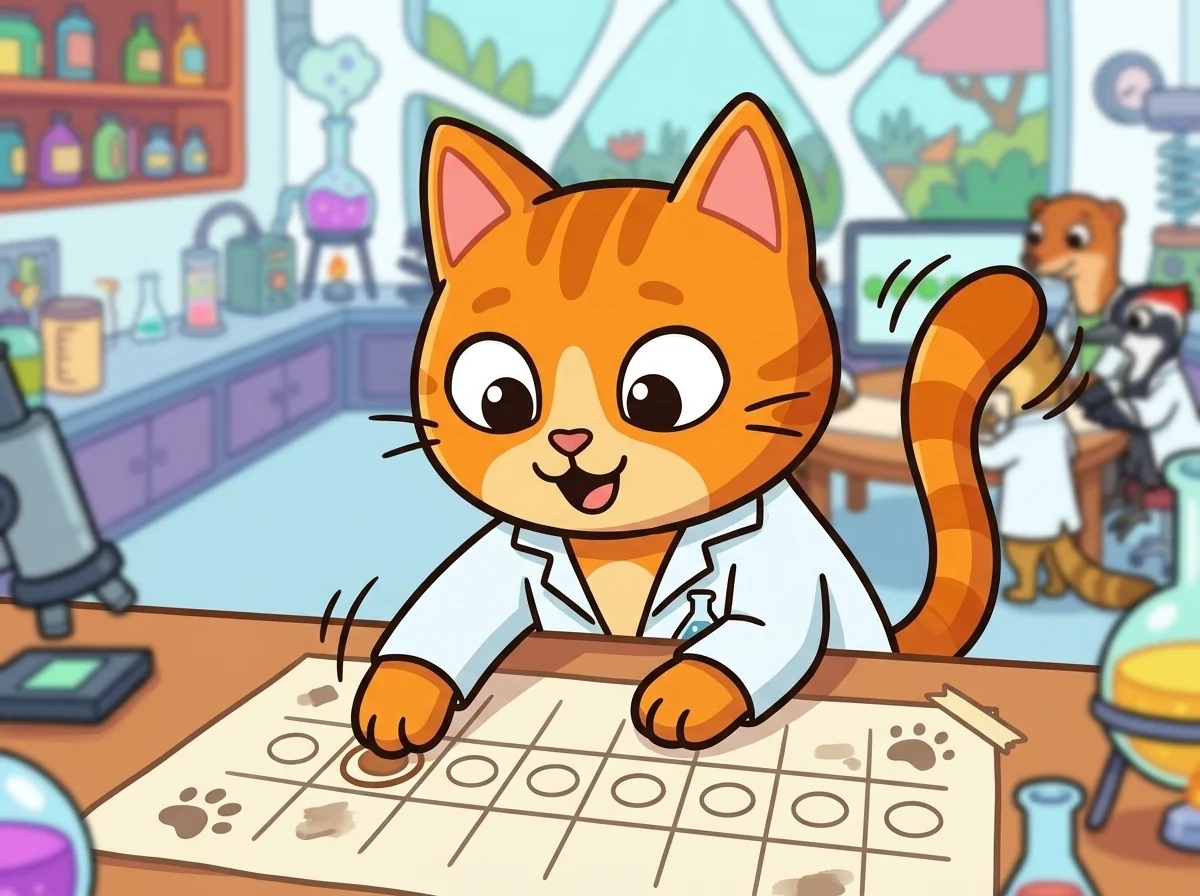
She walked to ScienceForge, because a place that hunted for truth ought to chase the surprises.
Prism, the leader, met her and asked, "What do you do with a result that doesn't fit?"
Stray didn't answer with a speech. She showed Prism a neat row of expected numbers with one strange outlier. Instead of crossing the outlier out, she circled it, and investigated it — and found it wasn't a mistake at all, but a real effect nobody had noticed, hiding in plain sight in the one number everyone wanted to ignore. "There," Stray said. "Everyone else saw an error to erase. I saw a clue. The odd result wasn't ruining the experiment — it was the most important thing in it. Discovery hides in the surprise, not the expected."
Prism looked at the circled, investigated outlier — a small new discovery. "You are appointed," he said.
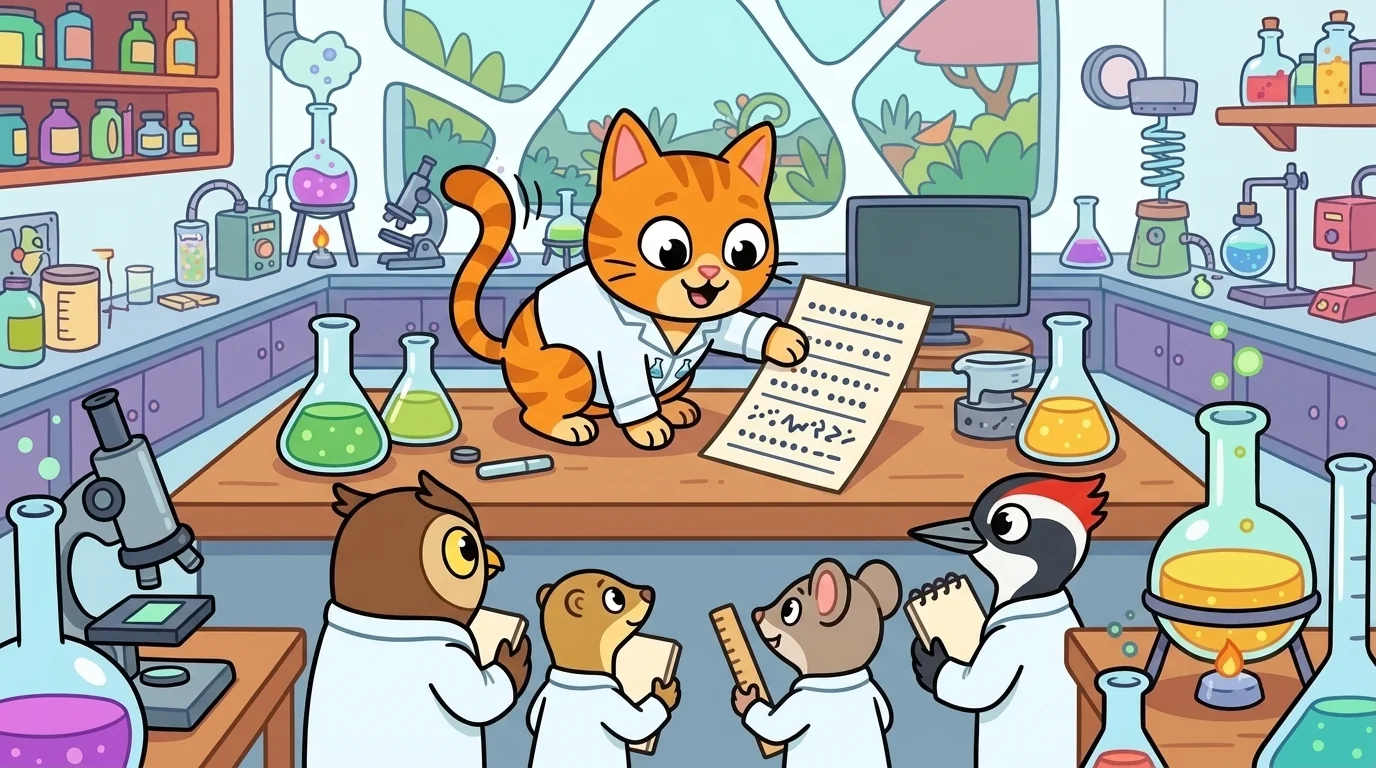
At the back of the lab, Stray taught anomaly-hunting by rescuing thrown-away results. She'd have students run experiments and, when a weird result showed up, catch them reaching to erase it. "Wait — why is it weird?" Sometimes it was just a mistake (fine — but now they knew, instead of guessing). Sometimes it was a real, surprising effect — a genuine little discovery they'd almost thrown in the trash. Then she gave the working rules: a result that surprises you is not automatically an error — before you erase it, ask why it's different, because it might be a mistake or it might be a discovery; the results that match your expectations teach you nothing new, while the ones that surprise you are where every real discovery lives; and the most important reaction in all of science is not "I was right" but "huh, that's strange..." — because that's the sound of the world showing you something you didn't know. "A student's experiment 'had one number that ruined everything,'" Stray purred. "So instead of erasing it, we got curious about it — and it turned out to be the one genuinely new thing she'd found all week. She'd been about to throw away her only discovery for the crime of being surprising. Don't erase the strange result. Chase it. That's where the treasure is."
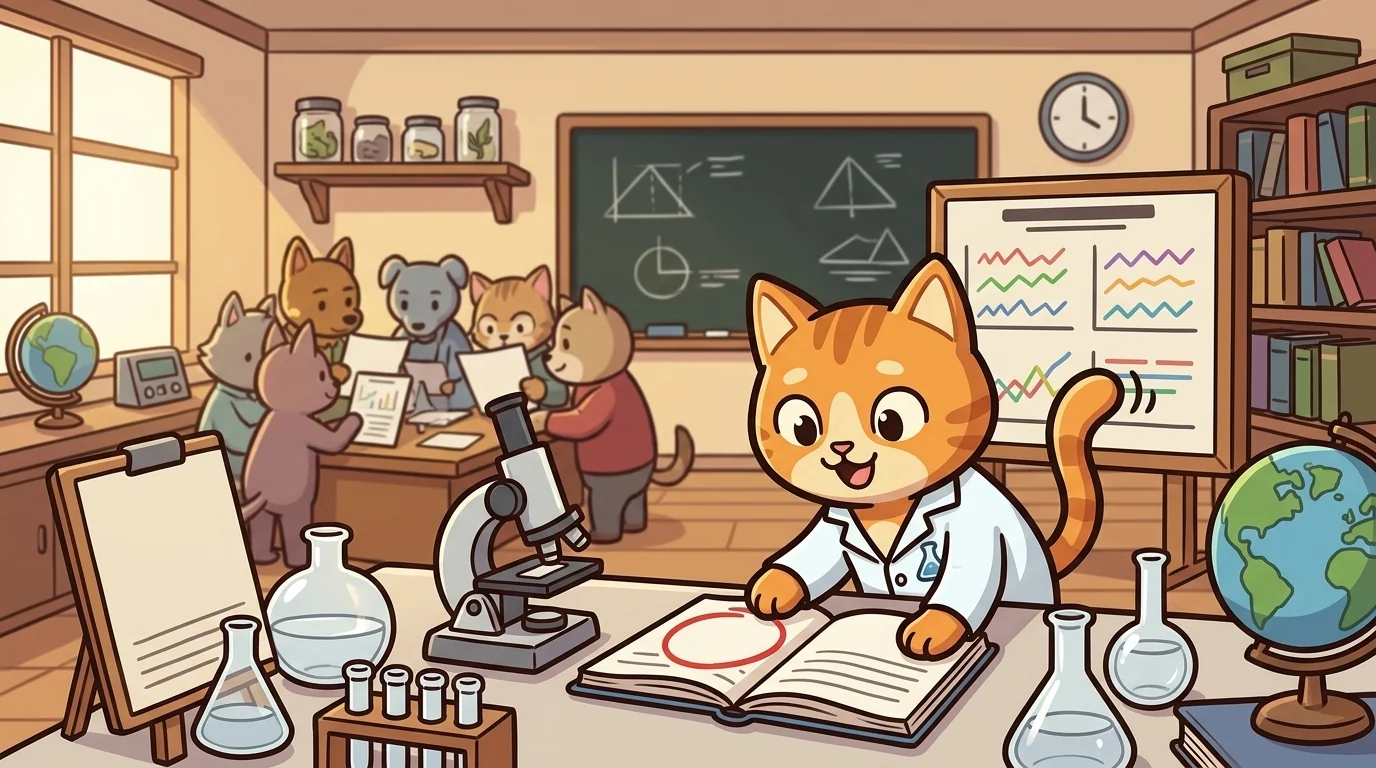
"So the result that surprises me might be the best one?" a student said slowly.
"The surprise is the door," Stray agreed, and she settled at the back of the lab beside the odd, circled, wonderful outlier that everyone else had wanted to erase, and purred with the deep delight of one who had learned to love exactly the thing others threw away. There was a bright, curious happiness in it — the tingling gladness of a cat who knew that the whole thrill of discovery lived in the moment something didn't go as expected, that "huh, that's strange..." was the most exciting sentence in the world, and that the courage to chase a surprise instead of erasing it was the difference between confirming what you knew and finding what nobody knew. It made her feel awake, and curious, and quietly brave. That chase-the-surprise, love-the-odd-one, discovery-hides-in-what-doesn't-fit warmth — the curious gladness of a creature drawn to the anomaly — was, to Stray, the electric secret hidden inside a result that strays. "Don't erase the strange result," she said softly, eyes on her circled treasure. "Chase it. The surprise is where the new thing is."
The ScienceForge ensemble
Stray is one of the friends in ScienceForge. Each friend shows you one idea by how they act; meet them all and you have the whole subject.
-

Question
Question-formation — 'what do we want to find out?' (curious wren)
-

Predict
Hypothesis-formation — 'I think... because... so we should see...' (steady fox)
-

Setup
Experiment-design — 'one thing changes, everything else stays' (methodical beaver)
-

Sample
Data-collection + measurement — 'many measurements; then we see the shape' (patient cat)
-

Conclude
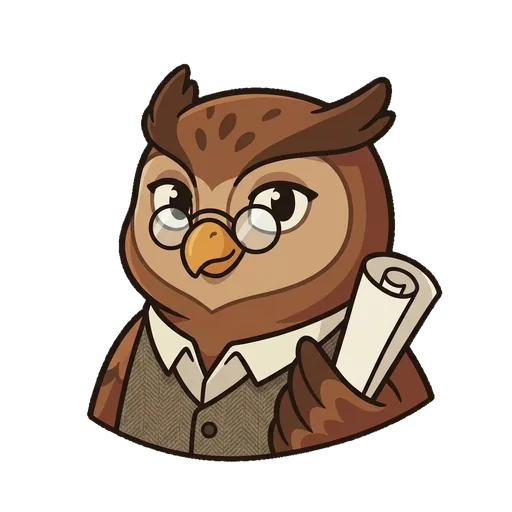
Data-interpretation + revision — 'the data shows... but maybe... let's check' (thoughtful owl)
-
Rerun
Replication / reproducibility
-
Dare
Falsifiability
-
Grill
Peer review / critique
-
Coincide
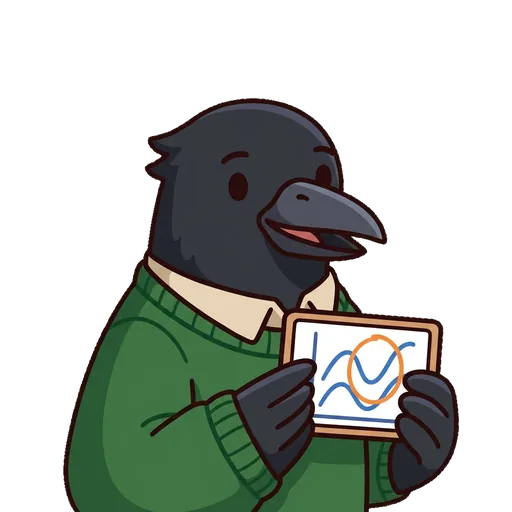
Correlation vs causation