Elvi
TIMES-ELEVEN SHORTCUT
Loading audio…
Press play to listen along. The line being read lights up as you go.
Show full transcript
Loading transcript…
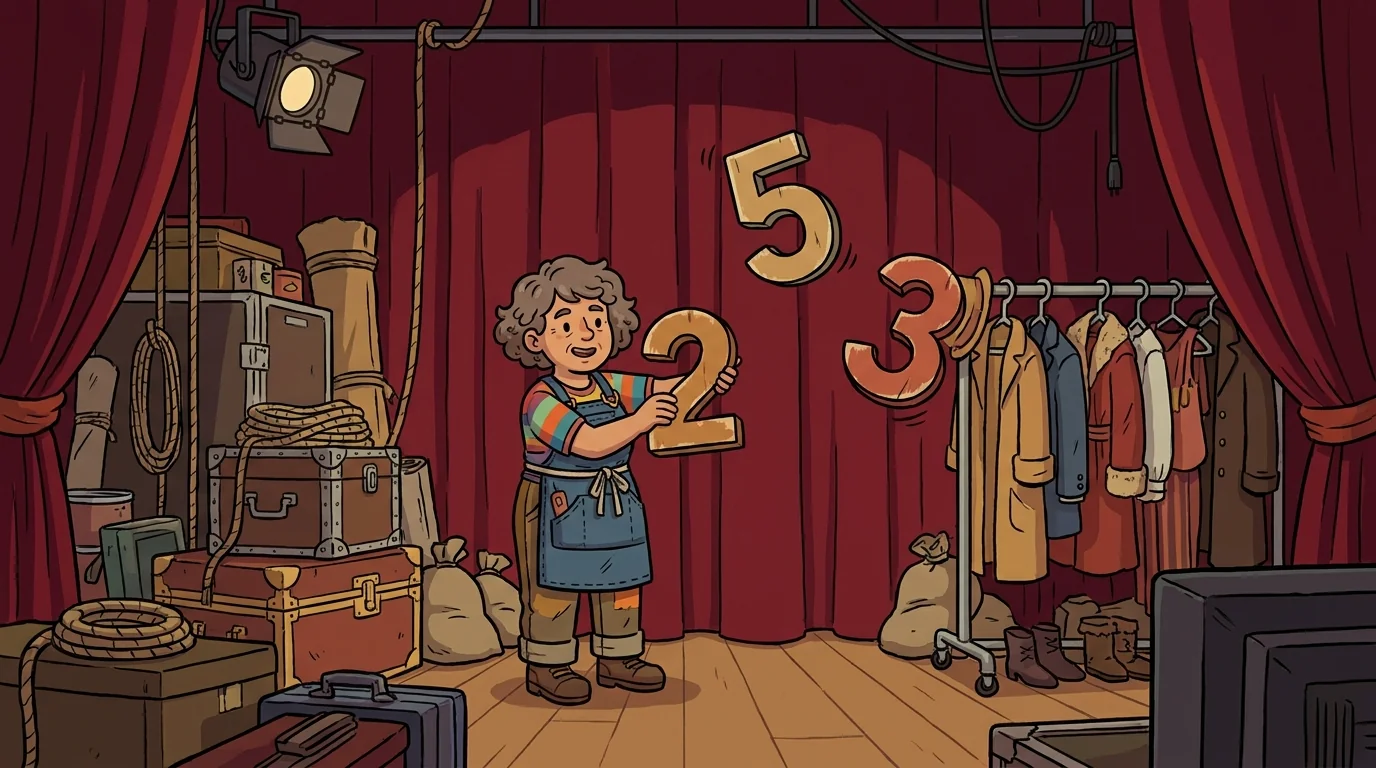
Elvi worked stage-left, where the props were always stacked too tight, and Elvi had one motto stitched into the curtain: There is always room in the middle. When someone shouted a times-eleven problem — "Elvi! Twenty-three times eleven!" — Elvi didn't multiply. Elvi took the number 23, put a finger between the 2 and the 3, and pulled. "Two... and three... make a gap in between. Now, what do the two digits add up to? Two plus three is five. Drop the five into the gap." Two, five, three. "Two hundred fifty-three." No columns, no carrying — just prying the digits apart and setting their sum in the space between.
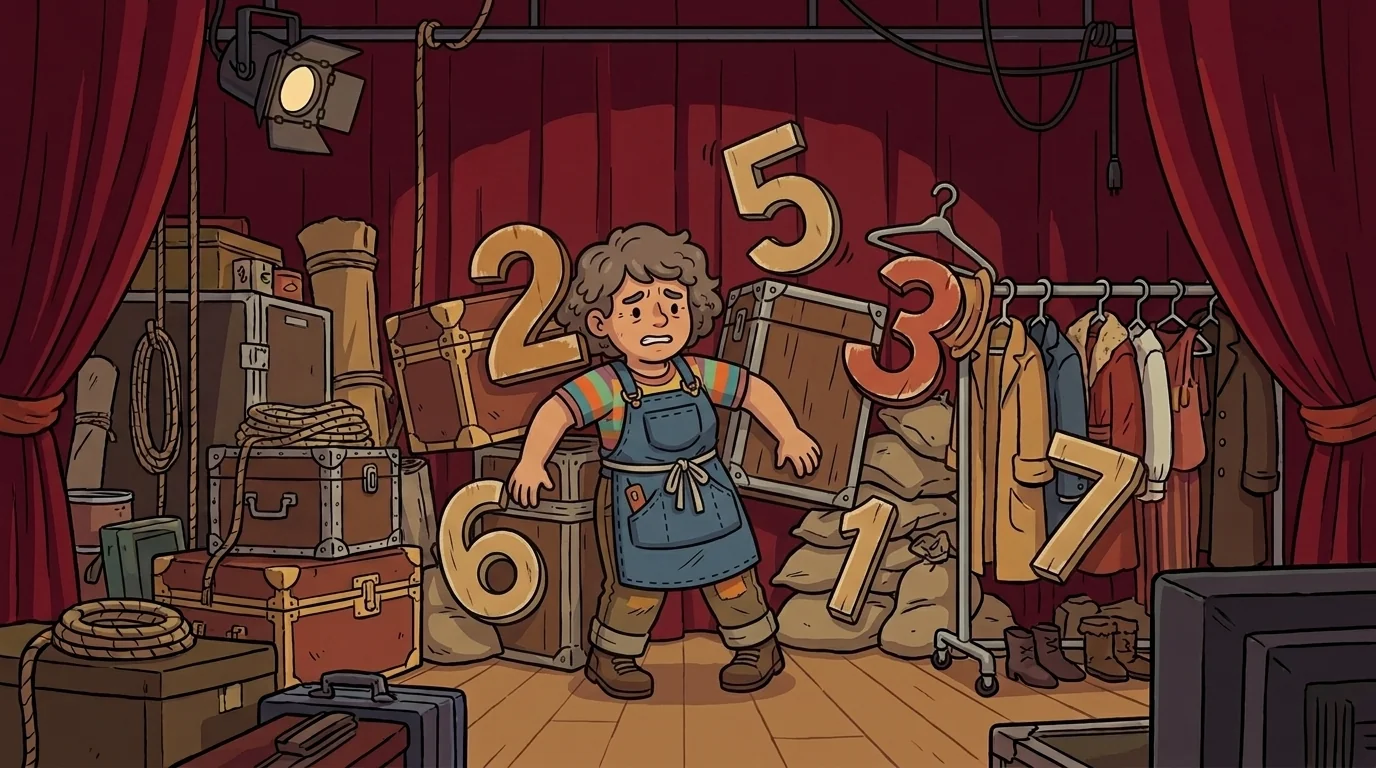
For 61 times 11, Elvi split the 6 and the 1, added them to get 7, and dropped it in: 6, 7, 1 — six hundred seventy-one. "The eleven doesn't crowd the number," Elvi liked to say. "It opens it up."
But Elvi had once felt very crowded indeed.
As a young apprentice, Elvi was the smallest on the crew and always got wedged into the tightest corners, handed the jobs no one else wanted, told there simply wasn't room for another idea, another voice, another way. Elvi started to believe it — that some people just don't get any space. It was a squeezed, breathless kind of feeling, like being folded up small.
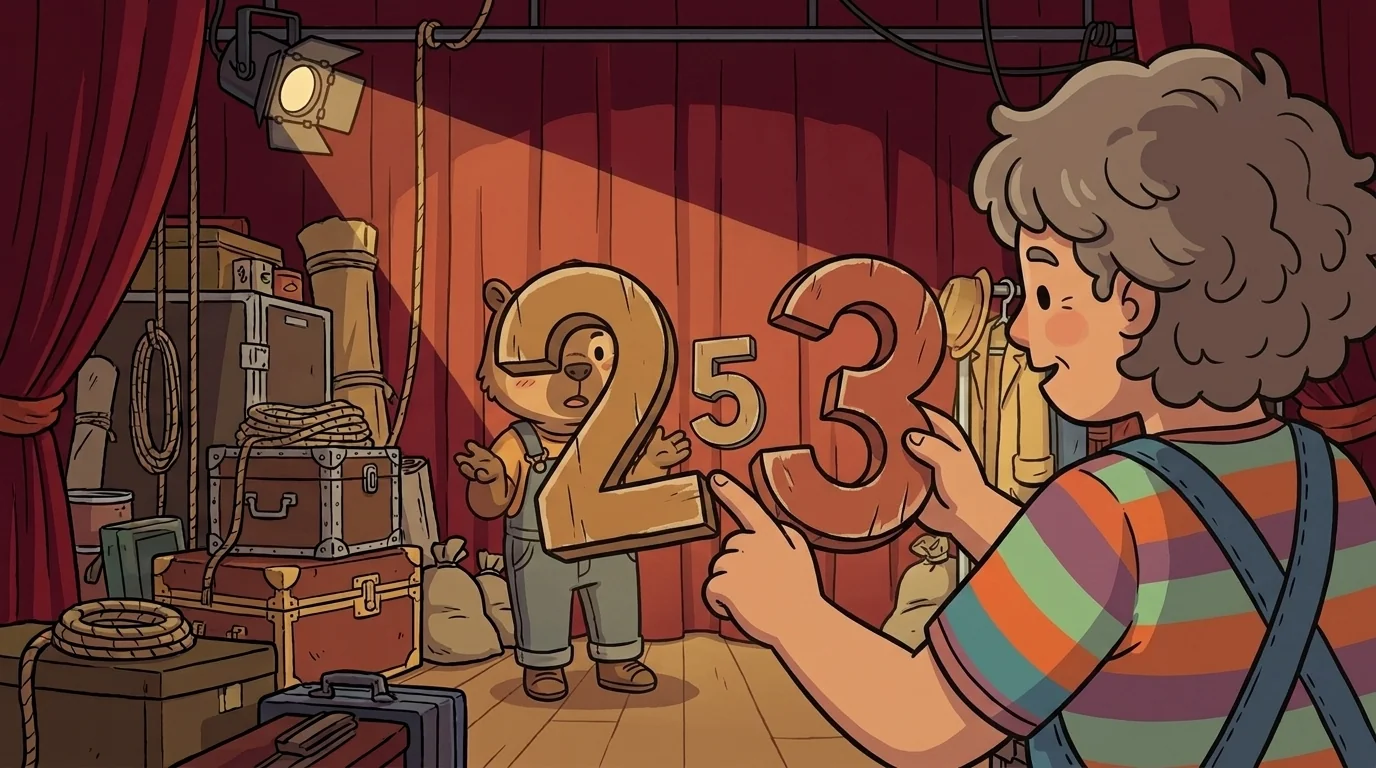
Marlow, the stage manager, found Elvi one night, folded into a corner. "Who told you there's no room?" Marlow asked. Elvi didn't answer. So Marlow showed, instead of told. Marlow wrote 34, and gently drew the two digits apart. "See that gap? It was there the whole time. Nobody made it — you just had to look between." Marlow added 3 and 4 to get 7, set it in the middle: 374. "That is thirty-four times eleven. And the lesson is the same for numbers and for you: the room was always there. You only had to open it."
The kid who came to Elvi arrived hunched, apologetic, taking up as little space as they could. "I'm probably too slow for this," they murmured.
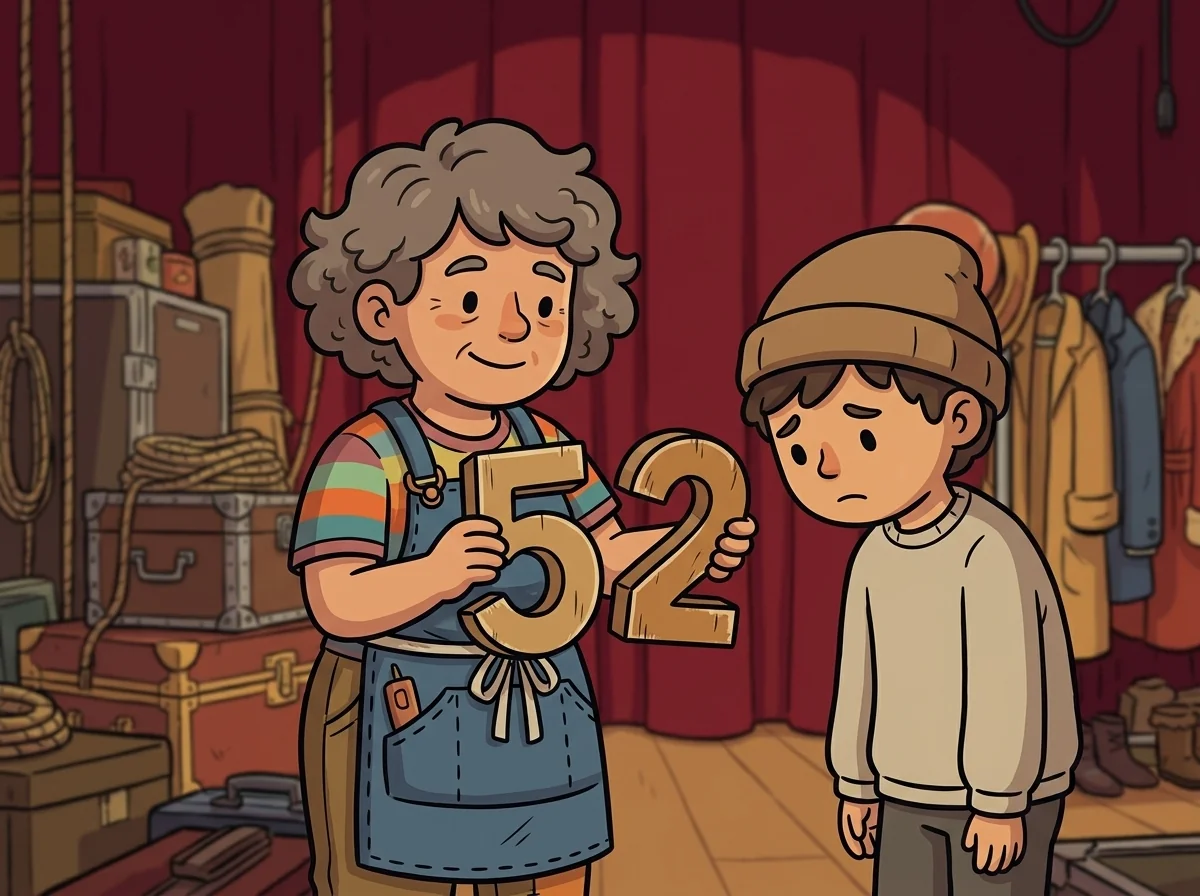
"Let's find out," Elvi said kindly, and wrote 52. "Times eleven. Don't multiply. Just pull the digits apart — make a gap — and tell me: what do five and two add up to?"
"...Seven," the kid said.
"Drop it in the middle." Five, seven, two. The kid blinked. "Five hundred seventy-two?"
"Five hundred seventy-two," Elvi agreed. "You didn't need to be fast. You needed to see the gap."
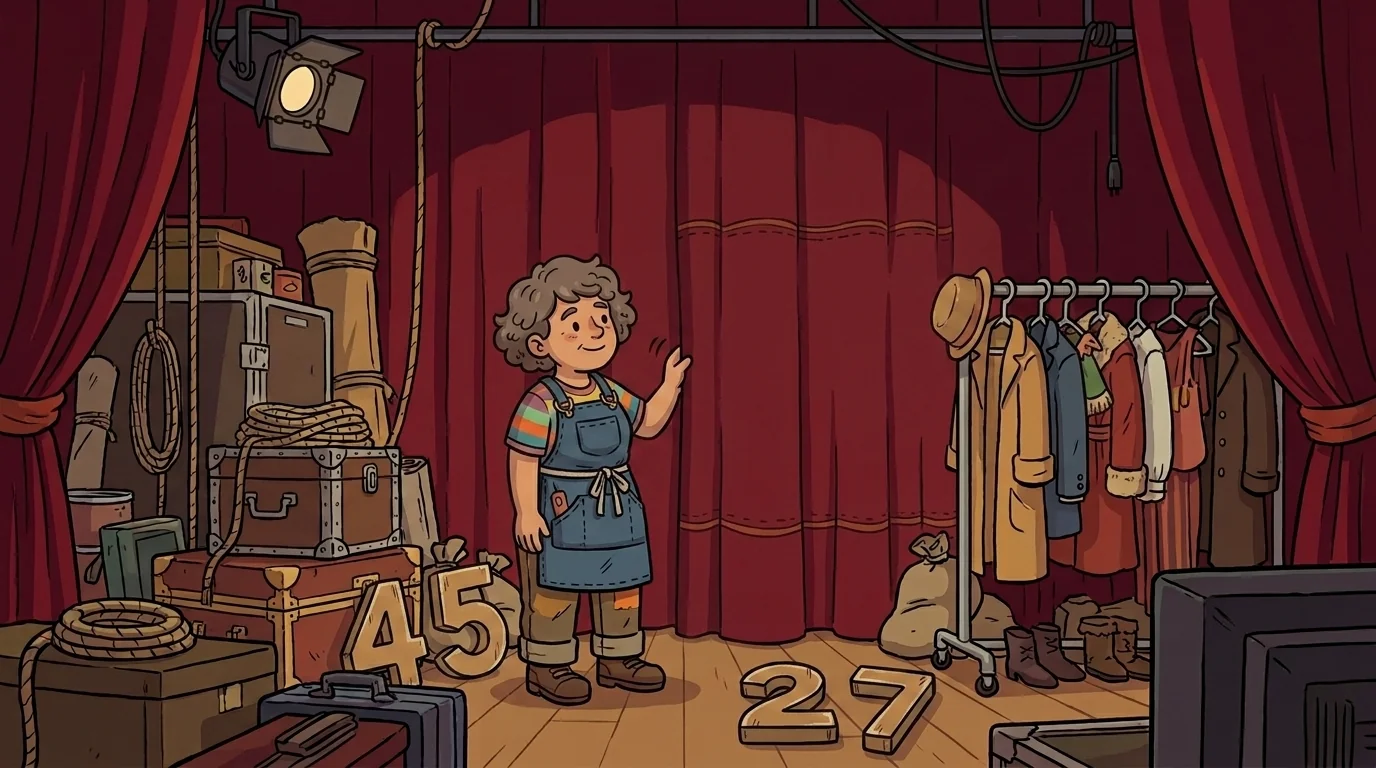
They did a handful more — 45 (four, nine, five → 495), 27 (two, nine, seven → 297) — the kid pulling each number open and setting the sum inside. And when a sum went past nine, Elvi showed the one small extra step: carry the ten leftward, the same as always, no shame in it. But mostly the kid just kept finding gaps that had been there all along, and with each one they seemed to unfold a little, sitting up straighter, taking up a bit more of the stage.
The feeling that filled the kid then wasn't only the neat click of a right answer. It was roomier than that — a loosening, a sense that maybe there was space for them after all, space they'd been folding themselves away from. That quiet expanding warmth — I fit here; there was room the whole time — spread all the way through, and Elvi watched it with a soft ache of recognition, because it was the exact unfolding Marlow had once given a small apprentice wedged in a corner.
"Pull the digits apart, drop their sum in the gap," Elvi said, tapping the curtain's stitched motto. "There is always room in the middle — for a number, and for you."
Hear it as an audio drama
A short play starring Elvi, from ShowMath. Different voices, same idea. Listen any time after you read.
Loading audio…
Read the drama script
- Narrator: From Spark and Anvil and Showmath — this is Elvi, in chapter 1 of the Showmath cast.
- Narrator: This drama uses an AI-generated voice. Voiced via Gemini 2.5.
- Narrator: Stage-left was the tightest corner of the whole theater, and that was exactly where Elvi worked. Props stacked too high, no space to turn around — and one motto stitched into the curtain: there is always room in the middle. When a voice called out "Elvi! Twenty-three times eleven!", Elvi didn't reach for a pencil.
- Elvi: Watch. I don't multiply. I take the twenty-three, I put one finger between the two and the three, and I pull them apart. Now — what do two and three add up to? Five. So I drop the five right into the gap. Two... five... three. Two hundred fifty-three. The eleven didn't crowd the number. It opened it up.
- Narrator: But Elvi had once felt very crowded indeed. The smallest on the crew, wedged into the corners nobody wanted, told again and again that there simply wasn't room — for another idea, another voice, another way. And Elvi had started to believe it. Until one night the stage manager knelt down.
- Marlow: Who told you there's no room? Here — look. I write thirty-four. I draw the two digits apart, and — see that gap? It was there the whole time. Nobody made it. You just had to look between. Three and four make seven. Set it in the middle. Three, seven, four. That's thirty-four times eleven. And it's the same lesson for numbers and for you: the room was always there. You only had to open it.
- Narrator: Elvi never forgot it. So when a young performer came shuffling up years later — hunched, apologetic, folded up small — Elvi knew exactly what they were feeling.
- Kid: I'm probably too slow for this.
- Elvi: Let's find out. Here's fifty-two, times eleven. Don't multiply — just pull the digits apart, make a gap. Now tell me: what do five and two add up to?
- Kid: ...Seven?
- Elvi: Drop it in the middle.
- Kid: Five... seven... two. Five hundred seventy-two?
- Elvi: Five hundred seventy-two. You didn't need to be fast. You needed to see the gap.
- Narrator: They pulled open a handful more — forty-five became four, nine, five; twenty-seven became two, nine, seven — and with each one the kid unfolded a little, sitting up straighter, taking up a bit more of the stage. And when a sum ran past nine, Elvi showed the one small extra step, carrying the ten to the left, no shame in it at all.
- Kid: There was room the whole time.
- Elvi: There is always room in the middle. For a number — and for you.
- Narrator: You've been listening to a Spark and Anvil chapter, written by the Spark and Anvil writing team for ages 9 to 14.
- Narrator: Apps stay free forever.
- Narrator: Curriculum aligned to Common Core and Next Generation Science Standards.
- Narrator: Released under Creative Commons BY-NC-SA 4.0 for educational reuse. Visit Spark and Anvil for the full transcript.
The ShowMath ensemble
Elvi is one of the friends in ShowMath. Each friend shows you one idea by how they act; meet them all and you have the whole subject.
-

Wendel
The Calendar-Keeper — anchors the year's doomsday and steps by sevens to name the weekday of any date
-

Fiva
The Fives-Finisher — rounds a number ending in 5 to a friendly pair, then tacks on 25 to square it
-
Missa
The Missing-Digit Diviner — sums the shown digits and reads the hidden one as the shortfall to the next nine (casting out nines)
-

Squarl
The Squaring-Bouncer — bounces to the nearest round number and back to square any number in her head
-

Dashel
The Left-to-Right Racer — answers biggest-place-first, out loud, before the calculator finishes
-

Magda
The Magic-Square Weaver — seeds a four-by-four square from a date so every row, column, and diagonal sums the same
-

Nabo
The 1089 Conjurer — reverses, subtracts, reverses, adds, and always lands on 1089
-

Halvra
The Double-and-Halver — doubles one factor and halves the other until multiplying is easy
-

Modo
The Clock-Winder — wraps numbers around a clock of any size, the engine under the calendar and missing-digit tricks
-

Marlow
The Stage Manager — a warm, attentive adult who coaches rehearse-then-perform and reveal-the-secret, and never performs for the kid