Sponsor
WEIGH RETURN AGAINST COST
Loading audio…
Press play to listen along. The line being read lights up as you go.
Show full transcript
Loading transcript…
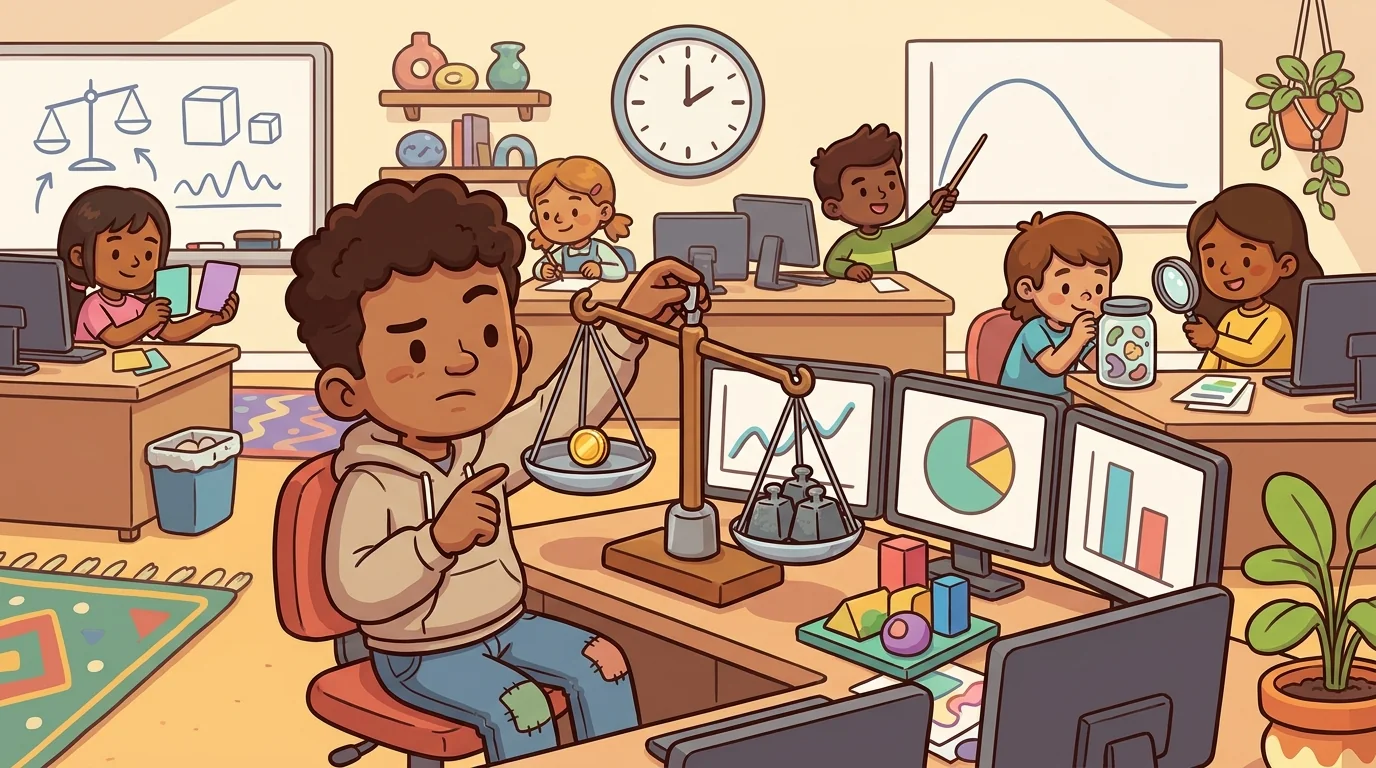
Sponsor was the crew's dealmaker — the member who read every offer with a clear head and a simple question: is it worth it? Not "is the number big?" but "is what we gain bigger than what we give up?" That question, Sponsor knew, was the whole of good business math.
"Anyone can be dazzled by a large payment," Sponsor said. "The skill is weighing it against its true cost — and the true cost is almost always more than the price tag."
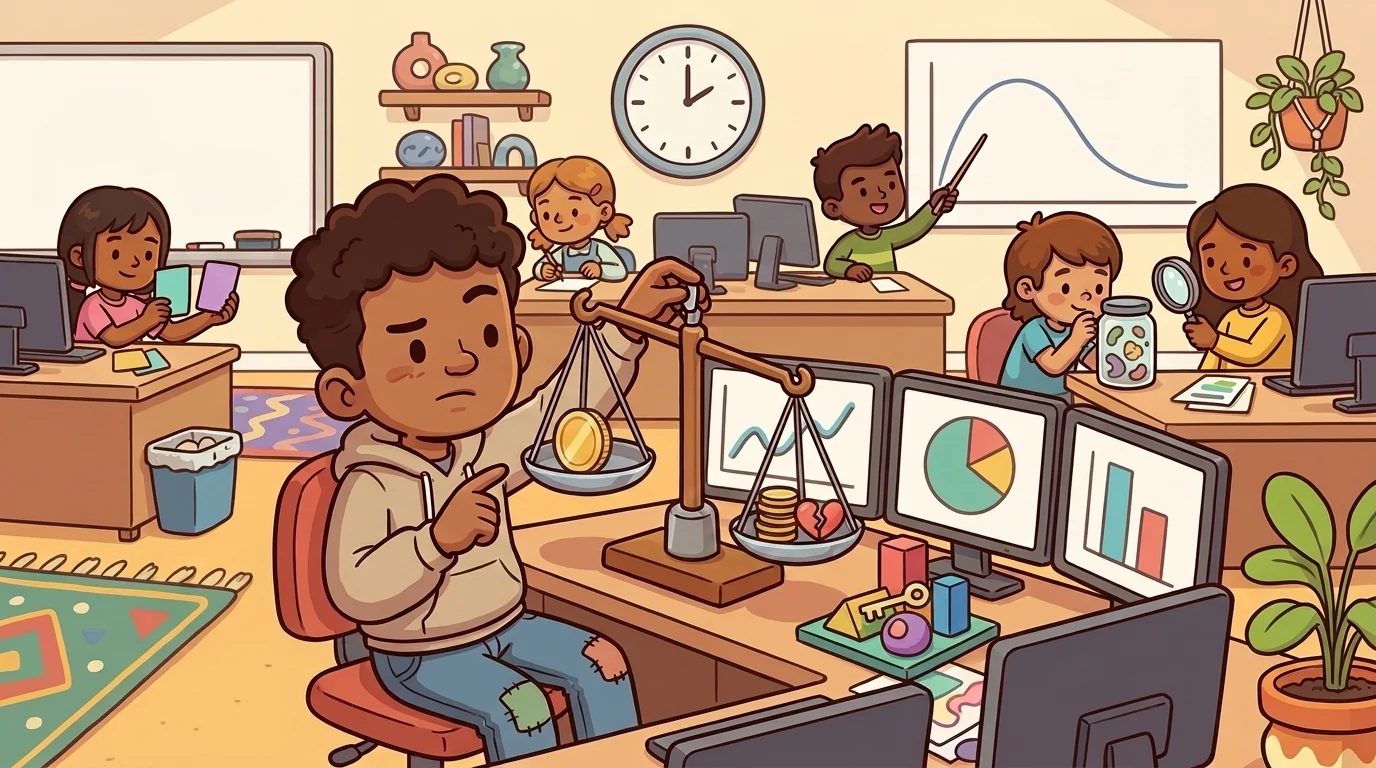
A big offer arrived. A company wanted the crew to promote a product for a payment larger than the channel had ever seen. "We have to take it!" someone said. "Look at that number!"
"Let's weigh it, not just admire it," said Sponsor, and drew a balance scale. On one side: the payment (large) plus any new viewers the product might bring. On the other side: the costs. Some were obvious — the time to make the video, the space it took from their normal posts. But Sponsor added the cost everyone forgets: the trust it might spend.
"Is this product something our audience actually wants and can rely on?" Sponsor asked. "Because if we promote something shoddy, Ledger's balance takes the hit. And a payment that costs us trust can be a losing deal even when the money looks huge."
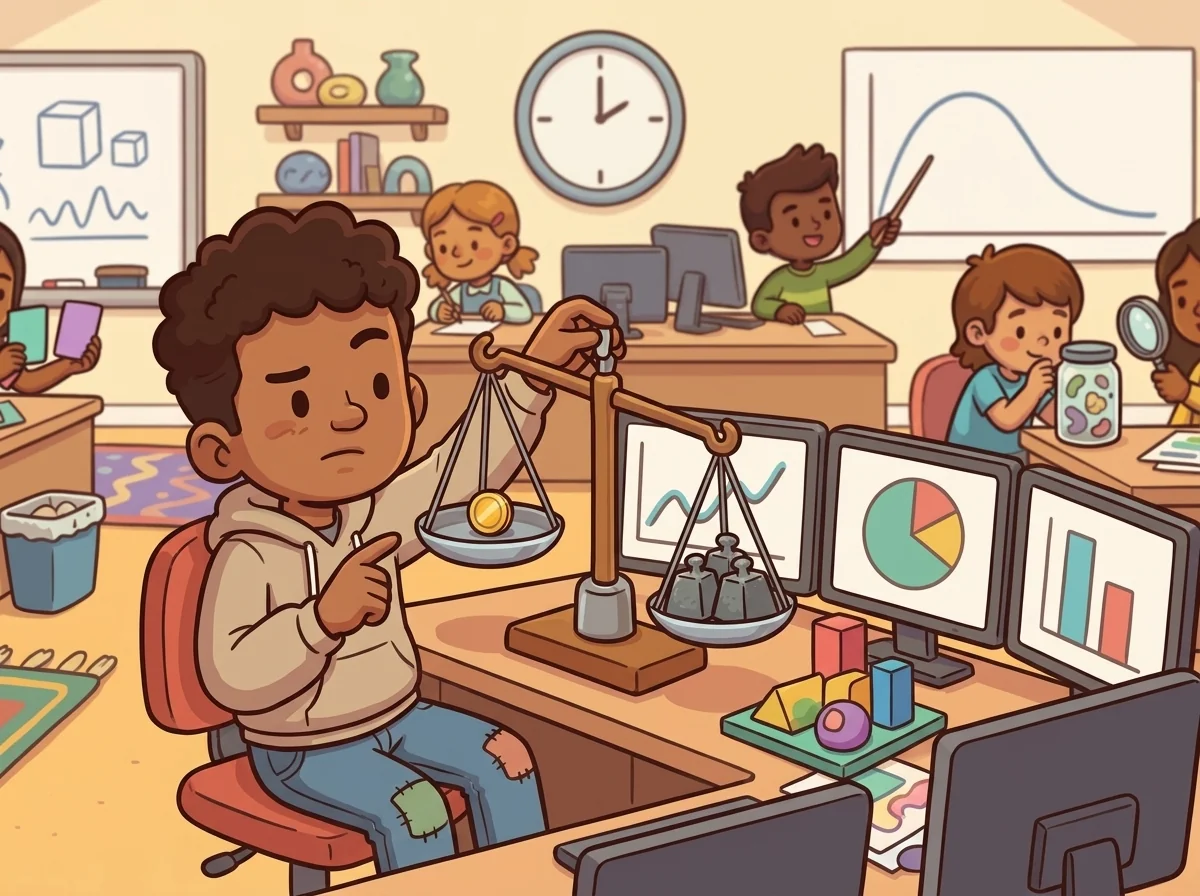
They investigated the product honestly. It was mediocre — over-promised, likely to disappoint the very people who trusted The Signal. Sponsor updated the scale: the money was real, yes, but the trust cost was enormous. Promote a letdown, and viewers would feel sold-out; the credibility ledger would crash far harder than any one payment could refill.
"Return on investment," Sponsor said, tapping the scale. "You compare what you get to what you give up. Get more than you give: good deal. Give up more than you get: bad deal — no matter how shiny the payment. This deal pays in money and charges in trust, and the trust bill is bigger."
They turned the big offer down.
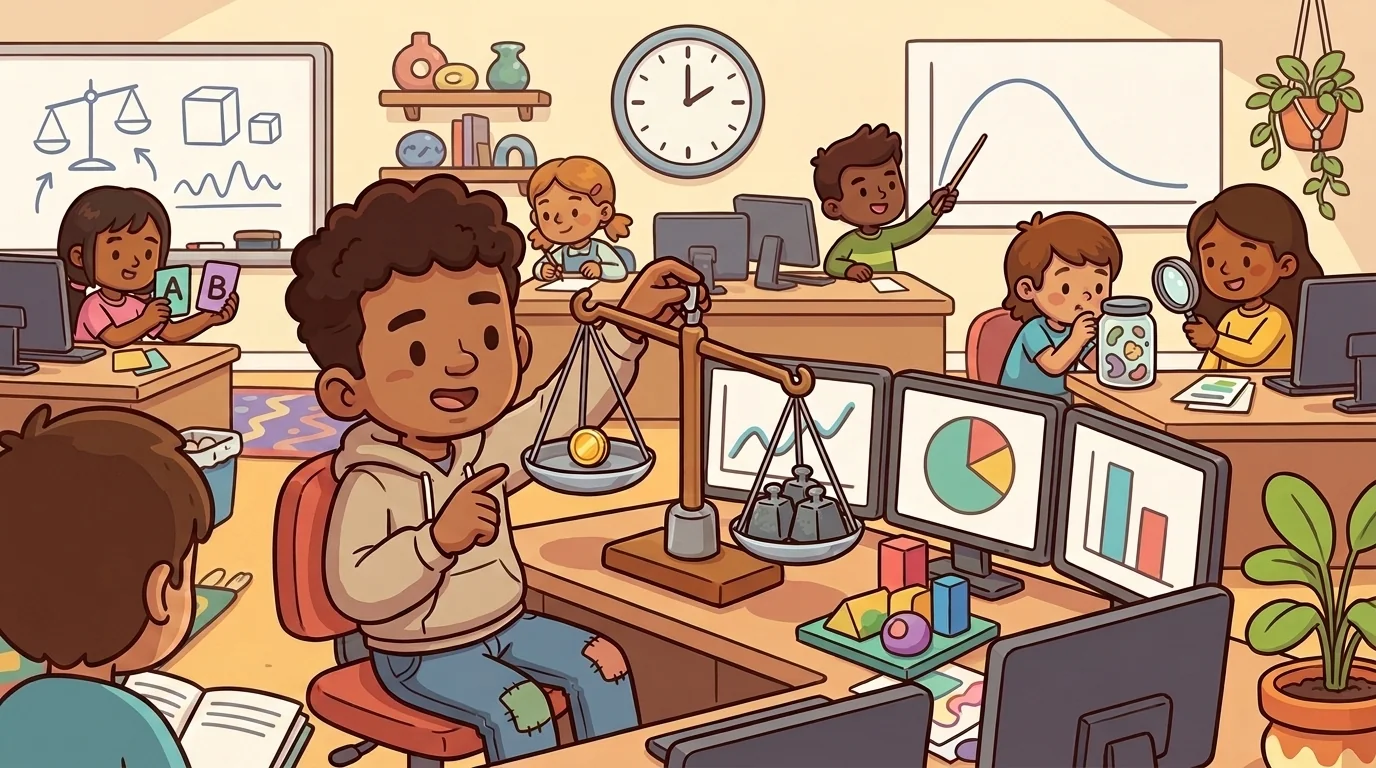
Sponsor taught the crew that this same scale weighed every choice, not just cash deals. Chasing a spike costs steady growth. Copying a viral standout costs the effort spent on a lottery ticket (Base's warning). Even a free-looking shortcut usually charges something — time, focus, or credibility. "There's no such thing as 'just take the number,'" Sponsor said. "Every number has a price on the other side of the scale. Read both sides, always."
The crew got sharp at it. They took the deals that fit their audience and paid fairly in things that mattered; they declined the ones that spent more than they returned. Their channel grew and stayed trusted — because every yes had been weighed, not just wanted.
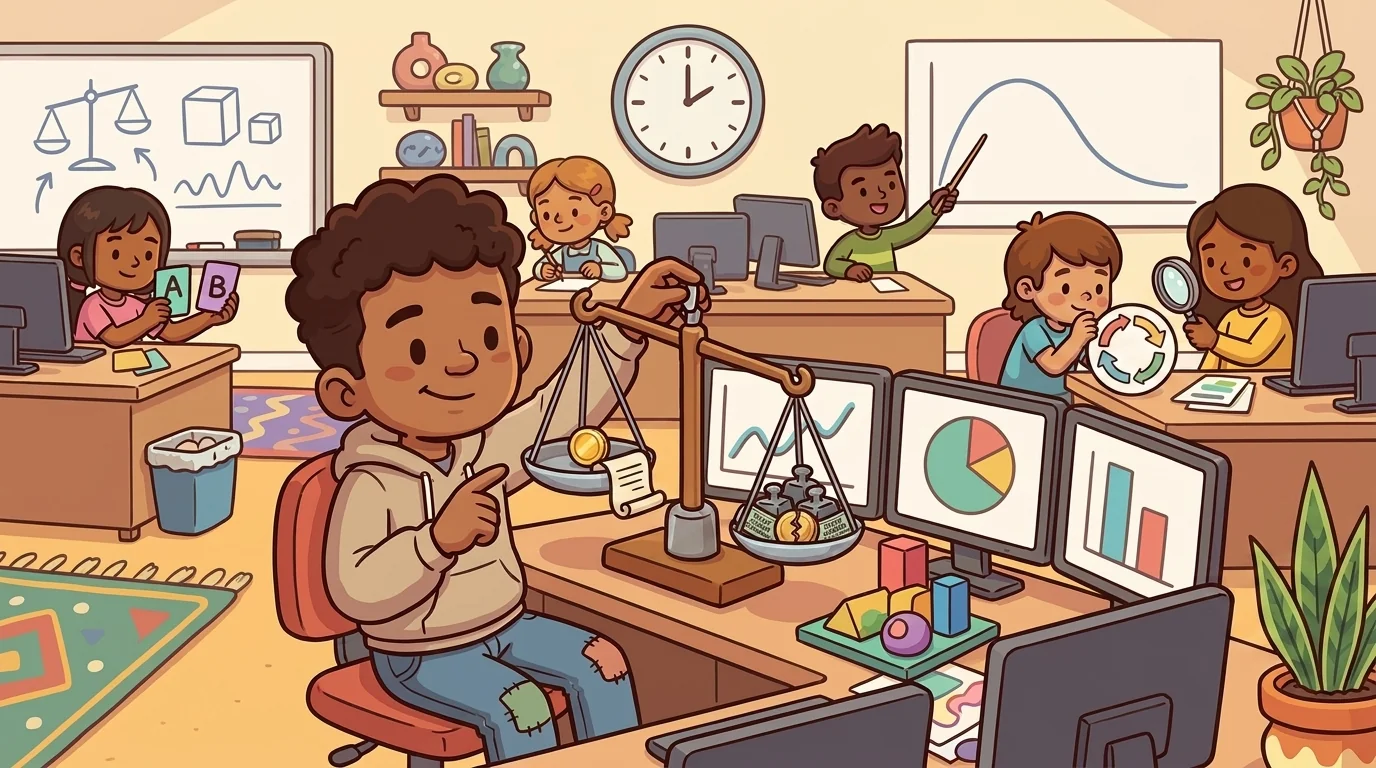
Weeks later a smaller offer came — less money, but for a genuinely good product their audience would love. On Sponsor's scale it tipped clearly the right way: modest payment, real value to viewers, a deposit to the trust ledger instead of a withdrawal. They said yes gladly. "Smaller number," Sponsor said, "better deal. That's the whole trick."
"So we should always take the highest payment?" a crew member asked, testing.
"Never the highest — the worth-it," Sponsor said. "Weigh what you gain against what it costs, in money and trust. A big payment that spends more than it returns is a losing deal. Read both sides of the scale, and you'll never be dazzled into a bad one."
Hear it as an audio drama
A short play starring Sponsor, from SignalForge. Different voices, same idea. Listen any time after you read.
Loading audio…
Read the drama script
- Narrator: From Spark and Anvil and Signalforge — this is Sponsor, in chapter 1 of the Signalforge cast.
- Narrator: This drama uses an AI-generated voice. Voiced via Gemini 2.5.
- Narrator: Sponsor is the crew's negotiator — shrewd, fair, and completely immune to a big number waved in its face.
- Narrator: A young creator named Devi ran in thrilled about a sponsorship offer with an impressive payment attached, for a product Devi didn't actually believe in.
- Devi: Sponsor, look at this offer — the payment is huge. I should obviously take it, right?
- Sponsor: A big payment is the gross. Nobody gets rich on gross. What matters is the net — what's left after you subtract everything the deal actually costs you.
- Sponsor: Every deal has two sides. What you get is the return, and what you give up is the cost. The offer only shows you the shiny return, because that's what makes you sign.
- Sponsor: Your job is to fill in the cost column yourself, honestly. If return is bigger, it might be a deal. If cost is bigger, it's a loss dressed up as a win.
- Devi: So a number that looks huge can still be a losing trade once I fill in the other column.
- Sponsor: Exactly, and here's the cost most people forget — it isn't only money. If promoting this product makes your audience trust you less, the deal costs you trust, and trust is the account you can't easily refill.
- Sponsor: A payment that puts cash in one pocket while draining credibility from the other can leave you poorer than before you took it. Always price the trust, not just the dollars.
- Sponsor: And there's one more line almost everyone skips. When you say yes to this deal, you say no to whatever else you'd have done with that time and that spot.
- Sponsor: The best thing you gave up is a real cost of saying yes — that's opportunity cost. So the real question isn't "is this deal good?" It's "is this deal better than the best thing I'd do instead?"
- Narrator: Devi wrote it all out — the cash, minus the trust lost promoting something shaky, minus the better project this would crowd out. The net turned negative.
- Devi: Once I do the net instead of the gross, this isn't a win at all. I'm passing.
- Sponsor: Weigh what you gain against what it costs — in money and trust. A big payment that spends more than it returns is a losing deal. Never sign the gross; always do the net.
- Narrator: You've been listening to a Spark and Anvil chapter, written by the Spark and Anvil writing team for ages 9 to 14.
- Narrator: Apps stay free forever.
- Narrator: Curriculum aligned to Common Core and Next Generation Science Standards.
- Narrator: Released under Creative Commons BY-NC-SA 4.0 for educational reuse. Visit Spark and Anvil for the full transcript.
The SignalForge ensemble
Sponsor is one of the friends in SignalForge. Each friend shows you one idea by how they act; meet them all and you have the whole subject.
-

Chief
Trust is the real metric — read every statistic by asking 'does this build trust that lasts?', not 'did it spike today?' (the editor-in-chief & mentor)
-

Retention
A retention curve shows where viewers leave — the steepest drop marks the exact moment something went wrong, so the shape of the line tells you what to fix
-

Sample
A small sample is noisy — a result from a few viewers can swing by luck; wait for enough data before you trust a difference
-

Split
A fair test changes only ONE thing — keep everything the same except the single variable, or you can never tell which change caused the difference (A/B testing)
-

Curve
Percent growth compounds — growing by the same percent each week bends upward faster and faster, so a small steady rate can overtake a big one-time jump
-

Loop
A feedback loop amplifies whatever it rewards — learn what the algorithm measures and you can read the feed like a designed machine, not random weather
-

Bait
Outrage spreads fast but spends trust — rage-bait travels quickly, then burns credibility and collapses an audience; a number bought with anger is a debt (cautionary)
-

Base
Judge by the base rate, not the standout — for every viral hit you see, thousands of similar attempts failed and stayed invisible, so ask 'out of how many tries?'
-

Ledger
Trust is not symmetric — many honest acts to earn it, one dishonest act to lose it