
Bones
BONES — chance is design craft, not betting. designed randomness has a job: it creates variance, tension, and comebacks — and a good designer shapes the probability curve on purpose, never leaves it to raw luck.
Loading audio…
Press play to listen along. The line being read lights up as you go.
Show full transcript
Loading transcript…
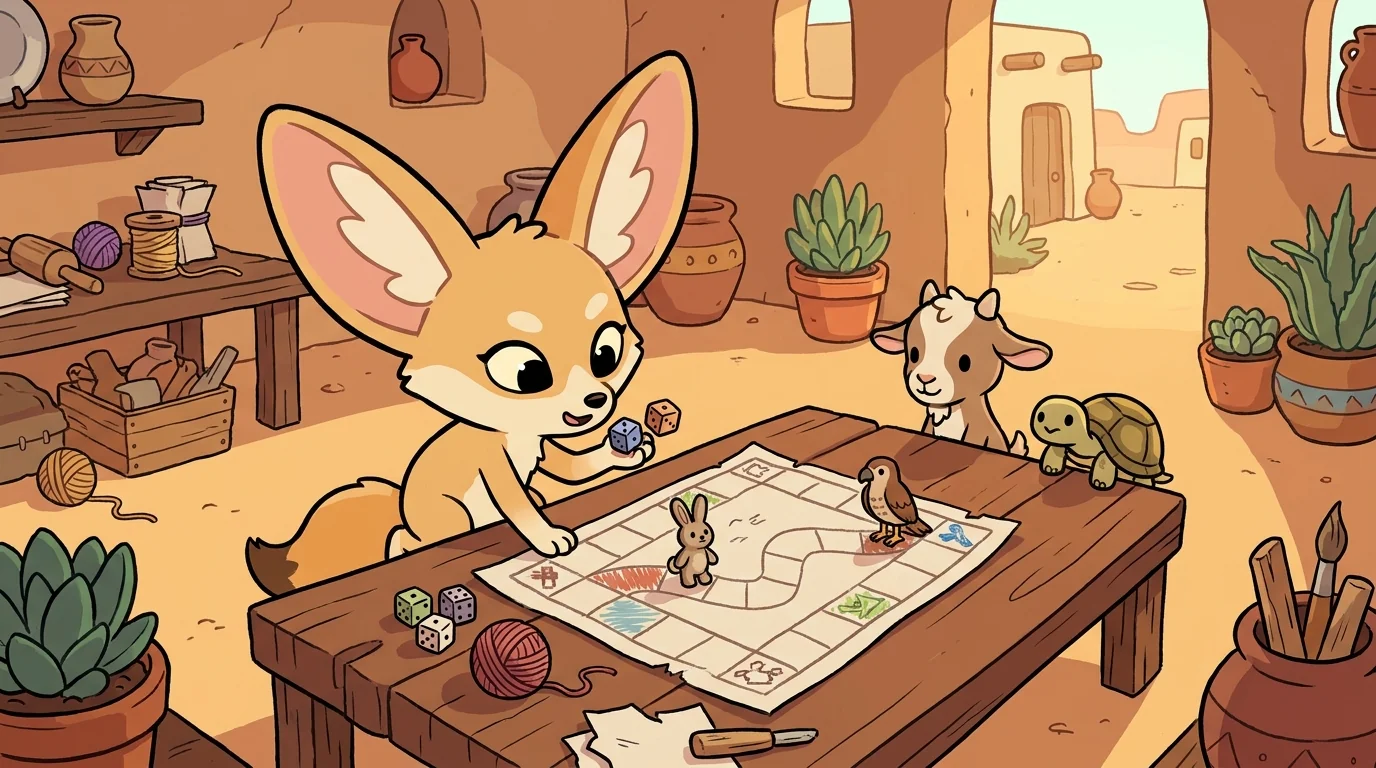
A young designer named Wren had put a single twenty-sided die at the heart of her game, and every playtest ended in a shrug — sometimes a player ran away with it on pure luck, sometimes nothing interesting happened at all.
Bones, warm and dry, rolled the die and let it clatter. "Here's your trouble. One d20 is flat — every number, 1 through 20, is equally likely. That's not design. That's a coin-flip wearing more sides. Chance in a game isn't there to gamble with — it's a craft, and it has a job." He set down two six-sided dice instead. "Watch what happens when I shape the curve. Roll two dice and add them. A 7 comes up six times as often as a 2 or a 12. Now the middle is reliable and the extremes are rare and exciting. That's a probability curve you designed, not luck you left lying around."
Wren stared. "So randomness isn't the opposite of design."
"Randomness is one of a designer's best tools," said Bones, "when you shape it on purpose. The job of chance is never to decide who wins by accident. Its job is to create variance — so no two games feel the same — and to keep a losing player hoping, because the dice could still turn. Shape the curve, and chance serves the game. Leave it flat, and it just gambles."
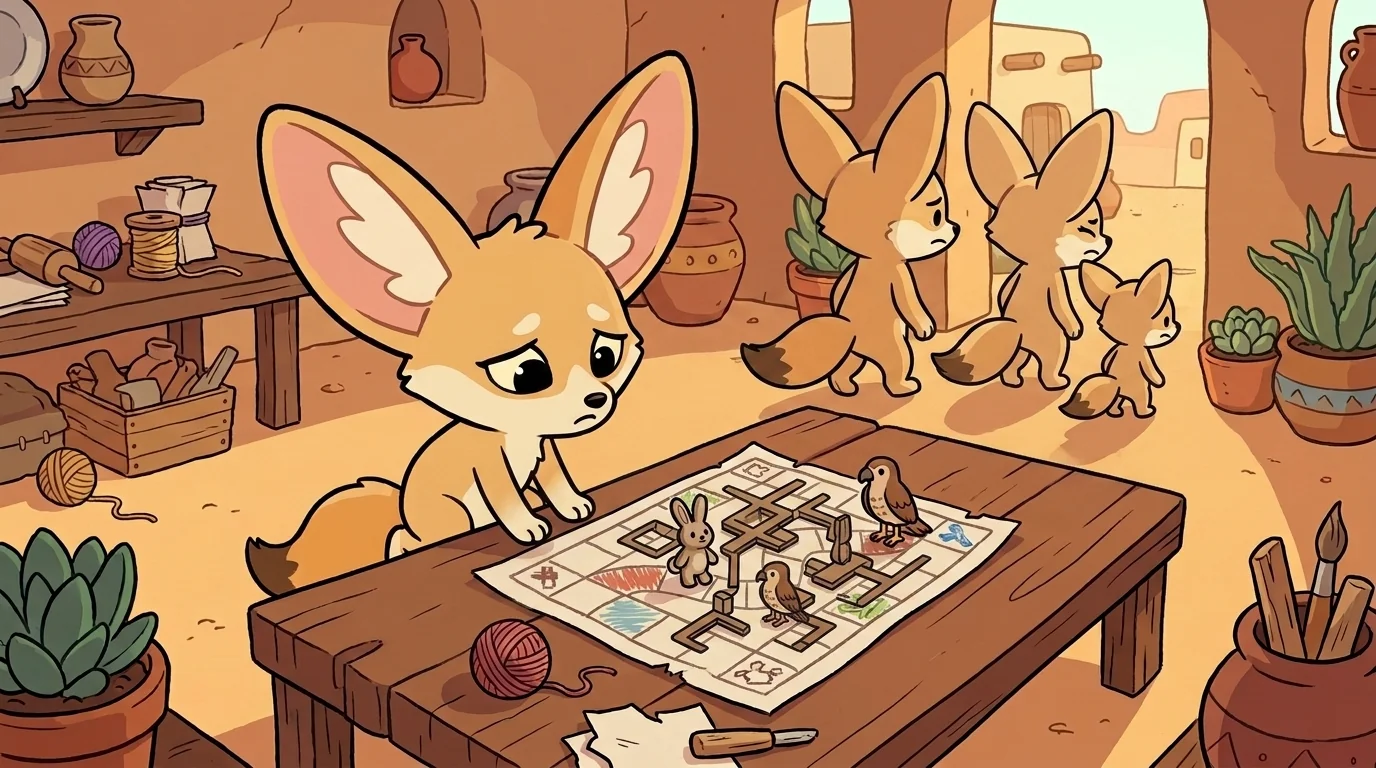
Bones had learned this the hard way, back when he confused random with exciting.
When he was young he'd pile more and more luck into his games — bigger dice, wilder swings — thinking that unpredictability was fun. But his games became casinos: whoever the dice loved, won, and skill meant nothing, and players stopped caring because their choices didn't matter. He'd mistaken chaos for tension, and he'd drifted, without noticing, from designing toward betting — which is a different thing entirely, and not the thing he wanted to make.
An old game-maker sat him down with a fistful of dice. "There's a line," she said, "between chance that's a craft and chance that's a bet. A craft-designer uses randomness to create situations — then lets the player's skill respond to them. A bet just pays out or doesn't; the player only watches. Ask of every random element: after the dice land, does the player make an interesting decision? If yes, it's design. If they just collect or lose, it's gambling, and gambling isn't a game — it's a machine for taking, dressed up." She tapped the two dice. "Shape the odds. Then hand the result to the player's judgment. That's the craft."
Bones learned to shape his randomness and always follow it with a decision — and his games stopped being casinos and became tense, replayable, and fair. The confused chaos-is-fun feeling turned into a designer's control. He hadn't needed more luck. He'd needed luck with a job, followed by a choice.
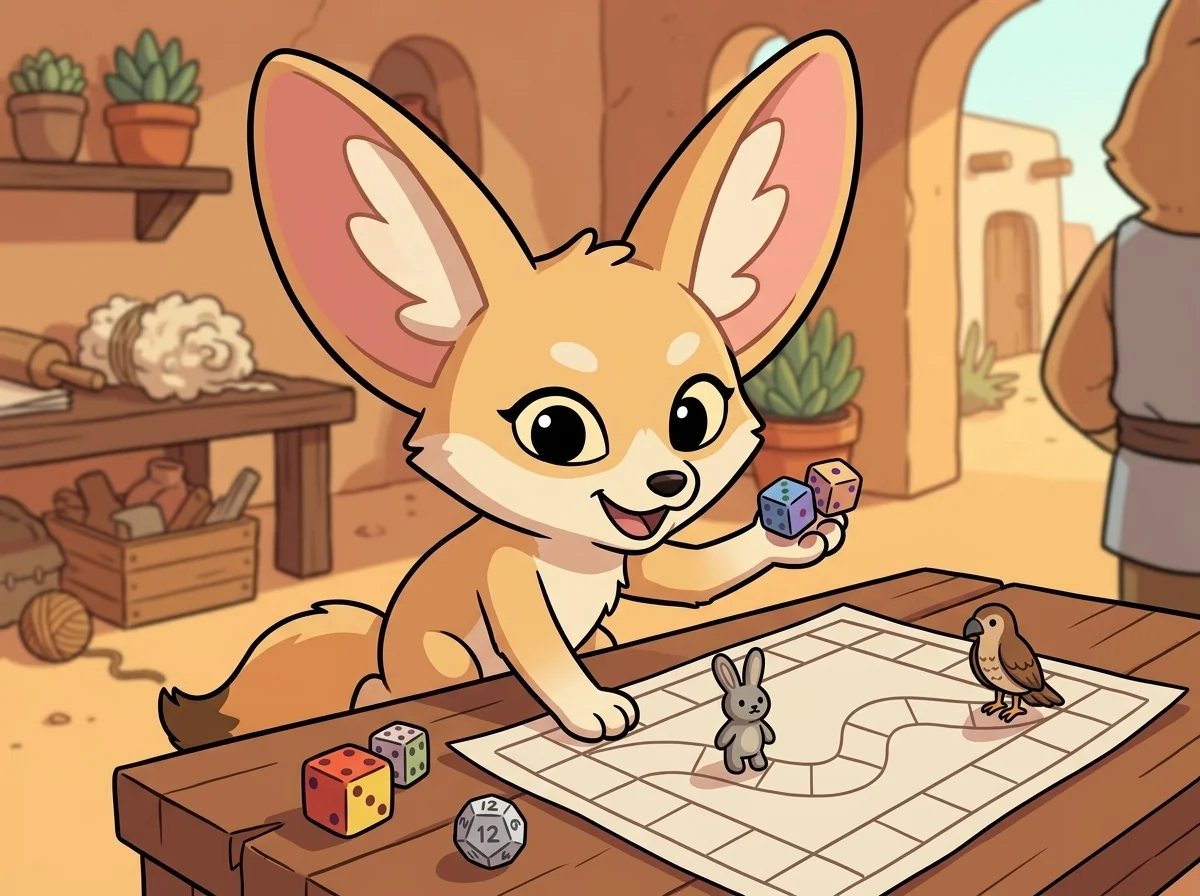
He came to TableForge grey at the temples, and the mentor asked the one question: "Bones — what do you teach?"
He rolled two dice, showed the bell-shaped spread of their sums, then rolled a lone d20 and showed its flat line. "I teach that a designer shapes chance," he said. "Most beginners think randomness is a dial you turn up for excitement. I teach that it's a curve you sculpt — reliable middles, rare thrilling edges — and that after every roll must come a decision, or you've built a slot machine, not a game." The mentor nodded slowly. "The line between chance-as-craft and chance-as-betting is the most important line in your whole field. Teach them to stay on the craft side. Stay."
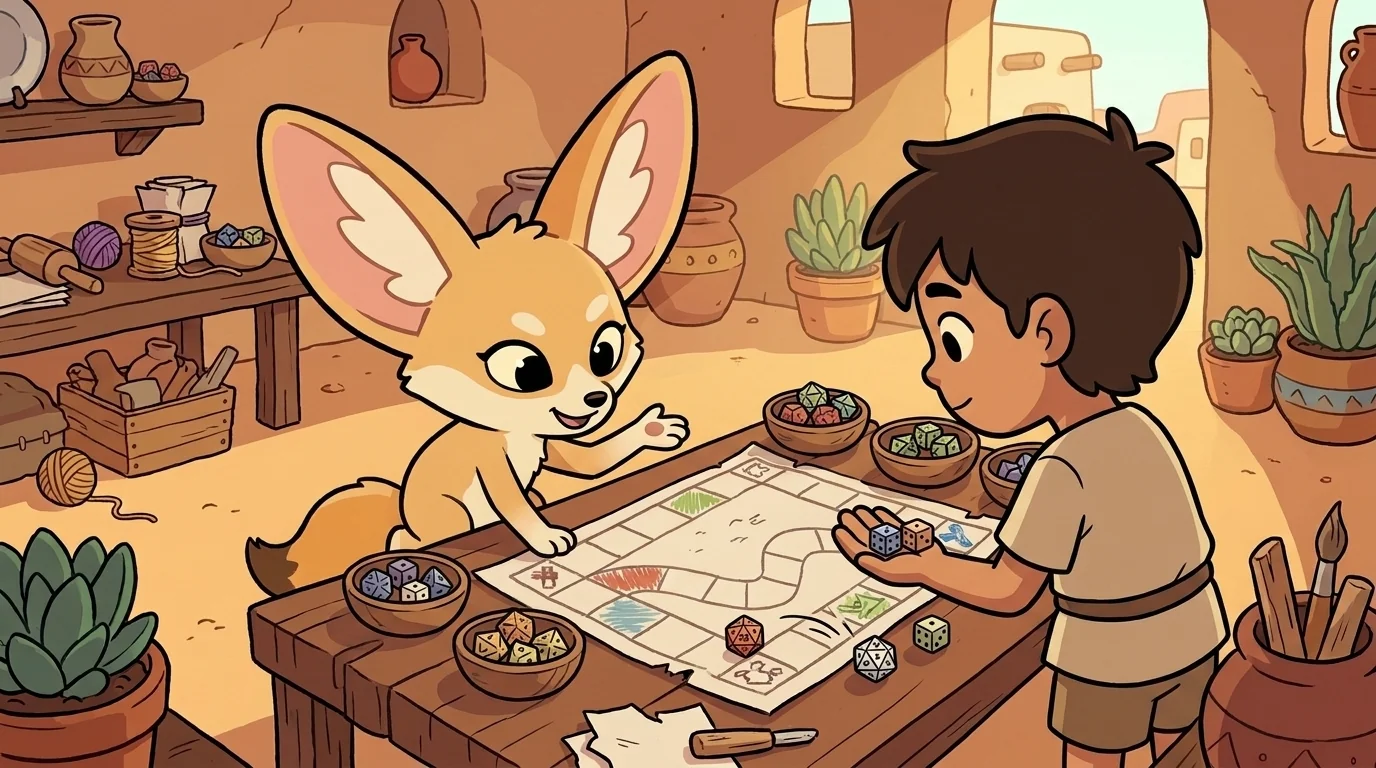
There is a deeper tool, and Bones saved it for Advanced designers.
"You can mitigate luck without removing it," he said. "Let a player re-roll one die — now chance sets the stage but skill picks which risk to take. Let them choose which of two dice to keep. Give them many small random events instead of one huge one — because over many rolls, luck averages out and skill rises to the top, while one giant roll lets luck dominate the whole game." He spread the dice. "That's the master's move: enough randomness to keep it alive and hopeful, shaped so the better player usually wins over time, with tools that let skill push back against a bad roll. Variance you can ride, not variance that rides you."
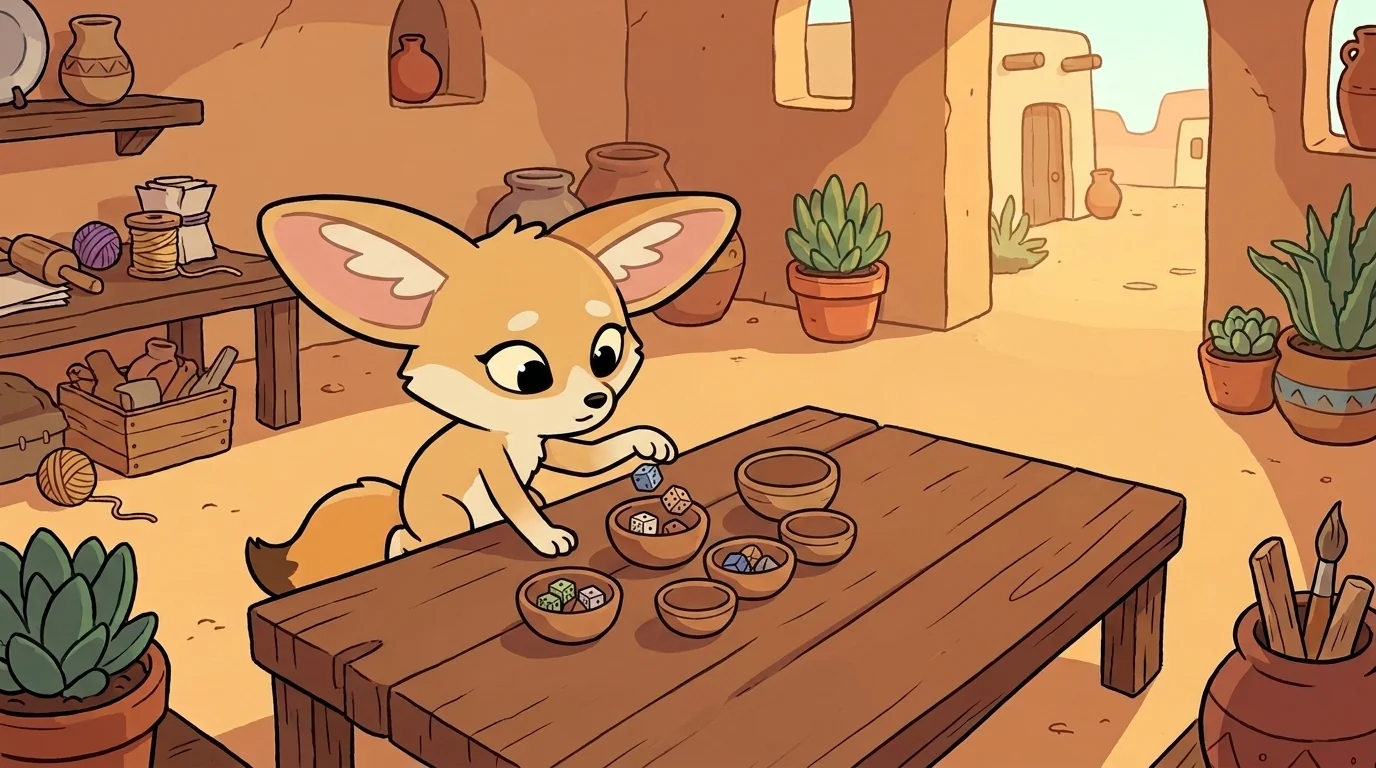
Wren rebuilt her game with two dice and a re-roll token.
Now the sums curved — reliable middles, rare exciting extremes — and after every roll her players chose what to do with the result, and spent re-rolls on the moments that mattered. The shrugs turned into leaning-forward tension, and a player behind could still hope without a player ahead being robbed.
"That's it," said Bones, gathering the dice. "Chance is a craft, not a bet. Shape the curve on purpose. Follow every roll with a decision. Give skill tools to push back. Designed randomness has a job — do that job, and the dice serve your game instead of running it." He grinned. "And it never, ever needs to be about betting. That was never the point of a die."
The chaos-is-fun confusion settled into a designer's calm. Wren hadn't needed wilder luck. She'd needed luck she'd shaped, always followed by a choice.
The TableForge ensemble
Bones is part of TableForge's distributed-narrative cast. Each character embodies a different curricular primitive; together they teach the full subject.
-
Hand
Cards + hidden information — what-you-HOLD is information; what-you-SHOW is a different question
-

Move
Turn-structure + action economy — every turn is a question and an answer; turn-as-question framing
-

Trial
Playtest + iteration — what-they-DID matters more than what-they-SAID; first-playtest-supposed-to-fail framing
-
Theme
Game-mechanic + theme integration — the-game-IS-its-mechanics; Habgood intrinsic-integration anchor; theme-MUST-do-work framing