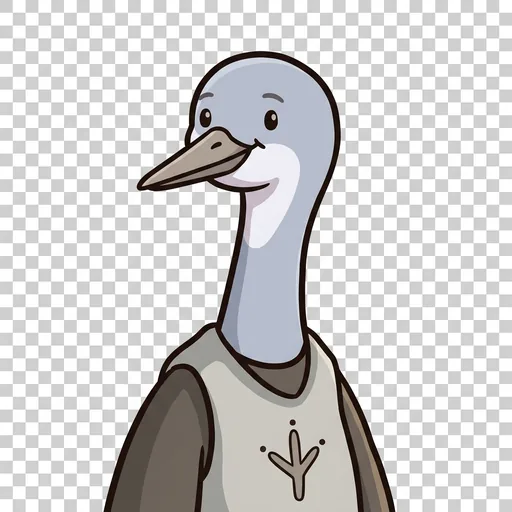
Poise
If one move is always best, there's no game
Loading audio…
Press play to listen along. The line being read lights up as you go.
Show full transcript
Loading transcript…
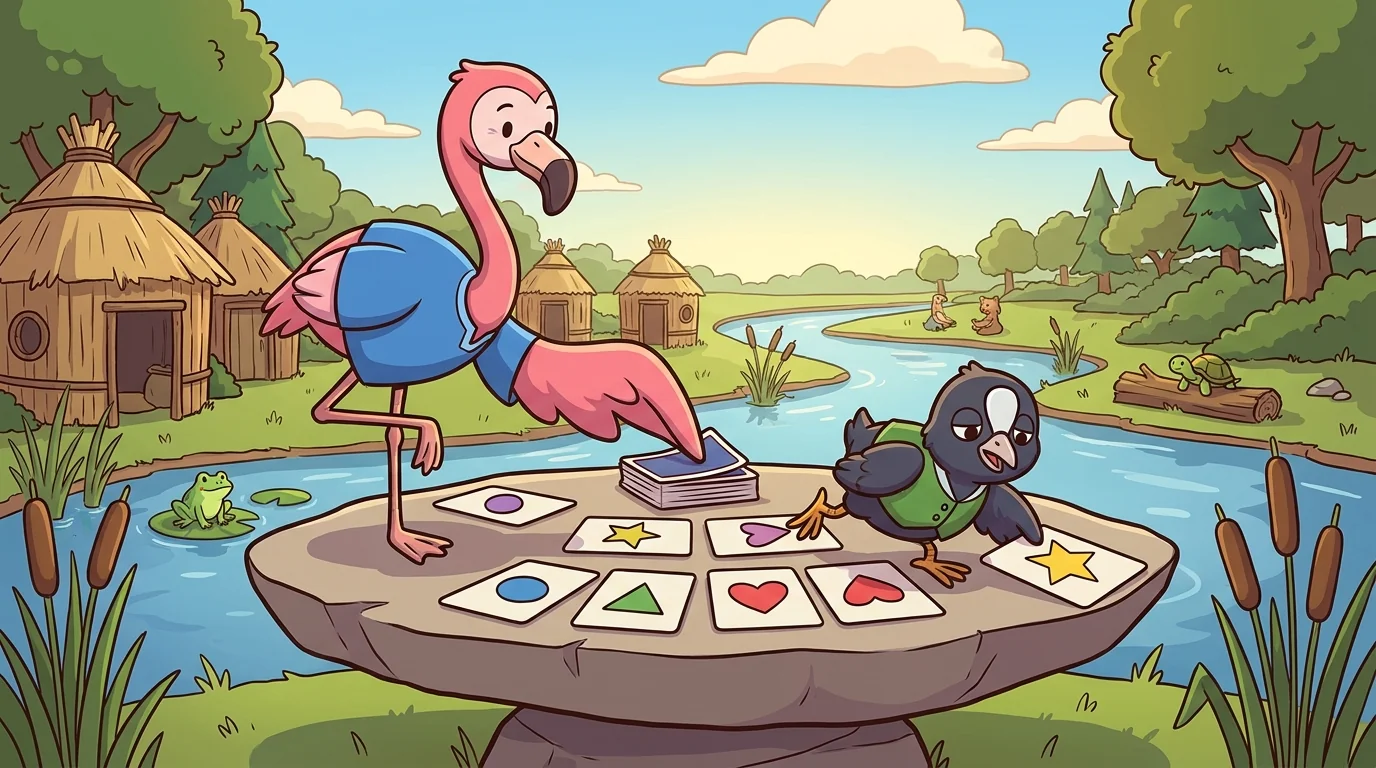
On the balancing-rock at the edge of the wetland-village, a tall pink flamingo stood on one leg, perfectly still, weighing something invisible in her mind.
Poise had a game spread on the flat stone in front of her — little cards of different powers — and a young coot was hopping between them, delighted. "This one!" the coot said, snatching a card. "This one's the best. It's SO much better than the others. I'll just take this every time."
"Then look what happens to your game," Poise said, and played a few rounds with him. Every turn, the coot grabbed the same best card. Every turn. By the fifth round he'd stopped thinking at all — he just reached for the same one, bored, on autopilot.
"...Oh," he said. "It got boring."
"Because one move was always best," Poise said, settling onto her other leg. "So there was never a choice. You didn't play the game — you just did the obvious thing over and over." She nudged the deck. "A game lives in the choosing. If one option beats the rest every time, you've quietly deleted the game." She looked at the card he'd been grabbing. "So my job is to weigh every option until each one is worth choosing — strong in its own way, tempting for its own reason. If one is always best, there's no game. Balance is making every choice worth choosing."
Poise had learned about weighing when she was small.
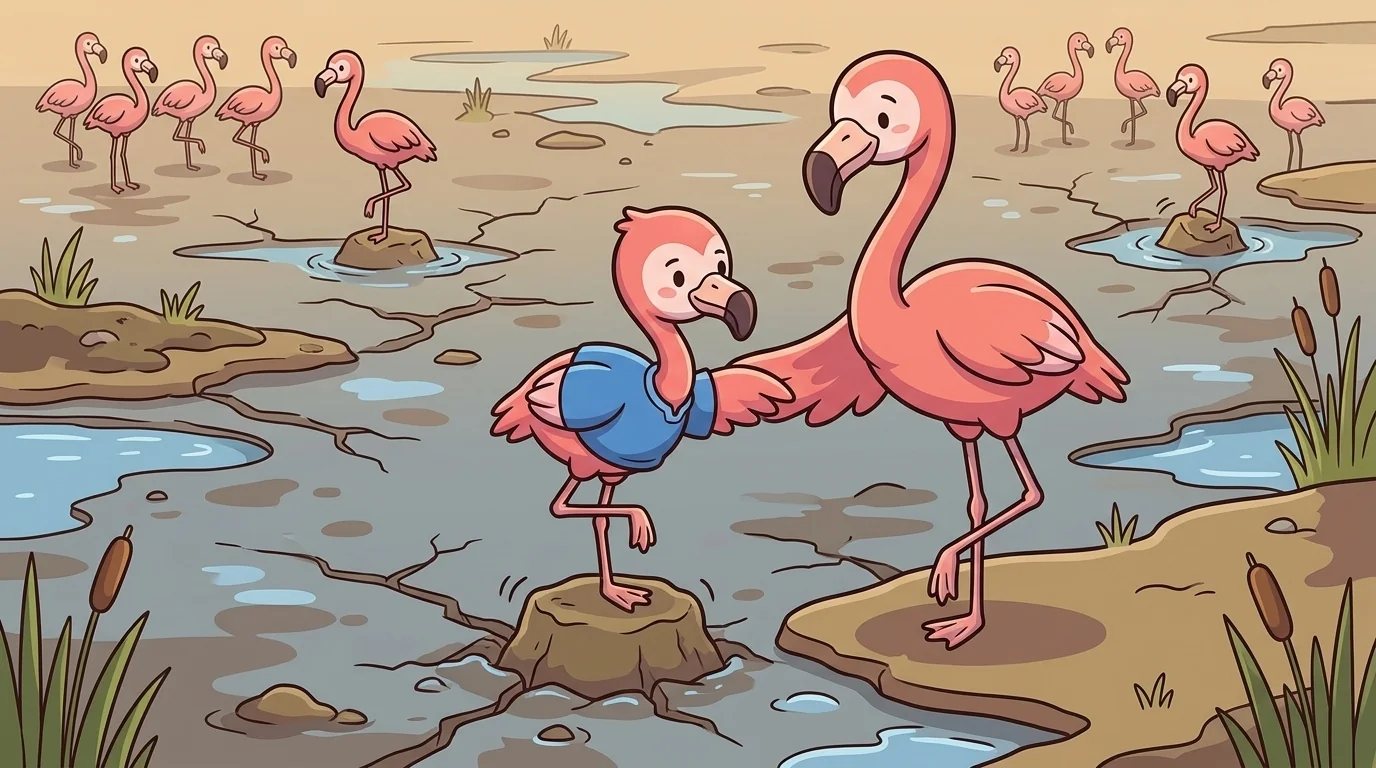
She grew up on a shifting mudflat, where her family were the still-standers — flamingos who could balance where the ground was always tipping. But young Poise, comparing herself to the others, thought balance meant finding the ONE perfect spot to stand and never moving. She'd plant herself on the single firmest tussock and freeze there, and when the tide shifted the whole flat, she'd topple, over and over, sure she just wasn't steady enough.
Her grandmother, tall and rosy and calm, stood beside her one evening on the tipping mud. "You keep hunting for the one perfect spot," she said. "But balance isn't standing on the single best place. It's keeping many places WORTH standing on, and shifting your weight between them as the ground moves." She rocked, gentle, from foot to foot. "If only one spot holds you, you fall the moment it sinks. Keep several good spots, and you always have somewhere to go."
Poise stopped hunting for the one perfect tussock. She learned to keep several decent footings and flow between them. When the tide shifted, she simply shifted her weight, and stayed up. The toppling, not-steady-enough feeling eased into a light, poised calm. Balance wasn't one perfect place. It was many places, each worth standing on.
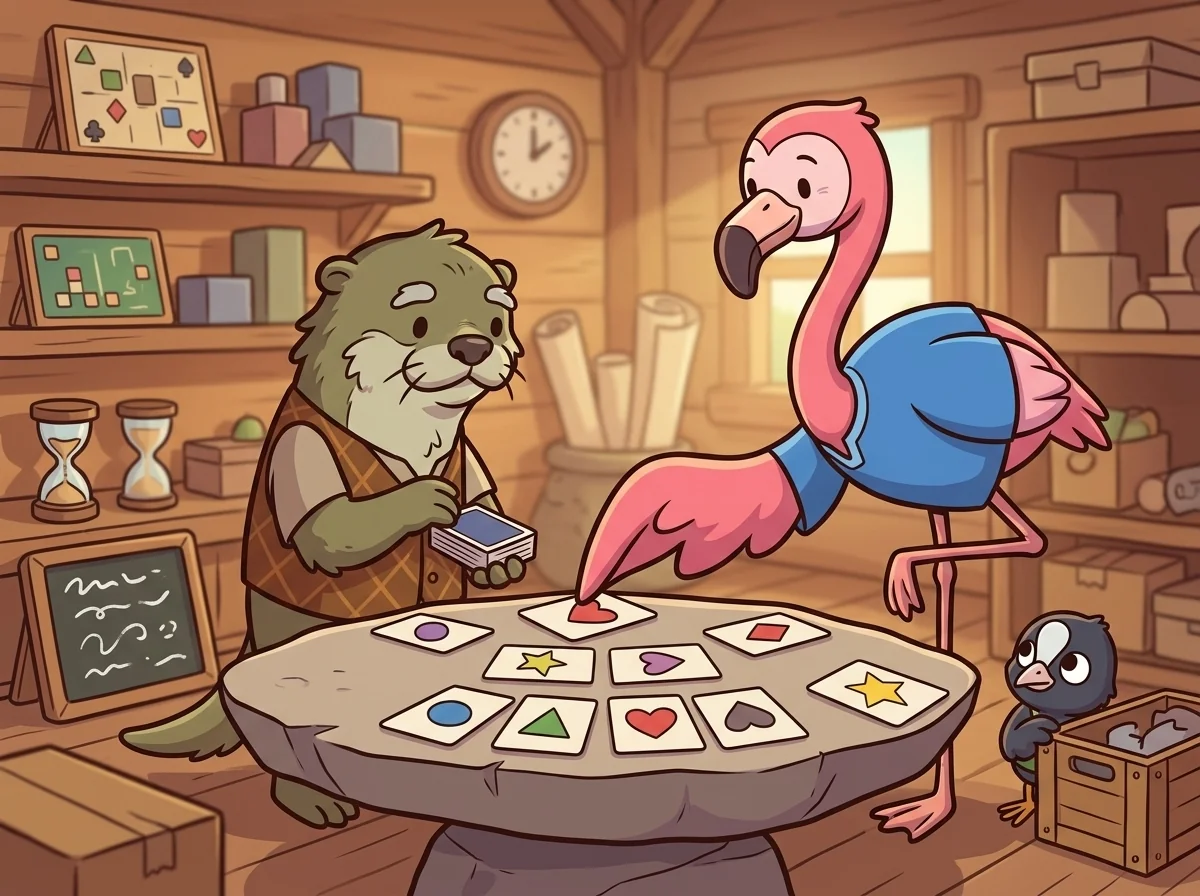
She waded up to TableForge at twelve, because a place that studied how games were built ought to understand the thing she loved: keeping every option alive.
Blueprint, the old mentor, met her at the gate and asked one question. "When is a game's set of choices well-made?"
Poise didn't answer with words. She took his little card-game, played a few rounds, and pointed at one card. "This one's too strong. Everyone will just take it, and stop choosing." She trimmed its power a touch, and bumped up two weaker cards, and played again — and now each card tempted for a different reason, and the coot in her memory would have had to actually think. "There," she said. "Now no card is always best. Now every turn asks a real question."
Blueprint watched the choices come alive. "You made the game harder to solve," he said.
"I made it worth playing," Poise said. "A game you can solve in one move isn't a game. It's a chore with a right answer." She stood, poised, on one leg.
Blueprint looked at the balanced little deck for a long moment. "You belong here," he said.
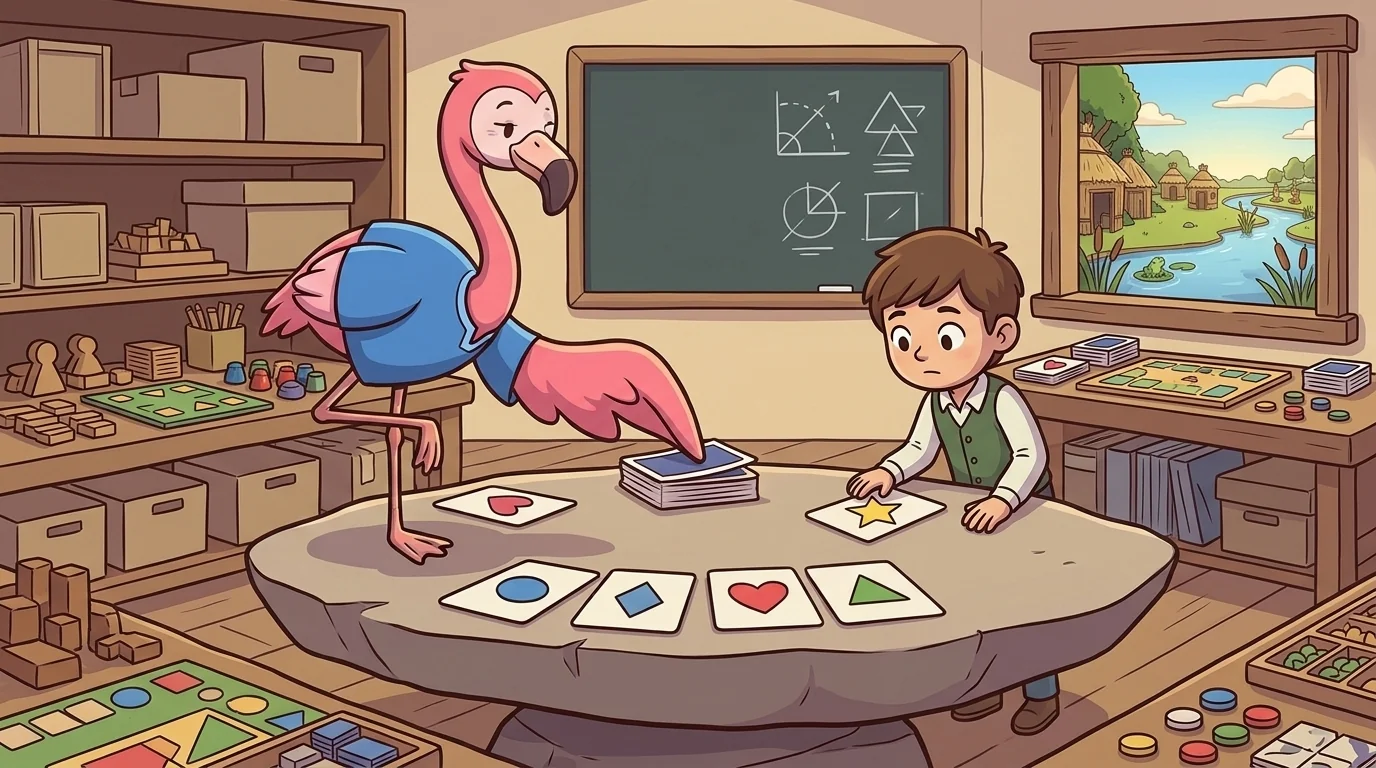
Poise's workshop was full of half-tuned games, and one afternoon a kid came in frustrated with one of their own.
"Everybody who plays it does the exact same thing," they said. "There's this one combo that's just... better. So every game is the same. I worked so hard, and it's boring, and I feel like I ruined it."
Poise knew that flat, toppled feeling. She'd stood frozen on a sinking tussock once.
"You didn't ruin it," Poise said. "You just have one spot that's too good to stand anywhere else." She looked at the game. "Show me the combo everyone takes." They did. She trimmed it — just a little — and then, gently, she strengthened three of the ignored options, giving each its own reason to be good. "Now play it again."
The kid played, braced for the same old combo — and stopped short. The old best-move wasn't clearly best anymore. Now THIS card was tempting here, and THAT one there, and suddenly they had to actually weigh it. "Oh," they said, leaning in. "I have to THINK now. Every one of these is kind of good."
"That's the whole secret," Poise said. "You don't fix a boring game by adding more stuff. You fix it by weighing what's already there until no single thing is always best. When every option is worth choosing, the choosing comes back to life."
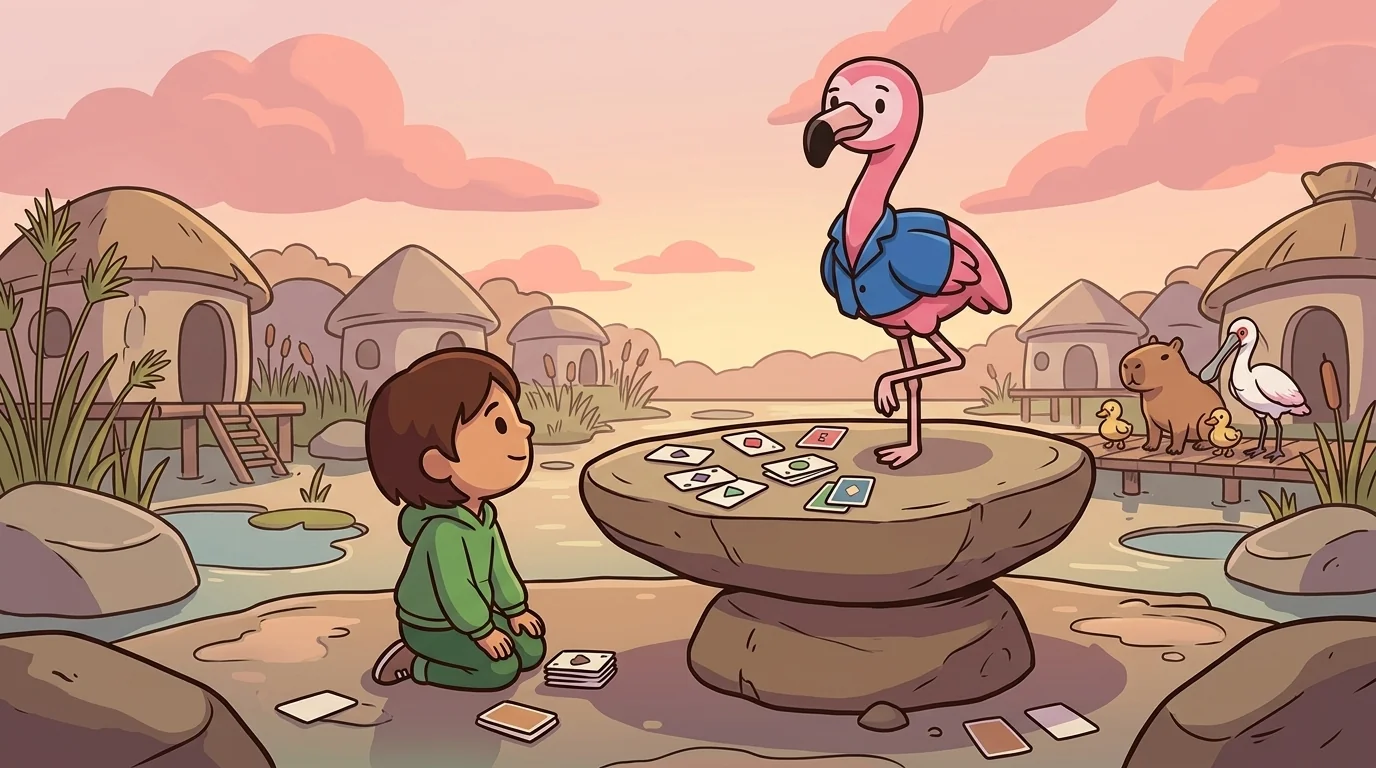
Later, when the workshop was quiet, the kid came back with their re-balanced game.
"How do you KNOW when it's balanced?" they said. "When every choice is worth it?"
Poise thought about the tipping mudflat, and her grandmother rocking gently from foot to foot.
"You feel it in the choosing," she said. "When it's unbalanced, choosing goes flat and dead — there's an obvious best move, so your mind just checks out and grabs it. But when it's balanced, there's this live little tug — ooh, this one, no THIS one — every option pulling at you a bit, and settling on one feels like it actually cost you the others." She shifted her weight, easy, on the rock. "That live tug is the game breathing. That's how you know it's alive."
The kid nodded slowly, and Poise watched the frustrated flatness lift off them — the same light, poised calm that had settled over her, years ago, when she stopped hunting for one perfect spot and learned to keep many worth standing on. They stood a moment in the wetland light, both of them steady, glad in a quiet way that a good game, like good balance, is never about one perfect place.
Hear it as an audio drama
A short play starring Poise, from TableForge. Different voices, same idea. Listen any time after you read.
Loading audio…
Read the drama script
- Narrator: From Spark and Anvil and TableForge — this is Poise, in chapter 1 of the TableForge cast.
- Narrator: This drama uses an AI-generated voice. Voiced via Gemini 2.5.
- Narrator: Poise is the balancer of the game-design studio. Poise hunts for the one thing that quietly kills games — a best move that's ALWAYS best.
- Poise: If one option is always the right one, there's no game. Players find it, they spam it, and every match plays out the same. My whole job is balance: making every choice worth choosing, so no single option runs away with it.
- Narrator: Balance. Not making everything equal — making everything tempting.
- Poise: The fast card should be great when you need speed. The strong card should be great when you can afford to wait. Each one is the best choice SOMETIMES, and never ALWAYS. When that's true, players have to read the moment and decide — and deciding is the fun.
- Narrator: Poise once shipped a game with one card everybody grabbed first, every single time.
- Poise: I thought it was just a strong card. But it wasn't strong — it was DOMINANT. It was correct in every situation, so nobody ever chose anything else. I hadn't made twelve cards. I'd made one card and eleven decorations.
- Narrator: So now Poise tests every option against one question.
- Poise: For each choice I ask: when would a smart player NOT pick this? If the answer is "never," it's broken — it's too good. I nudge it down, or make the others tempting, until every option has its moment. Then the game breathes.
- Narrator: A designer showed Poise a game where everyone opened the same way.
- Poise: See how there's one obvious first move? That's a dominant option. Either weaken it a touch, or give the other openings a situation where THEY shine. When there's no always-best move, every game plays differently.
- Narrator: The designer tuned the options, and suddenly two playtesters opened completely differently — and both were right.
- Poise: If one move is always best, there's no game. Balance it so every choice is worth choosing.
- Narrator: You've been listening to a Spark and Anvil chapter, written by the Spark and Anvil writing team for ages 9 to 14.
- Narrator: Apps stay free forever.
- Narrator: Curriculum aligned to Common Core and Next Generation Science Standards.
- Narrator: Released under Creative Commons BY-NC-SA 4.0 for educational reuse. Visit Spark and Anvil for the full transcript.
The TableForge ensemble
Poise is one of the friends in TableForge. Each friend shows you one idea by how they act; meet them all and you have the whole subject.
-
Primer
Onboarding / a game that teaches itself
-

Bones
Dice + randomness + probability — chance is part of game design — it is about fun and fairness, never betting
-

Hand
Cards + hidden information — what-you-HOLD is information; what-you-SHOW is a different question
-

Move
Turn-structure + action economy — every turn is a question and an answer; turn-as-question framing
-

Swing
Feedback loops / keeping the game close
-

Meddle
Player interaction / how players affect each other
-
Sprawl
Engine-building / combos that feed each other
-
Trial
Playtest + iteration — what-they-DID matters more than what-they-SAID; first-playtest-supposed-to-fail framing
-
Theme
Game-mechanic + theme integration — the-game-IS-its-mechanics; Habgood intrinsic-integration anchor; theme-MUST-do-work framing