Primer
A game should teach itself as you play
Loading audio…
Press play to listen along. The line being read lights up as you go.
Show full transcript
Loading transcript…
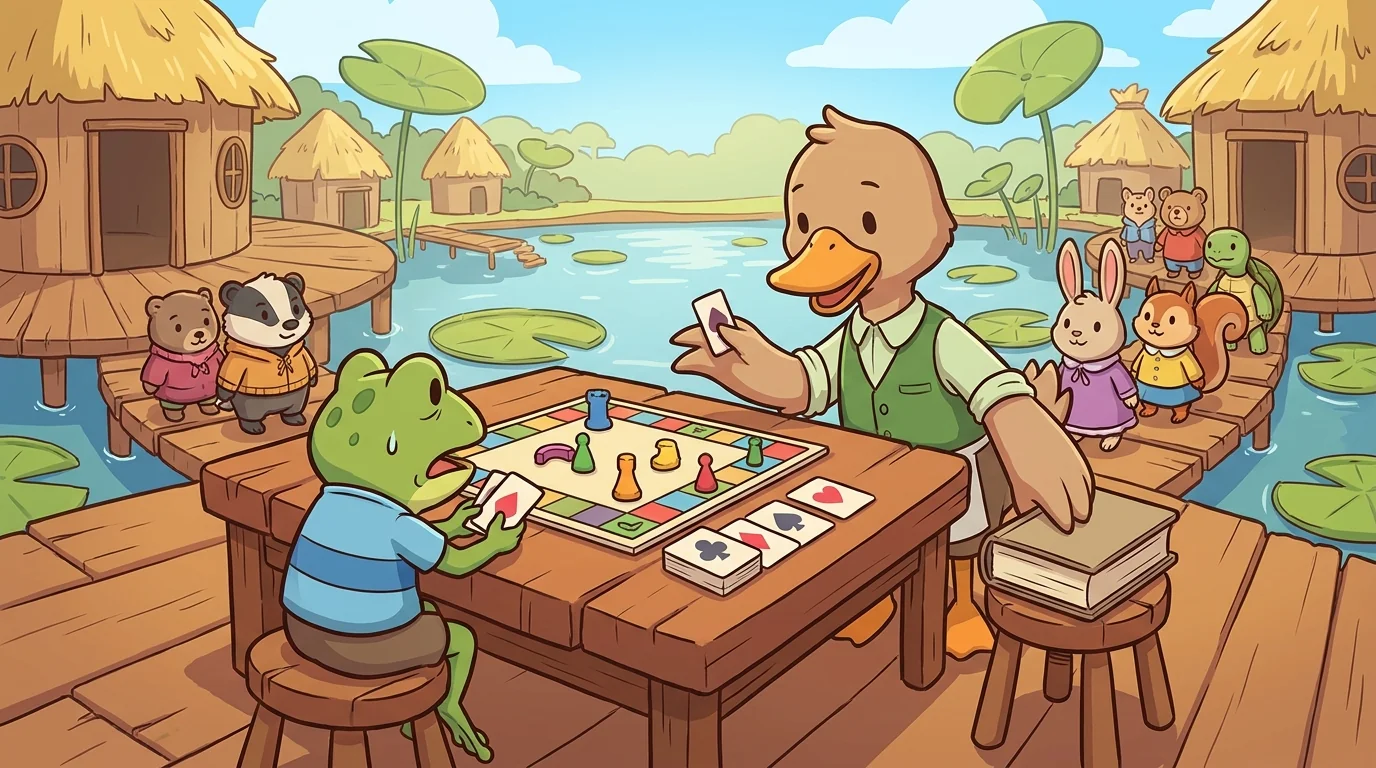
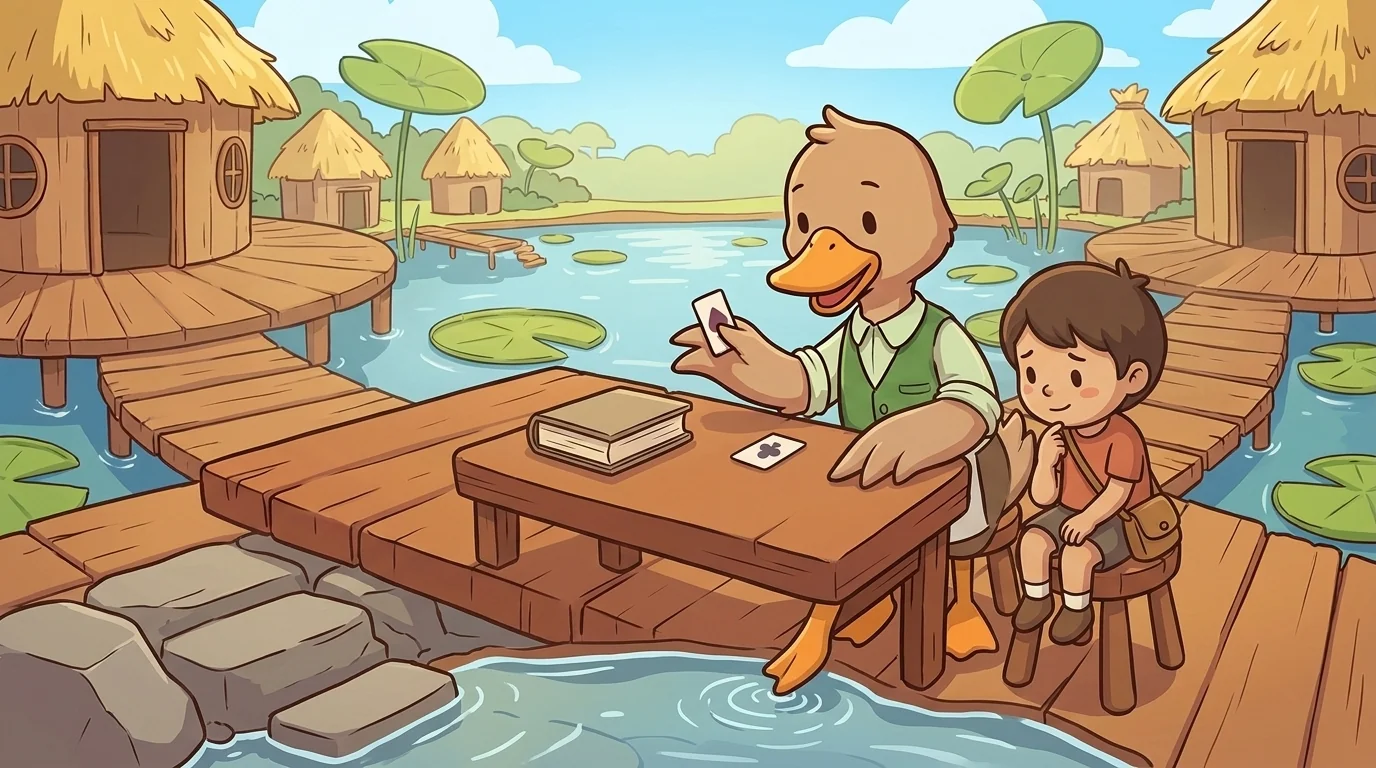
At the edge of the pond-village, a soft brown duck waddled ahead of a wobbly line of new players, showing them a game not by reading a rulebook, but by simply taking the first turn slowly, out loud.
Primer had a calm, patient way about her, and she never handed anyone a wall of rules. On the table sat her game. A young frog had opened the thick rulebook, gone pale at page one, and pushed it away. "There's SO much," he said. "I can't even start."
"Then don't read it," Primer said, gently taking the book and setting it aside. "Let the game teach you. Here — take one card. Just one. Play it. See what it does." The frog did, and something small and clear happened. "Now the next player takes one. See what THAT does." One simple turn at a time, no lecture, and the frog was playing before he realized he'd learned a single rule.
"Wait," he said, three turns in. "I know how to play now. When did that happen?"
"While you were playing," Primer said, pleased. "The first few turns ARE the rulebook — they show you one idea, then the next, only when you need it. A game shouldn't dump everything on you before you start. It should teach itself as you play. The first turn is the best rulebook."
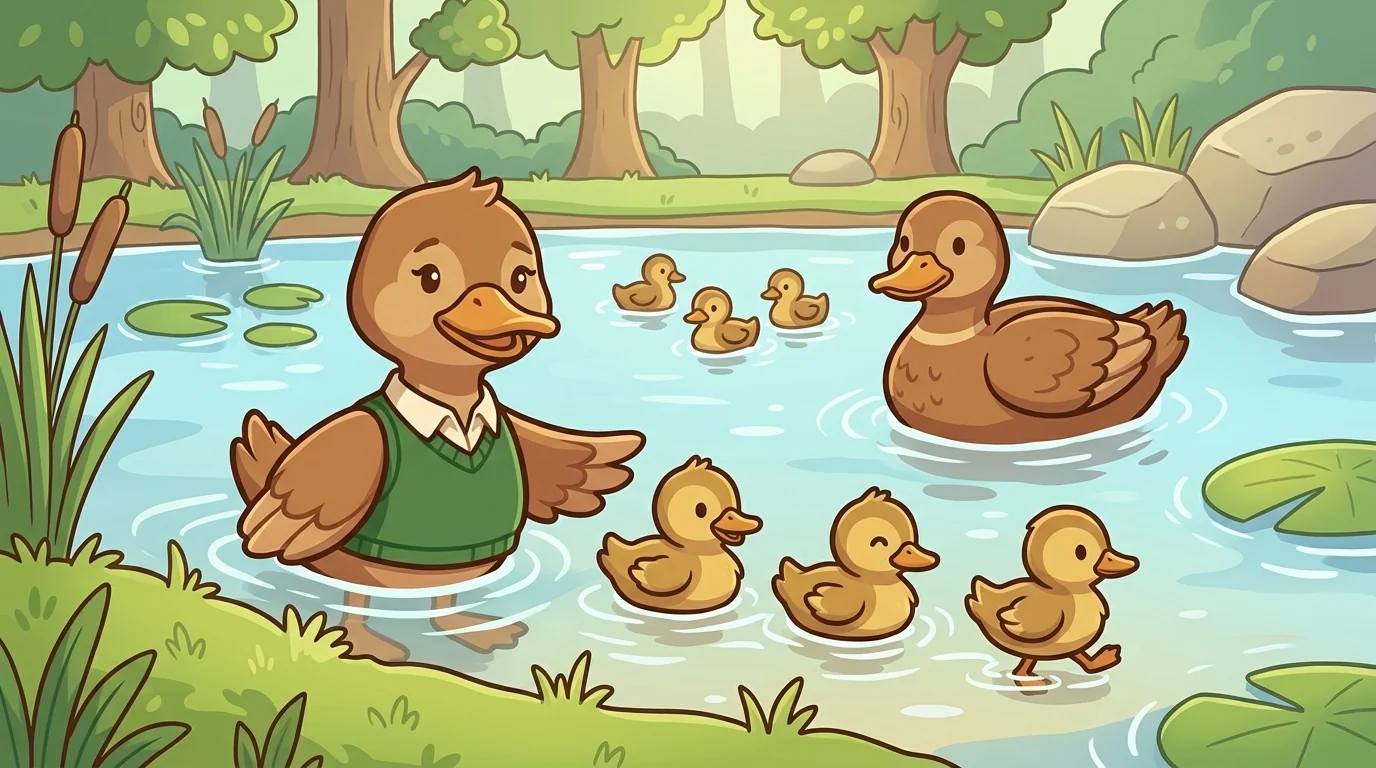
Primer had learned about gentle beginnings when she was small.
She grew up on a wide pond, where her family were the way-showers — ducks who led the little ones out onto the water for the first time. But young Primer, the first time SHE led, thought leading meant explaining everything up front — she sat her ducklings down and told them all the rules of the pond at once: currents, reeds, hawks, deep spots, every danger and skill. And the ducklings, drowning in it, panicked and wouldn't get in the water at all.
Her mother, calm and broad, paddled up beside her. "You've frightened them with the whole pond," she said gently. "Nobody learns to swim from a lecture. Show them ONE thing — how to float. Just float, right here in the shallows. Then, when they can float, show the next thing." She slid into the water. "Small steps, only when they're ready for them. The pond teaches itself, if you let it come one ripple at a time."
Primer stopped lecturing. She showed her ducklings just to float, then just to paddle, then just to steer — one gentle step, only when they were ready. They followed her right into the water, unafraid, learning without noticing. The overwhelmed panic she'd caused eased into a warm, easy calm. Learning wasn't a wall of rules. It was one small step, then the next.
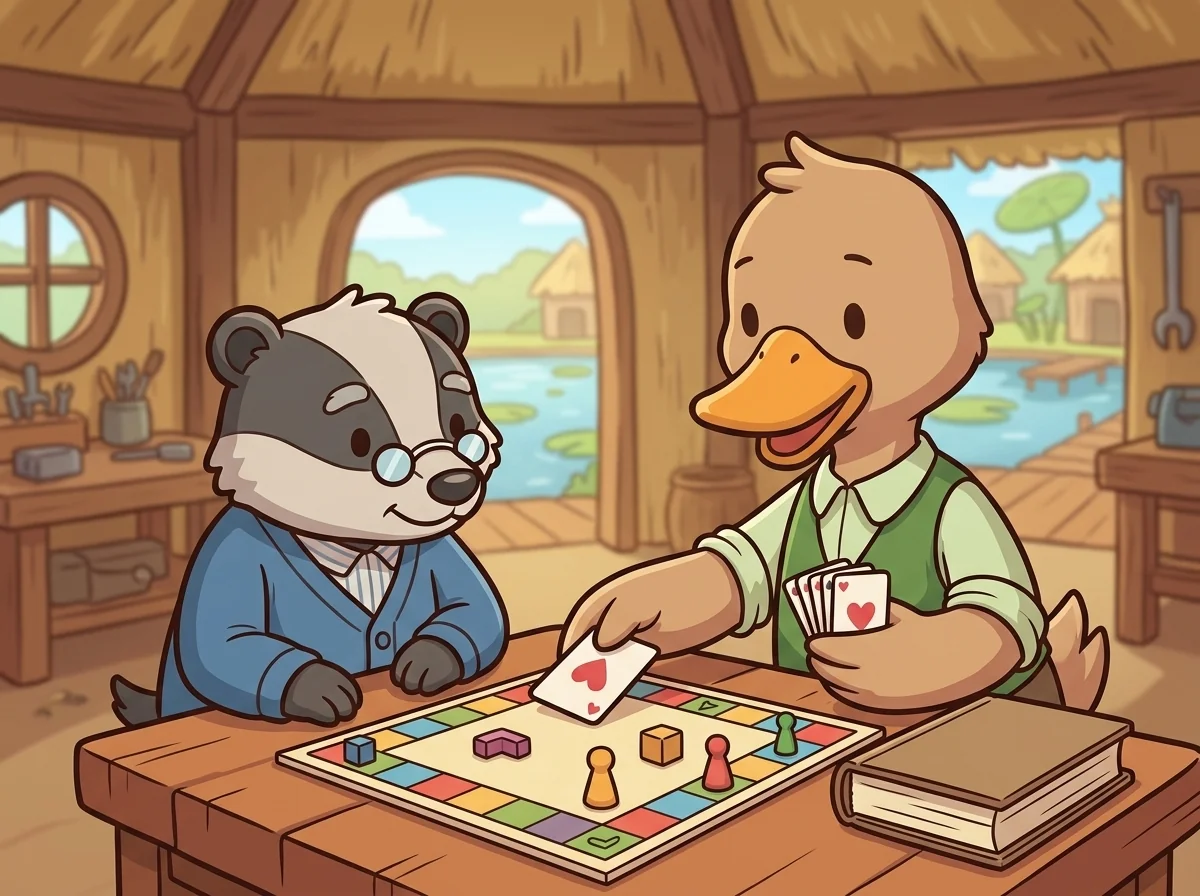
She waddled up to TableForge at twelve, because a place that studied how games were built ought to understand the thing she loved: a gentle first step.
Blueprint, the old mentor, met her at the gate and asked one question. "How should a player learn your game?"
Primer didn't answer with words. She took a game with a fat, scary rulebook, closed the book, and taught Blueprint by simply guiding him through the first three turns — one idea at a time, each new rule arriving only when it was needed. By the fourth turn he was playing on his own. "There," she said. "No wall of rules. The opening turns taught him, one gentle piece at a time."
Blueprint set down the unopened rulebook. "You made the game the teacher," he said.
"The first turn is the kindest teacher there is," Primer said. "It shows, it doesn't lecture, and it only shows what you need right now." She smoothed her feathers.
Blueprint looked at the game that had taught itself. "You belong here," he said.
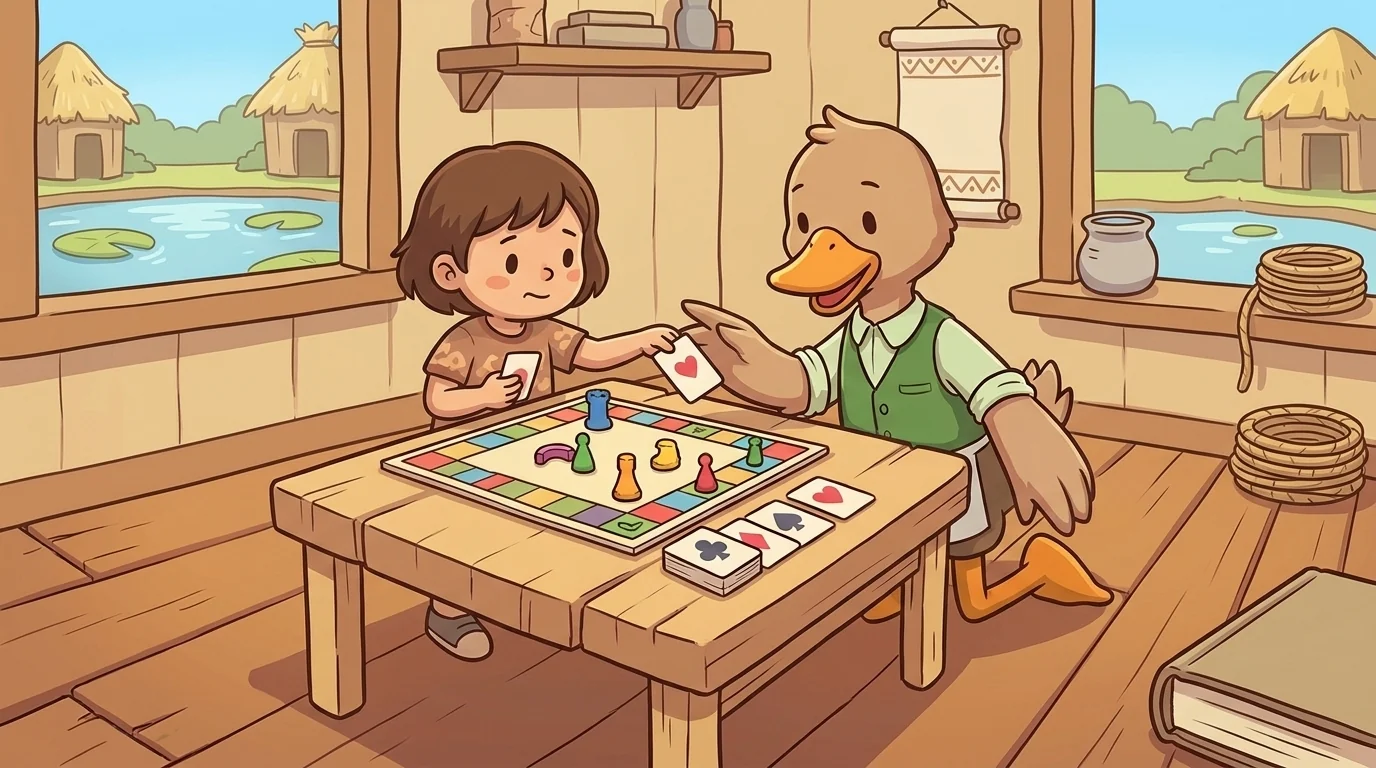
Primer's workshop was calm and uncluttered, and one afternoon a kid came in defeated, clutching a game nobody would play.
"I made this cool game," they said, "but whenever I try to teach it, people's eyes glaze over. There's just too much to explain before you can even start. So they give up. And I feel like the game is too much, like I'M too much."
Primer knew that overwhelmed, pushed-away feeling. She'd panicked a pond full of ducklings once.
"You're not too much," Primer said. "You're teaching it all at once, when a game should teach itself as you go." She looked at the fat rulebook. "What's the very FIRST thing a player does? Let's make that one thing simple and clear — and hide everything else until it's needed." Together they trimmed the opening to a single easy action, then let the next rule appear only on turn two, the next on turn three. "Now teach it to me — no rulebook. Just start."
The kid started, hesitant — "okay, you just take one card and place it here" — and Primer played along, and the rules unfolded one at a time, exactly when needed, and within a few turns Primer was playing freely. "Oh," the kid said, watching. "I didn't have to explain the whole thing. It taught itself."
"That's the whole secret," Primer said. "You don't fix a hard-to-learn game by writing a clearer wall of rules. You let the first turns BE the teacher, showing one idea at a time. A game that teaches itself is a game people actually get to play."
Later, when the workshop had emptied, the kid came back with their gentle-start game.
"How do you know how slow to go?" they said. "How much to show at the start?"
Primer thought about the shallows, and her ducklings learning just to float.
"You watch their faces," she said. "Too much at once, and you see it — the glazed eyes, the shoulders climbing, the quiet panic of someone handed too much. But go one gentle step at a time, only what they need right now, and you see something else: they lean in, they're not scared, they're playing before they notice they learned." She settled, easy. "That unafraid leaning-in is the game teaching kindly. That's how you know."
The kid nodded, and Primer watched the defeated, too-much feeling lift off them — the same warm, easy calm that had settled over her, long ago, when she stopped lecturing the pond and learned to show one ripple at a time. They stood in the soft pondside light, both of them lighter, glad that the best games, like the best teachers, never hand you everything at once.
Hear it as an audio drama
A short play starring Primer, from TableForge. Different voices, same idea. Listen any time after you read.
Loading audio…
Read the drama script
- Narrator: From Spark and Anvil and TableForge — this is Primer, in chapter 1 of the TableForge cast.
- Narrator: This drama uses an AI-generated voice. Voiced via Gemini 2.5.
- Narrator: Primer designs the way a game welcomes a brand-new player — and Primer believes the best rulebook is the first turn itself.
- Primer: A game should teach itself as you play. If people have to read ten pages before ANY fun happens, most of them quit before turn one. My goal is that your very first turn shows you how the game works — the first move IS the tutorial.
- Narrator: A game that explains itself in motion, not in a manual.
- Primer: I design the opening so the simplest, most obvious action is also a CORRECT one that reveals the core idea. You do the natural thing, something good happens, and you go "oh, I SEE." No lecture. The rules unfold as they become relevant, one at a time, exactly when you need them.
- Narrator: Primer once made a brilliant game buried under a twelve-page rulebook.
- Primer: The game was genuinely great — once you got there. But almost nobody got there. They'd open the rules, glaze over, and put the box back on the shelf. All that depth, locked behind a wall of text. A game no one can start is a game no one plays.
- Narrator: So now Primer designs the on-ramp first.
- Primer: I ask: can a total beginner take a good first turn knowing almost nothing? If yes, the door is open. Reveal the deeper rules as the game earns them. The best rulebook is a first turn that makes you say, "oh — I get it, let's keep going."
- Narrator: A designer handed Primer a game with a wall of rules up front.
- Primer: Nobody's going to read all this before playing. Let's find the ONE thing they need for turn one, teach only that, and let the rest appear as it comes up. Watch — now they're playing in thirty seconds instead of quitting in three minutes.
- Narrator: The designer trimmed the intro to a single first move, and new players were laughing and playing before they'd even finished sitting down.
- Primer: A game should teach itself as you play. Make the first turn the best rulebook you've got.
- Narrator: You've been listening to a Spark and Anvil chapter, written by the Spark and Anvil writing team for ages 9 to 14.
- Narrator: Apps stay free forever.
- Narrator: Curriculum aligned to Common Core and Next Generation Science Standards.
- Narrator: Released under Creative Commons BY-NC-SA 4.0 for educational reuse. Visit Spark and Anvil for the full transcript.
The TableForge ensemble
Primer is one of the friends in TableForge. Each friend shows you one idea by how they act; meet them all and you have the whole subject.
-

Bones
Dice + randomness + probability — chance is part of game design — it is about fun and fairness, never betting
-

Hand
Cards + hidden information — what-you-HOLD is information; what-you-SHOW is a different question
-

Move
Turn-structure + action economy — every turn is a question and an answer; turn-as-question framing
-

Poise
Balance / no single strategy dominates
-

Swing
Feedback loops / keeping the game close
-

Meddle
Player interaction / how players affect each other
-

Sprawl
Engine-building / combos that feed each other
-

Trial
Playtest + iteration — what-they-DID matters more than what-they-SAID; first-playtest-supposed-to-fail framing
-

Theme
Game-mechanic + theme integration — the-game-IS-its-mechanics; Habgood intrinsic-integration anchor; theme-MUST-do-work framing




