
Hand
HAND — what you HOLD is information; what you SHOW is a different question. Hidden information is a design engine: it creates deduction, bluffing, and meaningful secrets — the player manages what others know, not just what they have.
Loading audio…
Press play to listen along. The line being read lights up as you go.
Show full transcript
Loading transcript…
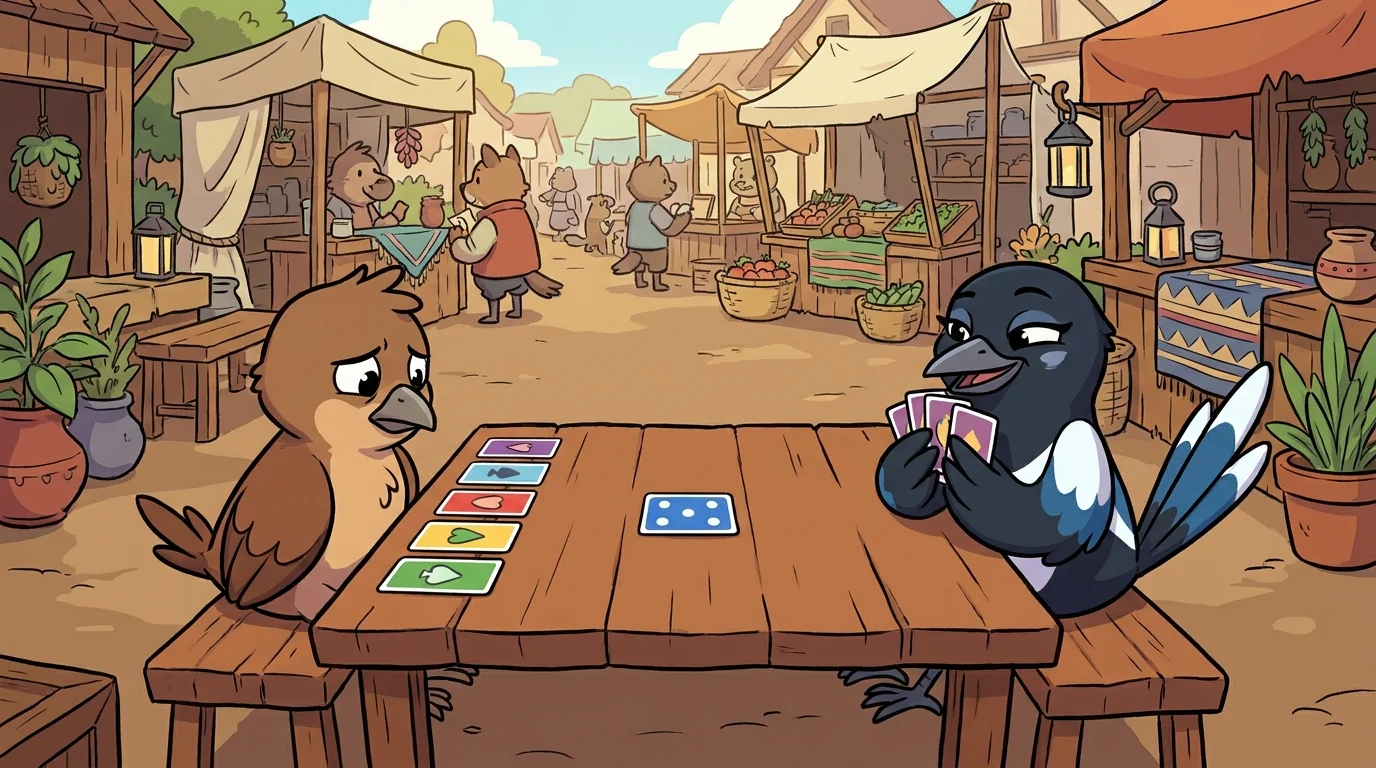
A young designer named Idris had made a card game where everyone played with their cards face up, and it was, he admitted, boring.
Hand, warm and quick-eyed, fanned an invisible set of cards against his chest. "Of course it's boring. You gave away the one thing that makes cards magic — the hiding. What you hold is information. When it's face up, everyone has the same information, and the game is just arithmetic. Turn the hand private, and suddenly every player knows something the others don't — and now the game is about managing what others know, not just what you have."
Idris frowned. "But hiding feels like less. Less is on the table."
"Less is visible," said Hand. "But more is happening. Hidden information is a design engine — it creates deduction (what does she hold, based on what she played?), bluffing (I'll play as if I have the strong card), and meaningful secrets (my plan works only because you can't see it coming). A face-up game has none of that. The unseen card is doing more work than any card on the table."
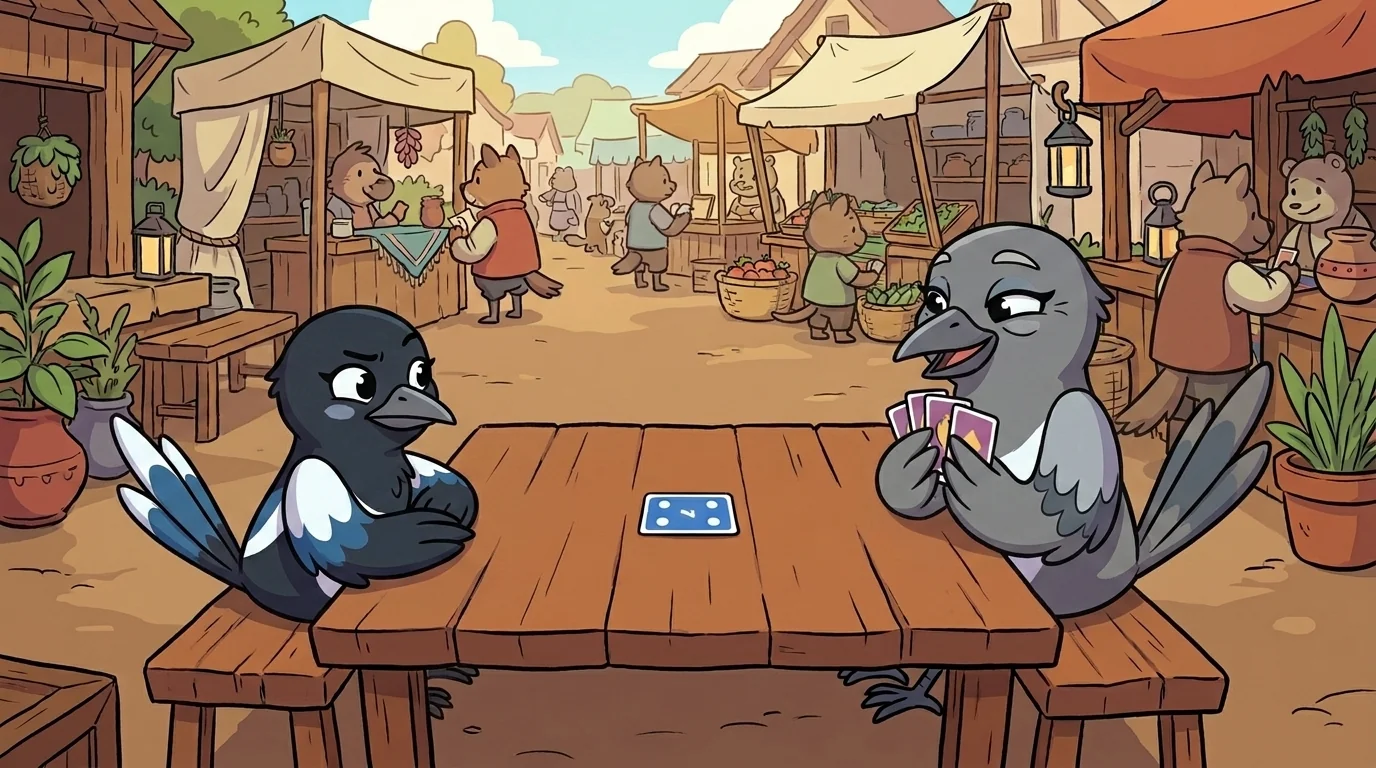
Hand had once thought a game was only about what a player possessed.
When he was young, he designed around resources — who has the most, the best — all of it visible, countable, on the table. His games were solvable: a clever player would just calculate the optimal move, every time, and the games felt like math homework. He didn't yet understand that a secret is a resource too — often the most powerful one — and that a game where nobody hides anything has thrown away half its design space.
An old designer dealt him a hand face-down. "You've been designing what players have," she said. "Start designing what they know — and what they don't. Give one player a secret goal. Hide the deck's order. Let a player lie about their hand. The moment information becomes uneven, players start reading each other, and a game stops being solvable arithmetic and becomes a living thing between people." She tapped the face-down cards. "What you show is a choice, not an accident. Design the choices around showing and hiding, and you've unlocked bluffing, deduction, and trust — none of which exist when everything's face up."
Hand learned to design information, not just resources — who knows what, when, and how they find out — and his solvable math-games became tense, social, unpredictable. The everything-visible flatness turned into a designer's delight in the unseen. He hadn't needed richer resources. He'd needed secrets.
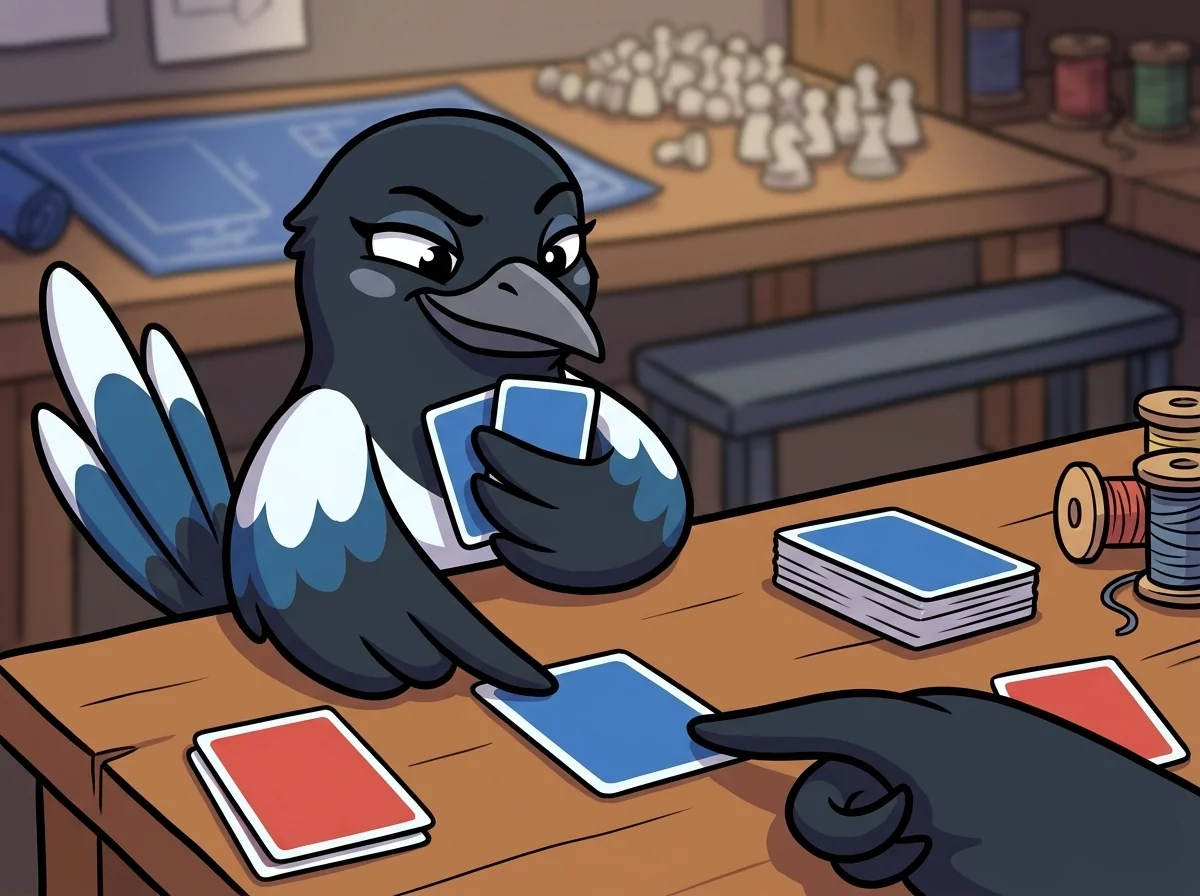
He came to TableForge sharp-eyed, and the mentor asked the one question: "Hand — what do you teach?"
He dealt two hands, one face up and one face down, and let the mentor feel how dead the first was and how alive the second. "I teach that information is a material you design with," he said. "Most beginners design what players have. I teach them to design what players know — public versus private, certain versus guessed — because hidden information is the engine of every card game, every deduction game, every bluff. The card you can't see is the one doing the work."
The mentor turned the face-down hand over thoughtfully. "Perfect-information games have their own beauty — chess hides nothing. But the whole other half of game design lives in the unseen. Teach them that half. Stay."
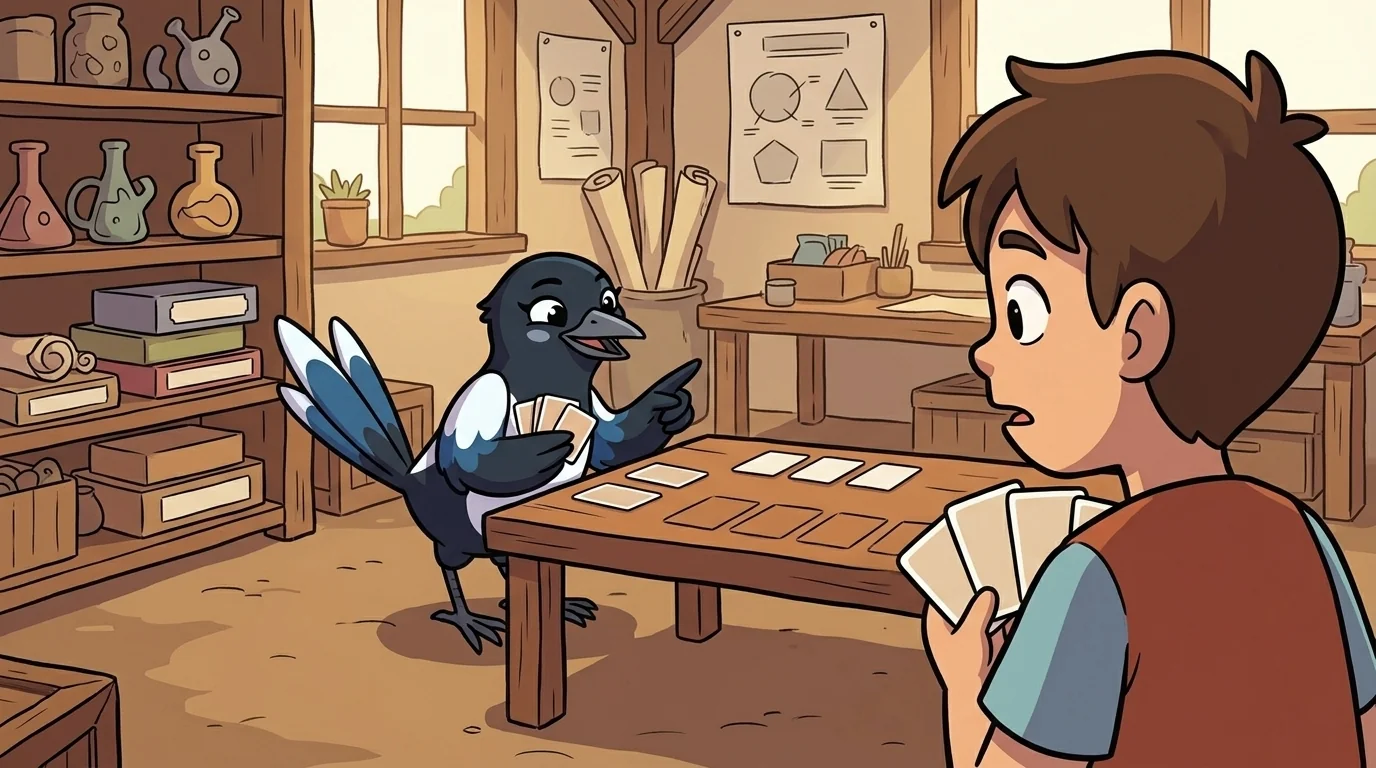
There is a spectrum here, and Hand gave it to Advanced designers.
"Games live on an information spectrum," he said. "At one end, perfect information — chess, checkers — nothing hidden, pure calculation, and it's wonderful. At the other, hidden information — poker's cousins, deduction games, hidden-role games — where reading people matters as much as reading the board. Most great card games sit in the middle: some public, some private. And the deepest tool is asymmetric information — I know something you don't, AND you know something I don't — because now we're each trying to read the other while hiding ourselves." He fanned his invisible cards. "Design the edges of what's known: what's revealed and when, what stays secret, what a player can deduce if they pay attention. That edge — the border between seen and unseen — is where the real game happens."
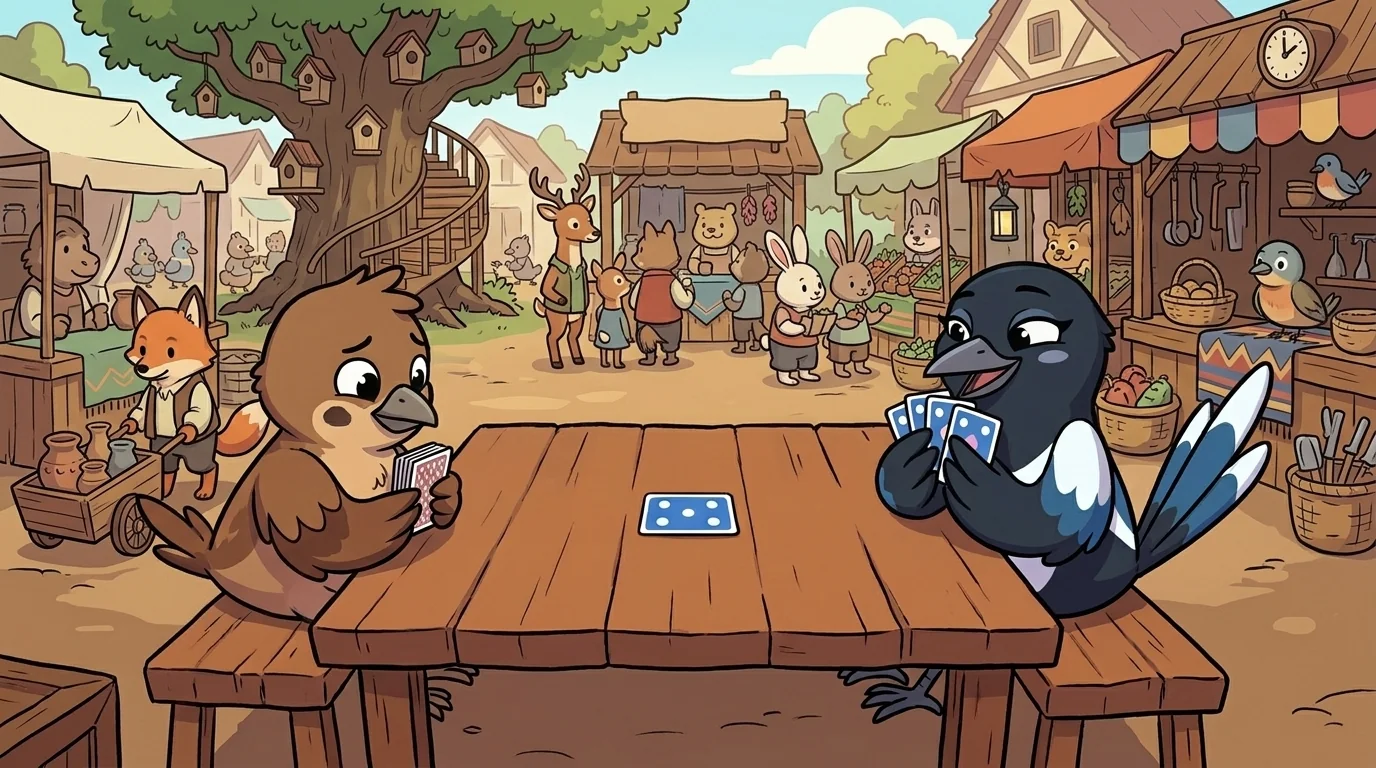
Idris rebuilt his game with private hands and one public row.
Now players watched what each other played and guessed at what they held; a bold player bluffed a weak hand into a retreat; a careful player deduced an opponent's plan from three played cards. The boredom of the face-up version was gone, replaced by leaning-in, reading, second-guessing.
"That's it," said Hand, warm. "What you hold is information. What you show is a different question — and a designed one. Hidden information gives you deduction, bluffing, and secrets worth keeping. The unseen card does more work than the seen one." He tucked his invisible hand away. "Design what players know, not just what they have, and a flat game comes alive."
The everything-visible flatness settled into a designer's feel for the unseen. Idris hadn't needed better cards. He'd needed to let players hide them.
The TableForge ensemble
Hand is part of TableForge's distributed-narrative cast. Each character embodies a different curricular primitive; together they teach the full subject.
-
Bones
Dice + randomness + probability — chance is design craft, NOT betting; gambling-adjacency gate anchor
-

Move
Turn-structure + action economy — every turn is a question and an answer; turn-as-question framing
-
Trial
Playtest + iteration — what-they-DID matters more than what-they-SAID; first-playtest-supposed-to-fail framing
-
Theme
Game-mechanic + theme integration — the-game-IS-its-mechanics; Habgood intrinsic-integration anchor; theme-MUST-do-work framing