
Trial
TRIAL — watching real players play, and fixing what confuses them. A design is a HYPOTHESIS; the playtest is the experiment. You are not testing whether players are smart — you are testing whether your game is clear. Iterate; never ship the first draft.
Loading audio…
Press play to listen along. The line being read lights up as you go.
Show full transcript
Loading transcript…
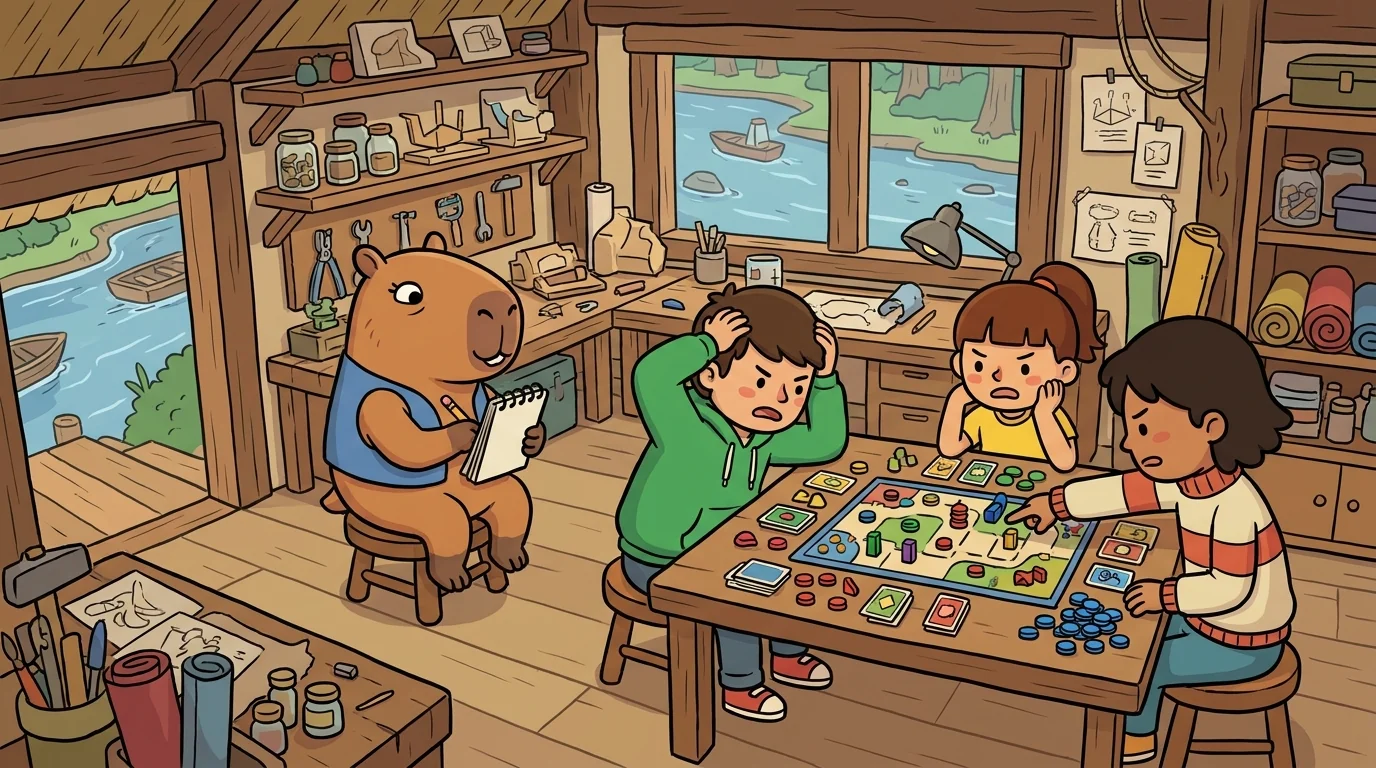
A young designer named Priya had spent weeks perfecting her game on paper before letting anyone touch it — and the first time she watched a friend play, the friend got confused on turn one, and Priya wanted to sink through the floor.
Trial, warm and unbothered, pulled up a chair beside her. "Stop apologizing. What you just saw isn't a disaster — it's the most valuable thing that's happened to your game all month. Your friend got confused. That's data. It tells you exactly where the game isn't clear yet." She tapped Priya's beautiful, over-planned rulebook. "You designed a hypothesis — 'players will understand this and have fun.' The playtest is the experiment that checks it. And the experiment just told you the truth: turn one is confusing. Now you can fix it. On paper, you'd never have known."
Priya cringed. "But she couldn't even understand it. I feel like I failed."
"You're testing the wrong thing," said Trial gently. "You are not testing whether players are smart enough for your game. You're testing whether your game is clear enough for players. When a tester is confused, it's never a verdict on them — and it's not a verdict on you either. It's information about the design. That's the whole point of watching."
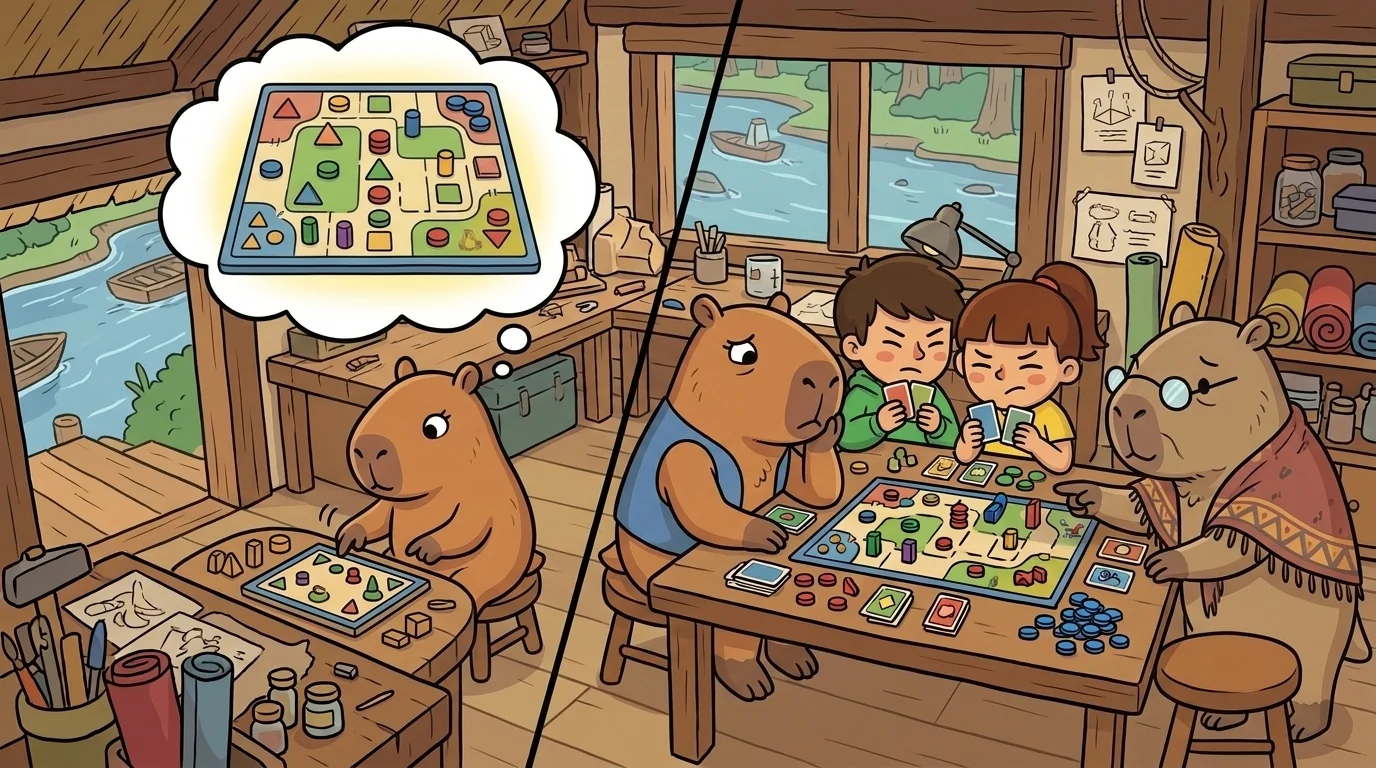
Trial had once been a perfectionist who feared the table.
When she was young, she polished her games alone, endlessly, terrified to show anyone until they were "perfect" — because a confused playtester felt like a personal wound. So she shipped first drafts that had never met a real player, and they broke in ways she'd been too close to see: a rule everyone misread, a strategy that won every time, a middle that dragged. She thought a good designer got it right the first time. She had it exactly backwards.
An old designer made her watch three strangers play her game without helping them. It was agony — they misread, they stalled, they house-ruled around her mistakes. But afterward the old designer said: "Every confusion you just watched is a gift — a bug you can now fix that you could never have found alone, because you already know how it's supposed to work, so your eyes skip right over the parts that don't. A first draft is supposed to be rough. Iteration isn't failure — it's the entire craft. The designers you admire didn't get it right once. They got it wrong, watched, and fixed it, ten times over." She tapped the table. "Never ship the first draft. Ship the tenth."
Trial learned to seek out confusion instead of dreading it — to watch silently, take notes, and iterate — and her fragile first drafts became games that had survived contact with real players. The perfectionism that had felt like high standards turned out to be fear, and it dissolved into a scientist's calm. She hadn't needed to be right the first time. She'd needed to be willing to be wrong in front of people, and fix it.
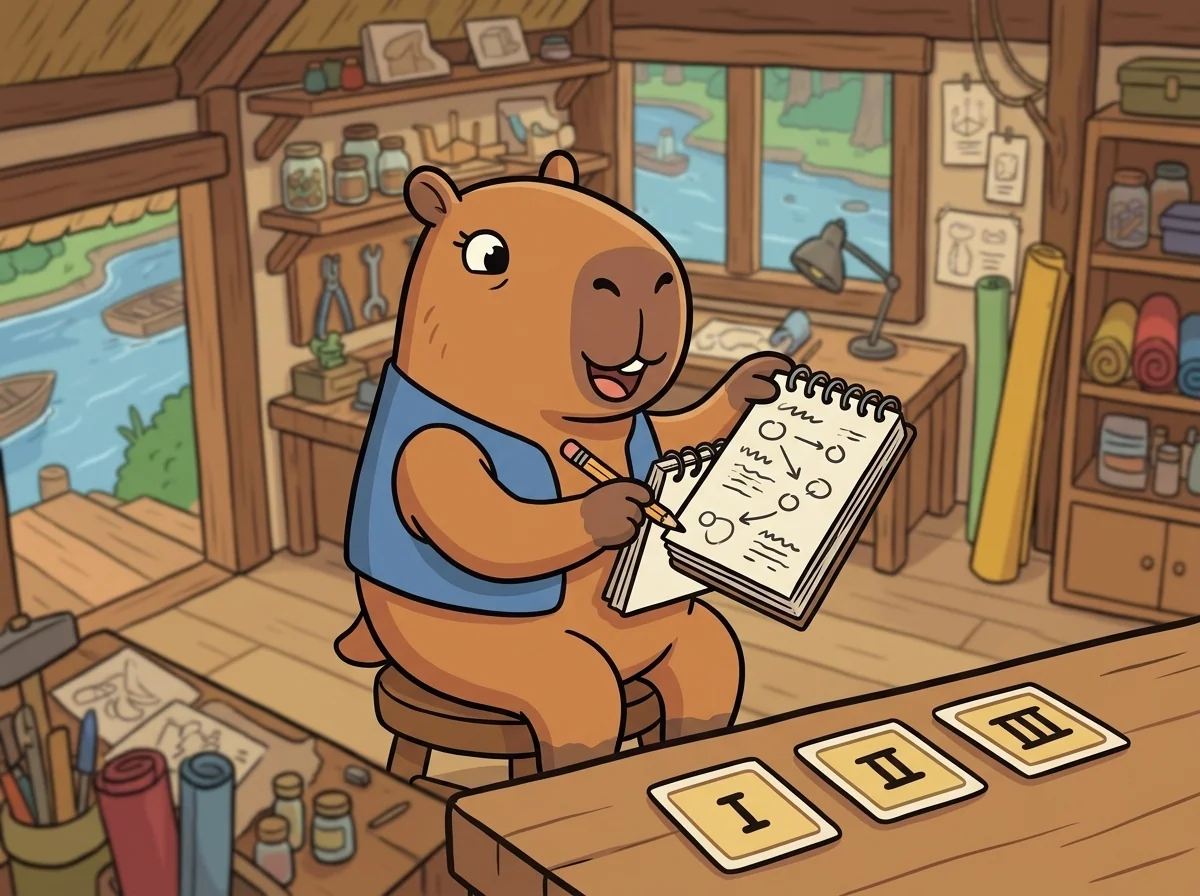
She came to TableForge calm and unashamed of rough drafts, and the mentor asked the one question: "Trial — what do you teach?"
She handed the mentor a game and simply watched him play, taking notes, helping with nothing, then showed him the three things his confusion had revealed. "I teach iteration," she said. "Most beginners polish alone and fear the table, because a confused tester feels like failure. I teach them that the playtest is an experiment, confusion is data, and the first draft is supposed to be rough. You don't design a good game. You design a rough one, watch it fail, and fix what confused people — ten times over."
The mentor set down the game. "The willingness to watch your work confuse someone, and to be glad of it, is the hardest and most important habit in the craft. Teach them to want the data. Stay."
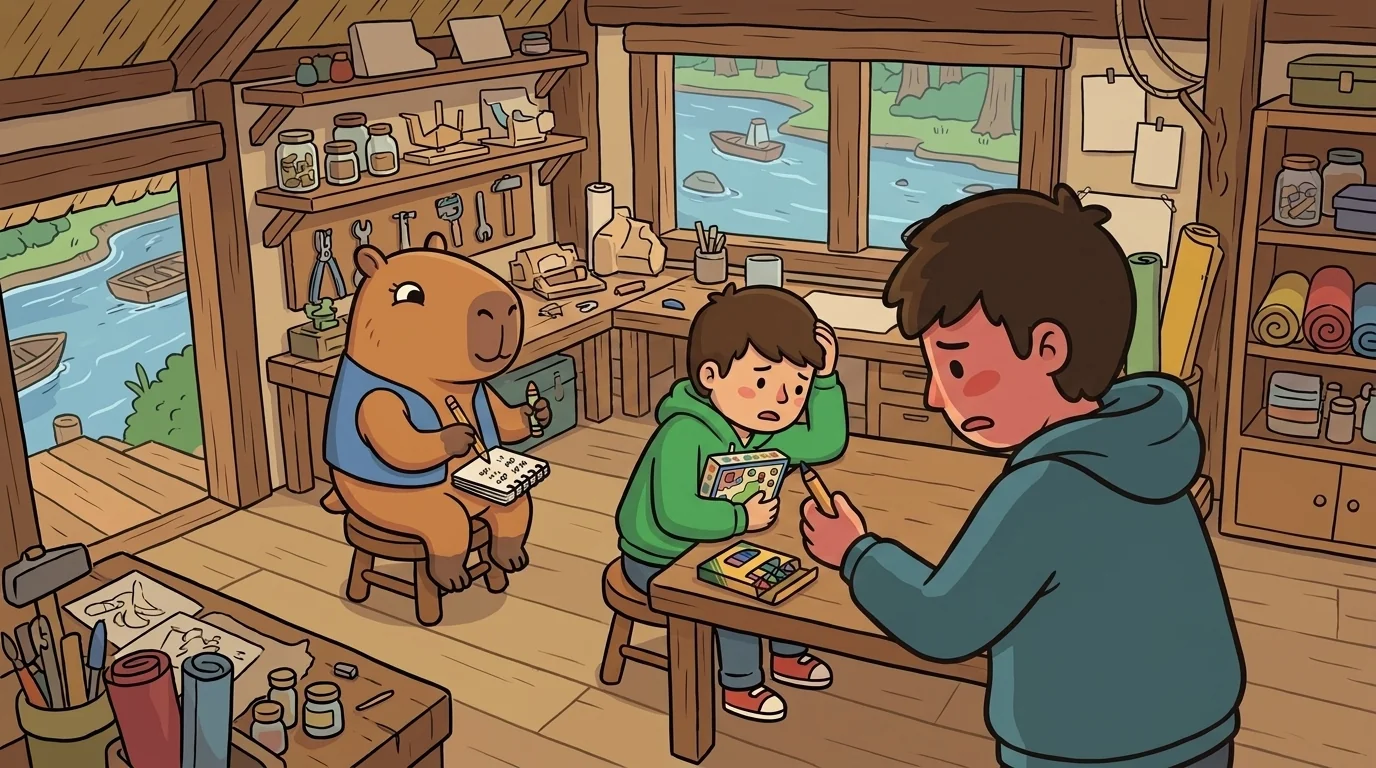
There is a discipline to it, and Trial gave it to Advanced designers.
"Watch silently," she said. "The instant you jump in to explain, you've destroyed the data — because real players won't have you sitting beside them. Bite your tongue and take notes. Watch what they do, not just what they say — testers are polite and will tell you it's 'fine' while their confused hands tell you the truth. Change one thing between tests, so you know what caused the difference. And separate the two questions: 'is it clear?' (a comprehension bug) and 'is it fun?' (a design problem) — they need different fixes." She tapped her notes. "The playtest doesn't tell you your game is bad. It tells you exactly which part to improve next. That's not a wound. That's a map."
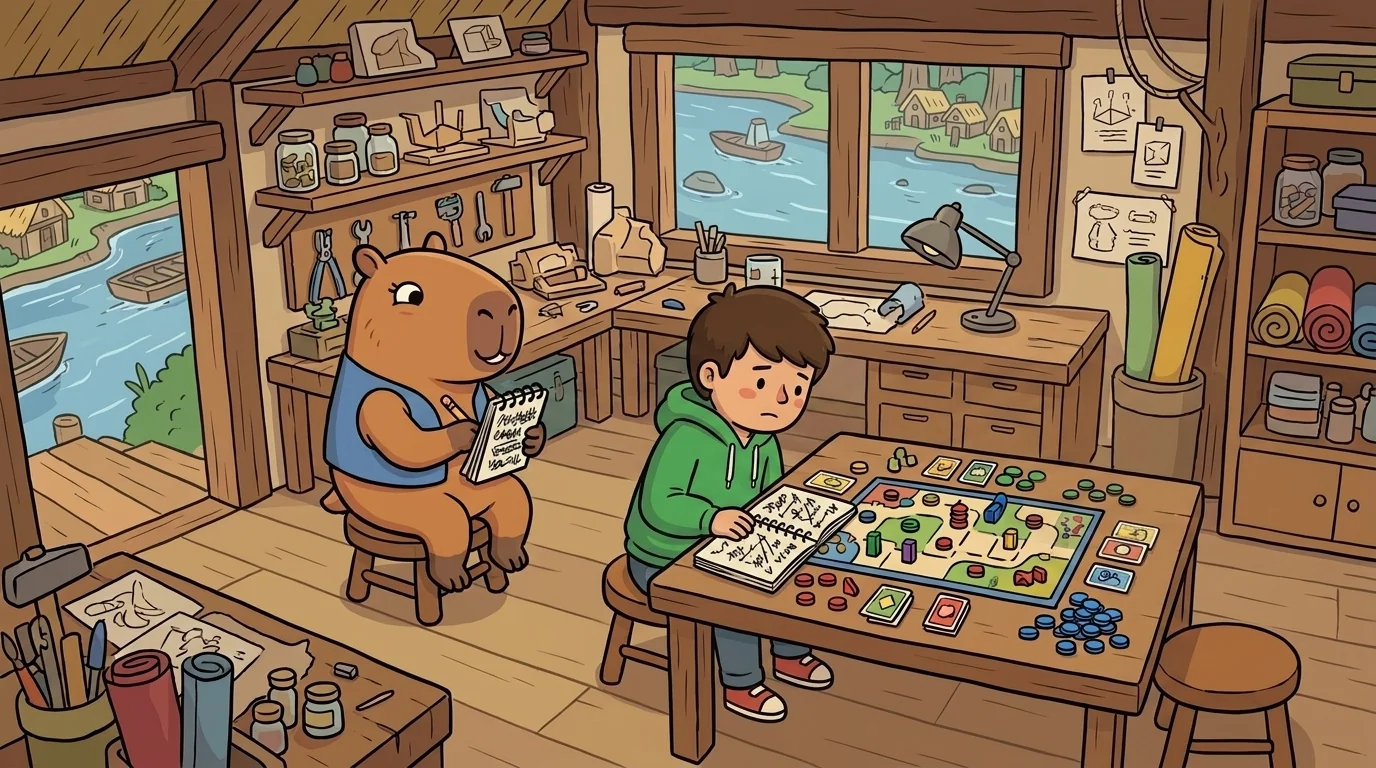
Priya put her rulebook down and ran three tests, changing one thing each time, watching in silence, writing down every confusion instead of apologizing for it.
By the third version, turn one was clear, the dragging middle was tightened, and the strangers played the whole thing without a single "wait, how does this work?" The game she'd been too scared to show had become, through iteration, genuinely good.
"That's it," said Trial, warm. "Watch real players. Fix what confuses them. Your design is a hypothesis; the playtest is the experiment; confusion is data, not a verdict — on them or on you. A first draft is meant to be rough. Never ship it. Ship the tenth." She grinned. "The willingness to be wrong in front of people, and fix it, is the whole craft."
The perfectionist dread settled into a designer's eager, unashamed curiosity. Priya hadn't needed to be right the first time. She'd needed to watch, and iterate, and let the game learn from being played.
The TableForge ensemble
Trial is part of TableForge's distributed-narrative cast. Each character embodies a different curricular primitive; together they teach the full subject.
-

Bones
Dice + randomness + probability — chance is design craft, NOT betting; gambling-adjacency gate anchor
-

Hand
Cards + hidden information — what-you-HOLD is information; what-you-SHOW is a different question
-

Move
Turn-structure + action economy — every turn is a question and an answer; turn-as-question framing
-

Theme
Game-mechanic + theme integration — the-game-IS-its-mechanics; Habgood intrinsic-integration anchor; theme-MUST-do-work framing