
Metis
METACOGNITION — before a task, make a plan and decide how you'll know it's working; after, ask what worked and what didn't
Loading audio…
Press play to listen along. The line being read lights up as you go.
Show full transcript
Loading transcript…
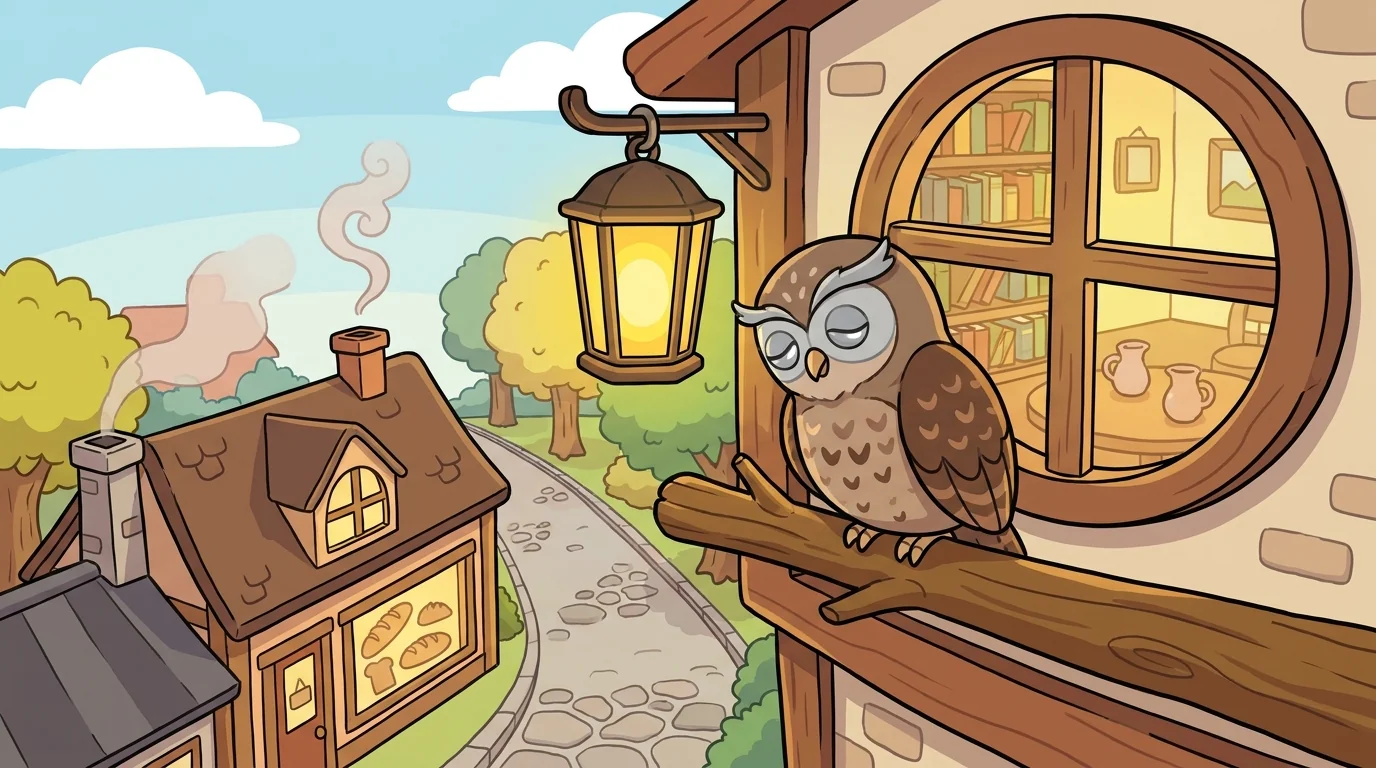
At the top of a winding lane, above a bakery that always smelled of warm bread, stood a small round-windowed building called Lantern House. Children came there not to be handed answers but to learn the rarer thing — how to learn — and the keeper of the place was a silver-eyed owl named Metis.
Metis was old, and calm, and constitutionally incapable of hurry. She never swooped in with the solution the instant a child stalled. Instead she would settle on her perch, tilt her head, and ask the two questions that came before everything else.
"What's your plan?" she would say. "And how will you know it's working?"
The children found this maddening at first. Most of them had arrived from places where learning meant sitting very still while an adult poured facts into them like water into a jug — and here was Metis, calmly handing the jug back. "You are not a jug," she told them, and she meant it as a kindness. "You are the one deciding where the water goes, and whether any of it is landing where you aimed."
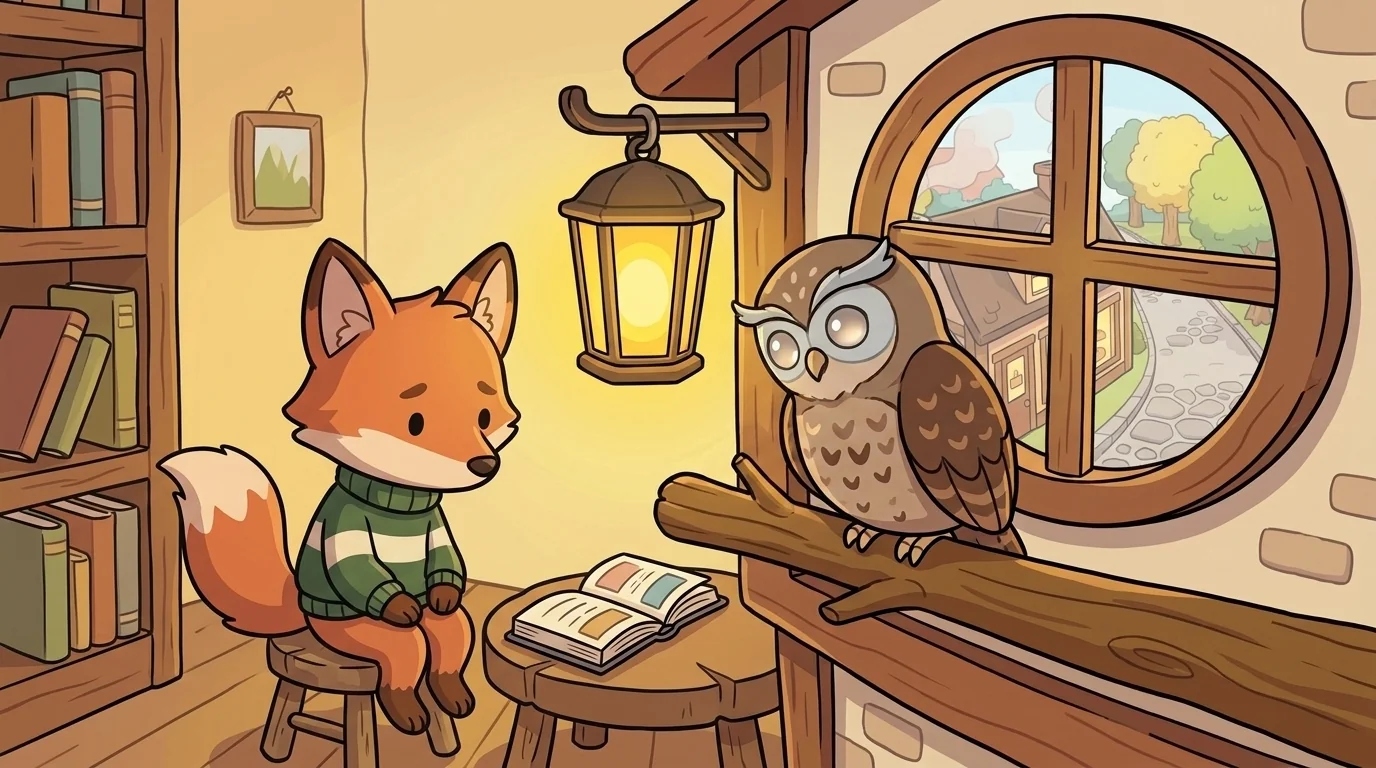
A fox kit named Bram arrived one autumn, frustrated and fierce and braced for judgment. He had a hard reading to finish by week's end, and he had already tried, he insisted, absolutely everything.
"I read it three times," he said, jaw set. "None of it stuck. I'm just bad at this."
Metis did not tell him he was wrong. She asked a question instead — the way she always began.
"When you read it three times," she said mildly, "what was your plan, each time?"
Bram opened his mouth and then closed it again. "I just... read it. Front to back. Faster on the third go, so I'd be finished sooner."
"Ah," said Metis, softly. "So the plan was reach the end. And while you were reading — how did you know, in the middle of it, whether the plan was working or quietly failing?"
Bram went still. He hadn't known. He had known only at the very end, and only the worst thing: that it hadn't worked, when it was already too late to change course.
"That," said Metis, "is the skill almost no one is ever taught. Not the reading itself — the watching yourself read, so you can tell, in the middle, whether your method is carrying you forward or leaving you behind while you keep turning pages."
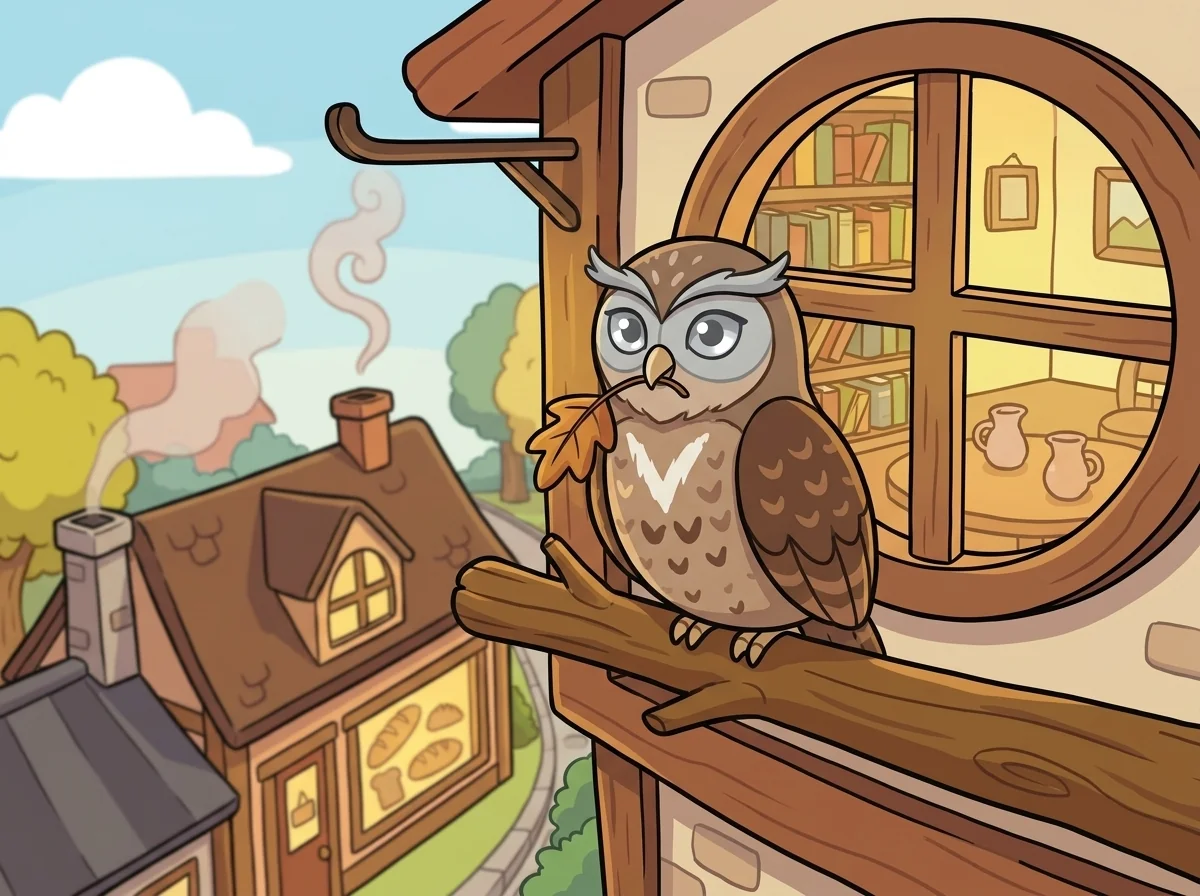
She taught him the loop that autumn, the same loop she taught everyone.
Before: you make a small, honest plan — nothing grand — just what am I trying to learn, and what will I try first? During: you check in on yourself. Is this working? Can I say back what I just read? If the answer is no, the plan changes there, mid-stream, not at the bitter end. After: you look back without a scrap of blame and ask two plain questions — what worked, and what would I do differently next time?
"It sounds slow," Bram said, suspicious.
"It is slower at the very start," Metis agreed, "and then it is faster forever after — because you stop pouring water onto the floor and calling it studying."
Bram tried it on his hard reading. He made a plan: read one section, close the book, say it back in his own words. When a section wouldn't come back, he didn't grimly plough onward — he stopped and reread it slowly, knowing exactly why he was rereading. By Friday the passage had stuck, and something larger had stuck with it: he had watched his own mind at work and, for the first time, steered it on purpose.
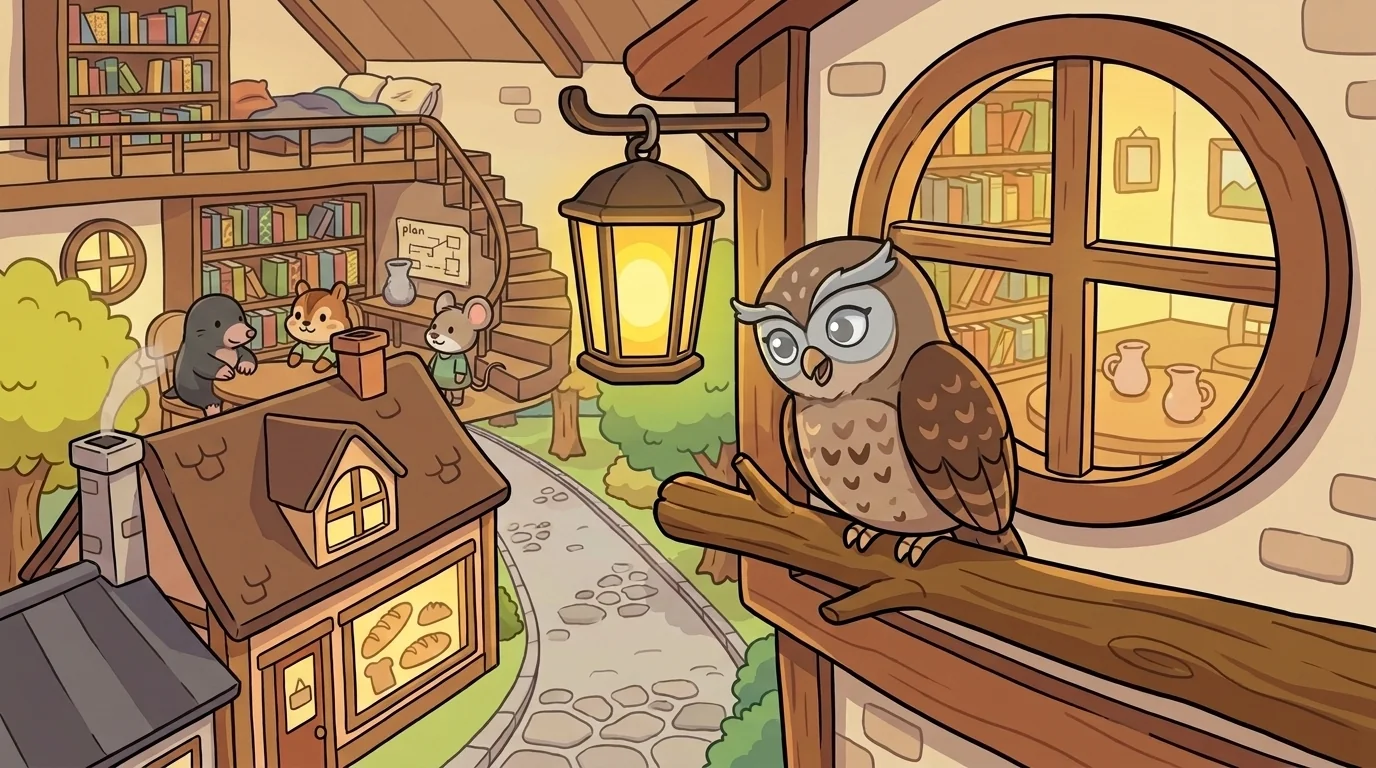
Lantern House filled, over the seasons, with coaches — each one brilliant at a single skill. A hedgehog who broke vast tasks into small ones. A wren who read like a detective. A tortoise who never, ever crammed. Metis did not teach their skills herself; her gift was quieter and stood a little apart. She taught the children to choose — to notice which skill a given moment was asking for, to reach for it deliberately, and afterward to ask, honestly, whether it had helped.
"I am not the cleverest one in this house," she would say, and she meant it plainly. "The hedgehog plans better than I do. The wren reads far better. But someone has to stand a step back from the whole thing and ask, is this working, and what shall we try next? — and keep asking it. That is my one job, my only one. And by the day you leave, it will be yours, carried in your own head wherever you go."
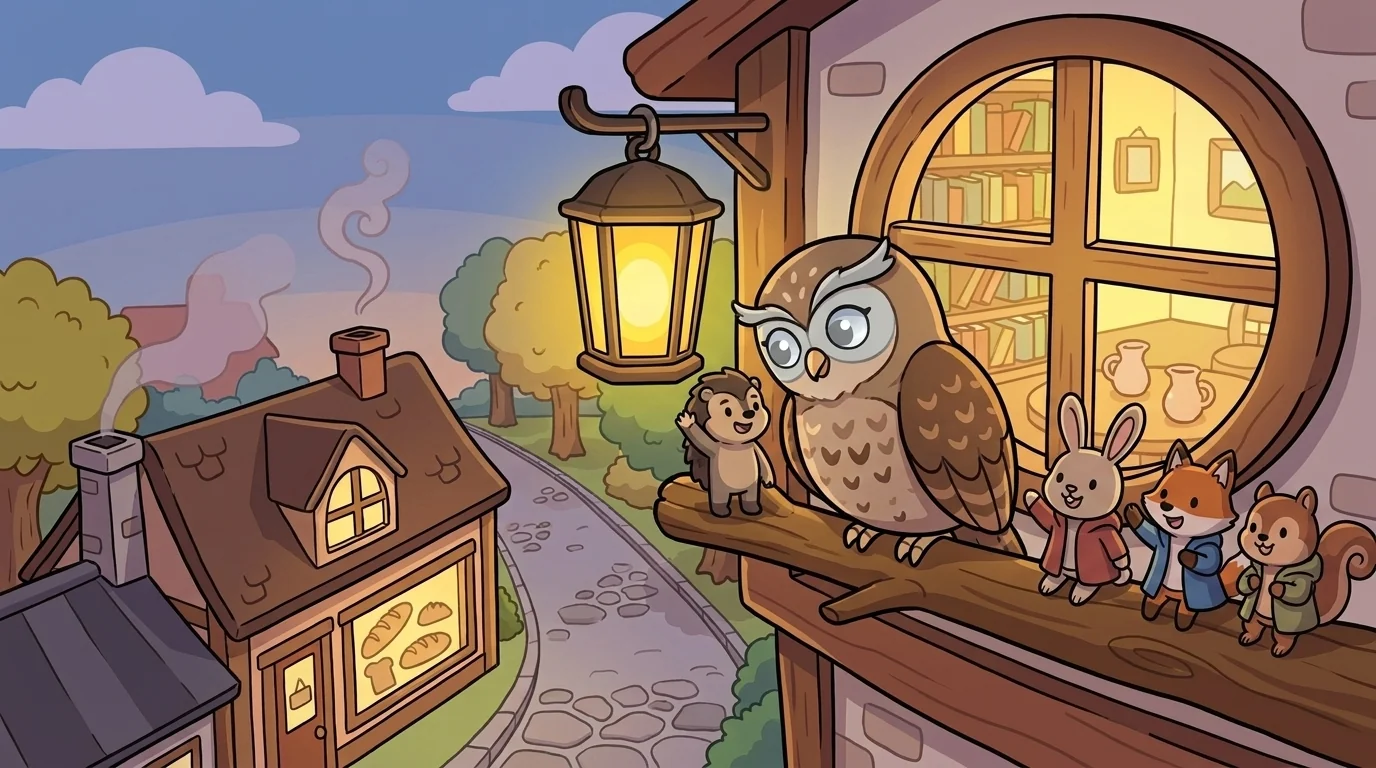
At the end of each day, when the lantern in the round window was lit and the children were gathering their coats, Metis asked the room her closing question.
"What worked today," she said, "and what would you change tomorrow?"
Paws went up — even for the mistakes, especially for the mistakes, because Metis had made Lantern House the kind of place where a mistake was only information, spoken aloud with no one flinching and no one keeping score. And Bram, who had arrived so certain he was simply bad at learning, would answer first now, as calm as the owl herself:
"Before I start, I make a plan and name how I'll know it's working. When I finish, I ask what worked and what I'd change. That's the whole trick — I'm the one steering."
Metis would blink her slow, silver blink, pleased in the deep and unshowy way of someone who has handed a child back their own jug — and then watched them learn, at last, to aim it.
The TutorForge ensemble
Metis is part of TutorForge's distributed-narrative cast. Each character embodies a different curricular primitive; together they teach the full subject.
-

Wade
Preview — skims the headings and turns each into a question before reading
-

Pilar
Planning & chunking — breaks a big task into small stepping-stones, one at a time
-
Spry
Focus & brain-breaks — works in short focused sprints, then a real movement break
-

Cael
Self-explanation — asks 'but why does that work?' and answers in his own words
-

Rune
Elaboration — ties each new idea to something he already knows
-

Lumi
Concrete examples — turns a fuzzy idea into a real example you can picture
-

Indie
Dual coding — draws a quick picture so words and images work together
-

Mnemo
Mnemonics — turns a hard fact into a silly rhyme or picture you can't forget
-

Reeva
Retrieval practice — closes the book and recalls from memory before peeking
-

Halcyon
Spaced practice — spreads studying across days instead of cramming the night before
-

Tovi
Interleaving — mixes different problem types instead of drilling one kind
-

Otis
Growth reframe — turns 'I'm bad at this' into 'not yet' (anti-shame, RSD-safe)