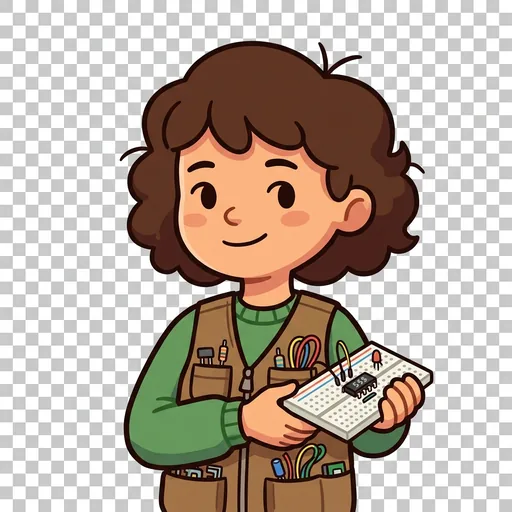
Reeva
RETRIEVAL PRACTICE — close the book and recall from memory before peeking, then check
Loading audio…
Press play to listen along. The line being read lights up as you go.
Show full transcript
Loading transcript…

At Lantern House there was a young hare named Reeva who taught the strangest-sounding lesson in the whole house: that the comfortable way to study barely works, and the way that feels a little bit hard is the way that actually sticks.
Reeva had watched countless children "study" by reading their notes over and over. It felt productive. It felt like learning. The words got more and more familiar each time. And then, on the day it counted, those same children would open their mouths to say what they knew — and nothing would come out. All that comfortable familiarity, and their brains couldn't reach the answer.
"Familiar isn't the same as known," Reeva said. "You have to make your brain reach for it. The reaching is the whole thing."

A young stoat named Dax was re-reading his notes for the fifth time, feeling great about it. "I've basically got this," he said. "I've read it so many times it all looks familiar now."
"Let's test that," said Reeva gently. "Close the book."
Dax closed it.
"Now — without peeking — tell me the main things you just read."
Dax opened his mouth. And... almost nothing came. He knew he'd seen it all. It had all looked so familiar a moment ago. But when he actually reached into his memory to pull it out, his hand closed on air. He was shocked. "But I just read it five times!"
"You recognized it five times," said Reeva kindly. "That's different from being able to recall it. Recognizing is easy — that's why re-reading feels good. But nobody's going to hand you the answer to recognize. You have to produce it. So you have to practice producing it."

"Here's the way that works," said Reeva. "Read a section once. Then close the book — and try to say it back, or write it down, from memory, before you look. Make your brain reach. It'll feel harder. You'll struggle. You'll get some of it wrong."
"That sounds worse," said Dax.
"It feels worse," Reeva agreed. "But that struggle — that reaching — is your brain building a strong path to the answer. Every time you drag something up from memory, the path gets wider and easier for next time. Re-reading paves nothing. Reaching paves a road."
"And when I get it wrong?"
"Then you look, and you fix it — and that correction sticks harder than anything, because you cared about the answer for a second there. Getting it wrong and then checking is one of the best things that can happen. It's not failing. It's how the road gets paved."

Dax tried it, doubtful. He read a section once, then closed the book and forced himself to recall it — and it was hard, and uncomfortable, and he got pieces wrong. He checked, and fixed them. Then the next section, the same way.
When he tested himself the next day, the difference was staggering. The stuff he'd reached for was solid — he could produce it, not just recognize it. The stuff he'd only re-read had already gone foggy.
"The uncomfortable way won," he said, half-laughing, half-annoyed. "The comfortable way just felt good and did nothing."
"That's the trap," said Reeva. "Comfortable and useless love to travel together. Reach for it. Struggle a little. Check. That's the whole road."
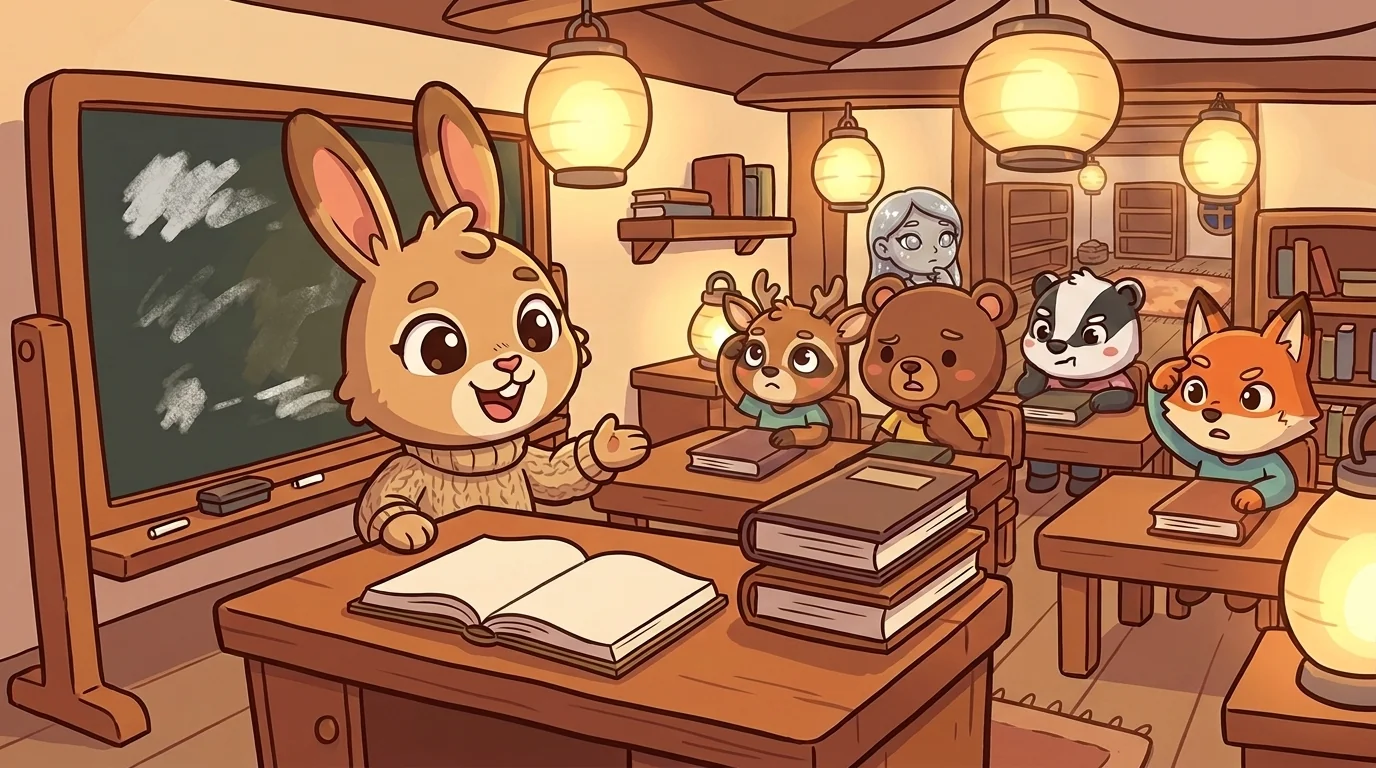
Metis watched Reeva make a room full of children close their books and reach, and blinked her slow silver blink.
"You taught them that the hard way is the kind way," she said.
"Struggling to recall isn't the price of learning," said Reeva. "It is the learning."
And that evening, when Metis asked what had worked, Dax answered, tapping the closed cover of his book:
"I close the book and make my brain reach for the answer before I peek. The reaching is what makes it stick — even when I get it wrong and have to check."
The TutorForge ensemble
Reeva is part of TutorForge's distributed-narrative cast. Each character embodies a different curricular primitive; together they teach the full subject.
-

Metis
Metacognition — plans before a task and reflects after (the mentor who orchestrates the coaches)
-

Wade
Preview — skims the headings and turns each into a question before reading
-

Pilar
Planning & chunking — breaks a big task into small stepping-stones, one at a time
-
Spry
Focus & brain-breaks — works in short focused sprints, then a real movement break
-

Cael
Self-explanation — asks 'but why does that work?' and answers in his own words
-

Rune
Elaboration — ties each new idea to something he already knows
-

Lumi
Concrete examples — turns a fuzzy idea into a real example you can picture
-

Indie
Dual coding — draws a quick picture so words and images work together
-

Mnemo
Mnemonics — turns a hard fact into a silly rhyme or picture you can't forget
-
Halcyon
Spaced practice — spreads studying across days instead of cramming the night before
-

Tovi
Interleaving — mixes different problem types instead of drilling one kind
-

Otis
Growth reframe — turns 'I'm bad at this' into 'not yet' (anti-shame, RSD-safe)