Wade
PREVIEW — before reading, skim the headings and turn each into a question, so your brain knows what it's hunting for
Loading audio…
Press play to listen along. The line being read lights up as you go.
Show full transcript
Loading transcript…
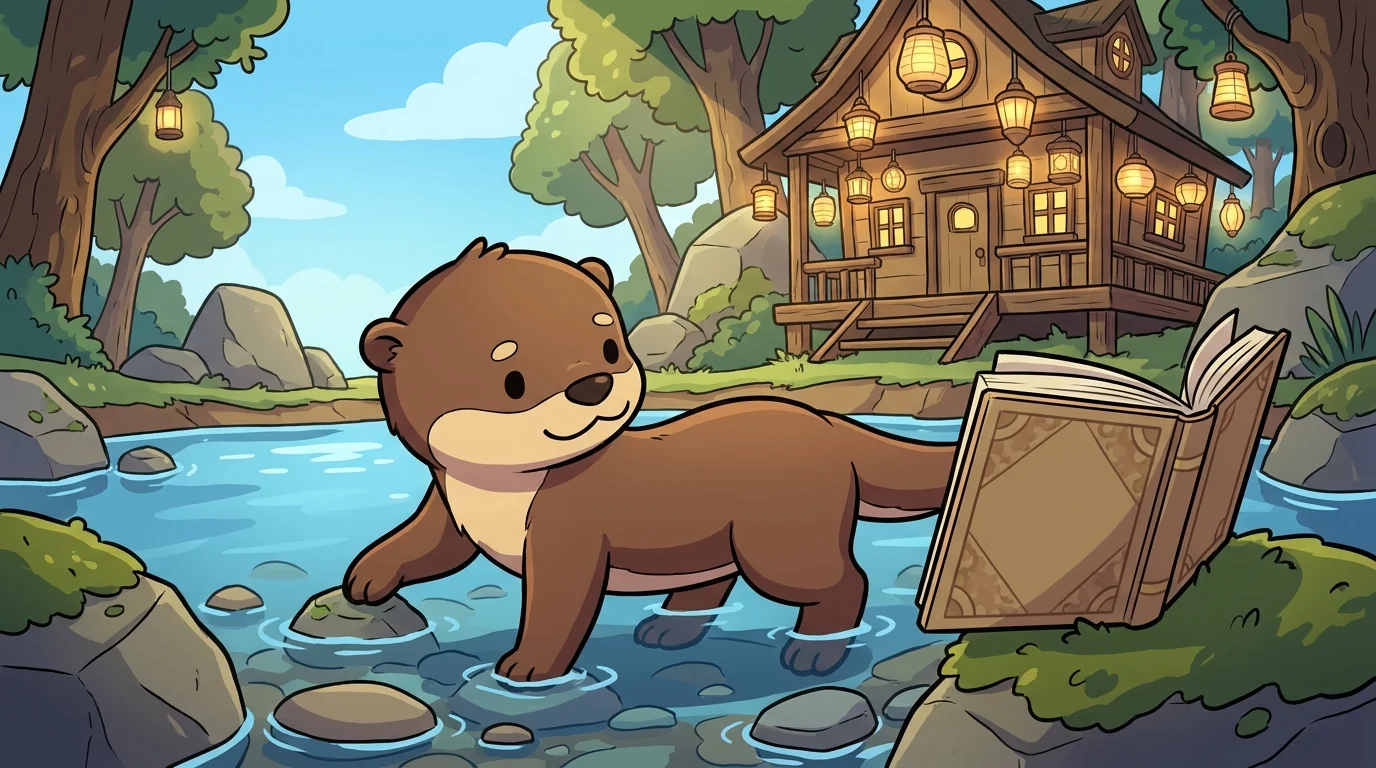
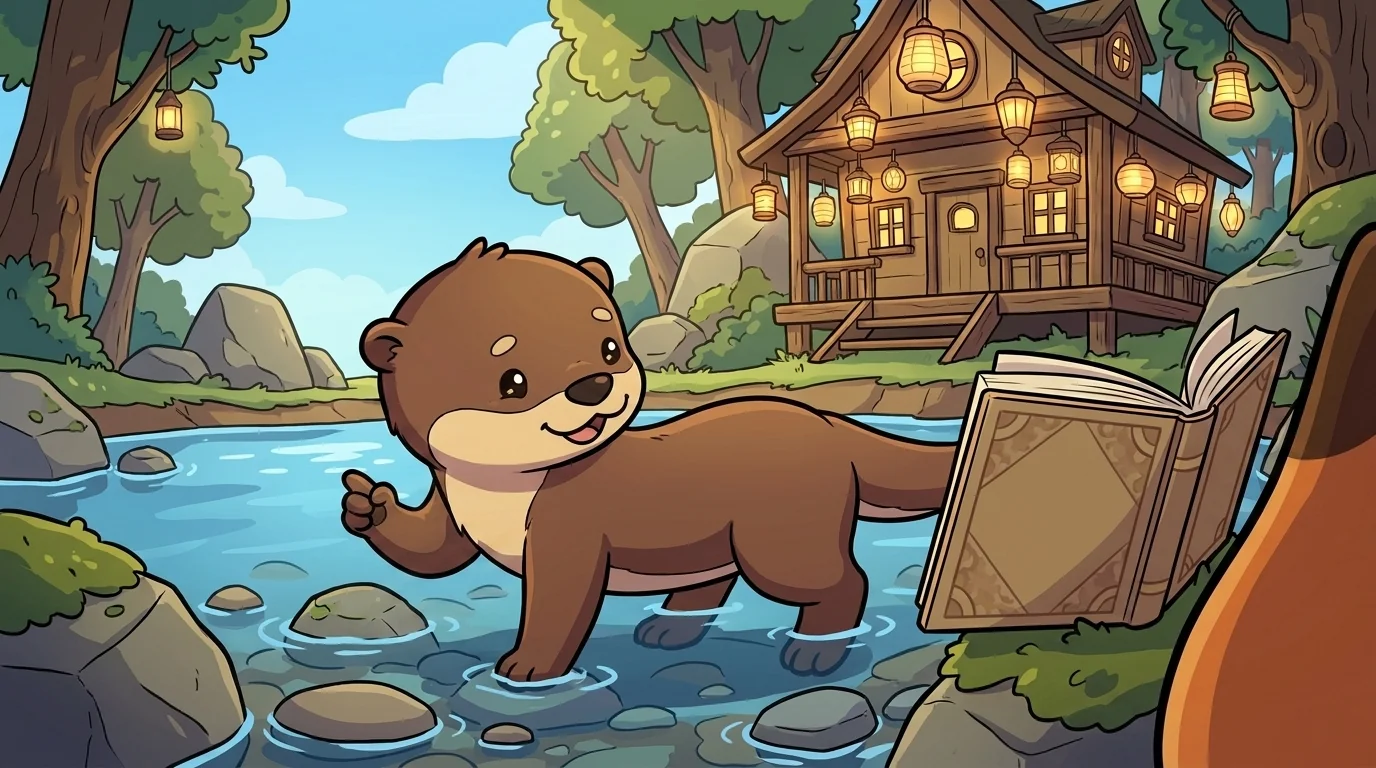
At Lantern House there was a young otter named Wade who had one rule about water, and one rule about reading, and they turned out to be the same rule.
The rule about water was: you never dive into a pool you haven't looked at. You wade in first. You feel where it's shallow and where it drops, where the rocks are, how cold it bites. Then you swim, and you swim well, because you already know the shape of the whole pool.
Wade did the exact same thing with a book.
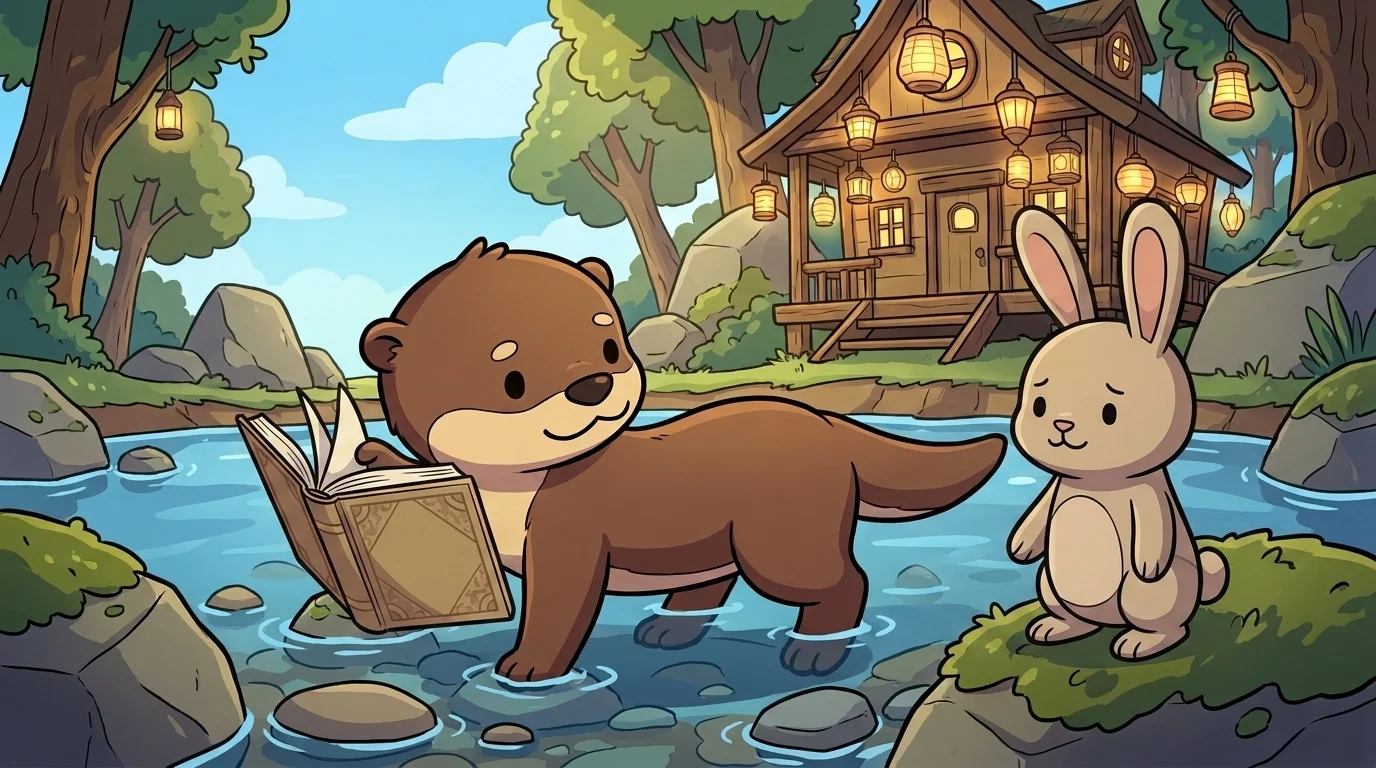
The other children thought reading meant opening to the first word and marching straight through to the last, hoping something stuck. Wade thought that was like diving blind into strange water.
"Watch," he said one morning, when a rabbit named Fen was groaning over a long chapter about rivers. "Don't read it yet. Just wade."
He flipped through the pages, quick as a fish, not reading — only looking. He read the big title. He read every bold heading. He looked at each picture and its caption. He glanced at the questions printed at the end.
"There," he said, surfacing. "Now I know the whole shape. It's about where rivers start, how they carry things, and where they end up. Three parts. I haven't read a single sentence properly, and I already know what the pool looks like."
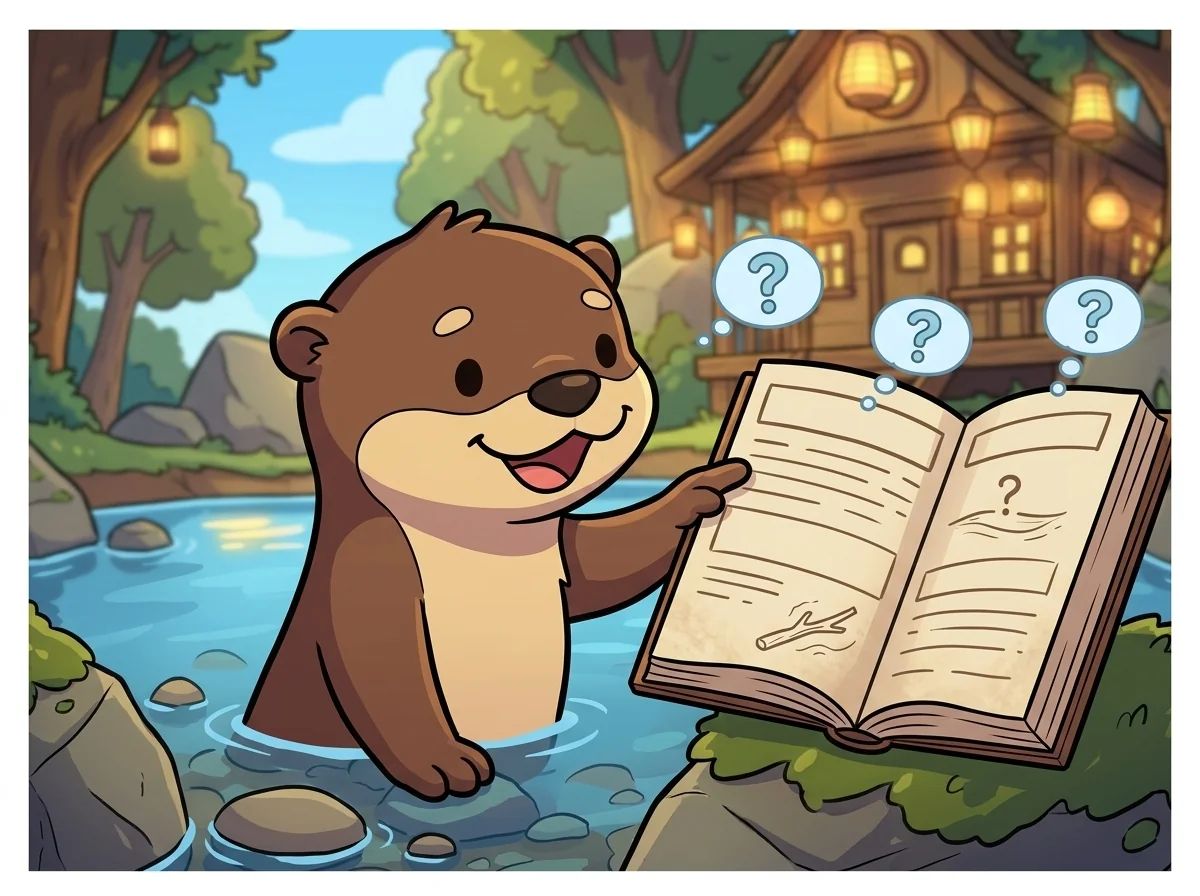
But Wade did one more thing, and it was the part that mattered most. As he skimmed each heading, he turned it into a question.
The heading said "Where Rivers Begin." Wade whispered, "Where do rivers begin?" The heading said "How Rivers Carry Things." Wade asked, "What can a river carry?" The heading said "River Mouths." Wade grinned. "What's a river mouth? Does it eat?"
"Why are you asking questions you can't answer yet?" said Fen.
"So my brain has something to hunt for," said Wade. "If I read with no question, my eyes just slide across the words and nothing catches. But if I've asked where do rivers begin? — then the second I read the answer, it lands. My brain's been waiting for it. It's like fishing. You don't catch anything without a hook in the water first."
Fen tried it, doubtful. She waded through the chapter without reading — title, headings, pictures, end questions — turning each heading into a question of her own. Where do rivers begin? What do they carry? What's a mouth?
Then she read it properly. And it was completely different. Every time she hit an answer to one of her questions, it snapped into place, satisfying as a puzzle piece. She wasn't wandering through fog anymore. She was hunting, and finding, and knowing she'd found.
"It didn't even take longer," she said, amazed. "The wading was fast. And then the reading was easy because I knew where I was going."
"That's the whole thing," said Wade, delighted. "A minute of wading saves you ten minutes of drowning."
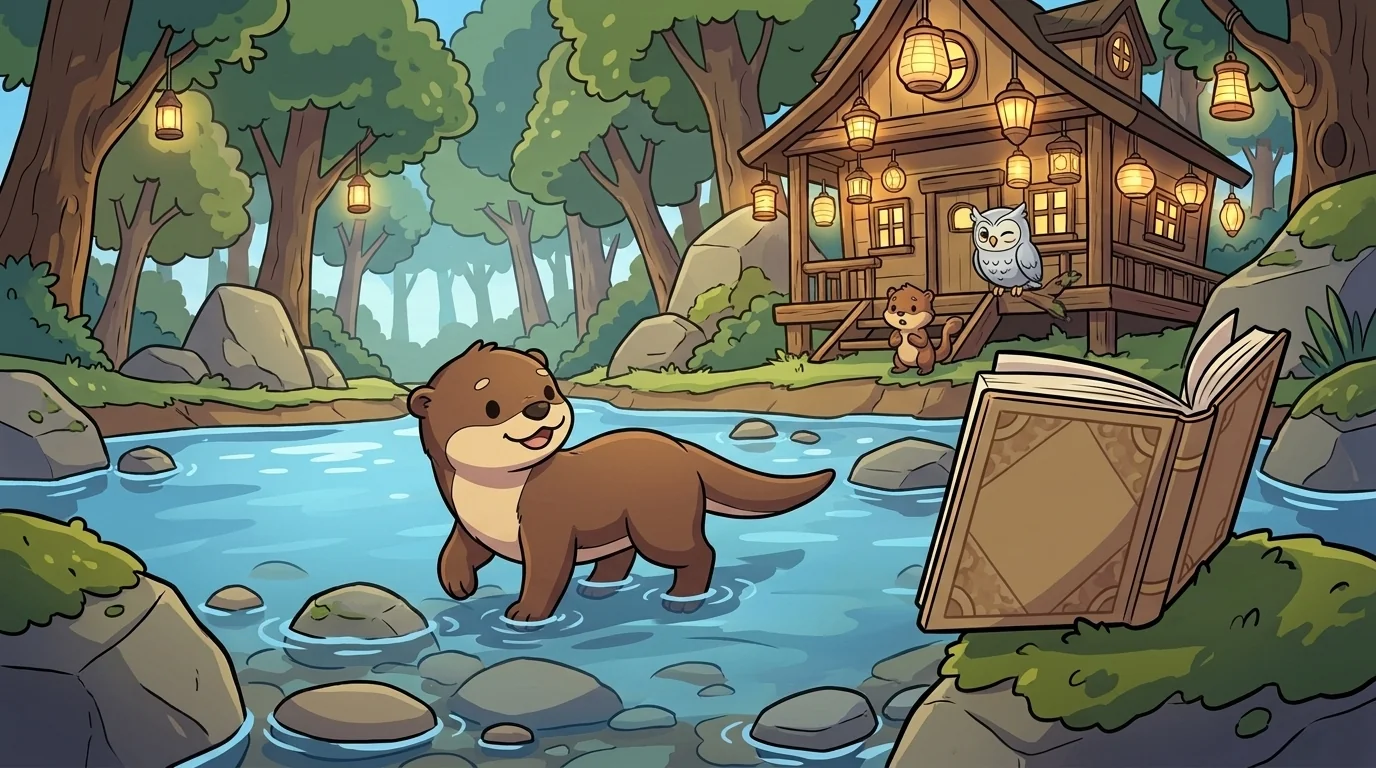
Metis, from her perch, watched Wade teach and blinked her slow silver blink.
"You give them a map before the journey," she said.
"I give them questions before the journey," said Wade. "A map just tells you the shape. A question makes you want to go."
And that evening, when Metis asked the room what had worked, Fen answered, still a little amazed at herself:
"Before I read, I skim the headings and turn each one into a question. Then my brain's hunting, not wandering — and everything I read just lands."
Wade, who was already eyeing tomorrow's long chapter the way he eyed a new pool, could not have looked happier.
The TutorForge ensemble
Wade is part of TutorForge's distributed-narrative cast. Each character embodies a different curricular primitive; together they teach the full subject.
-
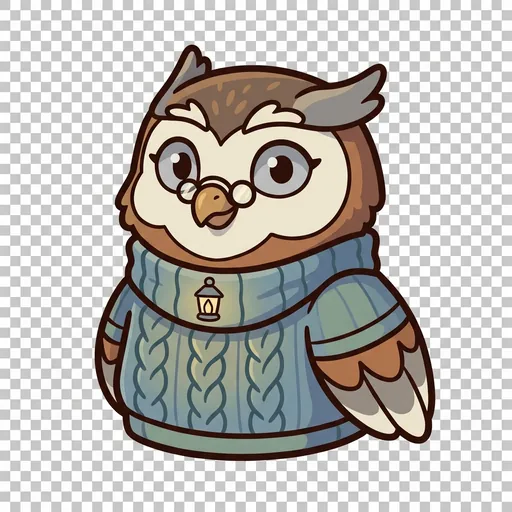
Metis
Metacognition — plans before a task and reflects after (the mentor who orchestrates the coaches)
-

Pilar
Planning & chunking — breaks a big task into small stepping-stones, one at a time
-
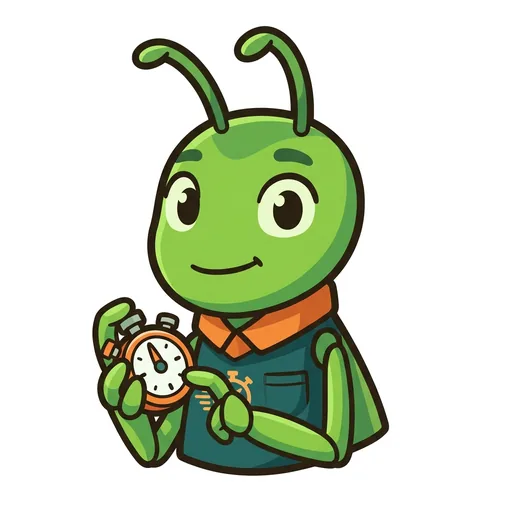
Spry
Focus & brain-breaks — works in short focused sprints, then a real movement break
-

Cael
Self-explanation — asks 'but why does that work?' and answers in his own words
-
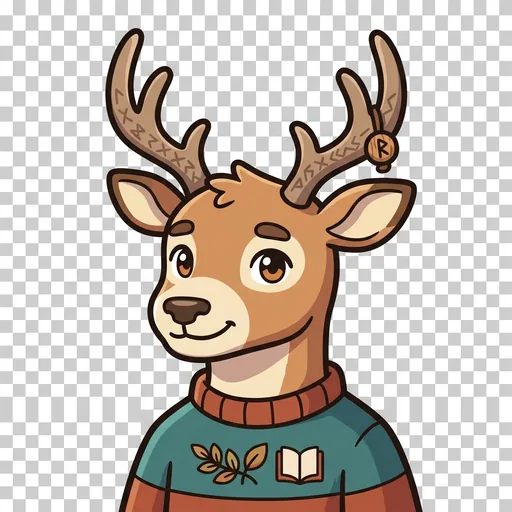
Rune
Elaboration — ties each new idea to something he already knows
-

Lumi
Concrete examples — turns a fuzzy idea into a real example you can picture
-
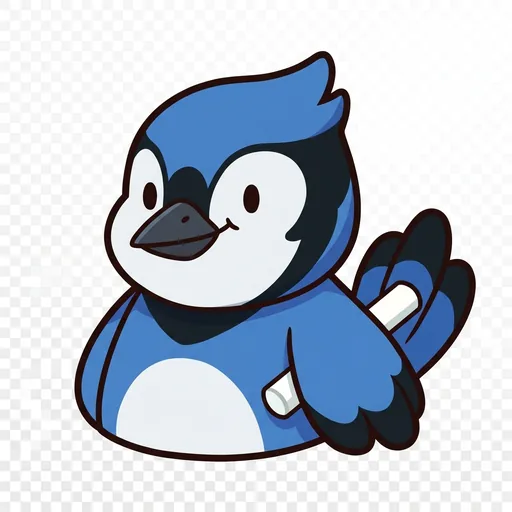
Indie
Dual coding — draws a quick picture so words and images work together
-
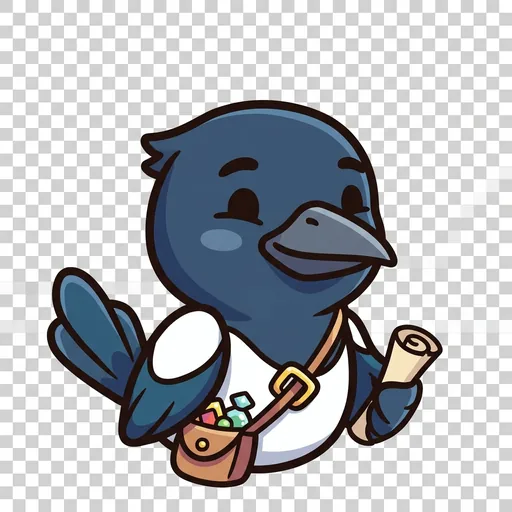
Mnemo
Mnemonics — turns a hard fact into a silly rhyme or picture you can't forget
-

Reeva
Retrieval practice — closes the book and recalls from memory before peeking
-
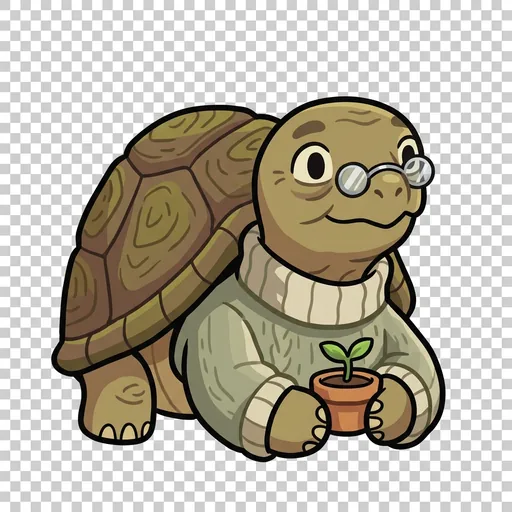
Halcyon
Spaced practice — spreads studying across days instead of cramming the night before
-

Tovi
Interleaving — mixes different problem types instead of drilling one kind
-

Otis
Growth reframe — turns 'I'm bad at this' into 'not yet' (anti-shame, RSD-safe)