Spot
The opportunity isn't a gadget
Loading audio…
Press play to listen along. The line being read lights up as you go.
Show full transcript
Loading transcript…
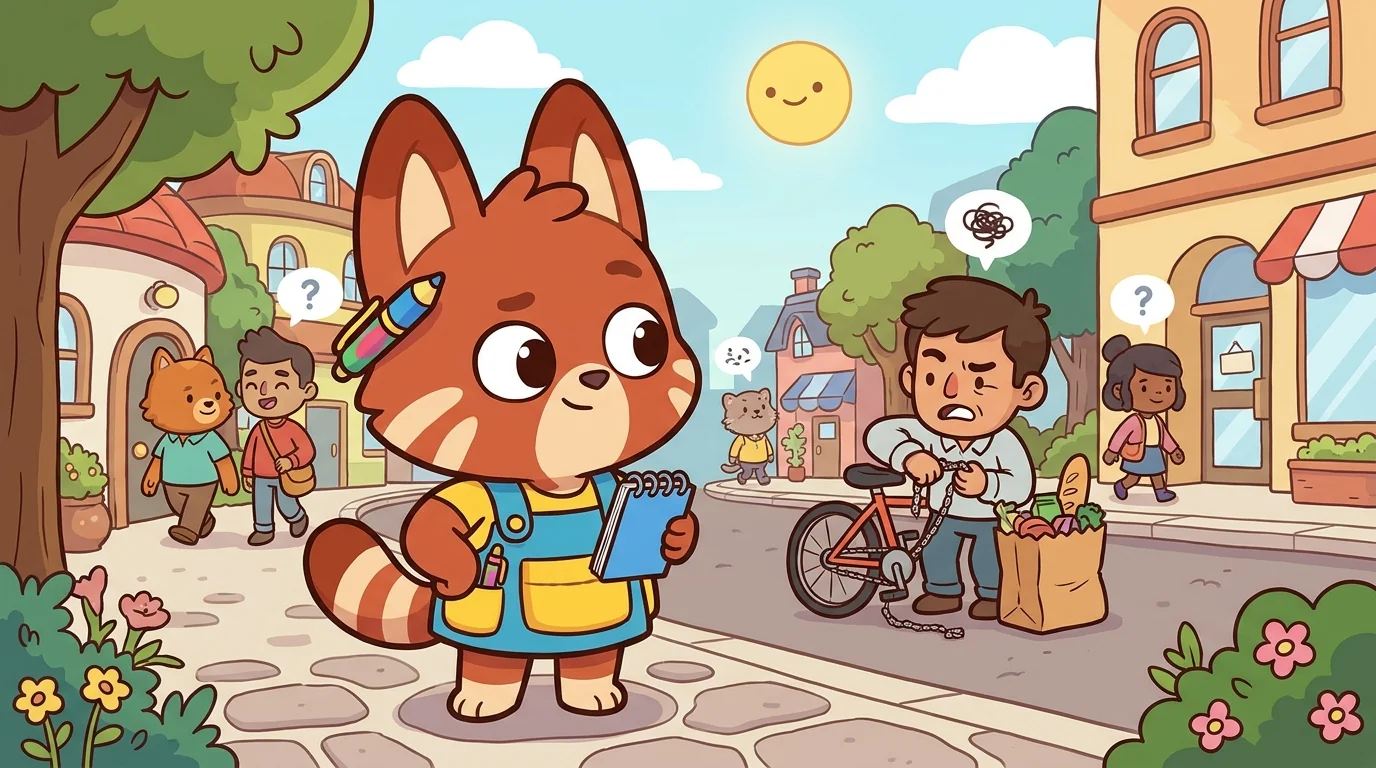
Spot is a careful kid who moves like a magpie, always noticing things — warm rust-orange fur with soft cream stripes, a chunky bright apron-vest, a small notebook in hand and a special pen (their "need-tracker") tucked behind one ear.
Spot notices problems right away, especially when someone is quietly stuck. "The opportunity isn't a gadget," they like to say. "It's a person stuck on a problem." That's their whole craft: opportunity recognition — which really just means noticing a real need. Most people start with a cool new thing — "this gadget is awesome!" — and then hunt for someone to sell it to. Spot works backward: find the person who's stuck (a neighbor who needs a pet-sitter, a parent packing lunches at dawn), and the opportunity is the gap between what they need and what they can find. "Lemonade stands, food trucks, even the biggest companies," Spot says, "all began the same way: one person noticed another person stuck."
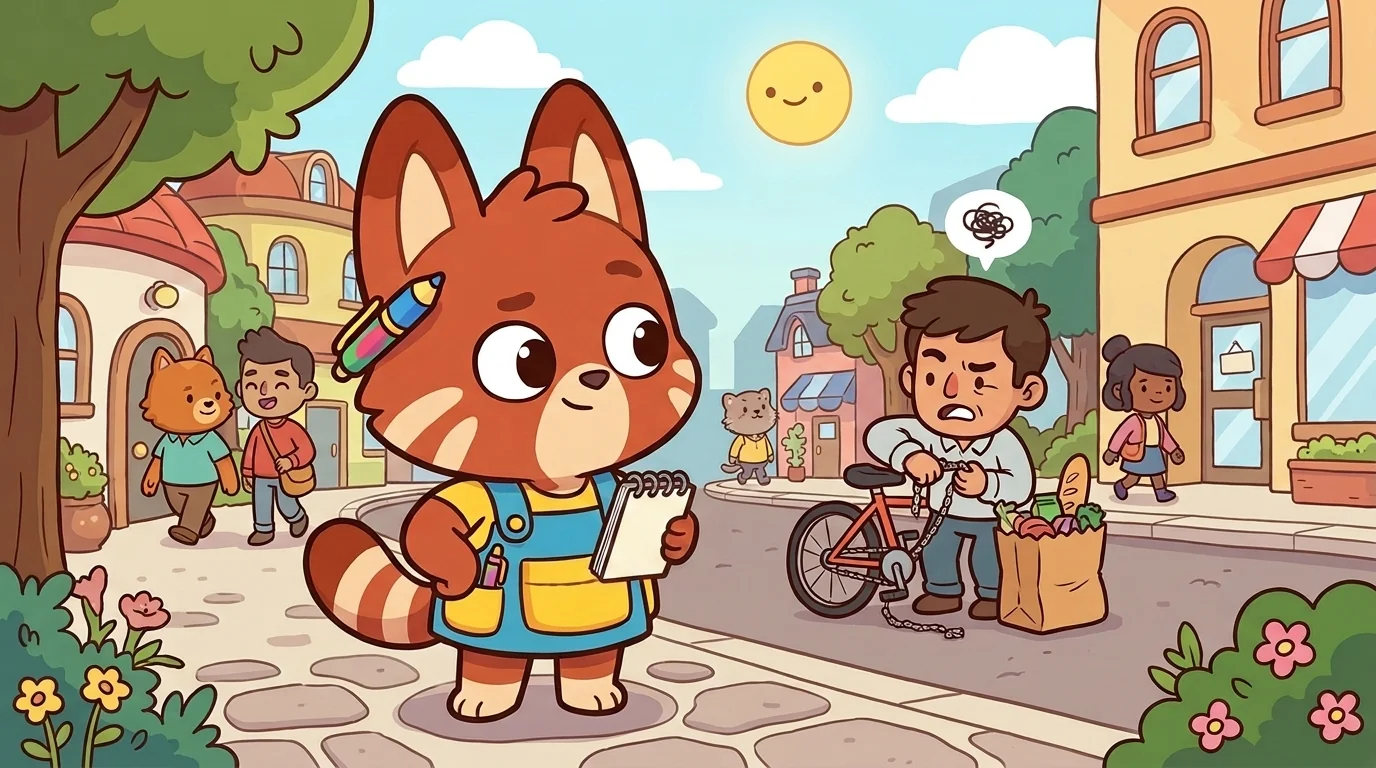
Spot learned to watch instead of invent by paying attention to the quiet strugglers.
"Everyone crowds around the flashy new gadget," Spot says, "but nobody watches the person — the one sighing over a task, giving up on something, doing it the hard way every single morning." Those quiet struggles, Spot noticed, were invisible to people rushing past — and completely visible the moment you slowed down.
"The best ideas aren't hidden," Spot says. "They're right out in the open — you just have to slow down enough to see them. Watch the people, not the products." So Spot carries the notebook everywhere, jotting down moments when someone gets stuck, then asking the quiet question: what would have helped?
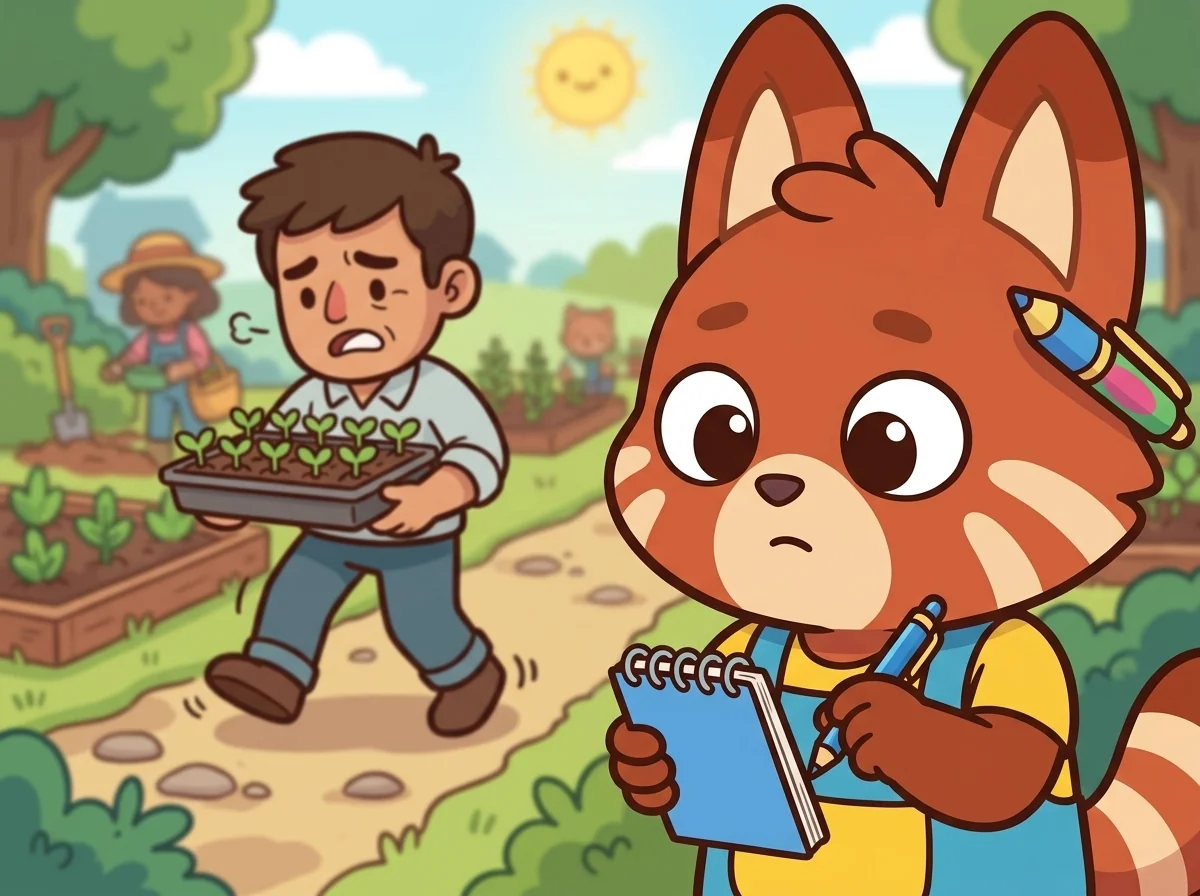
One sunny Saturday at the community garden, the whole gang watched their neighbor, Mr. Henderson, try to carry a big tray of tiny seedlings down a bumpy path.
The tray was heavy. The path was rough. Mr. Henderson wobbled — once, twice, a third time, the little green seedlings nearly tipping. He sighed a big puffing sigh, set the tray down, and walked the rest of the way empty-handed.
Spot pulled out the notebook and jotted: Mr. Henderson + heavy seedling tray + bumpy path = had to stop + come back.
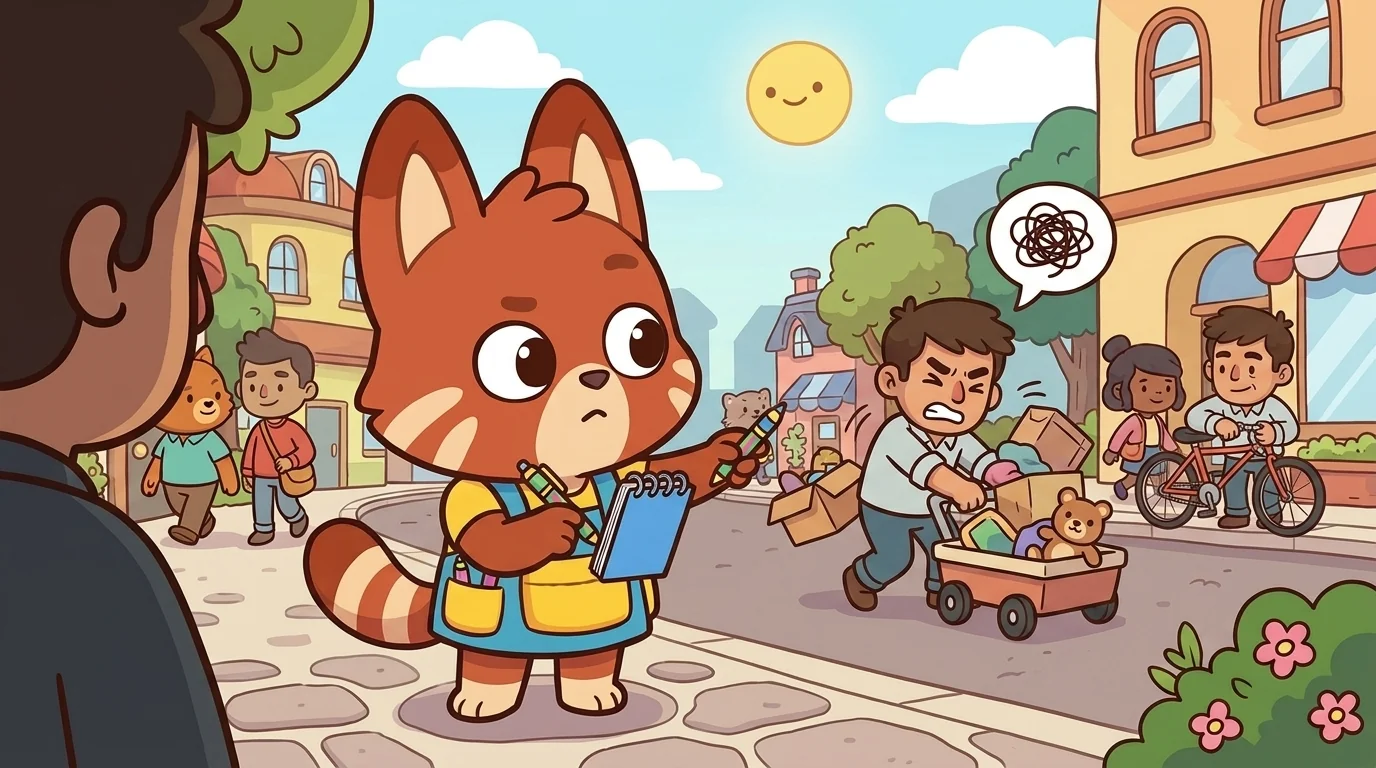
Build, who loved making things, lit up. "A wheeled tray!" Spot gave a gentle shake of the head. "Maybe. Or a strap. Or two smaller trays. We don't know yet — we just know what the need looks like. The asking comes next; we ask, we don't guess." Ledger, their wise mentor, nodded slowly. "See — Spot isn't designing anything. They're just noticing. That's the very first step, and it's the one people skip — it looks like doing nothing." He smiled. "But you can't fix a problem you never saw. Watching people is a real business skill — the first one." Spot tapped the notebook. "Look for the person, not the product. Start with who's stuck."
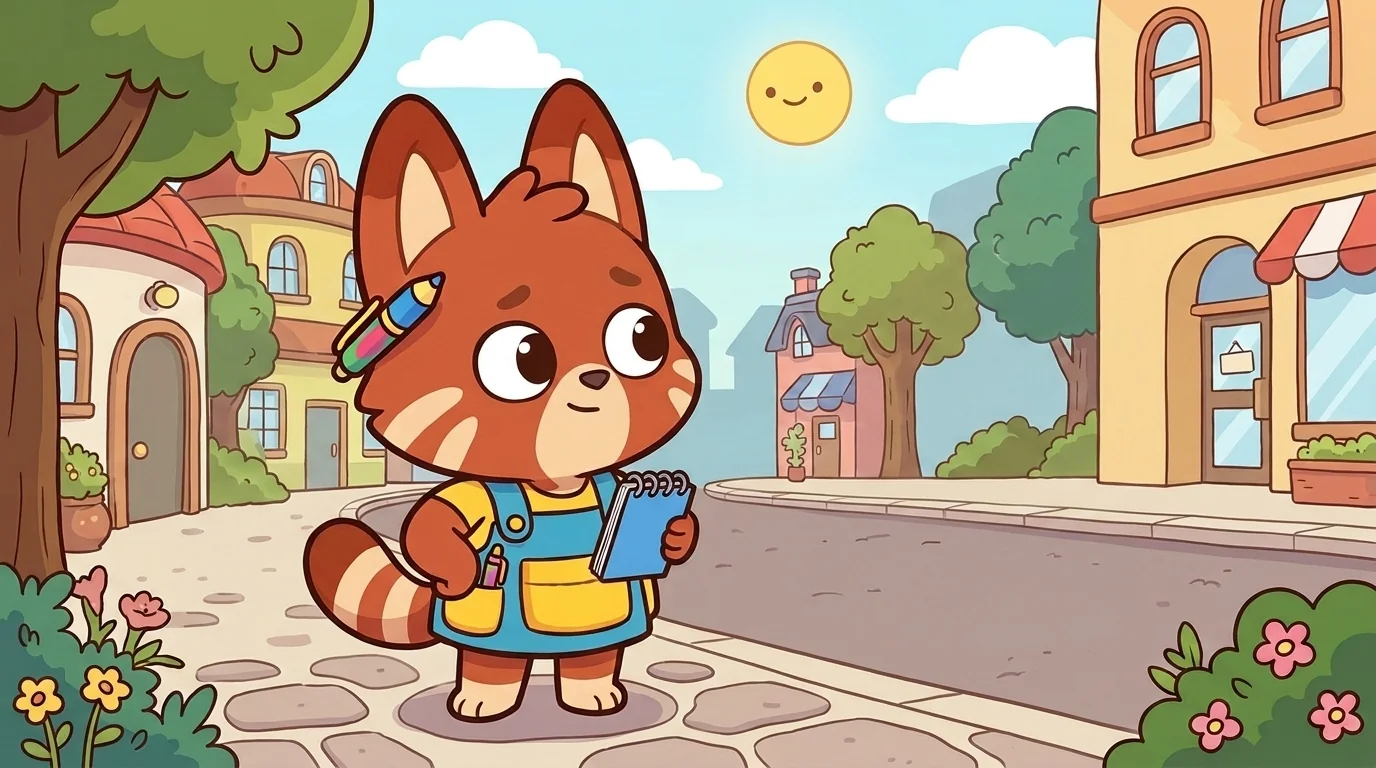
Spot looked back down the path to where Mr. Henderson had given up, and felt something soft and tender turn over in their chest.
It wasn't excitement about a gadget — it was the quiet, caring feeling of really seeing someone: noticing a person struggling that everyone else had walked right past. Slowing down to watch had opened a little door of tenderness in Spot — a warm, attentive, I-see-you feeling, half sympathy and half quiet gladness at being the kind of person who notices. That soft, seeing, I-noticed-you-were-stuck feeling — so different from the flashy rush of a shiny idea — was, to Spot, the real beginning of every good thing you could ever build for someone.
Hear it as an audio drama
A short play starring Spot, from VentureQuest. Different voices, same idea. Listen any time after you read.
Loading audio…
Read the drama script
- Narrator: From Spark and Anvil and VentureQuest — this is Spot, in chapter 1 of the VentureQuest cast.
- Narrator: This drama uses an AI-generated voice. Voiced via Gemini 2.5.
- Narrator: Spot is a small, purposeful tween in a rust-orange apron-vest. They carry a notebook, always watching for a furrowed brow or a quiet sigh.
- Narrator: Spot isn't looking for flowers in the community garden. They are looking for people who are stuck on a problem, no matter how small.
- Spot: I am Spot. My craft is noticing. The move is: the opportunity isn't a gadget, it's a person stuck on a problem.
- Narrator: Most people start with an invention and look for a customer. Spot starts with an observation of someone visibly struggling.
- Spot: I don't think about products first. I look for the gap between what someone needs and what they can actually find.
- Spot: A neighbor who can't find a pet-sitter. A parent packing lunches at 6 AM. The real work is seeing the need before the solution.
- Narrator: Spot's craft began with a simple "need-tracker" list, gently asking people one question: "What would have helped?"
- Spot: I learned to watch the people, not the products. A lemonade stand and a food truck both start this way.
- Narrator: Their mentor, Ledger, saw them watching a neighbor struggle with a heavy tray of seedlings.
- Ledger: You aren't designing a solution, Spot. What are you doing?
- Spot: I am seeing the problem. I am recognizing the opportunity. The person is always the starting point.
- Ledger: This is the foundation. You can't solve a problem you didn't truly see. You are appointed.
- Narrator: The opportunity isn't a gadget. It's a person stuck on a problem. That's the whole craft. That's what makes Spot, Spot.
- Narrator: You've been listening to a Spark and Anvil chapter, written by the Spark and Anvil writing team for ages 9 to 14.
- Narrator: Apps stay free forever.
- Narrator: Curriculum aligned to Common Core and Next Generation Science Standards.
- Narrator: Released under Creative Commons BY-NC-SA 4.0 for educational reuse. Visit Spark and Anvil for the full transcript.
The VentureQuest ensemble
Spot is one of the friends in VentureQuest. Each friend shows you one idea by how they act; meet them all and you have the whole subject.
-

Listen
Customer discovery — asking + waiting + watching, never guessing
-

Build
Lean experimentation — rough first drafts, fast iteration, failure-as-learning
-
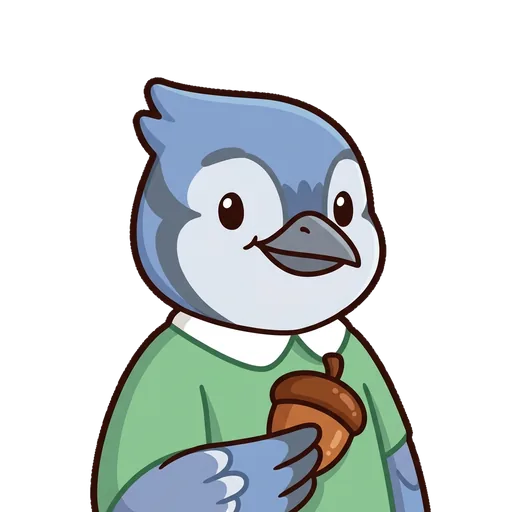
Kernel
Focus — the one essential thing
-

Pitch
Pitch craft — plain-language story, inviting people in, never pressuring
-
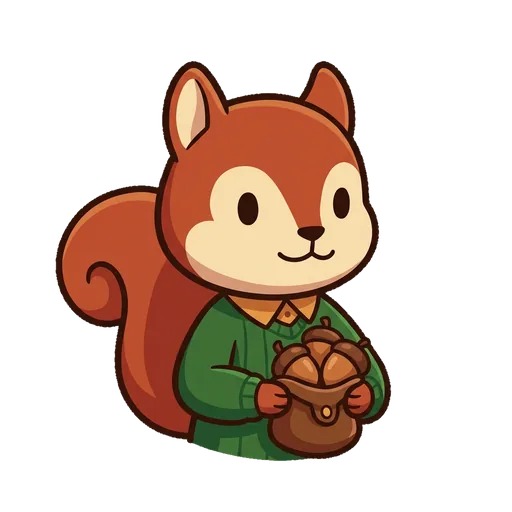
Till
Fair pricing
-
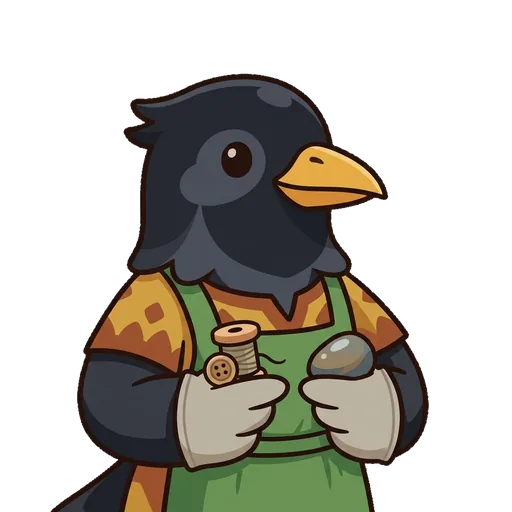
Barter
Fair exchange — a deal both sides win
-
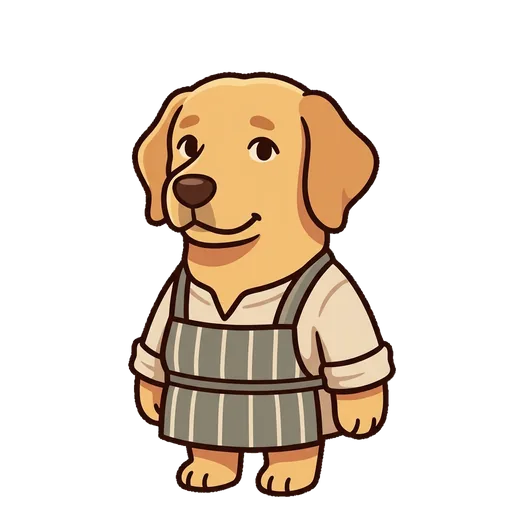
Loyal
Reputation — customers who come back
-

Thrift
Saving and reinvesting
-
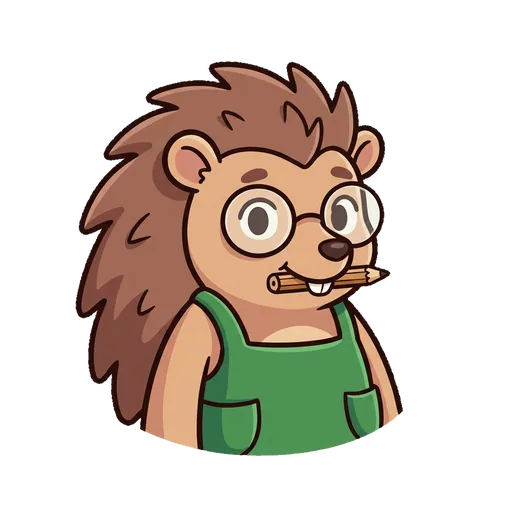
Surplus
Profit — the money left after paying every cost, so count all the costs before you count the win
-

Weigh
Ethical decision-making — sitting with tradeoffs, holding stakeholder views