How are you feeling?
Start here
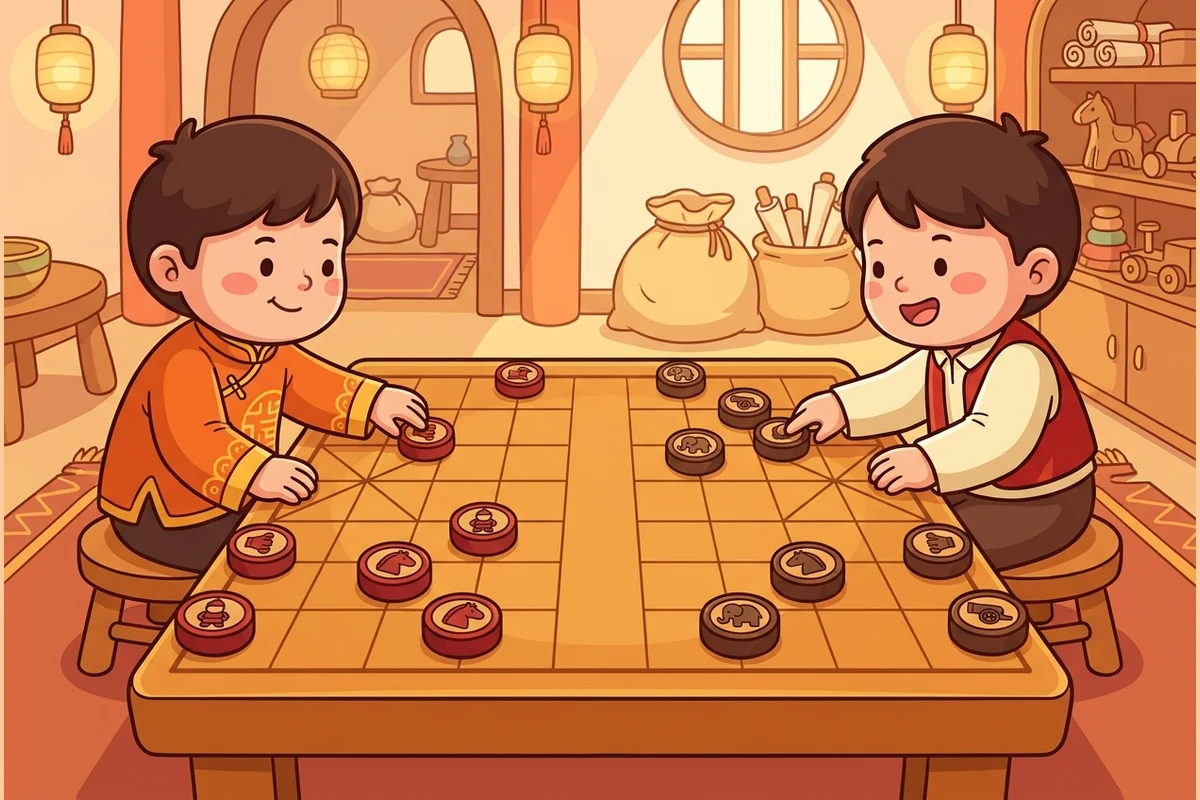
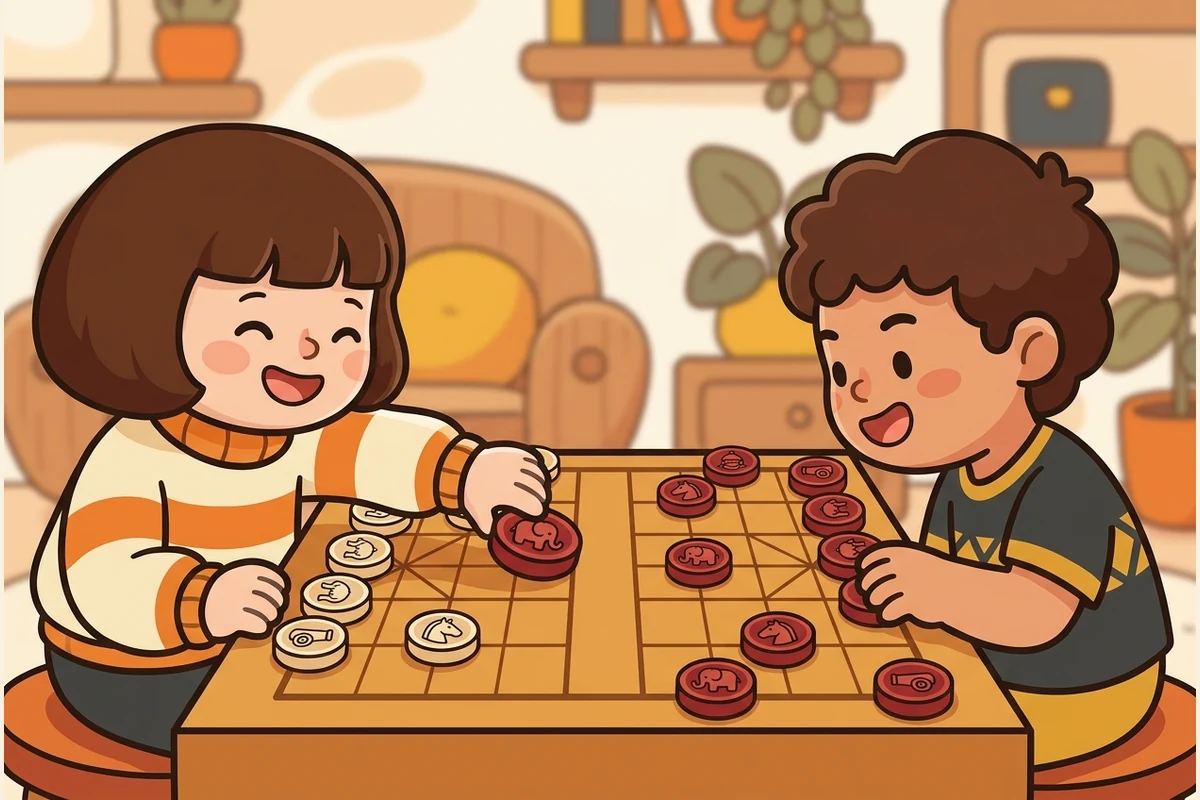 Play a Friend Pass-and-play xiangqi on one device — the real board, the river, and the palace, face to face.
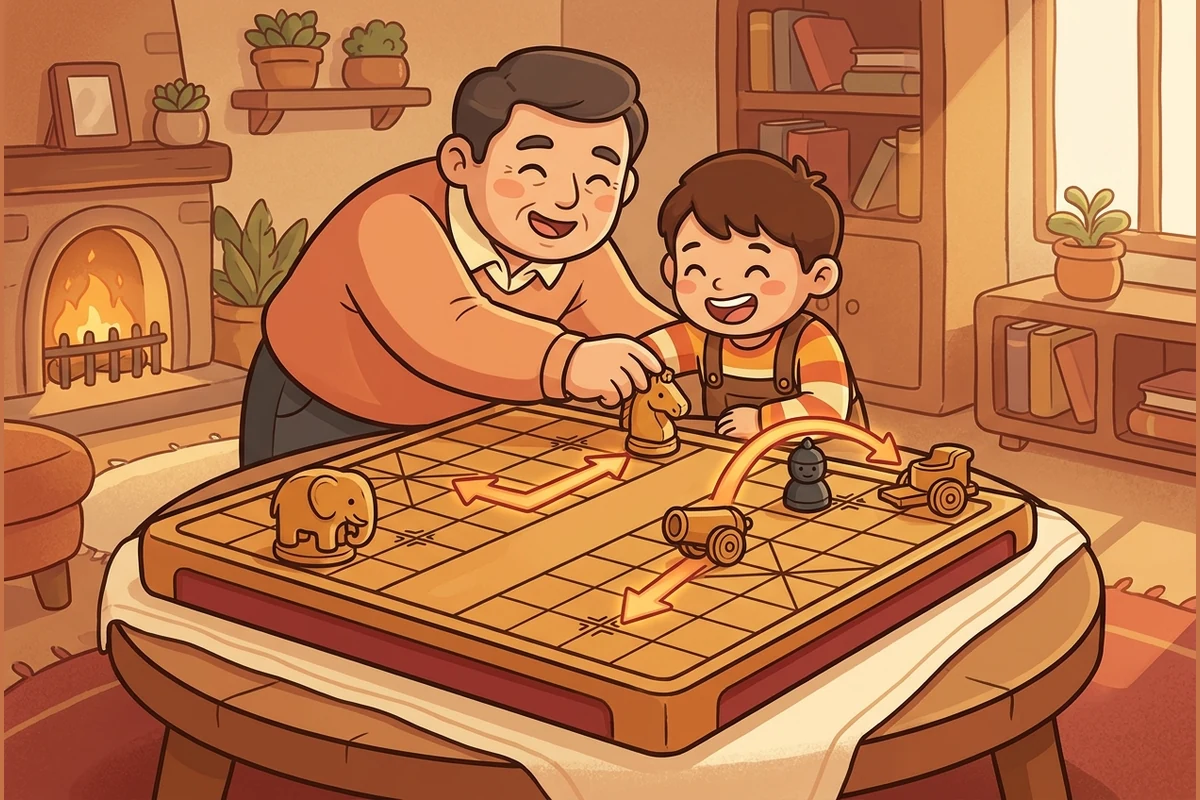 Learn to Play How each piece moves — why the cannon needs a screen, the horse gets hobbled, and the elephant cannot cross the river.
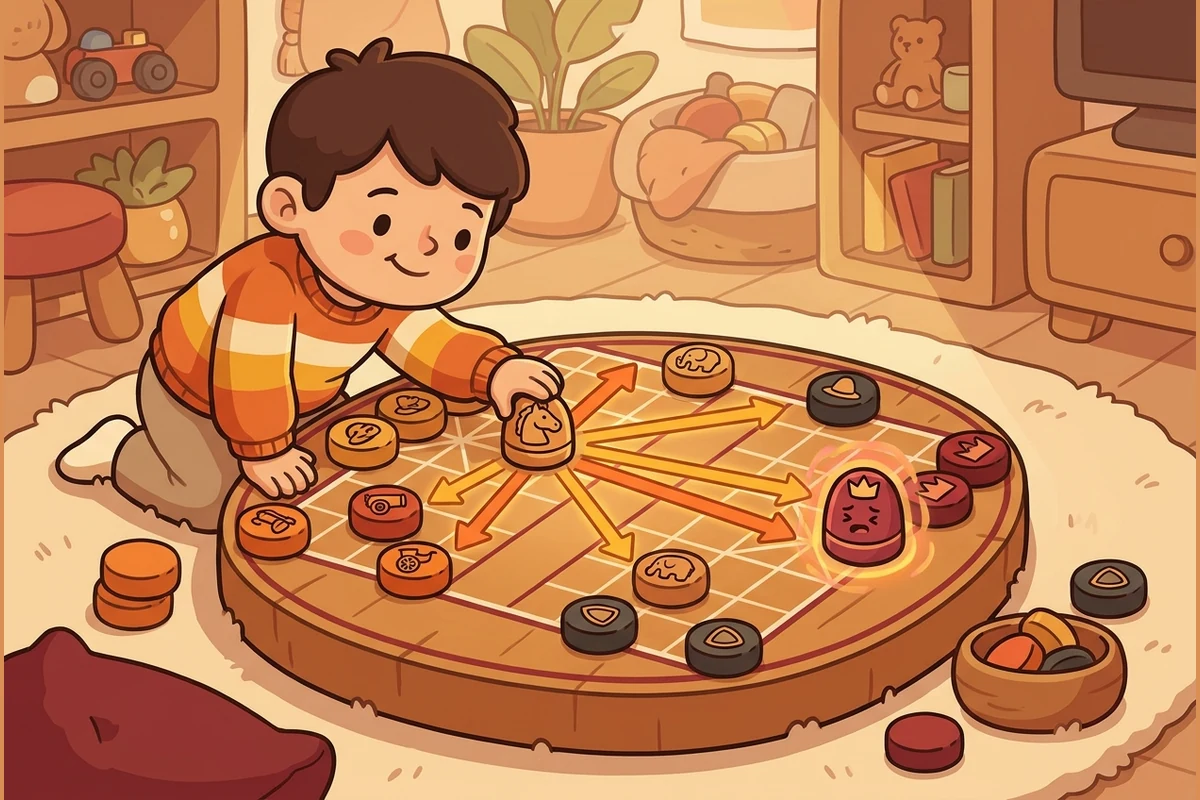 Board Vision Train your eye for the board — what each piece attacks, and where the general is in danger.
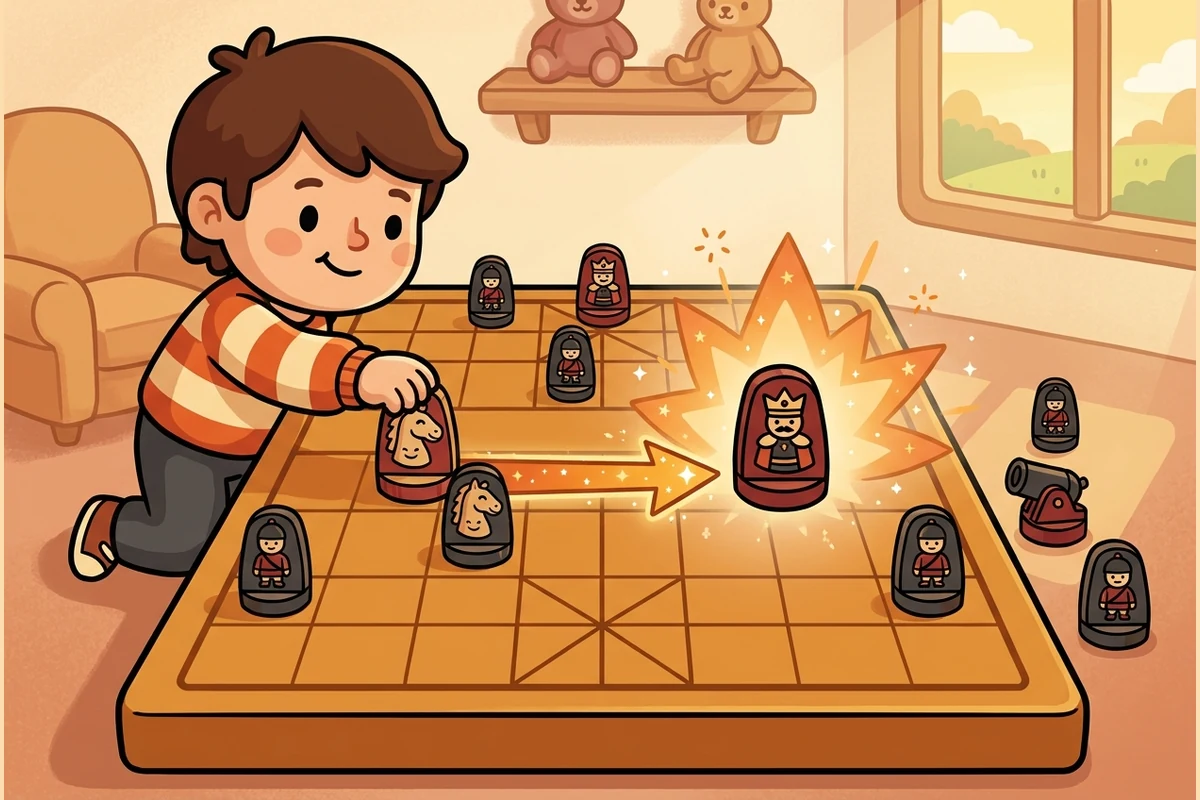 Endgame Trainer The few-piece finishes where one right move wins — checkmate the general with what you have left.
All activities
Play & learn
Sharpen your play
Practice & together
Concept Kits — 16 kits of xiangqi strategy
More ways to play
😄 Brain break
Built from these ludemes
A ludeme is a building block of a game's rules. This one combines:
Where this game comes from
Xiangqi (Chinese chess)
Xiangqi with the pieces you play today, including the cannon, was settled in China by the time of the Song dynasty (960–1279). Games called xiangqi are mentioned in older writings, but nobody is sure they were the same game.
One thing to hold: A traditional set is 32 flat wooden discs, each with its name carved in and painted red or black.
Why it matters: The river across the middle is labelled 楚河 漢界, “the Chu river, the Han border”: the line between two kingdoms that fought for China after 206 BCE. The cannon is written two ways, 砲 with the sign for stone (a catapult) and 炮 with the sign for fire; sets often use one for each side.
What we don’t know: Whether xiangqi grew from the same Indian game as chess, or started on its own in China, is still argued about.
Meet the cast — the characters who teach this
-
 Pào The cannon: waits for one piece in the way, then leaps it to strike the piece behind
-
 Elephant Wei The elephant
-
 Knight Lu Knight-jump tactical maneuver
-
 Soldier Jin Forward-advancing infantry
-
 Advisor Shi The advisor
-
 Chariot Che The chariot
-
 Marshal Shuai The General piece
-
 Palace Gong The palace
-
 River Chu The central river
-
 Sightline The flying-General rule
Ensemble stories — the cast together
What next? Pick a door
- More like this GambitTales Pin, fork or skewer? StoneSong Does this group have two eyes? StrategyForge What is the winning move here?
- A bit harder ScanForge What position is in this picture? BluffForge Which hidden piece is the bluff? GridForge Where is the winning connection?
- Something different PrismForge Where will the light ray go? ClassCircles What helps this student most? RoboForge Which code gets the robot home?