
Arel
THE (a+b) SQUARED AREA MODEL — *a square with side a+b cuts into four regions: an a by a square, a b by b square, and two a by b rectangles, so (a+b) squared = a squared + 2ab + b squared.*
Loading audio…
Press play to listen along. The line being read lights up as you go.
Show full transcript
Loading transcript…
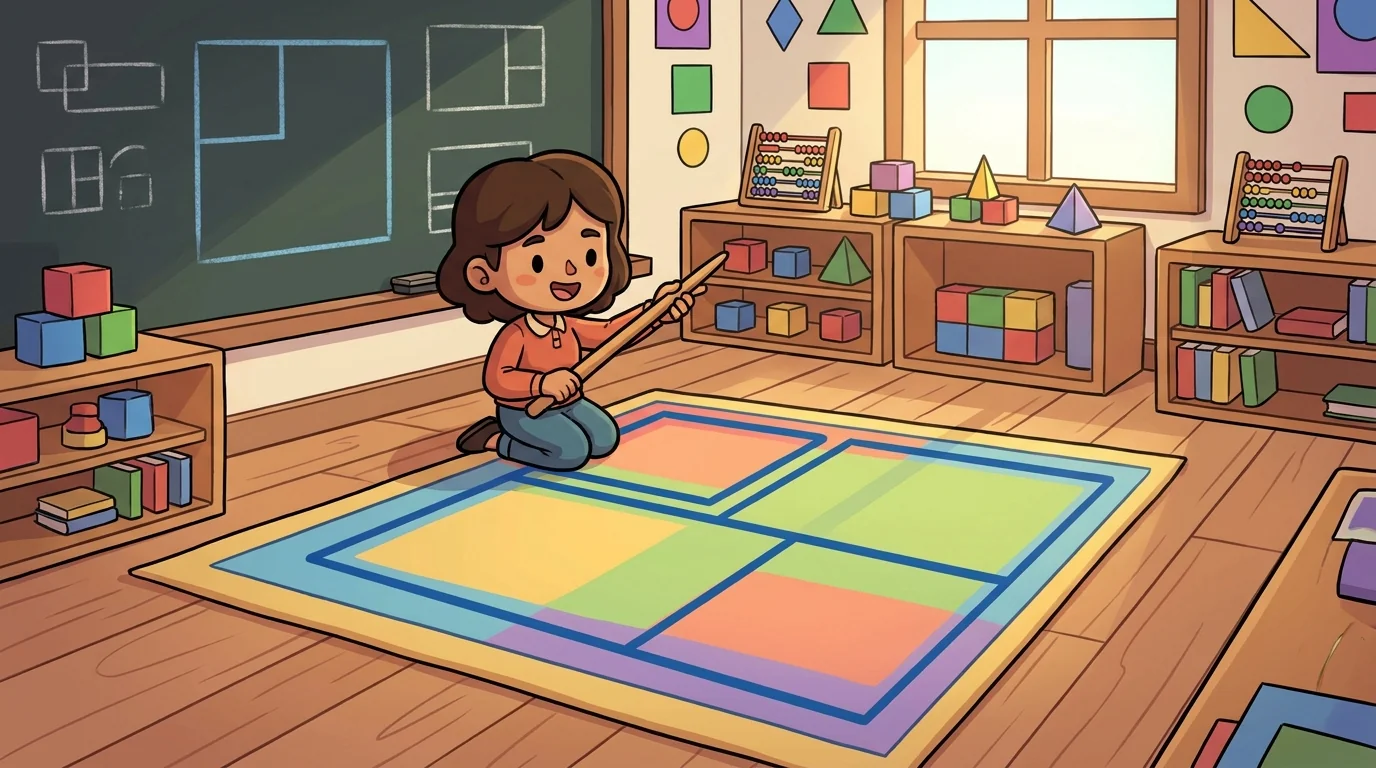
Arel worked with one big square drawn on the floor, its side split into two lengths — a longer part she called a, and a shorter part she called b. So the whole side was a-plus-b. "People look at this big square and freeze," Arel would say. "The side is a-plus-b, so the area is a-plus-b, squared — and that sounds scary. So don't look at the whole thing. Cut it." She'd draw one line across and one line down, right at the a-to-b split, and the big square fell into four honest pieces.
"Read them one at a time," Arel said, pointing. "Top-left: an a-by-a square — that's a-squared. Bottom-right: a b-by-b square — b-squared. And two matching a-by-b rectangles on the other corners — that's two a-b's." Add the four pieces: a-squared, plus two-a-b, plus b-squared. "That's what a-plus-b squared is. Not a scary lump. Four pieces you can read."
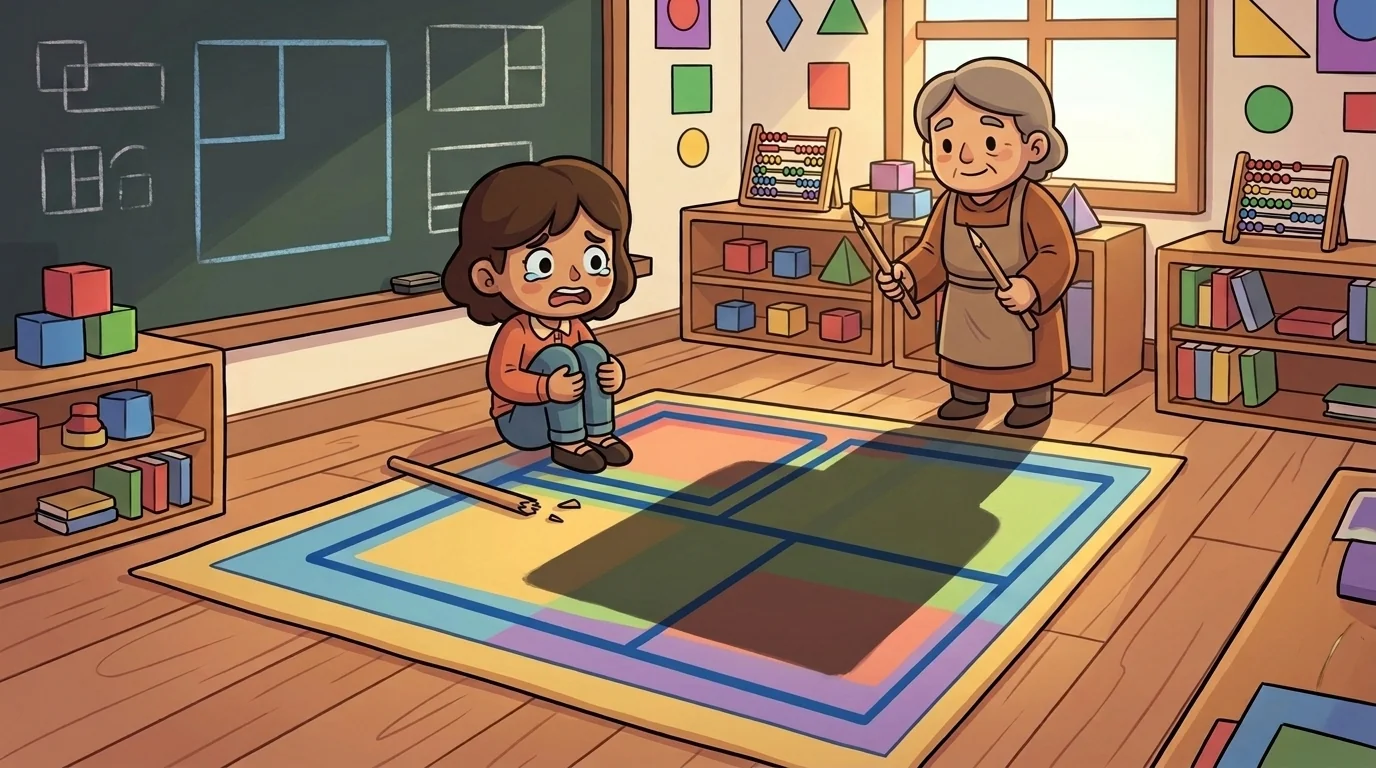
Arel used to face everything as one scary lump, and lose.
As a young apprentice, Arel would look at any big problem whole — all of it at once — and be flooded. A hard task felt like a single overwhelming wall with no handholds, and she'd end up frozen in front of it, certain she wasn't smart enough, when really she'd just never been shown where to cut.
Quill, the workshop's mentor, watched her stare, paralyzed, at a big (a+b) square. "You're trying to swallow the whole thing at once," Quill said. "No wonder it's too much." Quill drew two simple lines. "Cut it where it naturally divides. Now it's four small pieces, and you can read each one on its own." One by one, they named the pieces, and the terrifying whole quietly became four things a kid could hold. "You were never facing one impossible thing," Quill said. "You were facing four easy ones stuck together. Cut, then read." Something in Arel that had always frozen at the wall found, instead, a set of handholds.
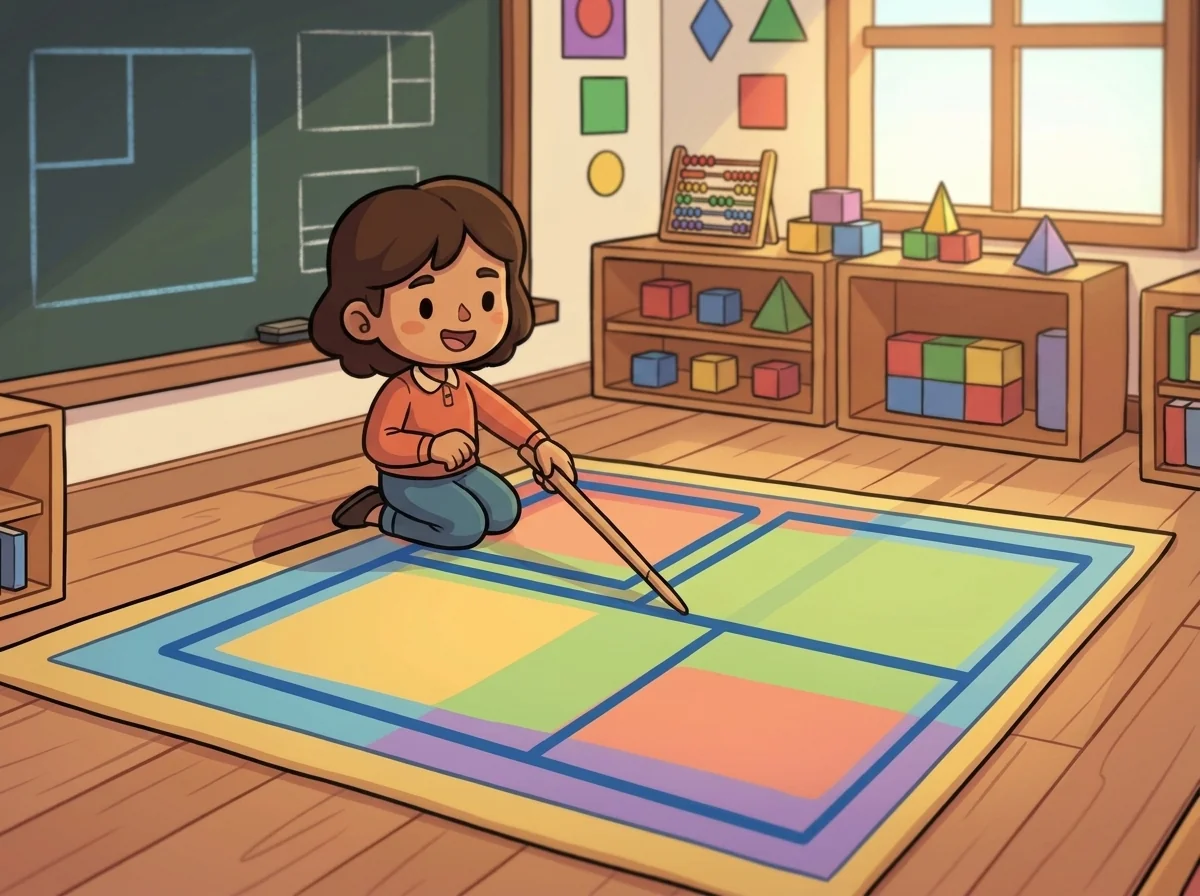
The kid who came to Arel took one look at the big split square and sighed. "That's too complicated."
"Only until we cut it," Arel said. "The side is a-plus-b. Draw a line across and a line down, right where a meets b. What four pieces do you get?"
The kid drew the lines. "Um... a big square, a little square, and two rectangles."
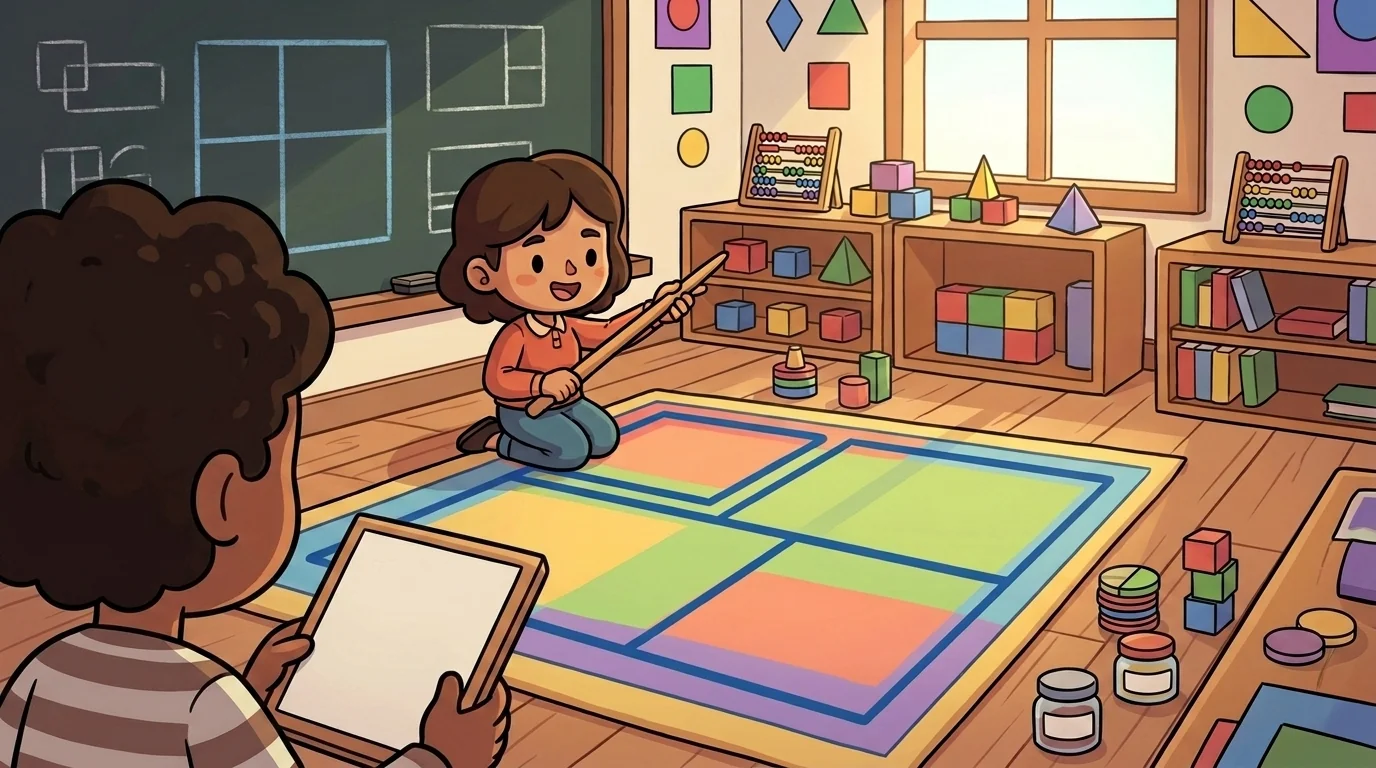
"Name them. The big square?"
"a times a — a-squared."
"The little one?"
"b-squared. And the two rectangles are each a-b." The kid paused. "So together it's a-squared, plus two a-b, plus b-squared?"
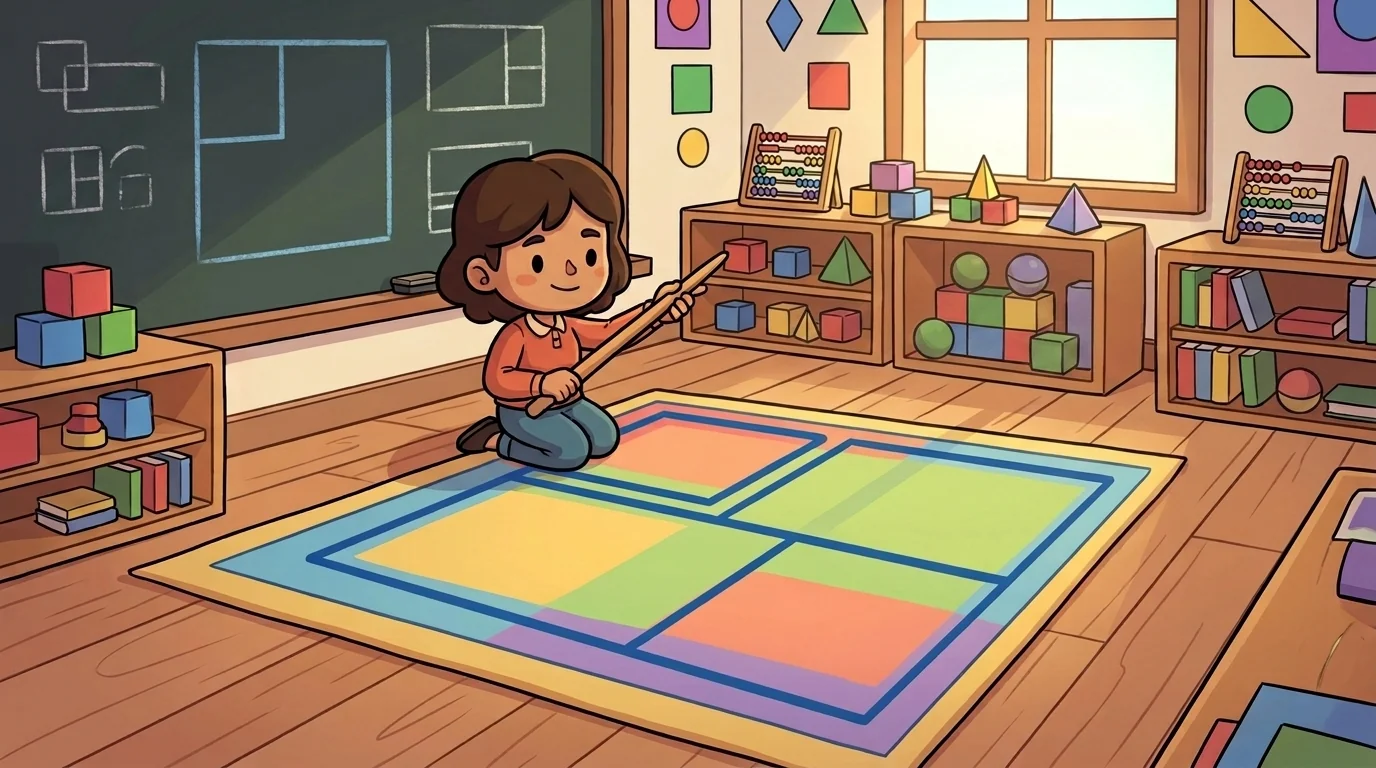
"That's it exactly. You just read the whole scary square, one piece at a time."
They cut a couple more with real numbers — a side of 12 split into 10 and 2 gave 100 + 2(20) + 4 = 144, and 12 squared really is 144 — the kid drawing the two lines, naming the four regions, and adding them up. And each time, the "too complicated" square shrank into four readable pieces, and the kid's flinch turned into a kind of methodical calm.
The feeling that settled into the kid then wasn't only the satisfaction of an expanded square. It was steadier and more capable: the discovery that an overwhelming whole is often just a few honest pieces stuck together, and that cutting it into parts you can read one at a time is not giving up — it's exactly how understanding works. If a scary big square was really four small ones, then "too complicated" was usually just "not cut up yet." That warm, grounding confidence — I can face the big thing by reading its pieces — spread all the way through, and Arel felt her own old freeze-at-the-wall ease once more, because it was the exact confidence Quill had once handed an apprentice drowning in one big lump.
"Cut the square into four; read a-squared, two a-b, and b-squared," Arel said, tracing the lines. "A scary whole is usually just pieces you haven't cut apart yet."
The CountCraft ensemble
Arel is part of CountCraft's distributed-narrative cast. Each character embodies a different curricular primitive; together they teach the full subject.
-

Tallis
The Two-Ways Counter — counts the same collection along rows, then along columns, and insists the two totals be equal (double counting)
-

Bijou
The Pair-Matcher — draws a one-to-one pairing between two sets to prove they are exactly the same size (bijection)
-

Stacia
The Staircase-Mirror — mirrors a one-two-three staircase against itself to make a rectangle (triangular numbers)
-
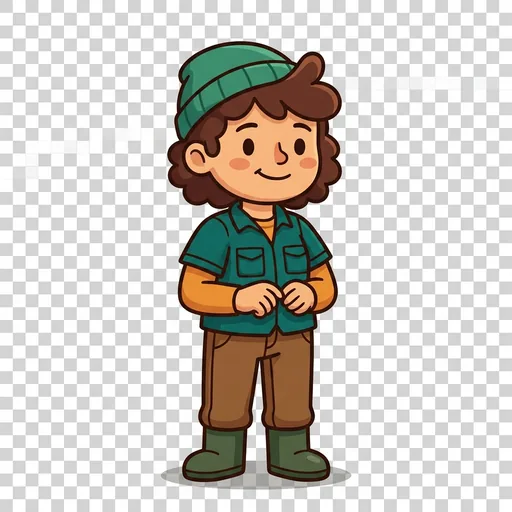
Nona
The Gnomon-Grower — adds the next odd L-shaped layer to grow a square one ring at a time (perfect squares)
-
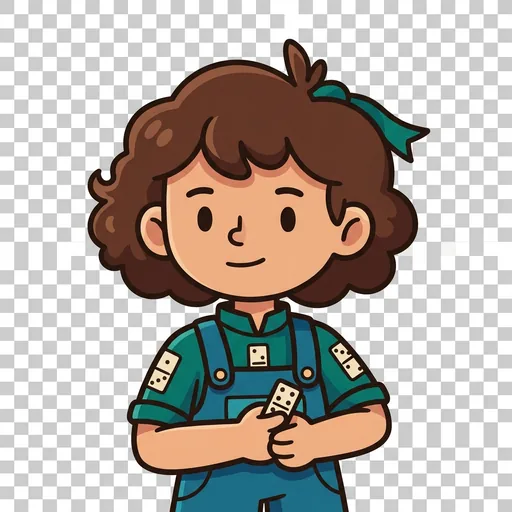
Domina
The Domino-Tiler — tiles a strip with squares and dominoes and counts the number of ways (Fibonacci tilings)
-
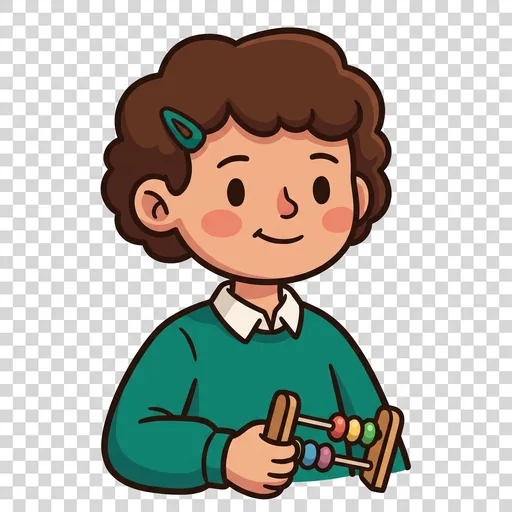
Chessa
The Handshake-Counter — pairs everyone with everyone exactly once to count the handshakes (choose two)
-

Cammy
The Committee-Splitter — sorts every committee by whether the last person is in or out (Pascal's rule)
-

Sett
The Subset-Flipper — flips an in-or-out coin for each item to list every subset exactly once (two-to-the-n)
-

Parry
The Parity-Prover — two-colours a board to show when a tiling simply cannot exist (parity and impossibility)
-

Quill
The Proof Director (mentor) — a warm, attentive adult who coaches build-the-two-counts-then-read-the-identity, and never proves for the kid