Parry
PARITY / IMPOSSIBILITY — *two-colour a board like a checkerboard; each domino must cover one of each colour, so if the colours are unequal, no domino tiling can exist — a proof that something is impossible.*
Loading audio…
Press play to listen along. The line being read lights up as you go.
Show full transcript
Loading transcript…
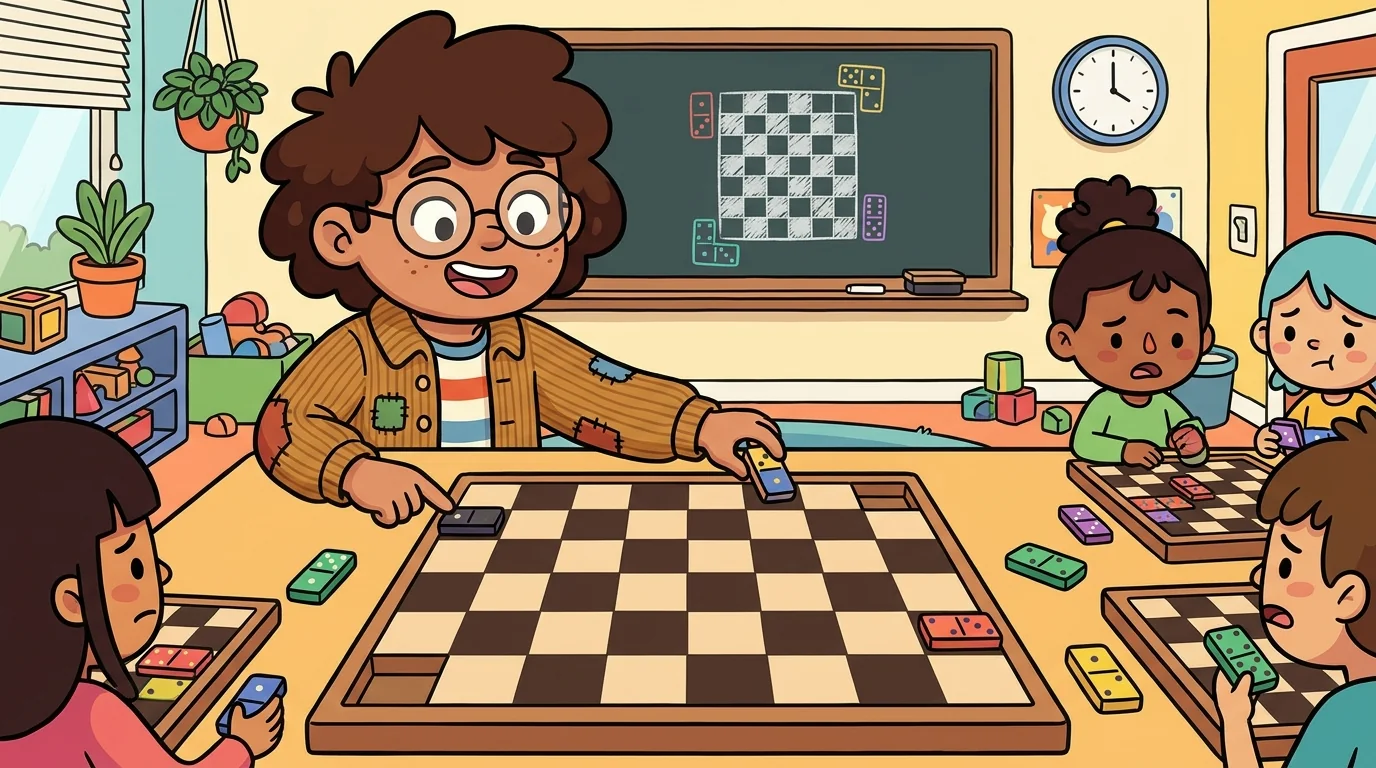
Parry studied boards that couldn't be tiled — and treated finding out as a victory, not a defeat. The classic: a checkerboard with two opposite corners cut off. "Can you cover the rest with dominoes, each domino covering two neighboring squares?" People try for ages, rotating dominoes, starting over, growing frustrated. Parry doesn't try. Parry colours. "Paint it like a checkerboard — light, dark, light, dark. Every domino, no matter where it goes, covers exactly one light square and one dark square. Always one of each."
"Now count the colours," Parry says. "The two corners you cut off were the same colour. So now there are, say, thirty dark squares and thirty-two light — unequal. But every domino needs one of each. You can't pair thirty with thirty-two." Parry smiles, satisfied. "So it's impossible — and I proved it, without trying a single arrangement. Knowing something can't be done isn't a failure. It's an answer. It's the thing that finally lets you stop trying."
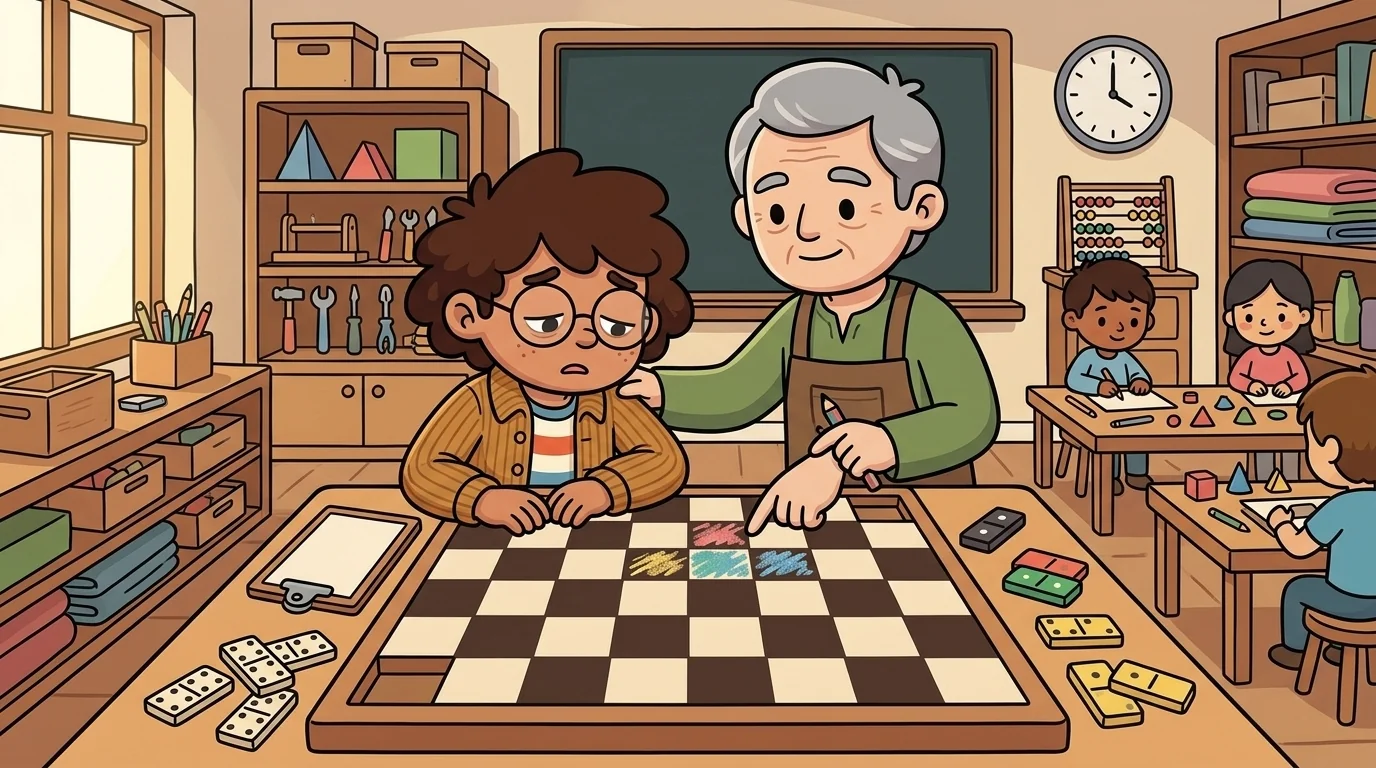
Parry knew that stop-trying relief because he'd spent years not getting it.
As a young apprentice, Parry would throw himself at impossible tasks over and over, never suspecting they might be impossible, blaming only himself. "If I just try harder, I'll get it," he'd think, through attempt after failed attempt, and each failure landed as proof that he was the problem. It was a grinding, shame-soaked way to live — always assuming the wall would move if he just pushed longer.
Quill, the workshop's mentor, found Parry exhausted over the corners-cut checkerboard, blaming himself for the thousandth failed try. "You think you keep failing," Quill said gently. "But maybe the task is failing you." Quill coloured the board and counted the mismatched squares. "It can't be tiled. Not by you, not by anyone. And look — knowing that doesn't make you a failure. It makes you free. You can stop pushing on a locked door." Quill met his eyes. "A proof that something's impossible is a gift. It ends the self-blame." Something in Parry that had been grinding against locked doors finally, gratefully, stopped.
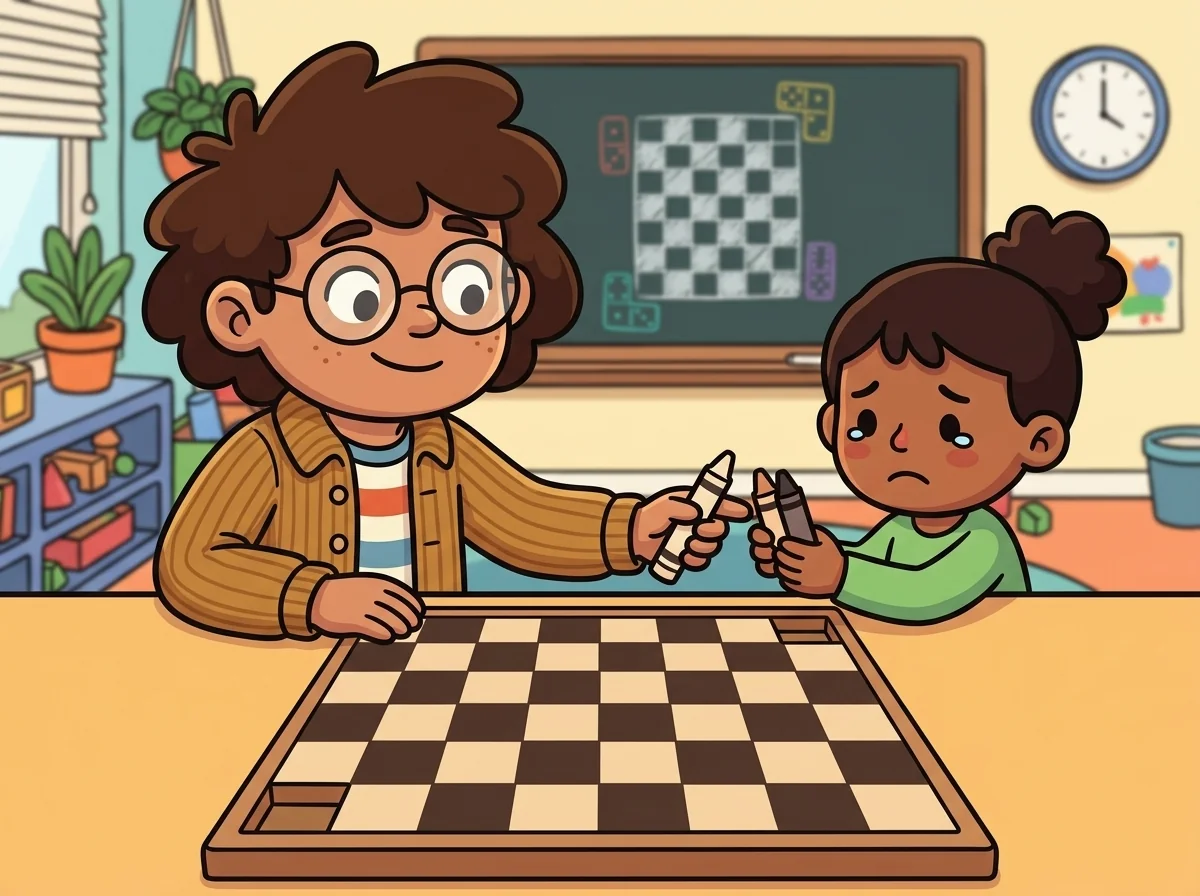
The kid who came to Parry was near tears over the corners-cut board. "I've tried like fifty times. I must be really bad at this."
"Before you try again," Parry said gently, "let's colour it." He handed the kid two crayons. "Checkerboard pattern. Now — every domino covers how many of each colour?"
"...One light, one dark."
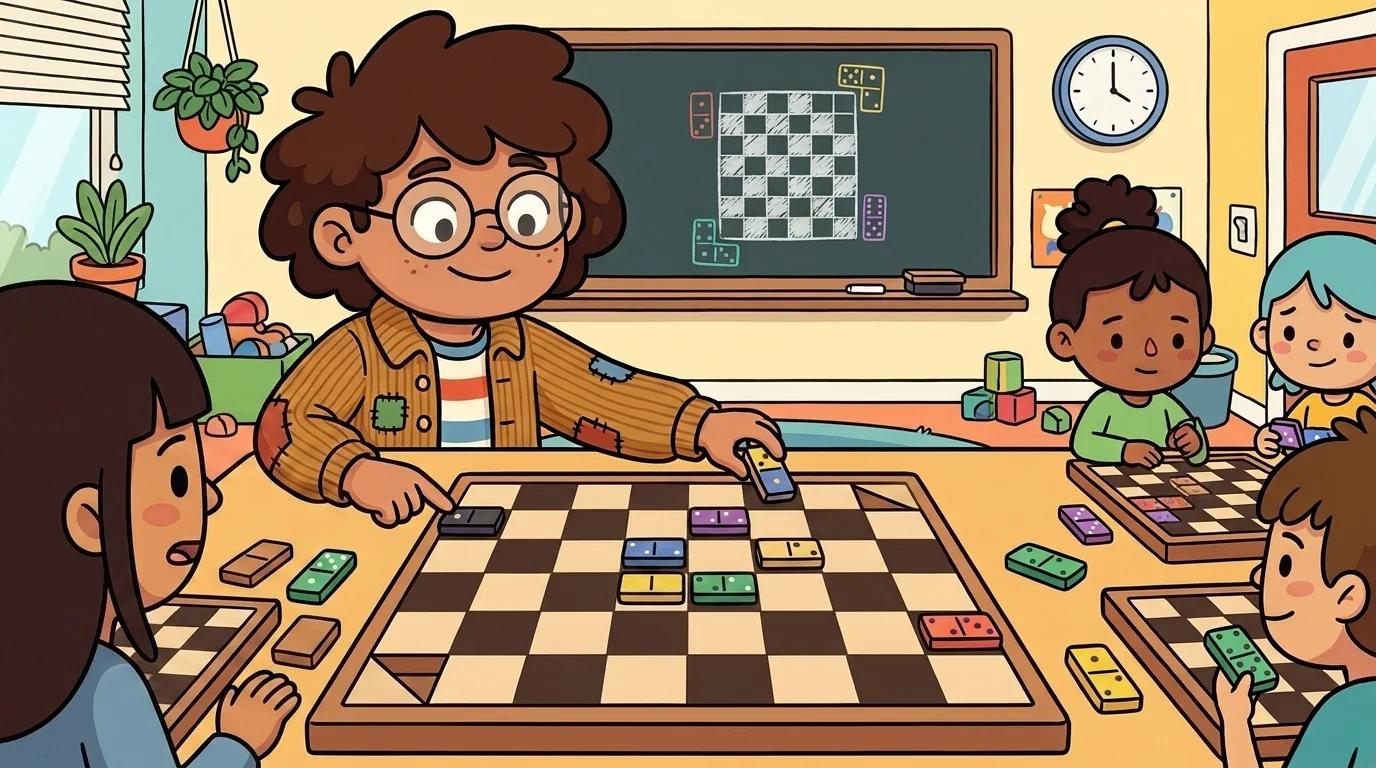
"Count the light squares. Count the dark." The kid counted. "They're not equal," they said slowly. "There are two extra of one colour."
"So can dominoes — one of each, every time — ever cover them all?"
The kid's eyes widened. "...No. It's impossible. It was never me."
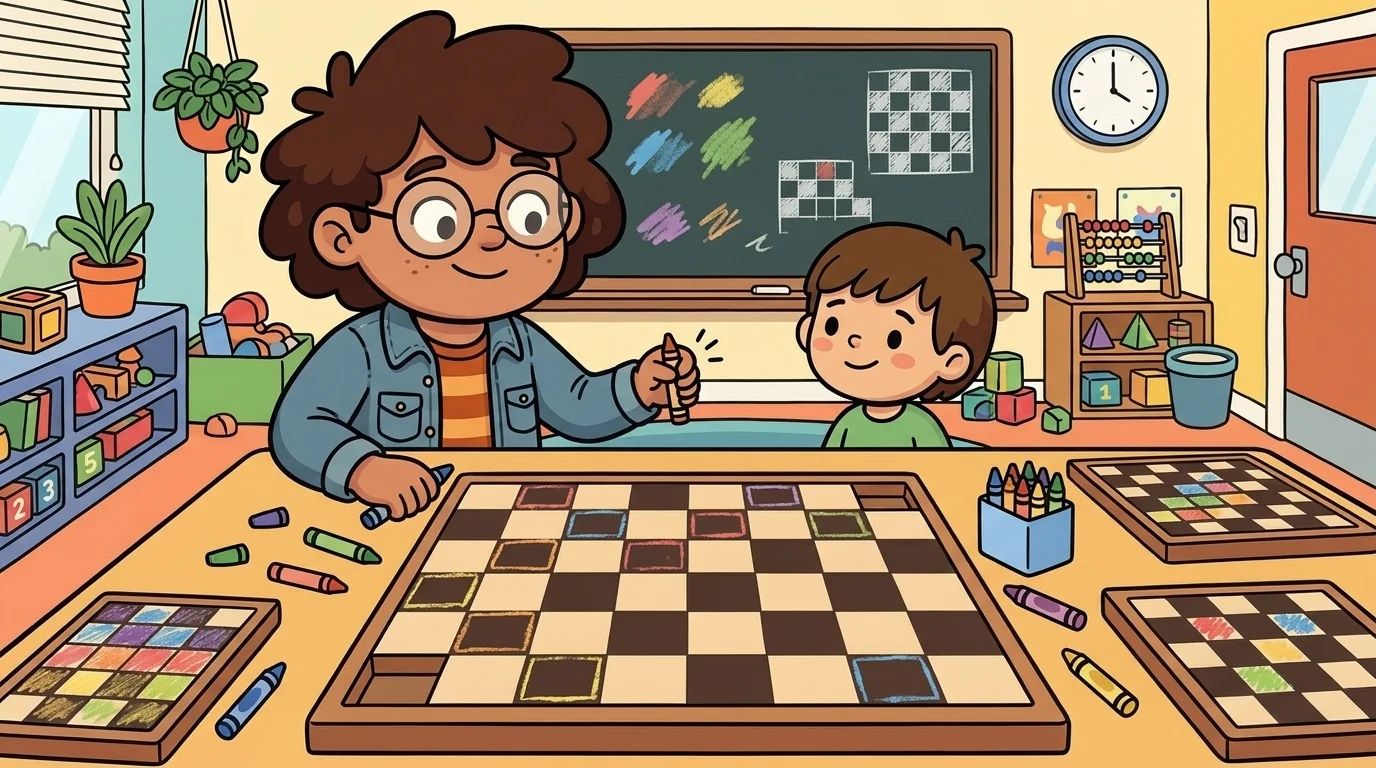
They coloured a couple more impossible boards and one that was possible (equal colours, and it tiled fine), so the kid could feel the difference: sometimes the colours balance and it works, sometimes they don't and it truly can't. And each time the kid met an impossible one, the crushing self-blame lifted, replaced by the clean relief of the door was locked; I can stop pushing.
The feeling that filled the kid then wasn't the sting of another failure. It was something they'd never felt after a "failure" before — relief, and even a strange pride: they hadn't been bad at it; the task had been impossible, and they had proved it. If a locked door can be shown locked, then all those attempts weren't stupidity — they were just missing the colouring that would have set them free. That warm, unburdening release — proving it can't be done is a win, not a shame — spread all the way through, and Parry felt his own old grinding self-blame ease once more, because it was the exact release Quill had once handed an apprentice who thought every locked door was his fault.
"Two-colour it; if the colours don't match, no tiling can exist," Parry said, capping the crayons. "Proving something's impossible isn't losing. It's the answer that finally lets you rest."
The CountCraft ensemble
Parry is part of CountCraft's distributed-narrative cast. Each character embodies a different curricular primitive; together they teach the full subject.
-

Tallis
The Two-Ways Counter — counts the same collection along rows, then along columns, and insists the two totals be equal (double counting)
-

Bijou
The Pair-Matcher — draws a one-to-one pairing between two sets to prove they are exactly the same size (bijection)
-

Stacia
The Staircase-Mirror — mirrors a one-two-three staircase against itself to make a rectangle (triangular numbers)
-
Nona
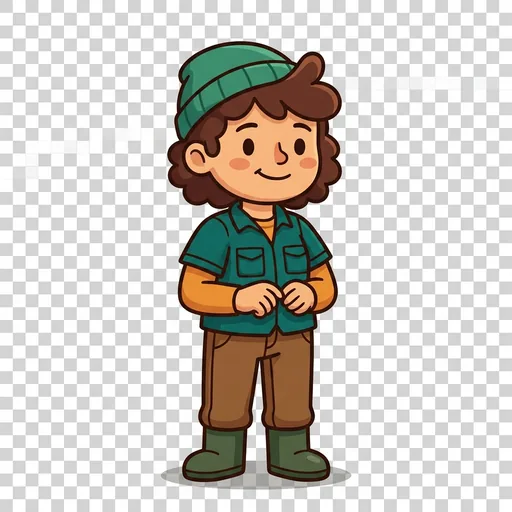
The Gnomon-Grower — adds the next odd L-shaped layer to grow a square one ring at a time (perfect squares)
-
Arel
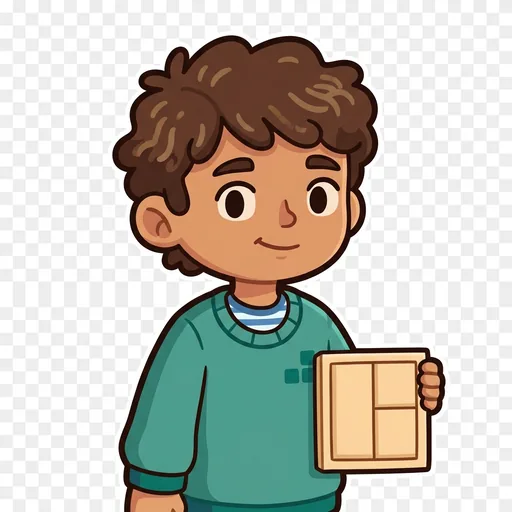
The Square-Cutter — cuts a square into four rectangles to read off a-squared plus two-a-b plus b-squared (area model)
-
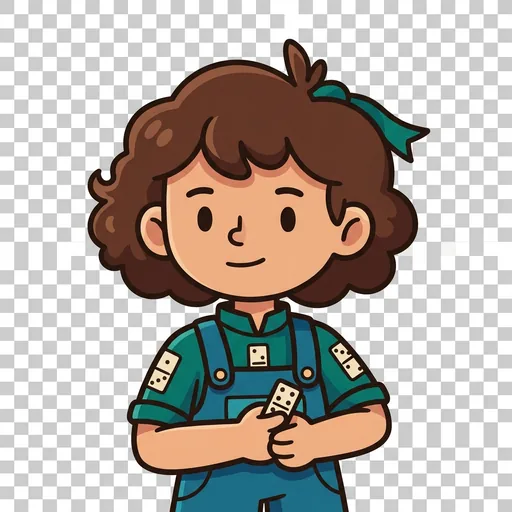
Domina
The Domino-Tiler — tiles a strip with squares and dominoes and counts the number of ways (Fibonacci tilings)
-
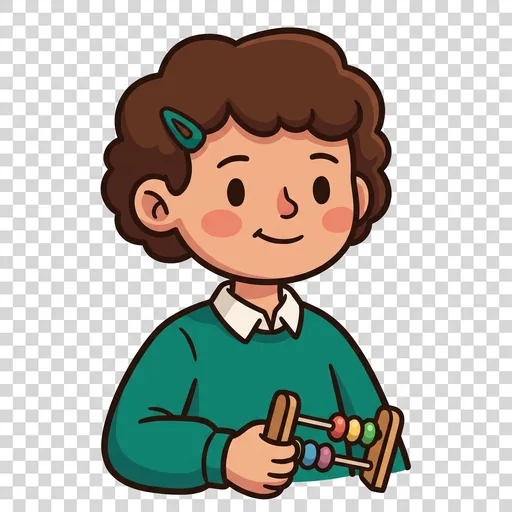
Chessa
The Handshake-Counter — pairs everyone with everyone exactly once to count the handshakes (choose two)
-
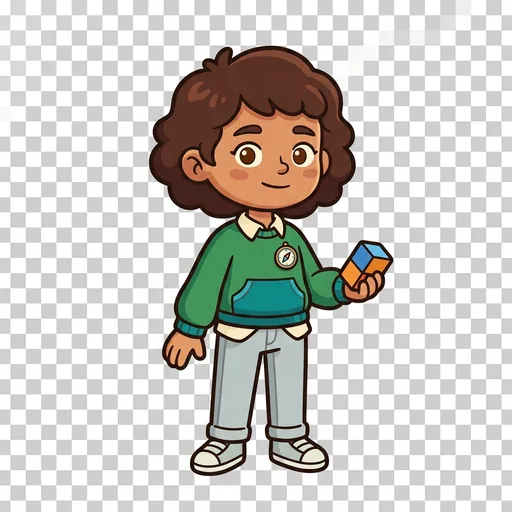
Cammy
The Committee-Splitter — sorts every committee by whether the last person is in or out (Pascal's rule)
-

Sett
The Subset-Flipper — flips an in-or-out coin for each item to list every subset exactly once (two-to-the-n)
-

Quill
The Proof Director (mentor) — a warm, attentive adult who coaches build-the-two-counts-then-read-the-identity, and never proves for the kid