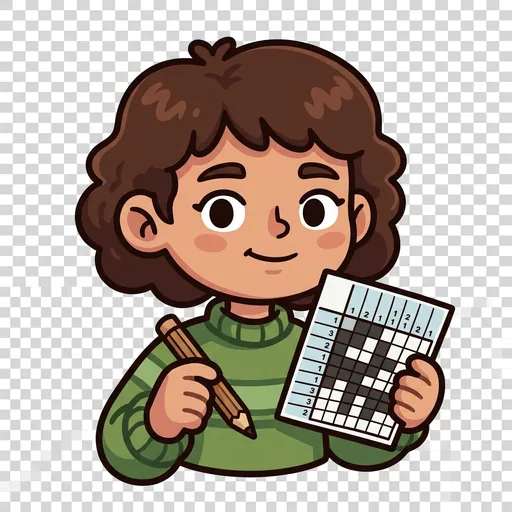
Nona
PERFECT SQUARES BY GNOMONS — *an n by n square grows to (n+1) by (n+1) by adding an L-shaped layer of 2n+1 tiles; so 1+3+5+...+(2n-1) = n squared.*
Loading audio…
Press play to listen along. The line being read lights up as you go.
Show full transcript
Loading transcript…
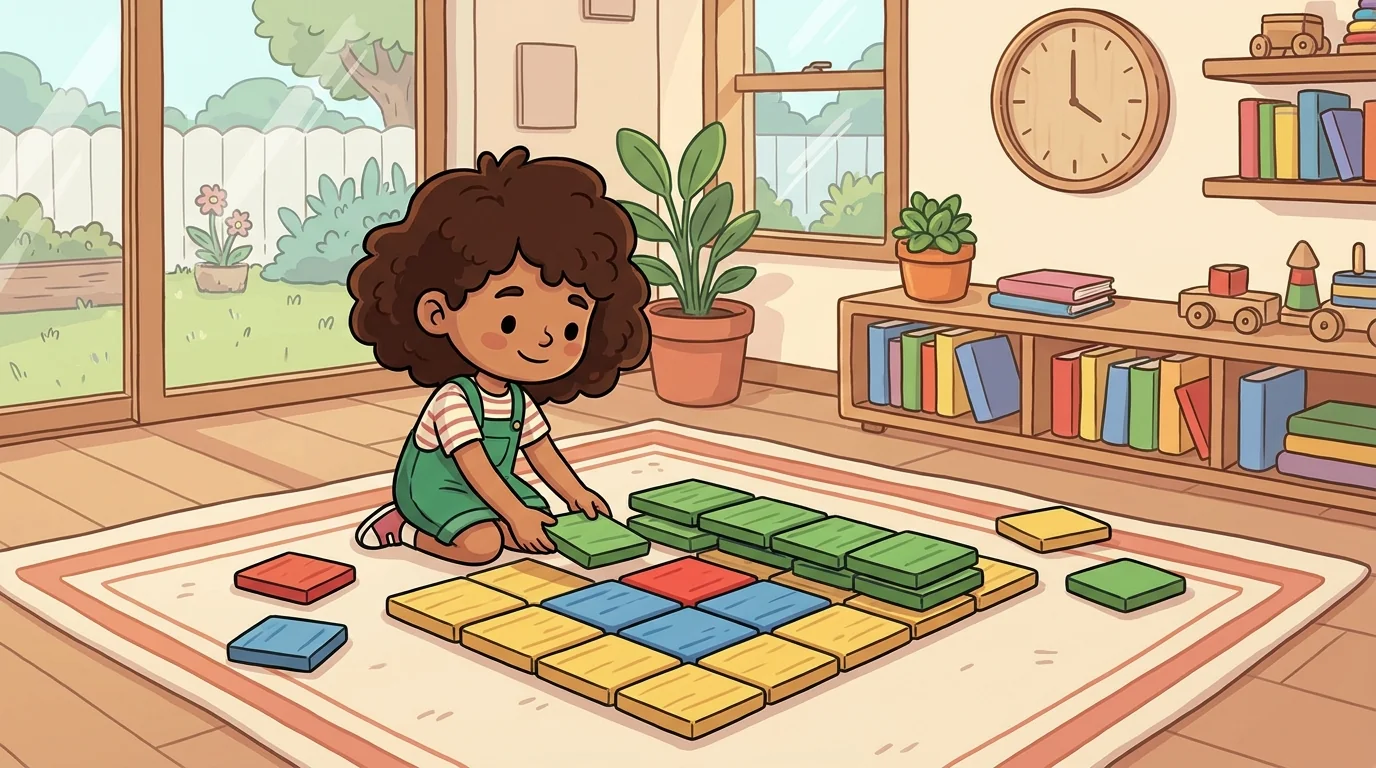
Nona grew squares. She'd start with a single tile — a 1-by-1 square — then add an L-shaped layer of tiles wrapped around two sides: two tiles up, one in the corner. Three tiles. Now it was a 2-by-2 square. Then she'd wrap another L — five tiles this time — and it became 3-by-3. "Every time I add the next odd number as an L-shaped layer," Nona would say, fitting the tiles snugly, "the square grows to the next size and stays perfectly square. One, then plus three, then plus five, then plus seven..." Those odd L's, stacked up, add to a perfect square every time: one plus three is four, plus five is nine, plus seven is sixteen.
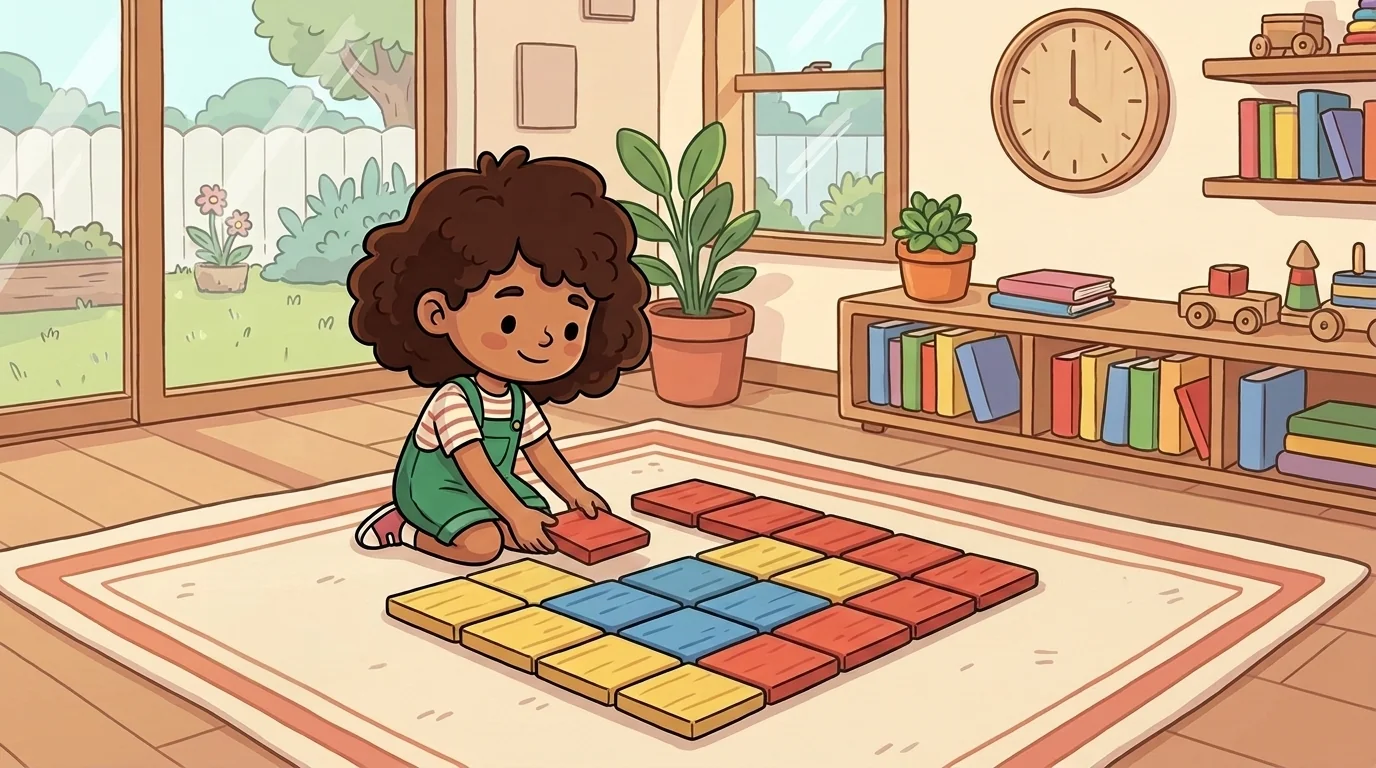
"People think adding something new might wreck the shape," Nona said, wrapping another odd layer. "But the right layer doesn't wreck it. It grows it. Add the next odd L, and you're bigger and still whole."
Nona had once been terrified of growing, sure that any change would break her.
As a young apprentice, Nona clung to what she could already do and refused to try anything new, because new felt dangerous — like adding a piece to a finished thing could only crack it. She stayed a careful little 1-by-1, unwilling to risk a second layer, and watched others grow while she held perfectly, anxiously still.
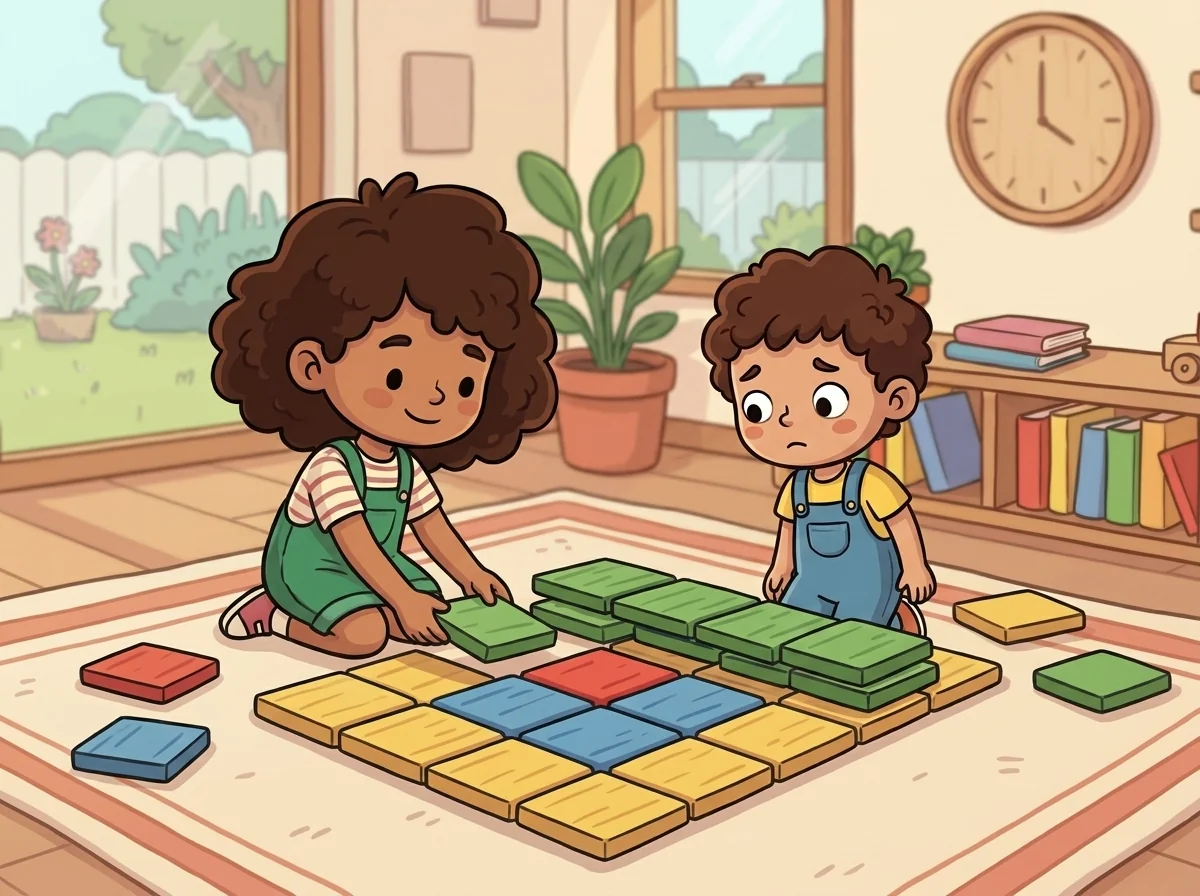
Quill, the workshop's mentor, noticed her flinch every time a new tile came near her square. "You think adding a layer will break you," Quill said. Quill took Nona's 2-by-2 square and gently wrapped it in an L of five tiles. "Look — it didn't crack. It grew. And it's still a perfect square, just a bigger one." Quill set the last tile in the corner. "The right kind of growth doesn't ruin what you already are. It keeps you whole and makes you more. You were never going to break, Nona. You were going to get bigger." Something in Nona that had been holding itself rigidly still finally let itself add a layer.
The kid who came to Nona was hanging back, cautious. "I don't want to try the harder square. I'll just mess up the one I've got."
"Let's grow it gently," Nona said. "Here's your 3-by-3 square — nine tiles. Don't rebuild it. Just wrap the next odd layer around it. How many tiles in the next L?"
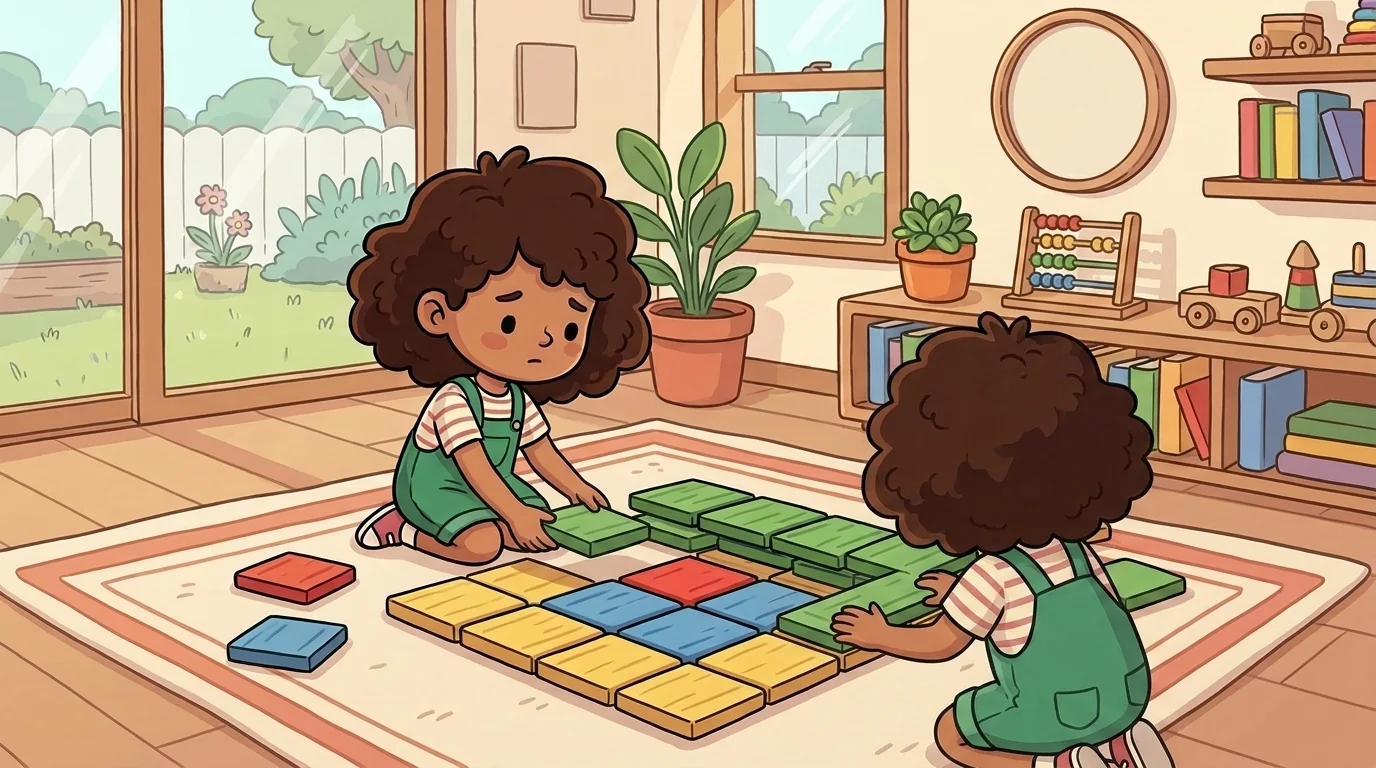
The kid counted the L that would fit: "...Seven."
"Add them." The kid wrapped the seven tiles around two sides. "What size is it now?"
"Four by four. Sixteen." They looked up. "And I didn't break the nine. It's still in there."
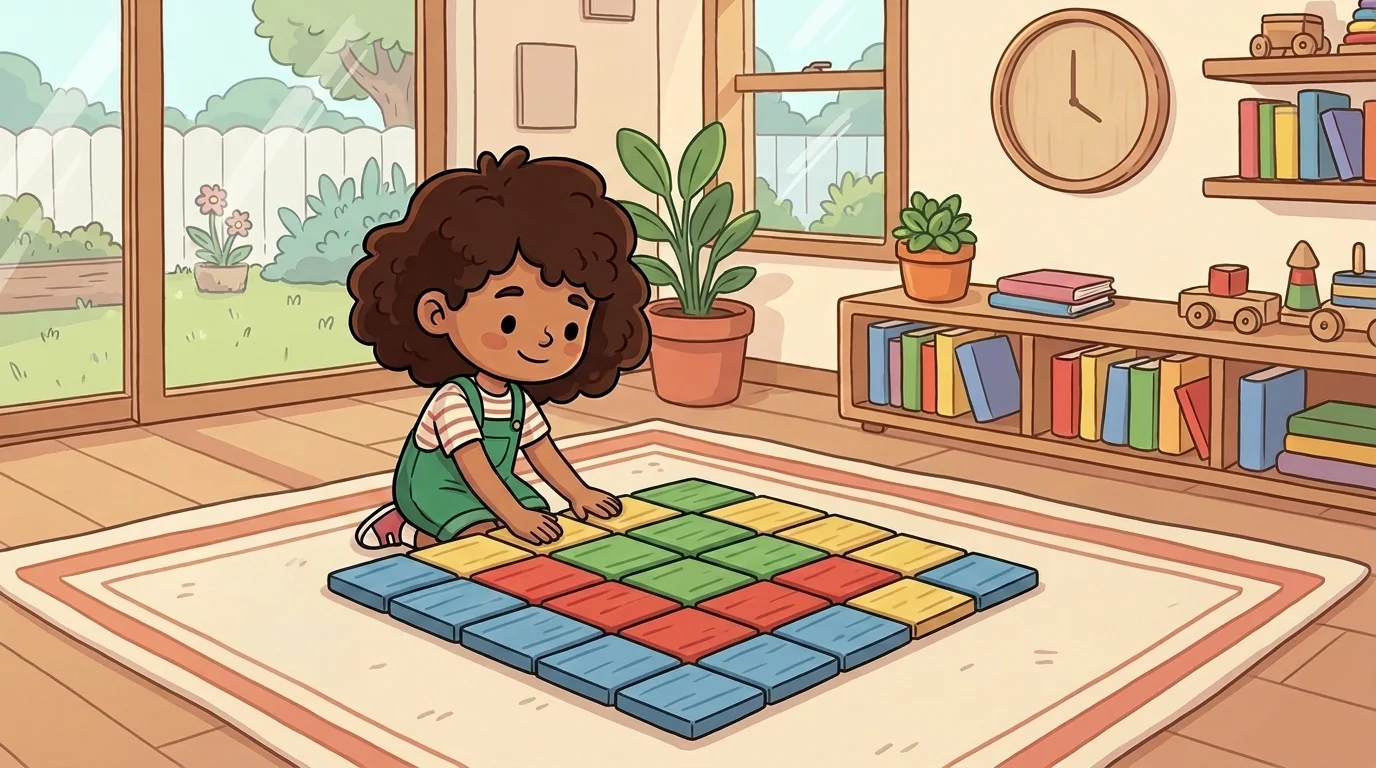
They grew a few more — 16 plus the next odd L of nine makes 25; 25 plus eleven makes 36 — the kid wrapping each odd layer around the square that was already there, keeping every earlier tile in place. And with each layer, the kid seemed a little braver about adding on, less afraid that growing would cost them what they already had.
The feeling that grew in the kid then wasn't only the tidiness of squares stacking up. It was more reassuring than that: the discovery that growth doesn't have to mean breaking — that you can add a whole new layer and stay just as whole, just bigger, with everything you already were still safely inside. If a square could grow and stay square, then trying the harder thing wasn't a threat to who they already were. That warm, steadying courage — I can add something new and stay whole — spread all the way through, and Nona felt her own old rigid stillness soften once more, because it was the exact courage Quill had once given an apprentice who was afraid a second layer would crack her.
"Add the next odd L, and the square grows to the next size," Nona said, patting the bigger square. "Growing doesn't break you. The right new layer keeps you whole and makes you more."
The CountCraft ensemble
Nona is part of CountCraft's distributed-narrative cast. Each character embodies a different curricular primitive; together they teach the full subject.
-

Tallis
The Two-Ways Counter — counts the same collection along rows, then along columns, and insists the two totals be equal (double counting)
-

Bijou
The Pair-Matcher — draws a one-to-one pairing between two sets to prove they are exactly the same size (bijection)
-

Stacia
The Staircase-Mirror — mirrors a one-two-three staircase against itself to make a rectangle (triangular numbers)
-
Arel
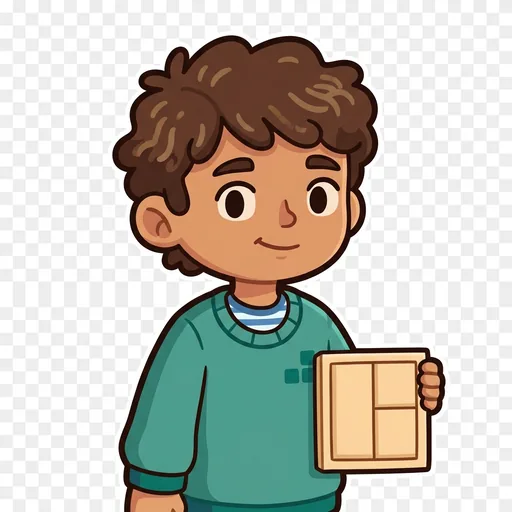
The Square-Cutter — cuts a square into four rectangles to read off a-squared plus two-a-b plus b-squared (area model)
-
Domina
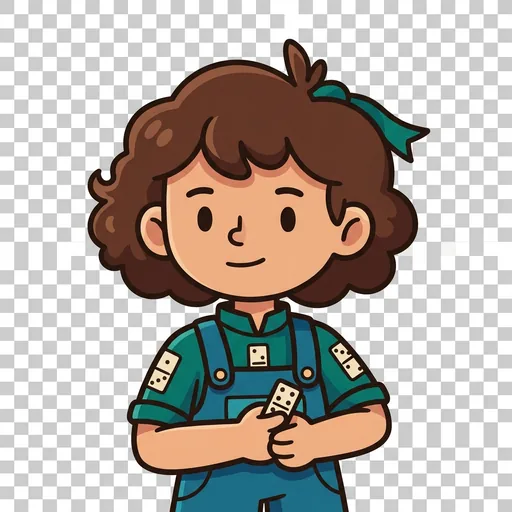
The Domino-Tiler — tiles a strip with squares and dominoes and counts the number of ways (Fibonacci tilings)
-
Chessa
The Handshake-Counter — pairs everyone with everyone exactly once to count the handshakes (choose two)
-

Cammy
The Committee-Splitter — sorts every committee by whether the last person is in or out (Pascal's rule)
-

Sett
The Subset-Flipper — flips an in-or-out coin for each item to list every subset exactly once (two-to-the-n)
-

Parry
The Parity-Prover — two-colours a board to show when a tiling simply cannot exist (parity and impossibility)
-

Quill
The Proof Director (mentor) — a warm, attentive adult who coaches build-the-two-counts-then-read-the-identity, and never proves for the kid