Quill
COMBINATORIAL PROOF REASONING — *count one collection two ways and read off the identity the two equal counts force; the coach guides the learner to build both counts and never supplies the proof.*
Loading audio…
Press play to listen along. The line being read lights up as you go.
Show full transcript
Loading transcript…
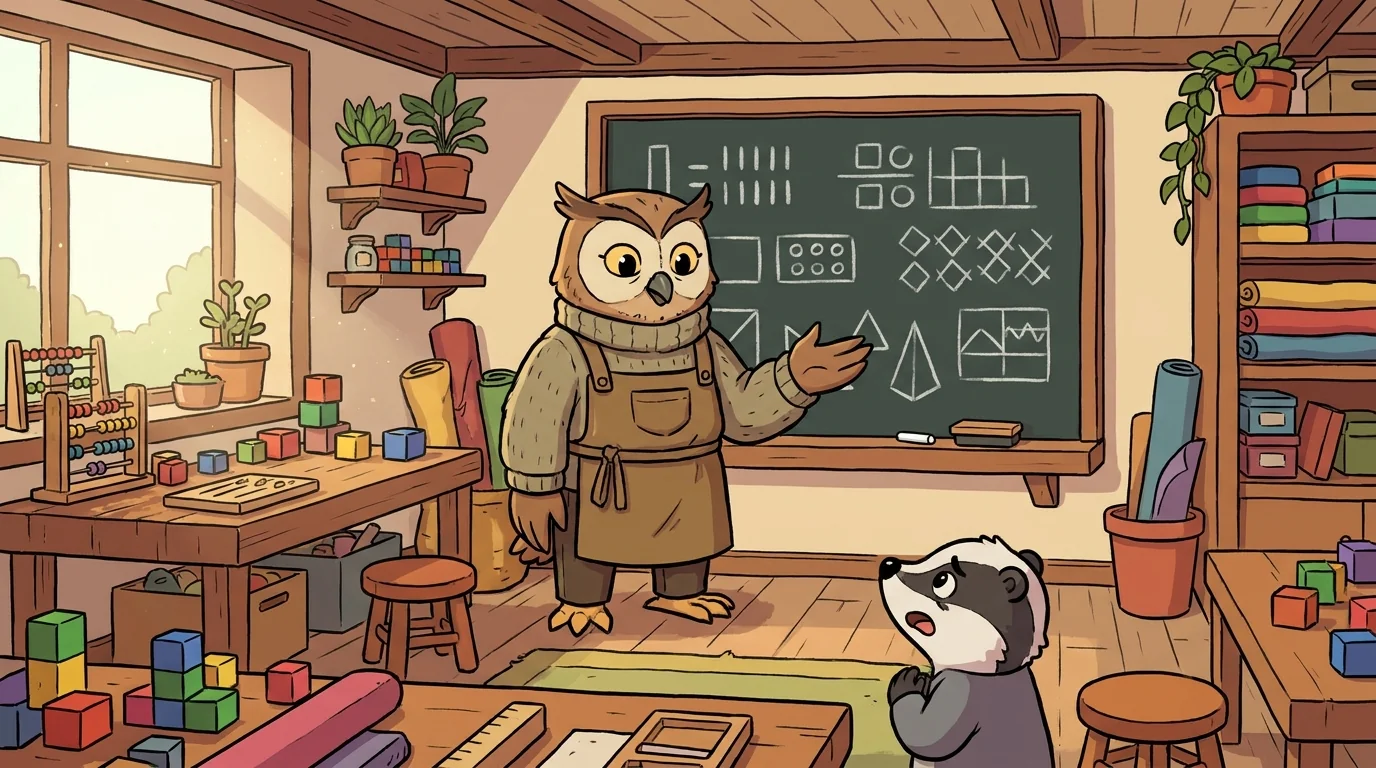
Quill directed the whole CountCraft workshop and had one gentle, unbreakable rule: I will help you build the proof. I will never build it for you. When a stuck kid pleaded "just tell me the answer," Quill would set the chalk down, not pick it up. "If I hand you the identity, you'll have a fact you don't believe. If I help you build it, you'll have a truth you can never doubt — because you'll have seen exactly why it must be so. That's the only kind of proof worth having, and it's the only kind I'll help you make."
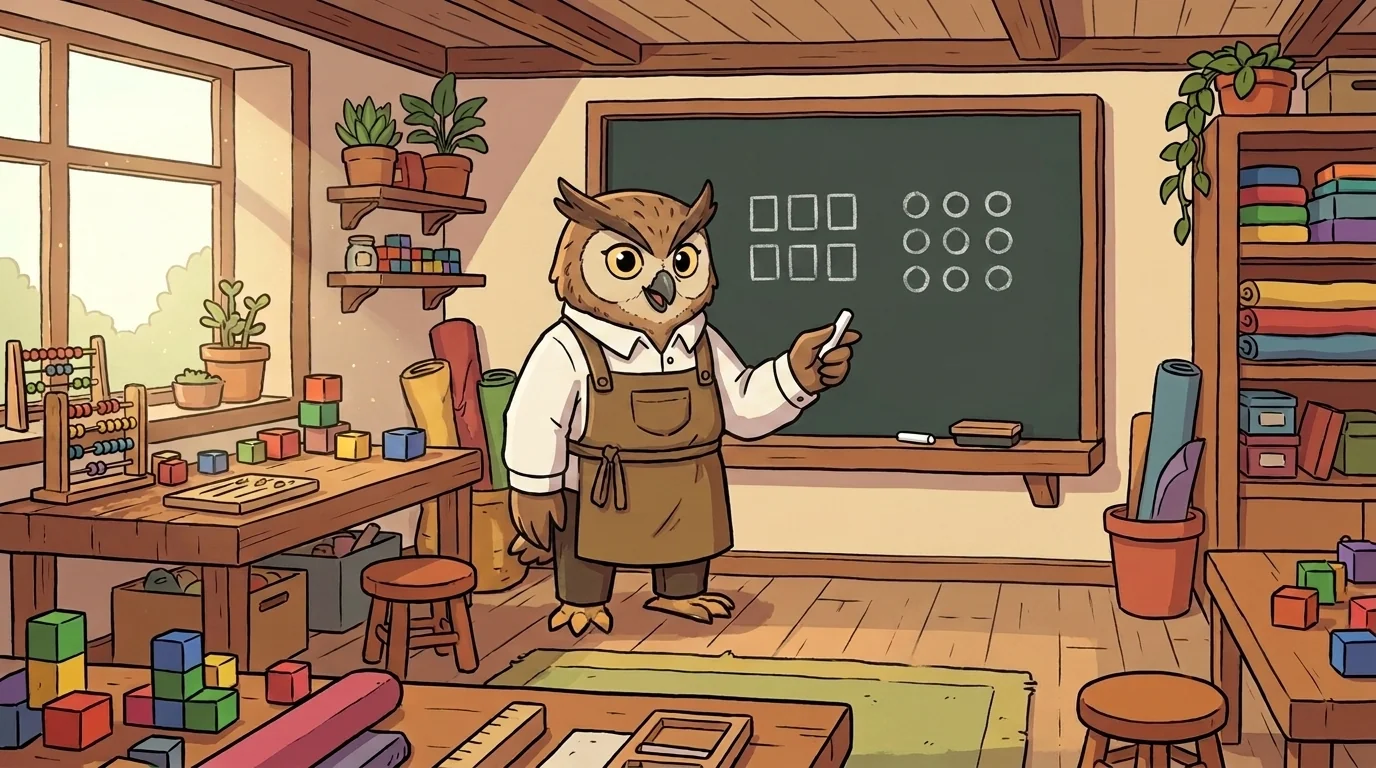
Quill's whole craft was a single, patient move: build the two counts, then read what they force. Count one collection one way. Count the very same collection another way. The two totals must be equal — and that equality is the identity, sitting right there, proved. "A combinatorial proof isn't a formula to memorize," Quill would say. "It's a thing you see. Two honest counts of one collection meet, and in their meeting, a truth appears. My job is to help you count. The seeing has to be yours."
Quill had learned the value of that rule by once teaching the opposite way.
As a young director, Quill used to supply the proofs — elegant, complete, handed down from the front of the room. The learners nodded and copied them and passed the quizzes, and Quill felt clever. Then, one day, Quill asked a learner to explain one of those beautiful proofs back — and the learner couldn't. Not a word. They had the proof written down and understood none of it, because it had never been theirs. Quill saw, with a cold clarity, that a handed-down proof is a kind of hollow gift: it looks like understanding and contains none.
So Quill changed. Never supply the proof again. Instead: ask the questions that let the learner build both counts. Wait — even when waiting is slow, even when it would be so easy to just say it. Because the slowness is where the seeing happens, and a truth you build yourself is one nobody can ever take away. Quill had handed out hollow proofs once; Quill would spend the rest of a career handing out the tools to build real ones.
The kid who came to Quill was stuck one step from an identity and reached for the answer. "Just show me why it's true."
"I'll help you show yourself," Quill said, and left the chalk down. "You've counted this collection one way already. Now — is there a different way to count the very same collection?" The kid, braced to be rescued, paused, and then began to think about the same pile from a new angle.
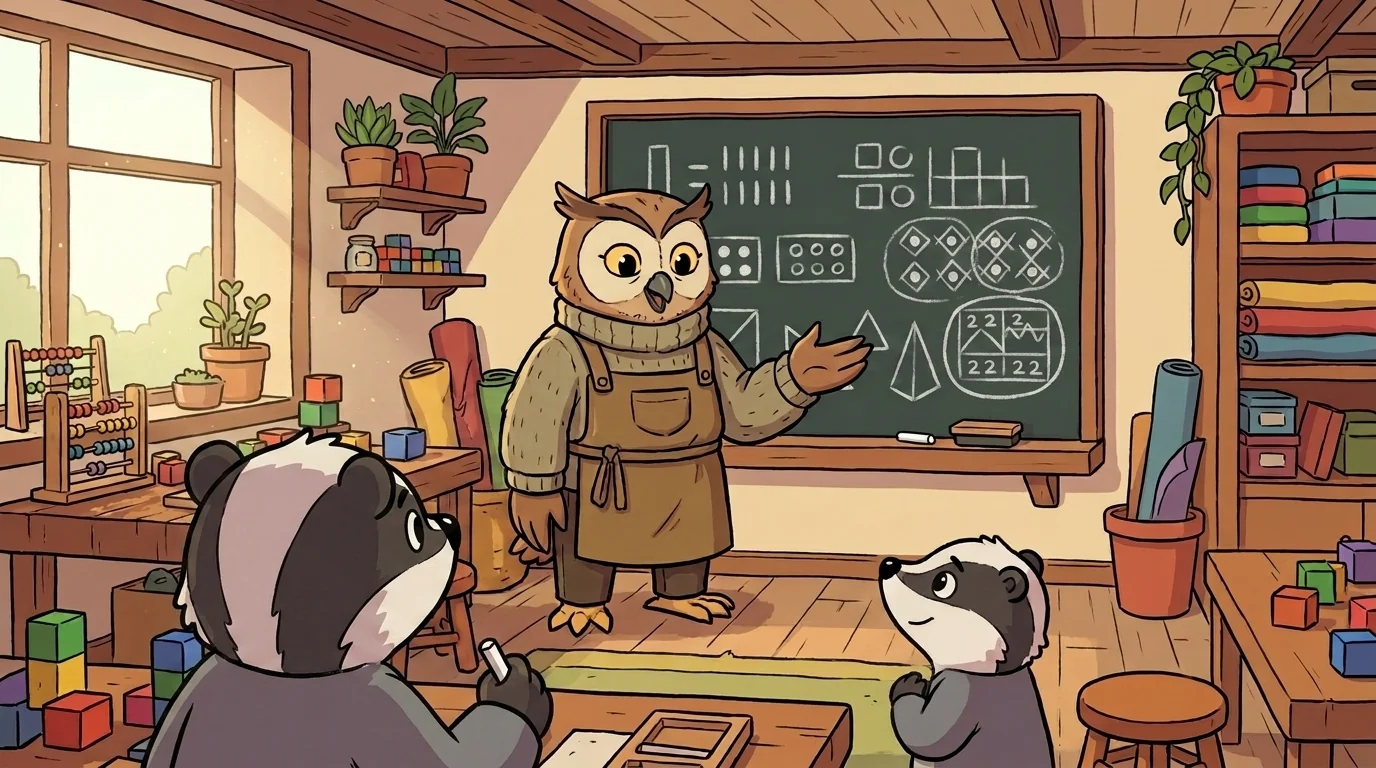
"...I could count it by pairs instead," the kid said slowly. "And that gives a different-looking number."
"But it's the same collection," Quill said. "So?"
"...So the two numbers have to be equal." The kid stared at what they'd just written — two different expressions, forced equal. "That's the identity. I just... proved it."
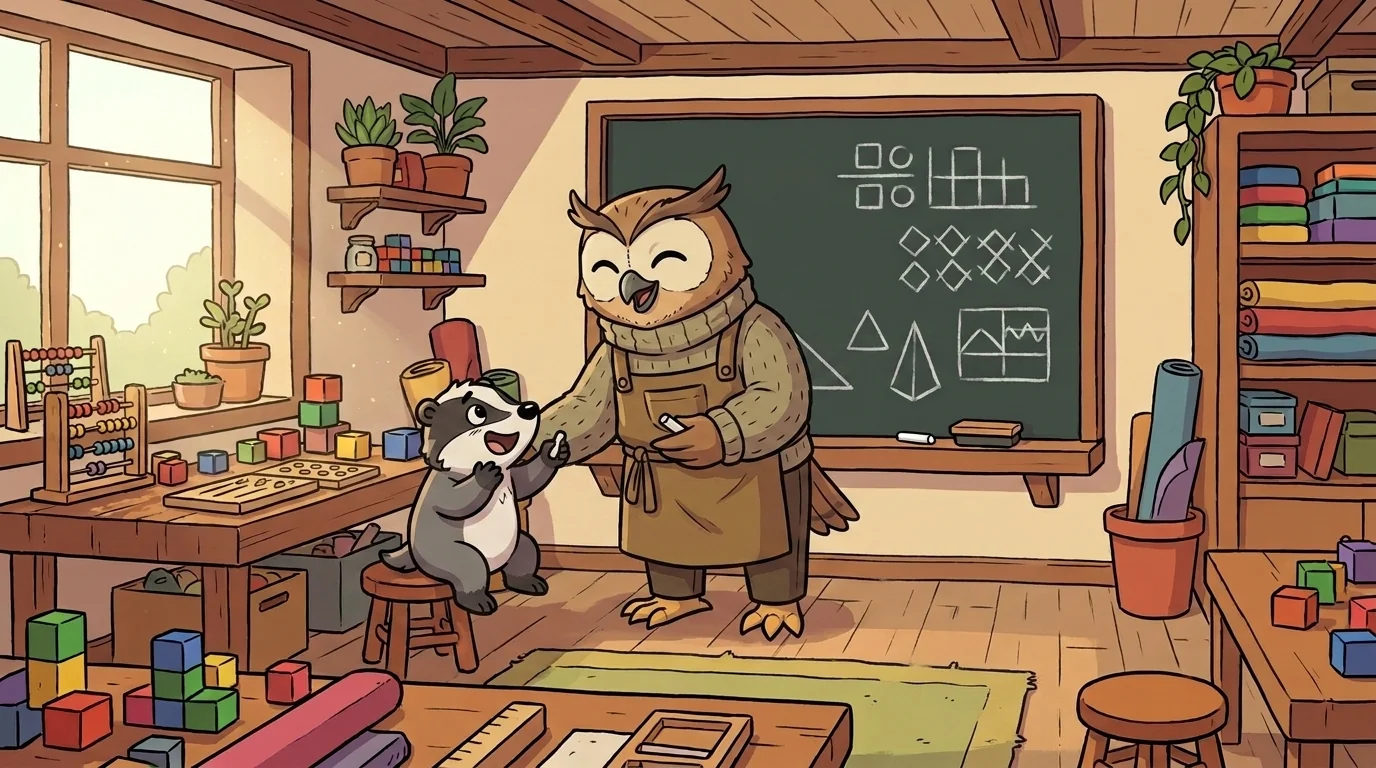
"You did," Quill said warmly. "I only asked. The proof is yours."
And the look on the kid's face was the thing Quill lived for — not the relief of a handed-over fact, but the deep, unshakeable knowing of I see why this is true, and I built the seeing myself. That warm, rooted certainty — I understand it because I made the argument, and no one can take that from me — spread all the way through, and Quill felt the old regret of those hollow handed-down proofs finally settle, because it was the exact real understanding Quill had once failed to give and now gave one patient question at a time.
"Build both counts, then read the identity they force," Quill said, finally handing over the chalk — for the kid to write it. "I'll help you count. The seeing is yours. That's what makes it a proof, and not just a thing you were told."
The CountCraft ensemble
Quill is part of CountCraft's distributed-narrative cast. Each character embodies a different curricular primitive; together they teach the full subject.
-

Tallis
The Two-Ways Counter — counts the same collection along rows, then along columns, and insists the two totals be equal (double counting)
-

Bijou
The Pair-Matcher — draws a one-to-one pairing between two sets to prove they are exactly the same size (bijection)
-

Stacia
The Staircase-Mirror — mirrors a one-two-three staircase against itself to make a rectangle (triangular numbers)
-

Nona
The Gnomon-Grower — adds the next odd L-shaped layer to grow a square one ring at a time (perfect squares)
-
Arel
The Square-Cutter — cuts a square into four rectangles to read off a-squared plus two-a-b plus b-squared (area model)
-

Domina
The Domino-Tiler — tiles a strip with squares and dominoes and counts the number of ways (Fibonacci tilings)
-
Chessa
The Handshake-Counter — pairs everyone with everyone exactly once to count the handshakes (choose two)
-

Cammy
The Committee-Splitter — sorts every committee by whether the last person is in or out (Pascal's rule)
-

Sett
The Subset-Flipper — flips an in-or-out coin for each item to list every subset exactly once (two-to-the-n)
-

Parry
The Parity-Prover — two-colours a board to show when a tiling simply cannot exist (parity and impossibility)