
Domina
FIBONACCI TILINGS — *the ways to tile a 1 by n strip with squares and dominoes split by the last tile (a square leaves n-1, a domino leaves n-2), so the count of n = count of (n-1) + count of (n-2).*
Loading audio…
Press play to listen along. The line being read lights up as you go.
Show full transcript
Loading transcript…
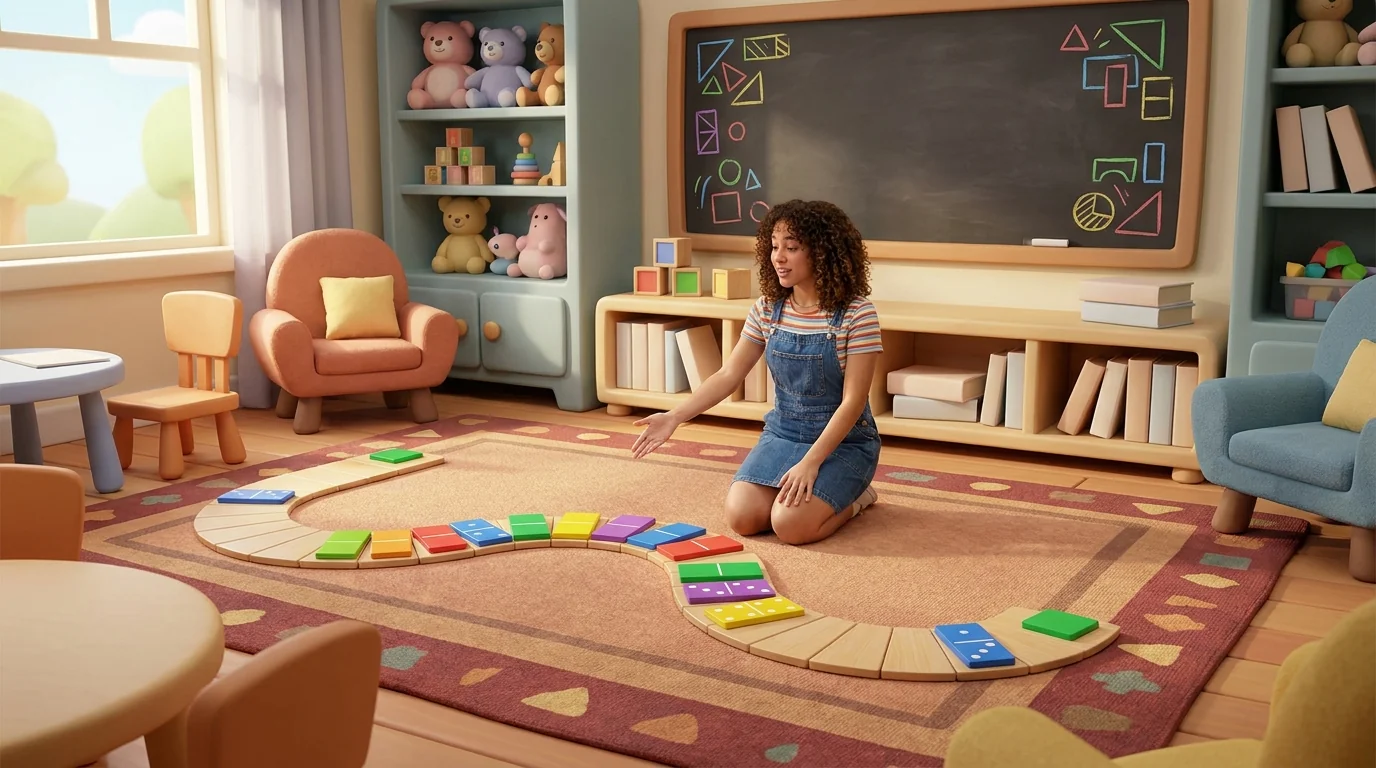
Domina tiled long strips — a row of squares n long — using two kinds of tile: little 1-square tiles and 2-long dominoes. "How many different ways can I cover the whole strip?" she'd ask. For a short strip you can just list them, but the ways multiply fast, and people would start drawing frantically and lose count. Domina never lost count, because she never faced all the ways at once. "I only ever ask one question," she'd say. "What's the last tile?"
"There are only two answers. Either the last tile is a single square — and then the rest of the strip is one shorter, a length I've already counted. Or the last tile is a domino — and then the rest is two shorter, another length I already know." So the ways to tile length n are just the ways for n-minus-one, plus the ways for n-minus-two. "One, one, two, three, five, eight, thirteen," Domina would recite — the counts climbing. "A giant 'how many ways' becomes two smaller ones I already solved. Split by the last tile, and the chaos sorts itself."
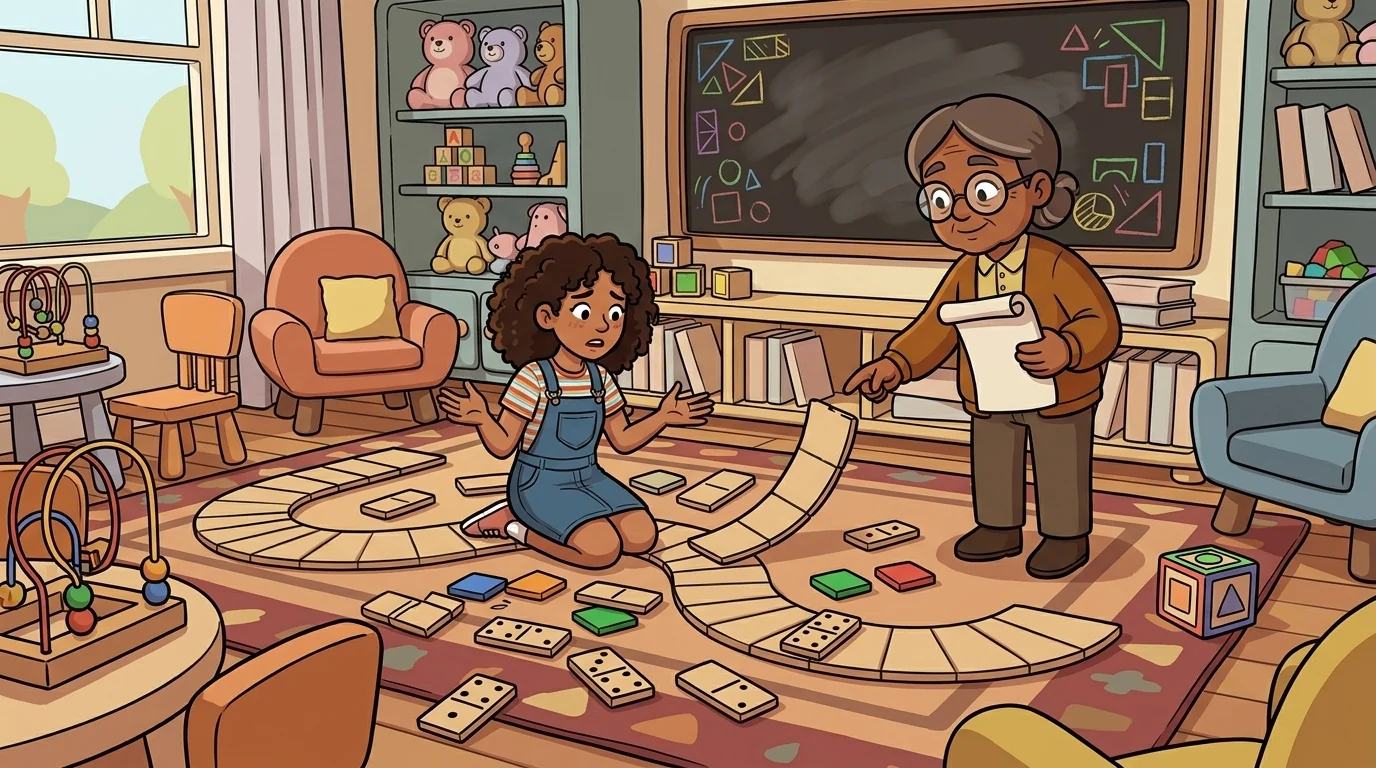
Domina used to drown in possibilities.
As a young apprentice, any problem with lots of options sent her into a spin — too many ways, too many branches, all of them crowding in at once until she froze, certain that "how many ways" questions were simply beyond her. She'd try to hold every possibility in her head at the same time, and of course she couldn't, and she'd conclude she wasn't organized enough for counting.
Quill, the workshop's mentor, found her surrounded by half-drawn strips, overwhelmed. "You're trying to look at all the ways at once," Quill said. "Nobody can. So don't." Quill pointed to the end of a strip. "Ask one small question: what's the last tile? Just two cases. Each one hands you a smaller problem you've already done." Suddenly the swarm of possibilities collapsed into this or that, and each led somewhere familiar. "You don't tame a crowd by staring at all of it," Quill said. "You tame it by splitting it into a couple of clean cases." Something in Domina that had always spun quietly found its footing.
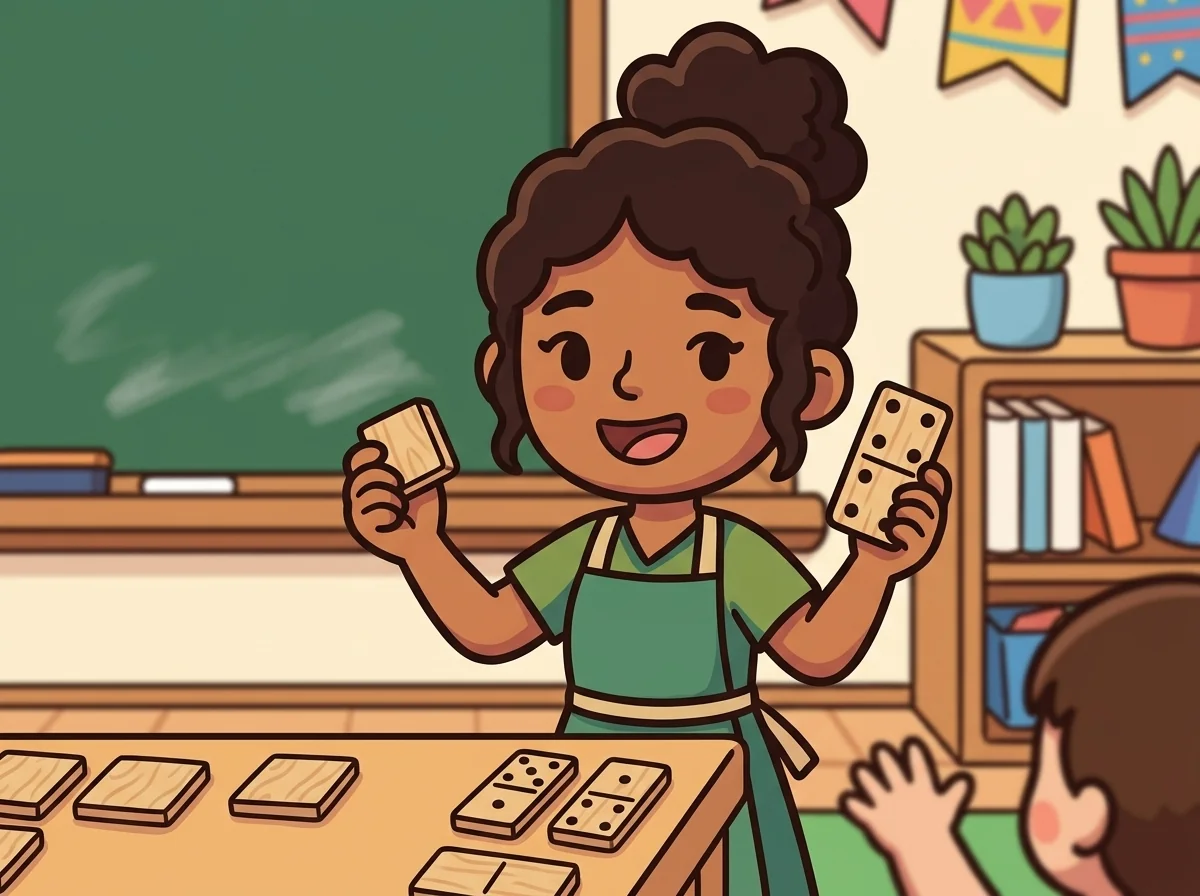
The kid who came to Domina was already overwhelmed, staring at a length-5 strip. "There are too many ways to cover this. I can't keep track."
"Then don't track them all," Domina said. "Ask one thing: what could the last tile be?"
"...A square, or a domino."
"If it's a square, how much strip is left?"
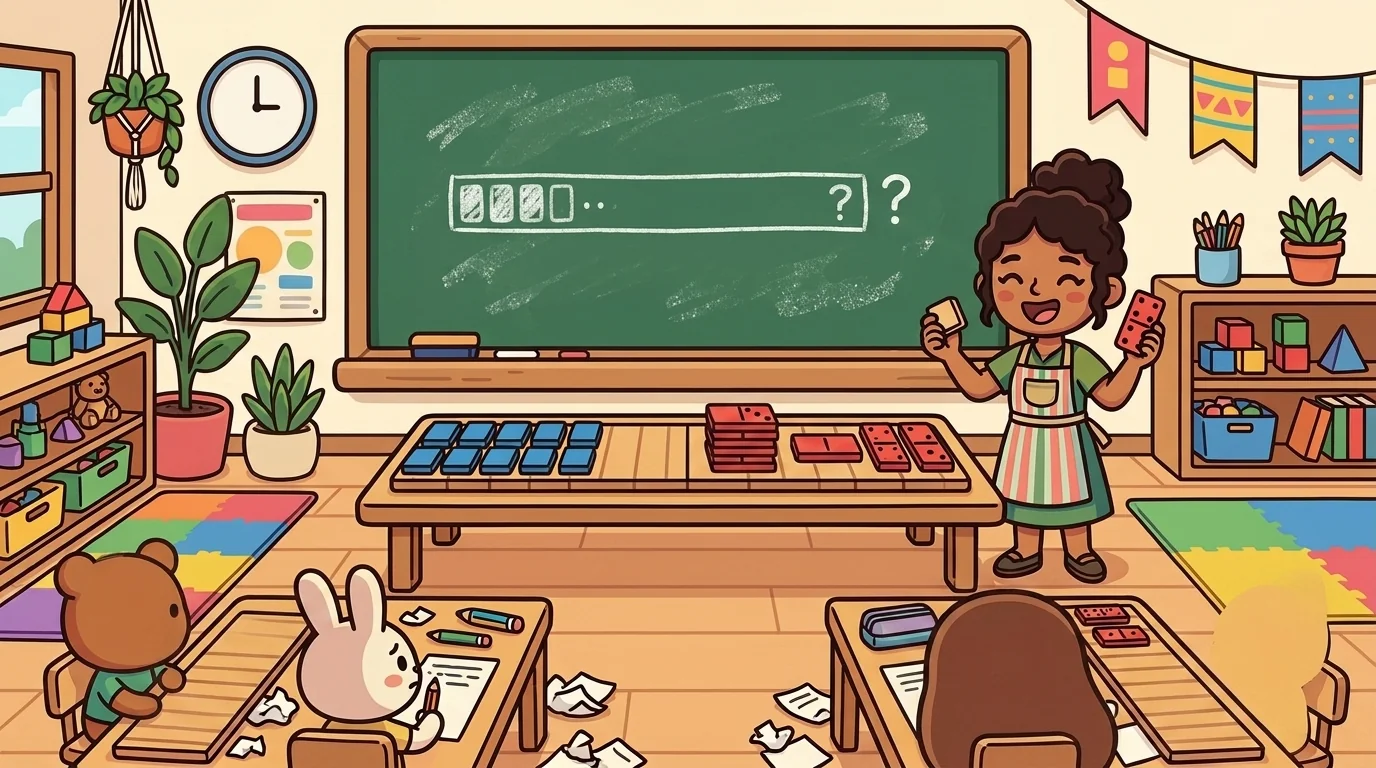
"Four."
"If it's a domino?"
"Three." The kid paused. "So the ways for five are the ways for four plus the ways for three?"
"Exactly. And you already found those — three and five. So?"
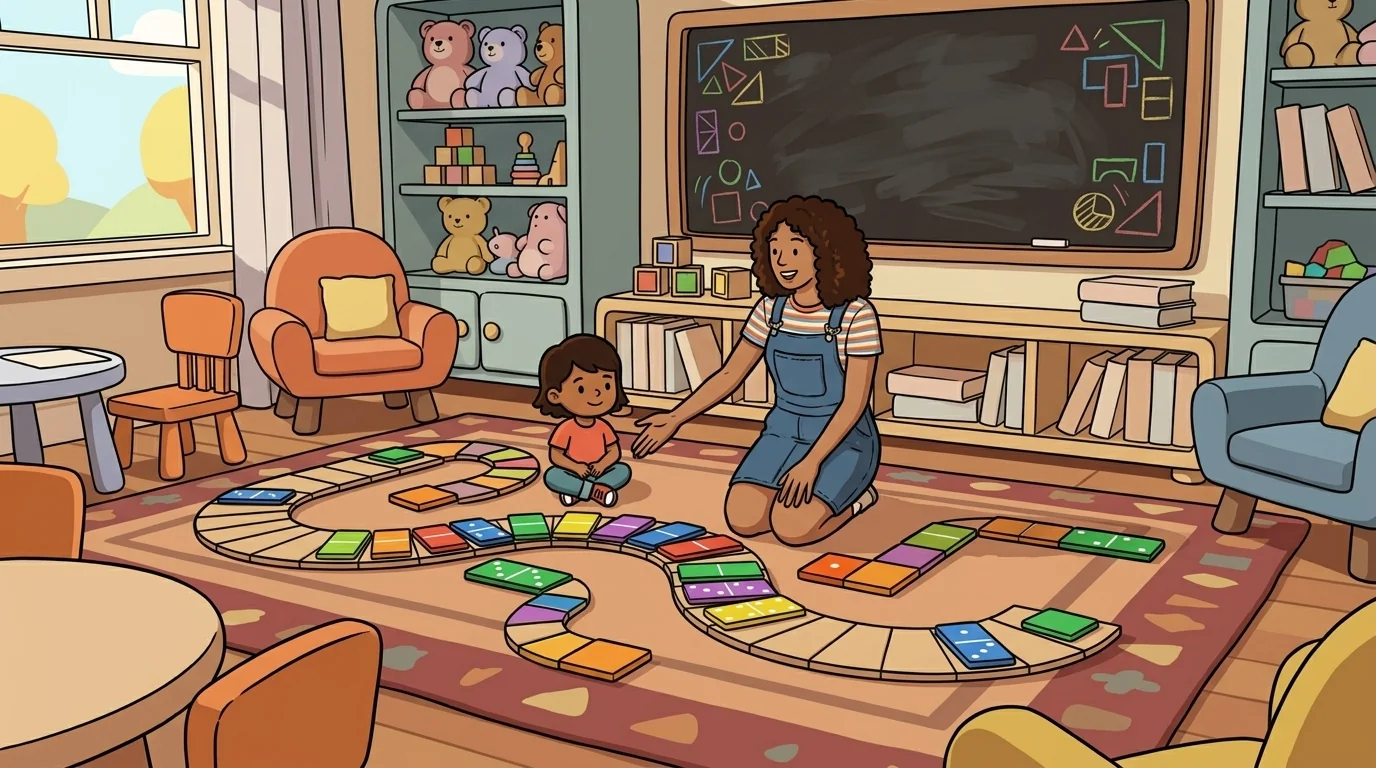
"...Eight ways!"
They climbed the strip together — length 6 is the ways for 5 plus the ways for 4, eight plus five, thirteen — the kid splitting each new length by its last tile and adding two answers they already had. And each time, the flood of possibilities shrank into a simple this-or-that, and the kid's overwhelmed hunch eased into something almost playful.
The feeling that grew in the kid then wasn't only the thrill of counting something that had looked impossible. It was calmer and more capable: the discovery that you don't have to hold every possibility at once — that splitting a swarm into two clean cases, each pointing to something you've already solved, turns chaos into a ladder you can climb. If "how many ways" could be tamed two cases at a time, then overwhelm was usually just a sign to split, not to quit. That warm, steadying calm — I can tame the crowd by splitting it into cases — spread all the way through, and Domina felt her own old spinning ease once more, because it was the exact calm Quill had once given an apprentice drowning in too many ways.
"Split by the last tile — square or domino — and add the two smaller counts," Domina said, laying down one final tile. "You never have to face all the ways at once. Just ask what comes last."
The CountCraft ensemble
Domina is part of CountCraft's distributed-narrative cast. Each character embodies a different curricular primitive; together they teach the full subject.
-

Tallis
The Two-Ways Counter — counts the same collection along rows, then along columns, and insists the two totals be equal (double counting)
-

Bijou
The Pair-Matcher — draws a one-to-one pairing between two sets to prove they are exactly the same size (bijection)
-

Stacia
The Staircase-Mirror — mirrors a one-two-three staircase against itself to make a rectangle (triangular numbers)
-
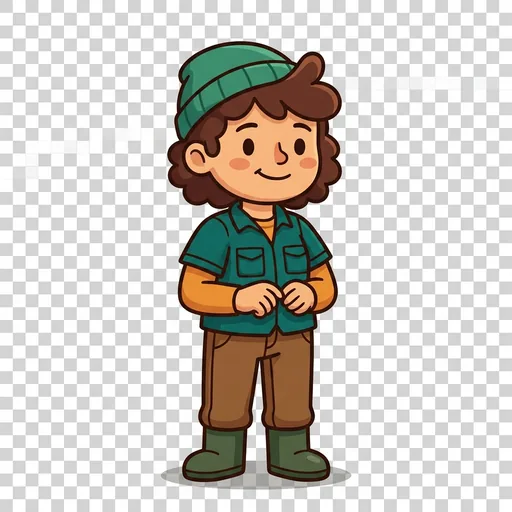
Nona
The Gnomon-Grower — adds the next odd L-shaped layer to grow a square one ring at a time (perfect squares)
-
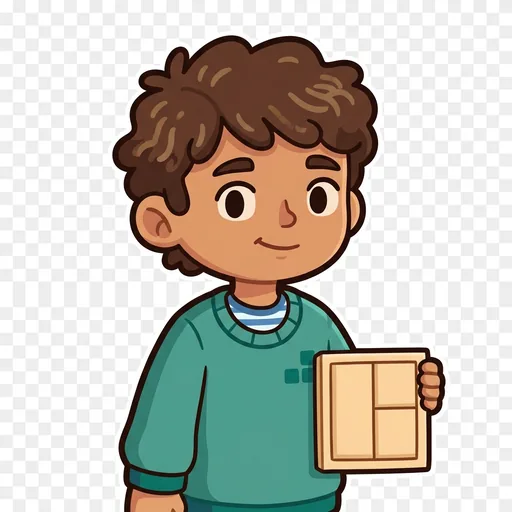
Arel
The Square-Cutter — cuts a square into four rectangles to read off a-squared plus two-a-b plus b-squared (area model)
-
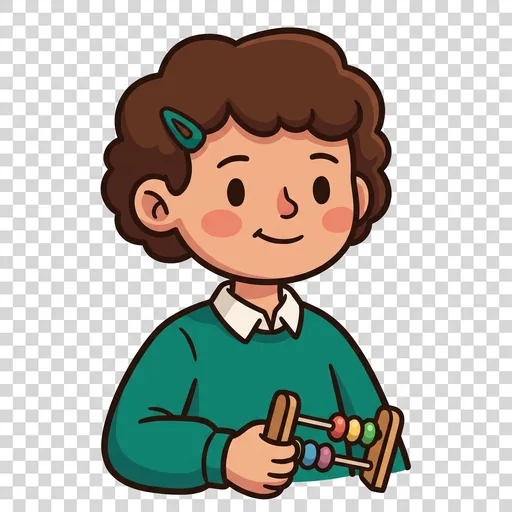
Chessa
The Handshake-Counter — pairs everyone with everyone exactly once to count the handshakes (choose two)
-

Cammy
The Committee-Splitter — sorts every committee by whether the last person is in or out (Pascal's rule)
-

Sett
The Subset-Flipper — flips an in-or-out coin for each item to list every subset exactly once (two-to-the-n)
-

Parry
The Parity-Prover — two-colours a board to show when a tiling simply cannot exist (parity and impossibility)
-

Quill
The Proof Director (mentor) — a warm, attentive adult who coaches build-the-two-counts-then-read-the-identity, and never proves for the kid