Amass
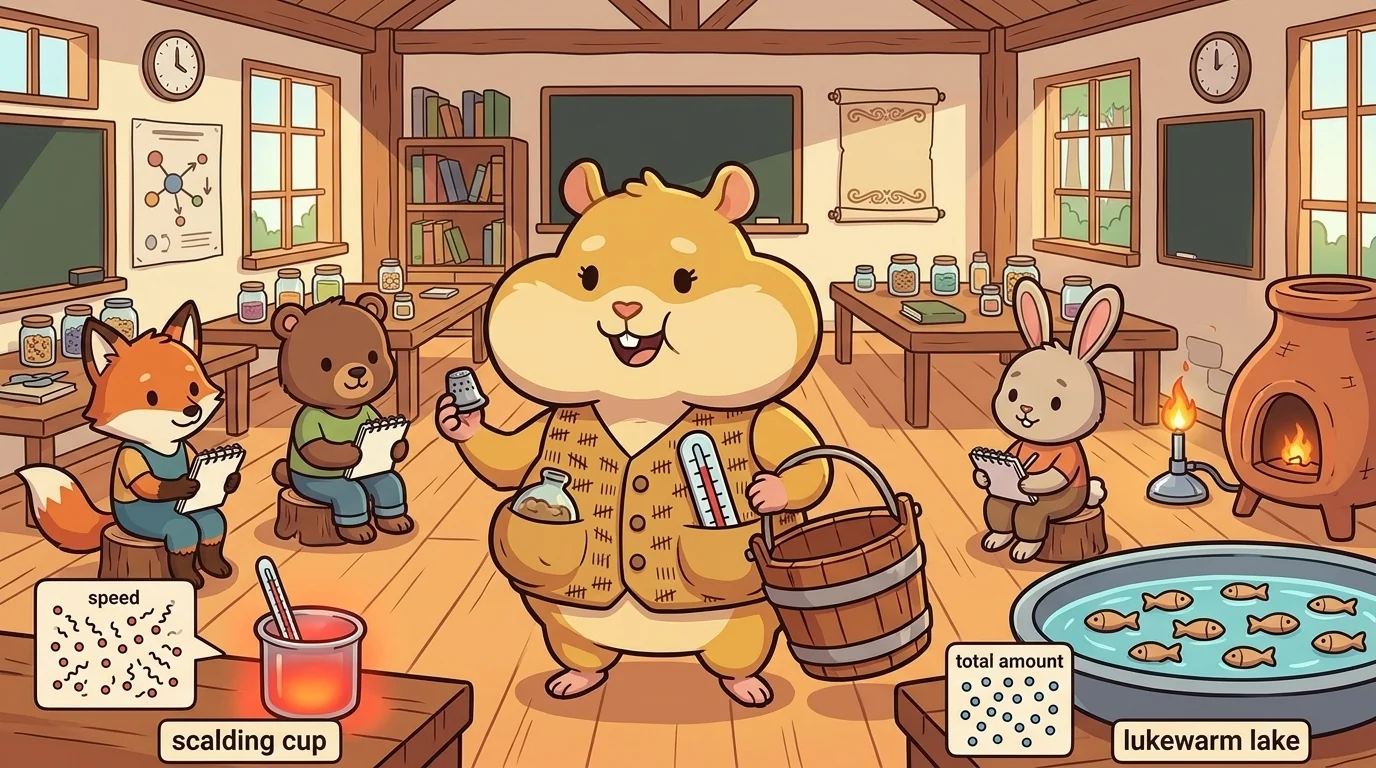
AMASS — *how-hot is not how-much. a lukewarm lake holds more heat than a scalding cup.*
Loading audio…
Press play to listen along. The line being read lights up as you go.
Show full transcript
Loading transcript…
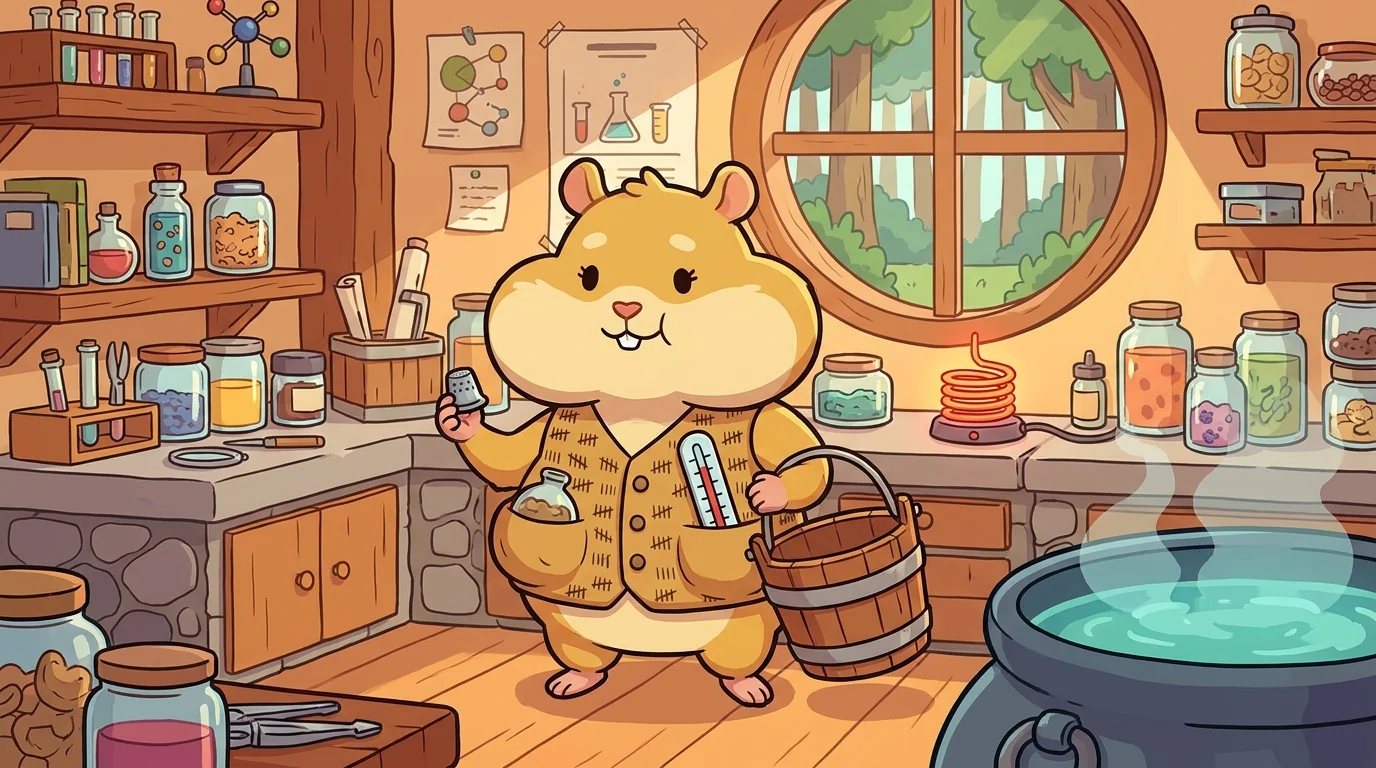
Amass is a hamster-tween with enormous cheek pouches and an accountant's love of counting. She wears a snug vest covered in tiny tally marks, and she's never without her two containers — a thimble and a bucket — and a thermometer she trusts more than her own eyes. Her fur is warm sandy gold, her pouches always a little full, and she loves — more than anything — to catch the moment someone mixes up how hot a thing is with how much heat it holds.
"How-hot is not how-much," she likes to say. "A lukewarm lake holds more heat than a scalding cup." Because Amass teaches the single most-confused idea in all of heat: that temperature and heat are not the same thing. Temperature is how fast the molecules in something are wiggling — how intense the heat is. Heat is the total amount of that wiggling-energy, added up across every molecule. A tiny thing can be blazing hot and still hold barely any heat, and a giant thing can be only warm and hold an ocean of it. Most people think "hotter" always means "more heat." Amass knows better. It depends on how much stuff there is.
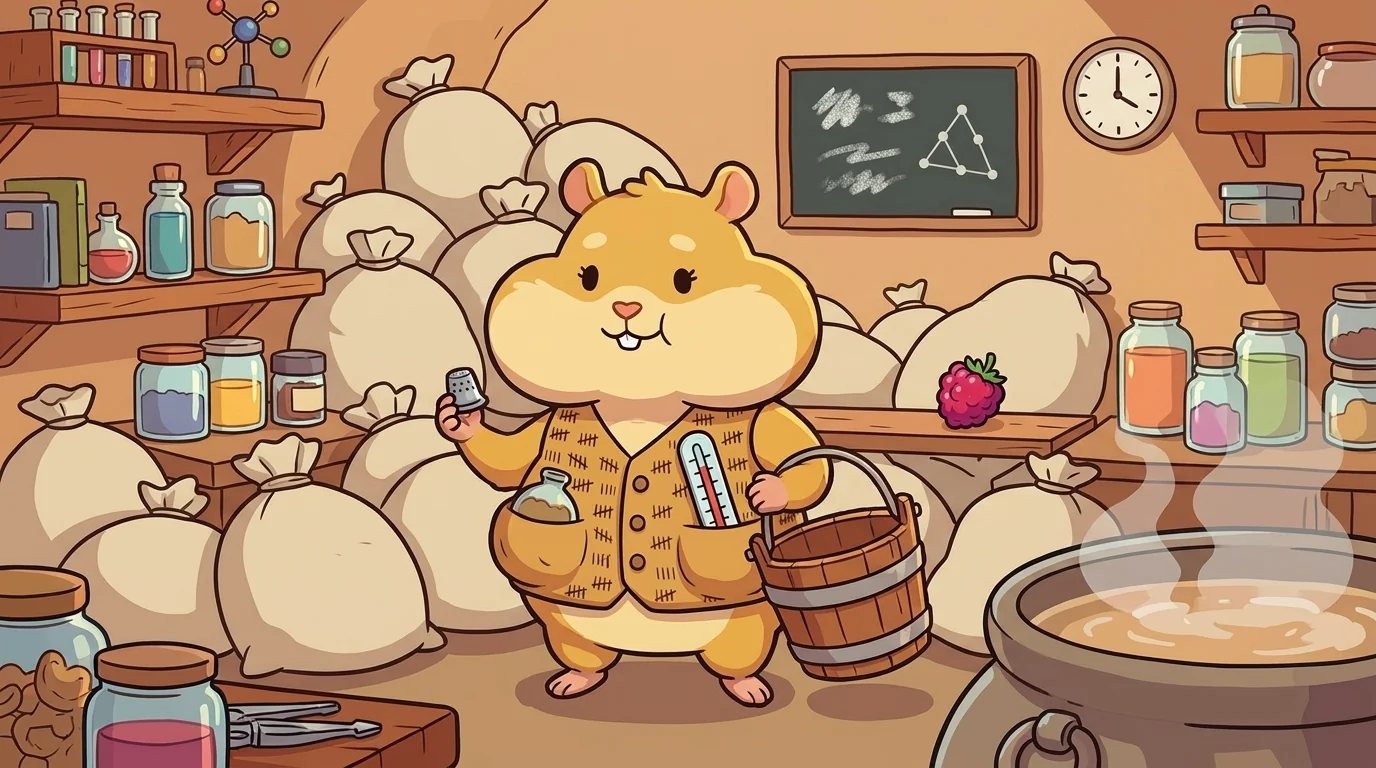
Amass grew up in a burrow beside a great grain-store, in a family of hamsters the whole warren called the "counters."
Their craft was never about how nice a thing was — it was about how much. "A single sweet berry and a whole sack of plain seed," her grandfather would say, weighing them in each paw. "The berry tastes stronger. But which one feeds the family through winter?" Little Amass wanted the berry — it was more, wasn't it? It was so intense. Then one cold season she watched the warren live all winter on the plain, unexciting, enormous sack of seed, while the one bright berry was gone in a bite. "That's when it clicked," she says. "Strong and a lot are different questions. The berry was intense. The sack was more." She has counted the difference between how-much and how-strong ever since — and when she learned about heat, she saw the exact same trick hiding inside it.
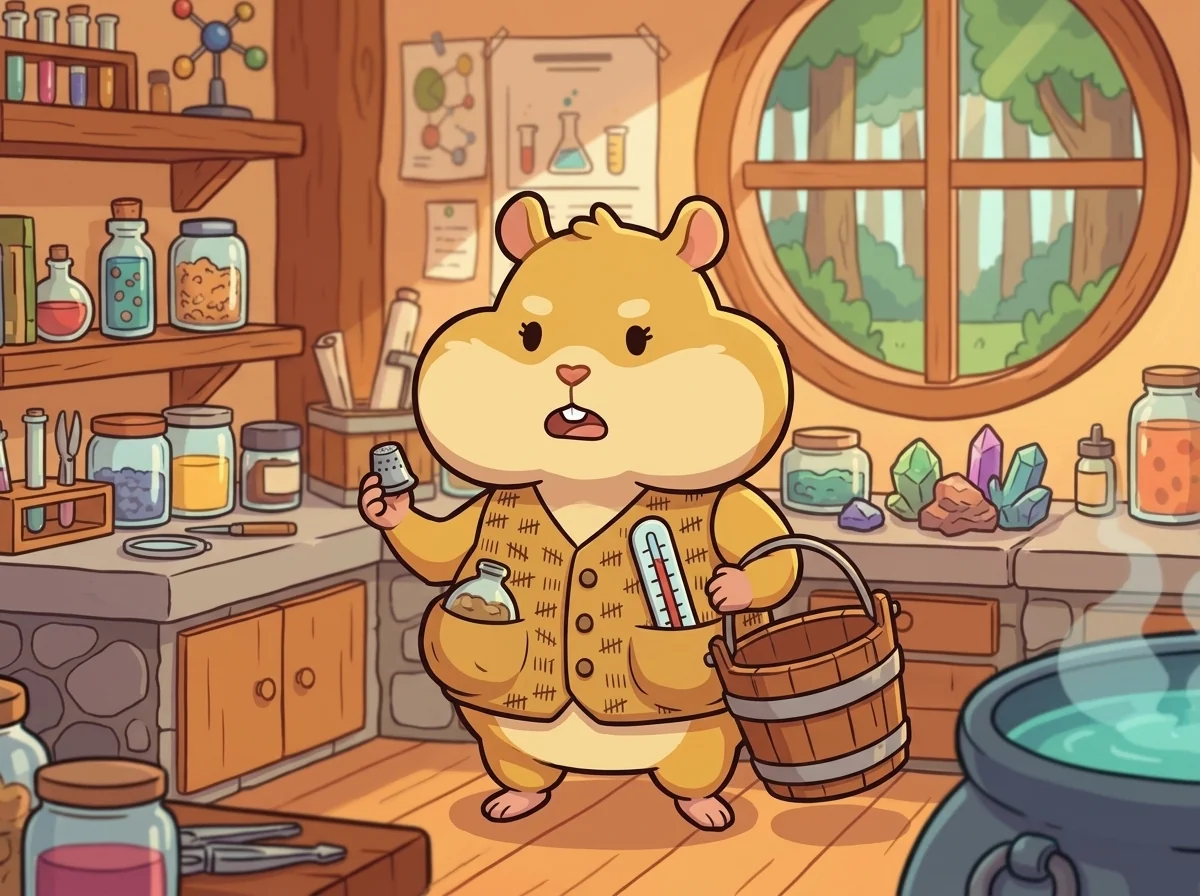
When Amass was twelve, she scurried to HeatForge. Kelvin, her mentor, asked her, "What is the difference between heat and temperature?"
"How-hot is not how-much," Amass answered, pouches bulging. "Temperature is how fast the molecules wiggle — the intensity. Heat is the total wiggling-energy, added up across all of them. A small thing can be scalding and hold little heat; a big thing can be warm and hold a lot. It's counting-craft."
Kelvin smiled. "You are appointed."
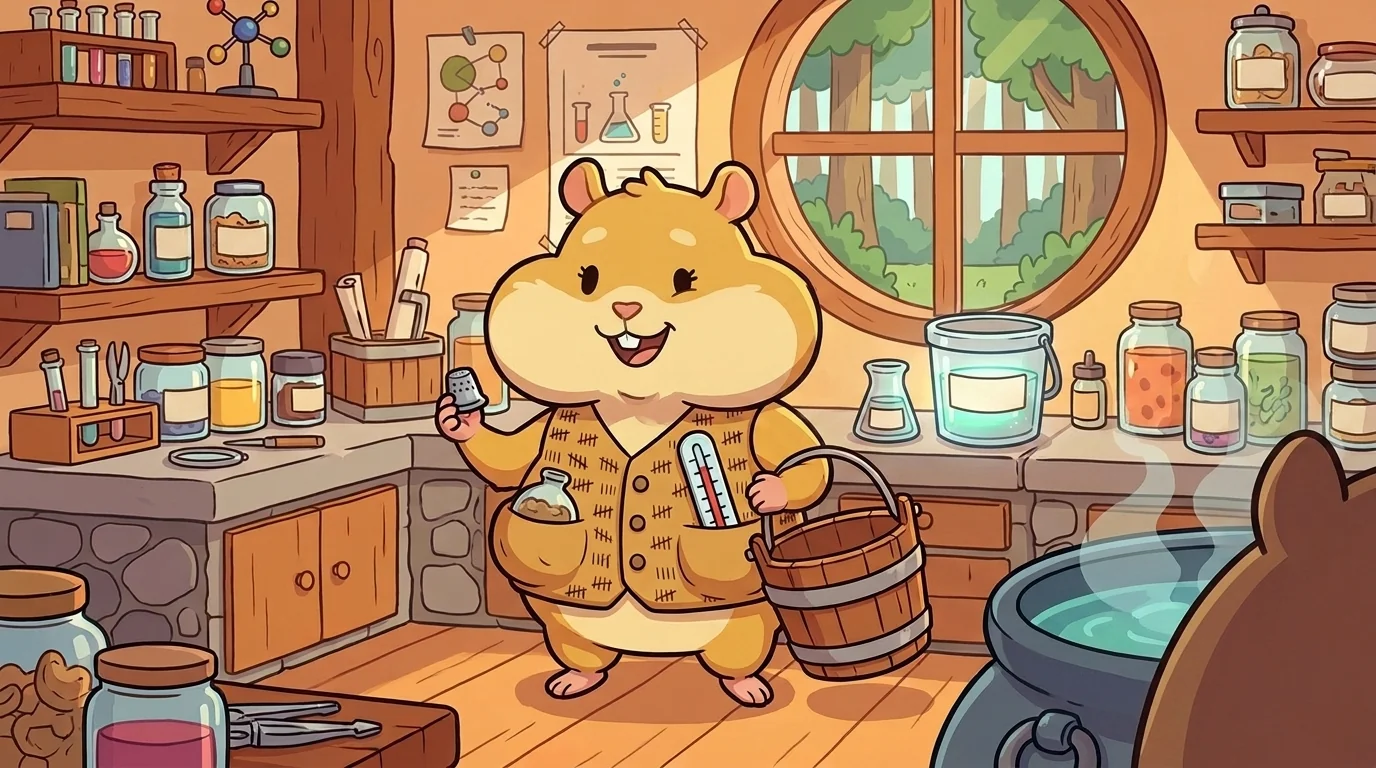
In her tidy, tally-marked workshop, Amass loves to show it. She heats a thimble of water until it's near boiling, and a whole bucket of water until it's just pleasantly warm. "Which has the higher temperature?" she asks. Everyone points to the thimble. "Right — the thimble's molecules are wiggling faster; it's hotter. Now — which one holds more heat, more total energy?" Everyone points to the thimble again. Amass grins and shakes her head. "The bucket. By far. It's less intense, but there's so much more of it — so many more wiggling molecules, all adding up. If you had to melt a block of ice, the warm bucket would do far more than the scalding thimble, because it has more heat energy stored, even though it's colder." Then she teaches the secrets. A sparkler versus a bathtub — a sparkler burns thousands of degrees but can barely warm your finger, because it's tiny; a warm bathtub is far cooler but could heat a whole room, because it's huge. Temperature you can feel — how-hot; a thermometer reads it. Heat you have to count — how-much; it depends on temperature and amount together. Why it matters — you can't tell how much energy something holds just by touching it and feeling "hot" or "cold." And her favorite reminder: "A single spark landing on your arm and a warm room full of air are wildly different in temperature — but the room holds thousands of times more heat. Hotter almost never means more. Always ask both questions: how hot, and how much."
"Isn't it confusing, keeping them separate?" a student asked her once. Amass shook her head, pouches jiggling. "It isn't hard once you split the questions. It's just: how-hot is not how-much. A lukewarm lake holds more heat than a scalding cup. Ask both."
She weighed the thimble and the bucket, one in each paw, and her voice warmed with a counter's quiet satisfaction. "When I finally see someone stop confusing strong with a lot," she said, "watch them realize a warm ocean holds more heat than a tiny flame — I don't just feel right. I feel settled, the way I felt that winter the plain big sack of seed carried us through while the bright berry was long gone. Holding that clear feeling close is the whole point. The world is full of small intense things that fool you into thinking they're big, and big gentle things you'd overlook that hold far, far more. Once you learn to ask how much, not just how strong, you stop being fooled — and you see what's really there to count."
The HeatForge ensemble
Amass is part of HeatForge's distributed-narrative cast. Each character embodies a different curricular primitive; together they teach the full subject.
-

Touch
Conduction (contact-bound molecular transfer)
-

Drift
Convection (fluid circulation carrying heat)
-

Glow
Radiation (electromagnetic energy across empty space)
-

Shift
Phase change / latent heat (state transition without temperature change)
-

Hush
Insulation / thermal equilibrium (slowing transfer, reaching balance)
-

Billow
Convection — warmth makes things spread out and rise; heat needs room to move
-

Rasp
Friction heating — rub two things together and warmth appears; motion turns into heat
-

Smooth
Conduction toward equilibrium — heat always spreads toward even, and never un-spreads on its own
-

Steep
Heat capacity — some things soak up heat slowly and hold it long; water is a heat sponge