Steep
STEEP — *some things soak up heat slowly and hold it long. water is a heat sponge.*
Loading audio…
Press play to listen along. The line being read lights up as you go.
Show full transcript
Loading transcript…
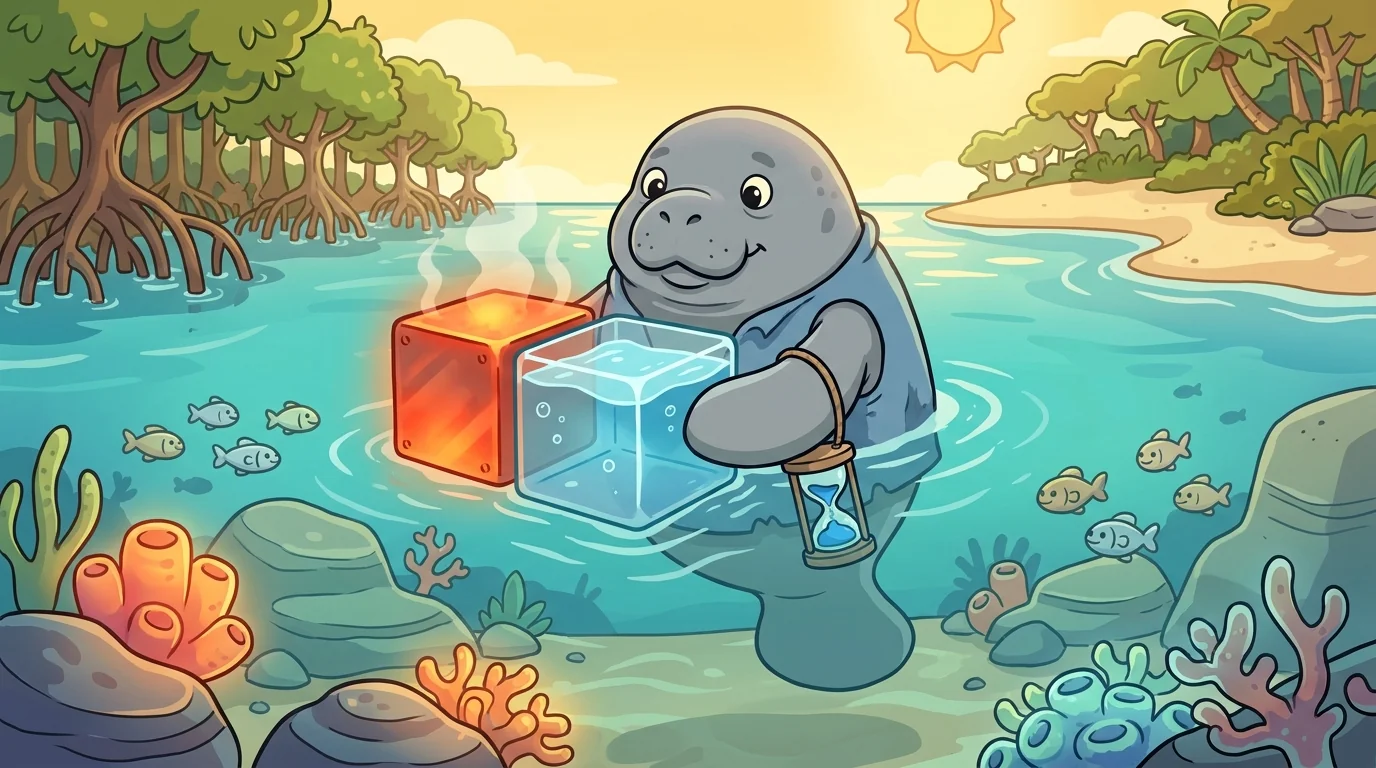
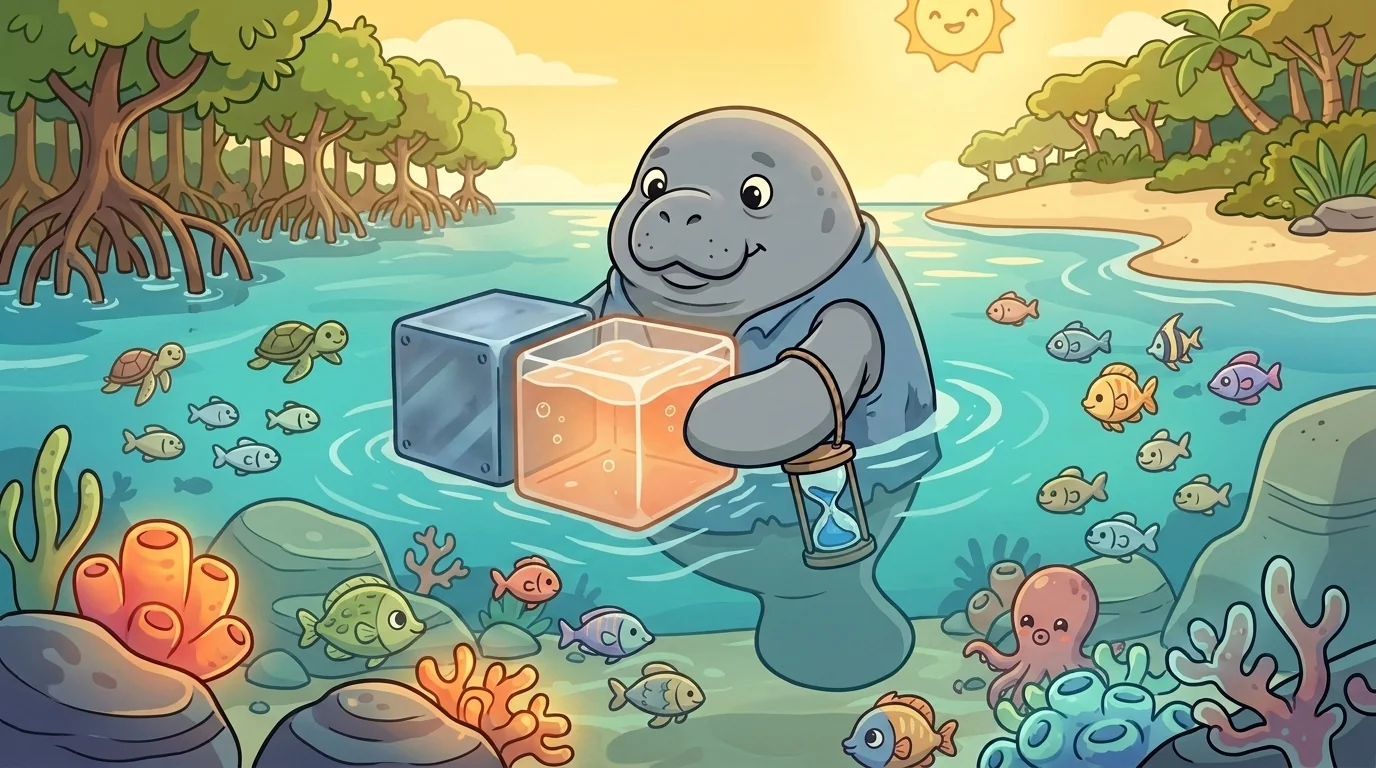
Steep is a manatee-tween who does everything slowly and doesn't apologize for it. She wears a loose, water-worn vest, and she carries two blocks — one metal, one full of water — and a slow, patient timer. Her hide is soft gray, her movements unhurried, and she loves — more than anything — the way some things drink heat in slowly, hold it a long, long time, and give it back gently, keeping their cool while everything around them races.
"Some things soak up heat slowly and hold it long," she likes to say. "Water is a heat sponge." Because Steep teaches heat capacity — the way different materials need very different amounts of heat to warm up by the same amount. Metal heats up fast and cools down fast; it barely holds heat at all. Water is the opposite — it takes a huge amount of heat to warm water even a little, and once warm, it holds that warmth for ages. Most people think all things heat up at the same speed. Steep knows better. Some things are heat sprinters, and some, like water, are the great slow sponges of the world.
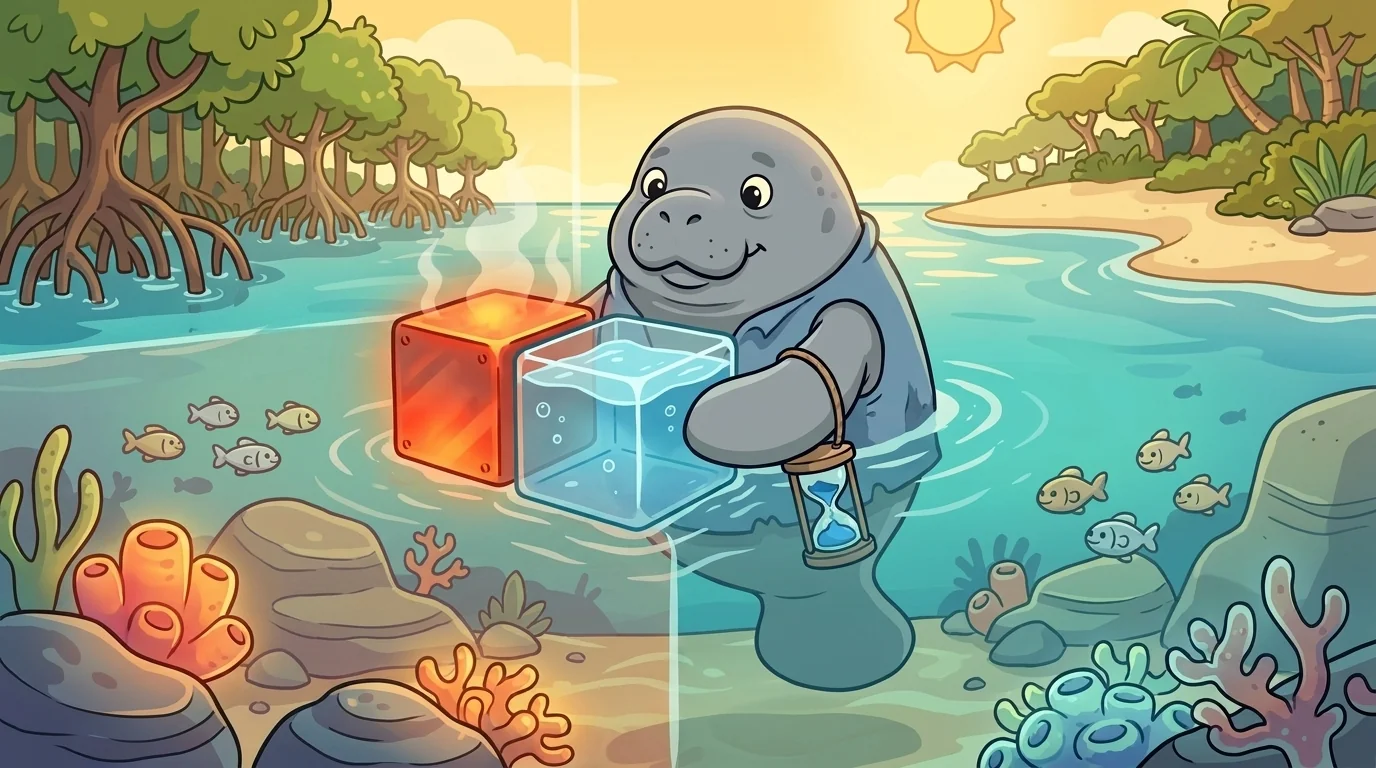
Steep grew up in a warm coastal lagoon, in a family of manatees the shore-folk called the "slow-keepers."
Their whole wisdom was patience with warmth. "The land races," her grandmother would drift and say, "hot by noon, cold by night. But the water?" She'd gesture at the lagoon, calm and steady in every season. "The water keeps its temper. It warms slow, cools slow, and holds the middle." Little Steep was impatient — she wanted the water to warm up fast in the morning sun like the sand did. Then one blazing afternoon she felt the beach sand burning hot enough to hurt, while the very same sun had barely nudged the lagoon's temperature at all. "That's when I understood," she says. "The sand and the water got the same sunshine. But the sand sprinted — heated fast, so it burned. The water steeped — it drank the heat in slow, and stayed gentle, because it can hold so much." She has moved at the water's patient pace ever since.
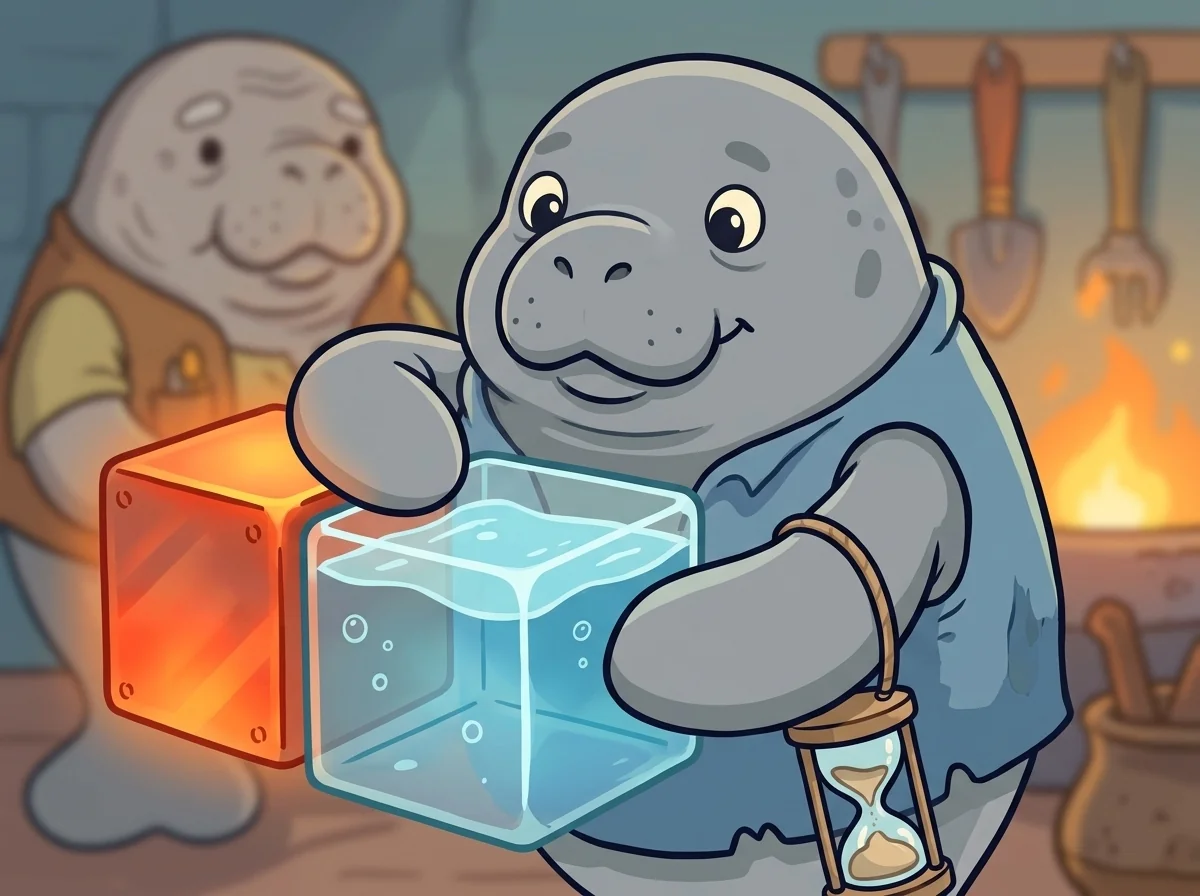
When Steep was twelve, she drifted to HeatForge. Kelvin, her mentor, asked her, "Why does water warm so much slower than metal?"
"Some things soak up heat slowly and hold it long," Steep answered, unhurried. "Water is a heat sponge — it takes a huge amount of heat to warm it even a little, and it holds that warmth for ages, while metal warms and cools in a blink. It's storage-craft. How much heat a thing needs to change its temperature depends on what it's made of."
Kelvin smiled. "You are appointed."
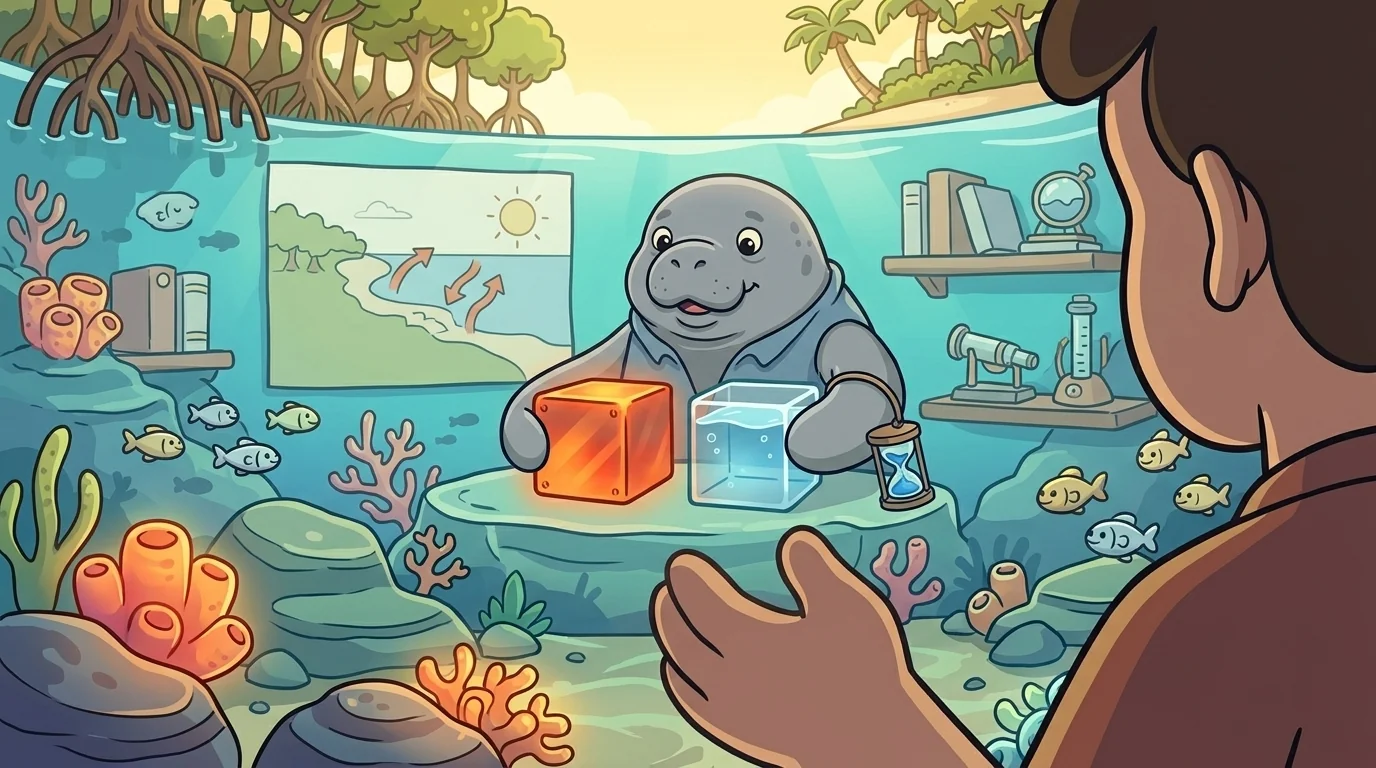
In her calm, water-cooled workshop, Steep loves to show it. She warms a metal block and an equal-sized block of water over the same flame for the same time. "Feel the metal — hot already. Now the water — barely warm." Then she lets them cool: the metal goes cold fast; the water stays warm long into the evening. "Same heat in. Wildly different change. That's heat capacity." Then she teaches the secrets. Sprinters and sponges — metal, sand, and air change temperature fast with a little heat (low heat capacity); water changes slowly (very high heat capacity), so it's the world's great heat sponge. Why the coast is mild — the ocean is such a huge heat sponge that it warms slowly all summer and releases that warmth slowly all winter, so places by the sea have gentler weather than places inland. Why a pot handle isn't the water — the metal pot screams hot fast; the water inside takes far longer to boil. Why your body uses water — you're mostly water, which helps you hold a steady temperature instead of swinging with every change. And her favorite: "A hot day and a cold night hit the sand and the sea the same. The sand can't take it — it burns by noon, freezes by dark. The sea just steeps, and stays steady. Being a good heat sponge is a kind of calm."
"Isn't being slow a problem?" a student asked her once. Steep smiled her slow manatee smile. "Not at all. It's just: some things soak up heat slowly and hold it long. Water is a heat sponge. Slow to warm, slow to cool — that's not weakness. That's steadiness."
She rested a flipper on the water-block, still gently warm long after the metal had gone cold, and her voice warmed with a keeper's quiet contentment. "When I feel the water holding its warmth into the night," she said, "steady while the racing land swings hot and cold around it, I don't just feel patient. I feel anchored, the way I felt in the lagoon that stayed calm through every blazing noon and freezing dark. Holding that steady feeling close is the whole point. The world is full of sprinters that flare hot and go cold in a blink — and full of quiet sponges that take the heat in slow, hold it long, and stay gentle through it all. Learning which is which, and knowing it's okay to be a slow, steady sponge, is the calmest kind of understanding there is."
The HeatForge ensemble
Steep is part of HeatForge's distributed-narrative cast. Each character embodies a different curricular primitive; together they teach the full subject.
-

Touch
Conduction (contact-bound molecular transfer)
-

Drift
Convection (fluid circulation carrying heat)
-

Glow
Radiation (electromagnetic energy across empty space)
-

Shift
Phase change / latent heat (state transition without temperature change)
-

Hush
Insulation / thermal equilibrium (slowing transfer, reaching balance)
-

Amass
Heat quantity vs temperature — how-hot is not how-much; a lukewarm lake holds more total heat than a scalding cup
-

Billow
Convection — warmth makes things spread out and rise; heat needs room to move
-

Rasp
Friction heating — rub two things together and warmth appears; motion turns into heat
-

Smooth
Conduction toward equilibrium — heat always spreads toward even, and never un-spreads on its own