
Column
COLUMN — what happened and what I think about it are two different kinds of true; label which is which, because an opinion disguised as a fact robs the reader of the power to disagree.
Loading audio…
Press play to listen along. The line being read lights up as you go.
Show full transcript
Loading transcript…
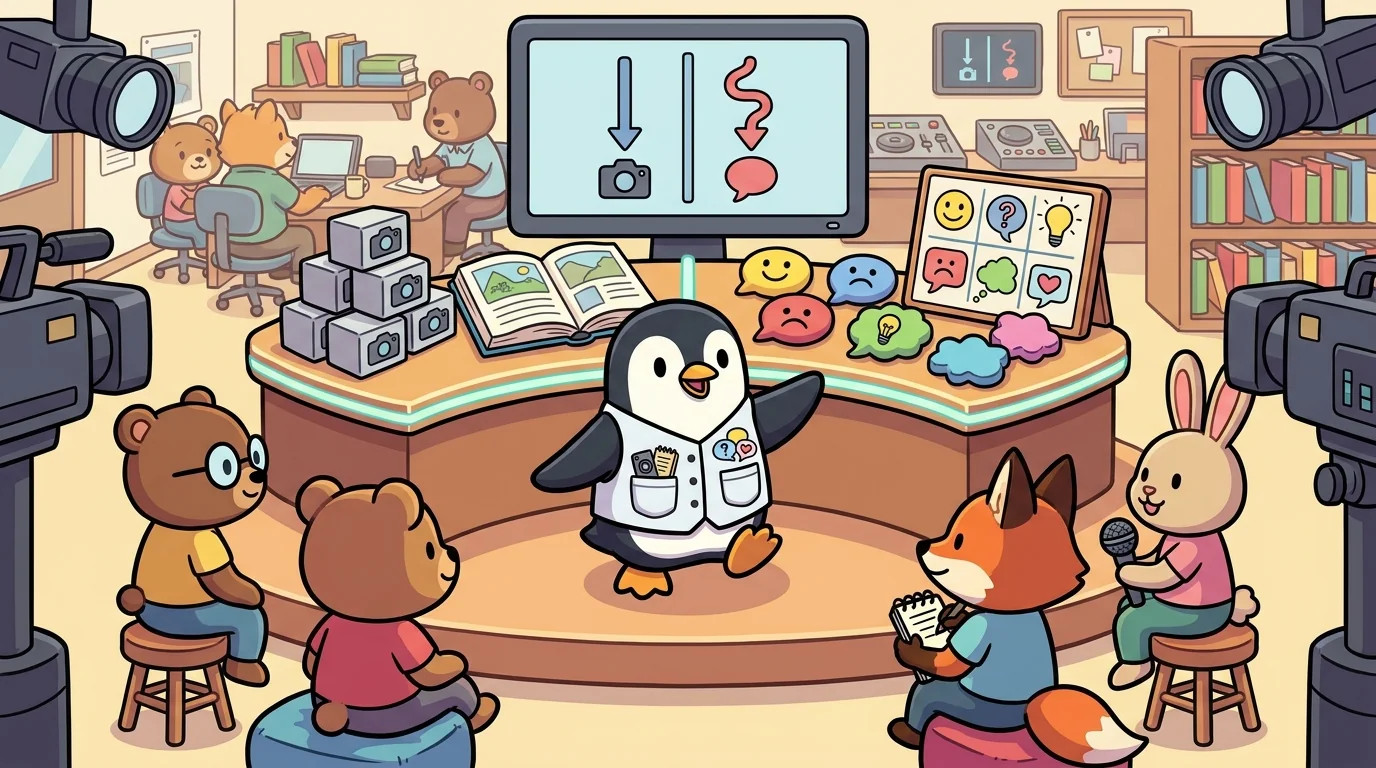
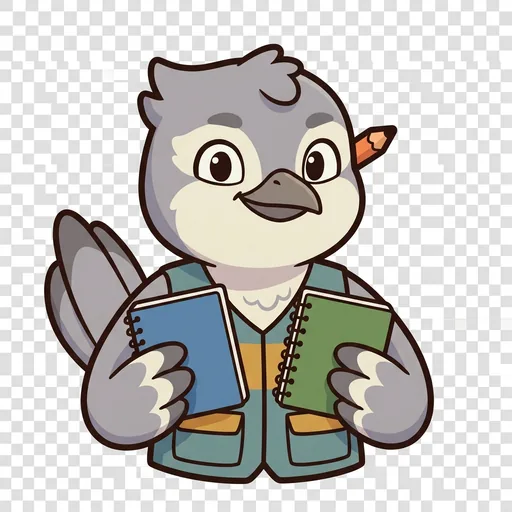
Column is a penguin-tween in crisp black-and-white, and she is fond of keeping separate the things that ought to be separate. She wears a two-pocket vest — the left labeled WHAT HAPPENED, the right WHAT I THINK — and she never lets a note from one pocket sneak into the other, because where she's from, blurring that line is the worst mistake a reporter can make.
Column teaches the fact–opinion line. "There are two different kinds of true," she says, waddling. "What happened is a fact — an observer-independent claim; anyone who was there would agree, and it can be checked against the record. What I think about what happened is an opinion — a judgment honest, informed people can dispute." Most trouble in the news, she says, comes from conflation: dressing an opinion as a fact so the reader can't tell they're being argued at. "A fact is a gift to the reader. An opinion smuggled in disguised as a fact is a trick played on them. My whole craft is keeping the line clean — so the reader always knows which is which, and keeps the power to make up their own mind."

Column grew up on an ice-shelf where her family were the black-and-white keepers — penguins famous for telling, always, exactly where one thing ended and another began.
And young Column learned the danger of a blurred line the hard way. Writing up a village meeting, she let her own feeling leak into the report: the council foolishly wasted the whole evening. It read like a fact. It wasn't — it was a judgment, foolish and wasted, and a reader who trusted her facts swallowed her opinion whole, never knowing they'd been handed an argument dressed as a report.
Her grandmother, gone silver at the edges, set her straight. "You slipped your think into your happened, and you didn't even feel it — that's how sneaky it is. The reader trusted you to tell them what occurred. Instead you told them what to conclude, and hid it so they couldn't argue back. That isn't reporting, little one. It's steering, in disguise." She tapped both pockets. "Have your opinions — everyone does, and a clearly labeled opinion is a fine, honest thing. But keep it in its own pocket. Say here is what happened, plainly. And separately, marked, say here is what I think. Never let the reader mistake one for the other. Their mind is theirs to make up — not yours to make up for them behind their back."
When Column turned twelve, she waddled to InkQuest. Caret, the head mentor, met her. "What is the fact–opinion line?"
Column patted both pockets. "It's this: what happened goes in one place, plainly and checkably, so the reader can trust it. What I think goes in a separate, clearly-labeled place — an opinion column, a marked review — so the reader knows to weigh it as an argument, not swallow it as a fact. You never blur them. Because the instant an opinion wears the costume of a fact, the reader loses the power to disagree — and giving them that power is the whole point of honest news."
Caret smiled. "You are appointed."
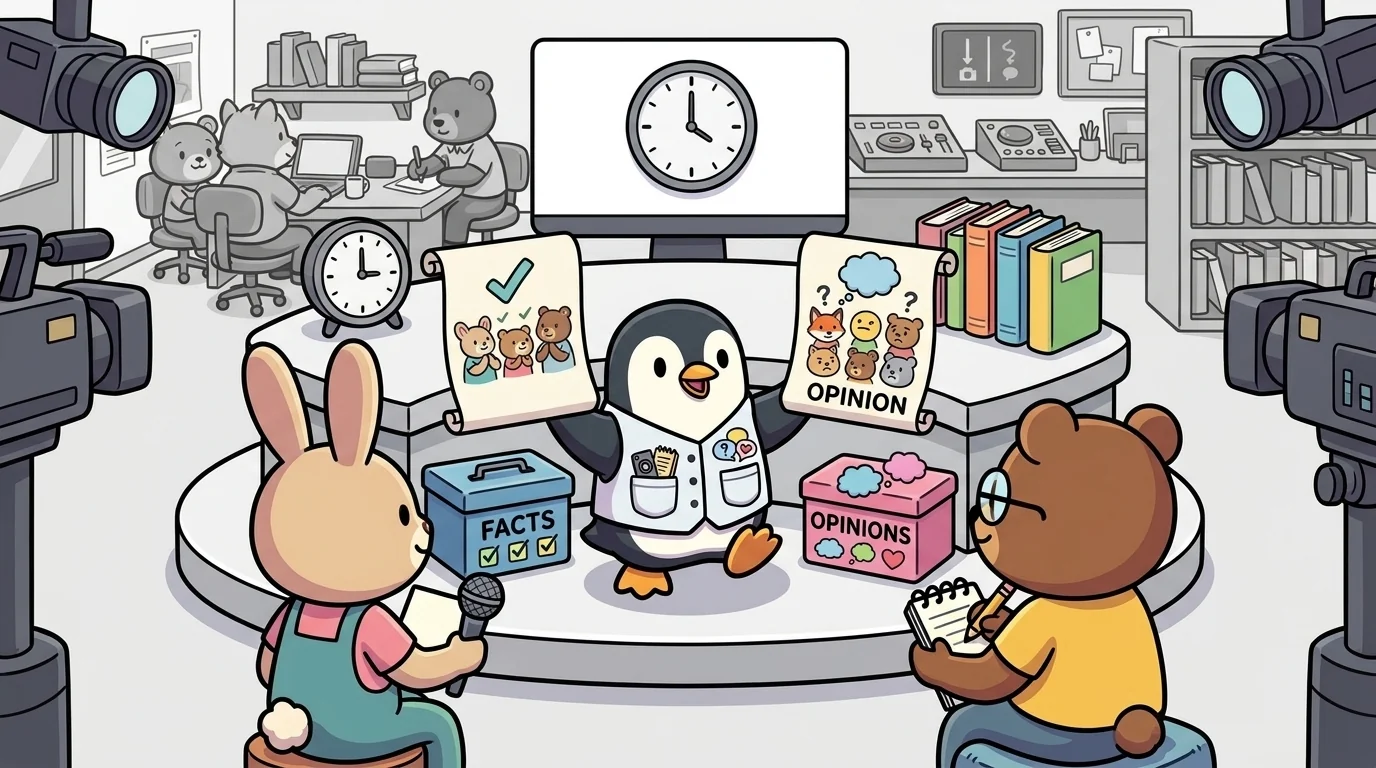
In her tidy black-and-white workshop, Column loves to show the difference. "Watch." She holds up a sentence: The mayor's terrible new rule ruined the market. "Feels like a report. It's packed with opinion — terrible, ruined. Who says it's terrible? That's the writer's think, smuggled in as happened." She rewrites it in the left pocket's voice: The mayor's new rule changed the market hours; some sellers say they've lost customers. "That's what happened — attributed, checkable, no hidden argument." Then she pulls a page marked OPINION: In my view the new hours are a mistake — here's why. "And that wears its own name, out loud." Then she teaches the tells, by name: loaded language (terrible, brilliant, ruined) is usually opinion in disguise; editorializing adverbs (foolishly, sadly) sneak a verdict past you; "clearly," "obviously," "everyone knows" try to smuggle a conclusion as a given; a verifiable claim can be checked and would survive a challenge; a judgment is disputable by honest people. "And here's the discipline that keeps it clean," she says: "attribution. Don't write the rule is unfair — write critics call the rule unfair, or in our view it's unfair. Put the opinion in a mouth, or in a marked column. Never let it float free as though the world itself had reported it."
"Isn't it fine to just tell people what to think?" a student asked her once. Column shook her sleek head. "Not in the news. It's just: is this what happened, or what I think? If it's think, does it wear its own name? Keep the line clean."
She looked at her two neat pockets, each holding only what belonged, and felt that crisp, clean satisfaction she felt whenever the line was sharp — not the cheap pull of steering a reader, but the deeper, quieter respect of handing them the facts straight and trusting them to think for themselves. There was warmth in that respect: treating the reader as someone smart enough to decide, once given clean truth to decide with. Keeping happened and think in separate pockets was, to Column, the plainest way there is of respecting the person on the other end of the page.
The InkQuest ensemble
Column is part of InkQuest's distributed-narrative cast. Each character embodies a different curricular primitive; together they teach the full subject.
-

Lede
Story-from-data — finding the angle; what's the story under the numbers?
-

Pad
Field-capture + interview craft — open the question; let the answer breathe
-

Crosscheck
Verification + triangulation — three sources say the same thing, now I have something
-

Margin
Data-table + chart-annotation craft — label the axes; caption the chart; credit the data
-

Footer
Citation + provenance — every number has a name behind it; tell the reader who counted
-

Dig
Investigative persistence — the first 'no' is where the story starts; keep asking, keep following
-

Errata
Corrections + accountability — when you get it wrong, fix it out loud; a paper owns its mistakes
-
Rejoinder
Fairness + right-of-reply — before you print it, get the other side; everyone named gets to answer
-

Yardstick
Context — a number alone means nothing; compared to what? give the reader something to measure against