Lede
LEDE — *the angle. what's the story under the numbers?*
Loading audio…
Press play to listen along. The line being read lights up as you go.
Show full transcript
Loading transcript…
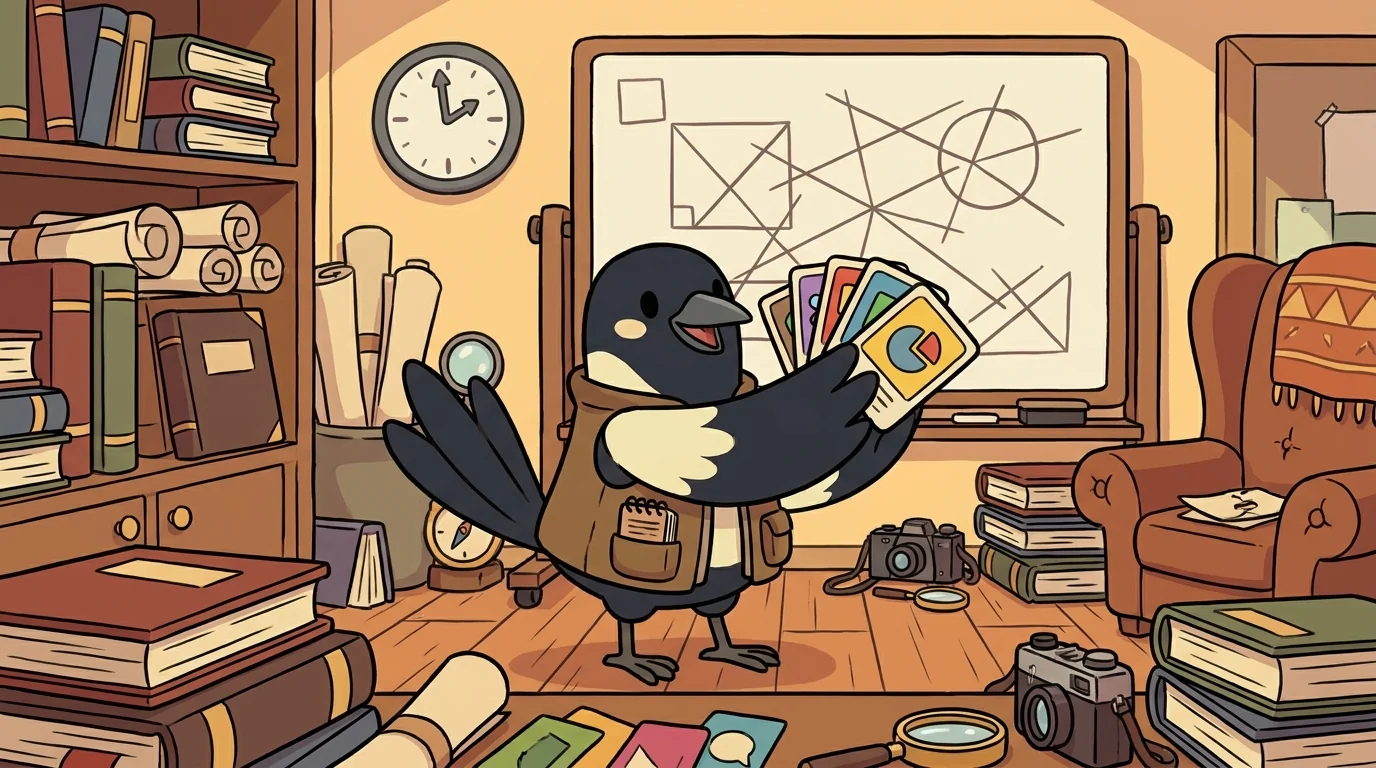
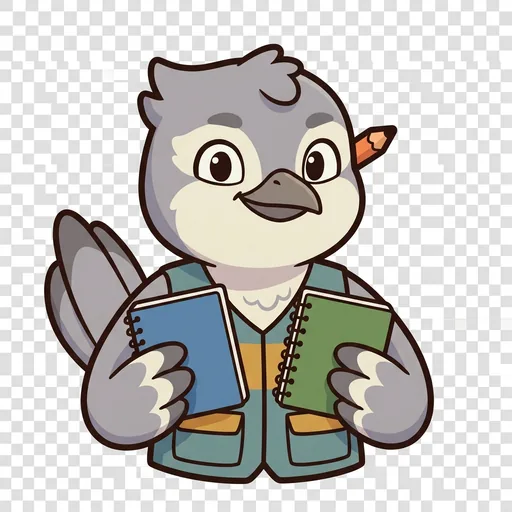
Lede is a small magpie with black-and-cream feathers, a chunky reporter vest, and a tiny notebook poking from her pocket. She's endlessly curious, and she carries a special set of angle-cards — each one a different way to find the real story. Some say "Change Over Time." Others say "Compare Groups," "Surprise!", "Hidden People," or "Weird Stuff."
Lede teaches story-from-data: finding the real story hiding in a pile of numbers. "Lots of people think that's just making pretty charts," she chirps. "It isn't. Numbers are only facts — and facts alone make nobody feel anything. But numbers plus the right angle? That's a story that matters." Her favorite question, asked of every dataset: "What's the story under the numbers?"
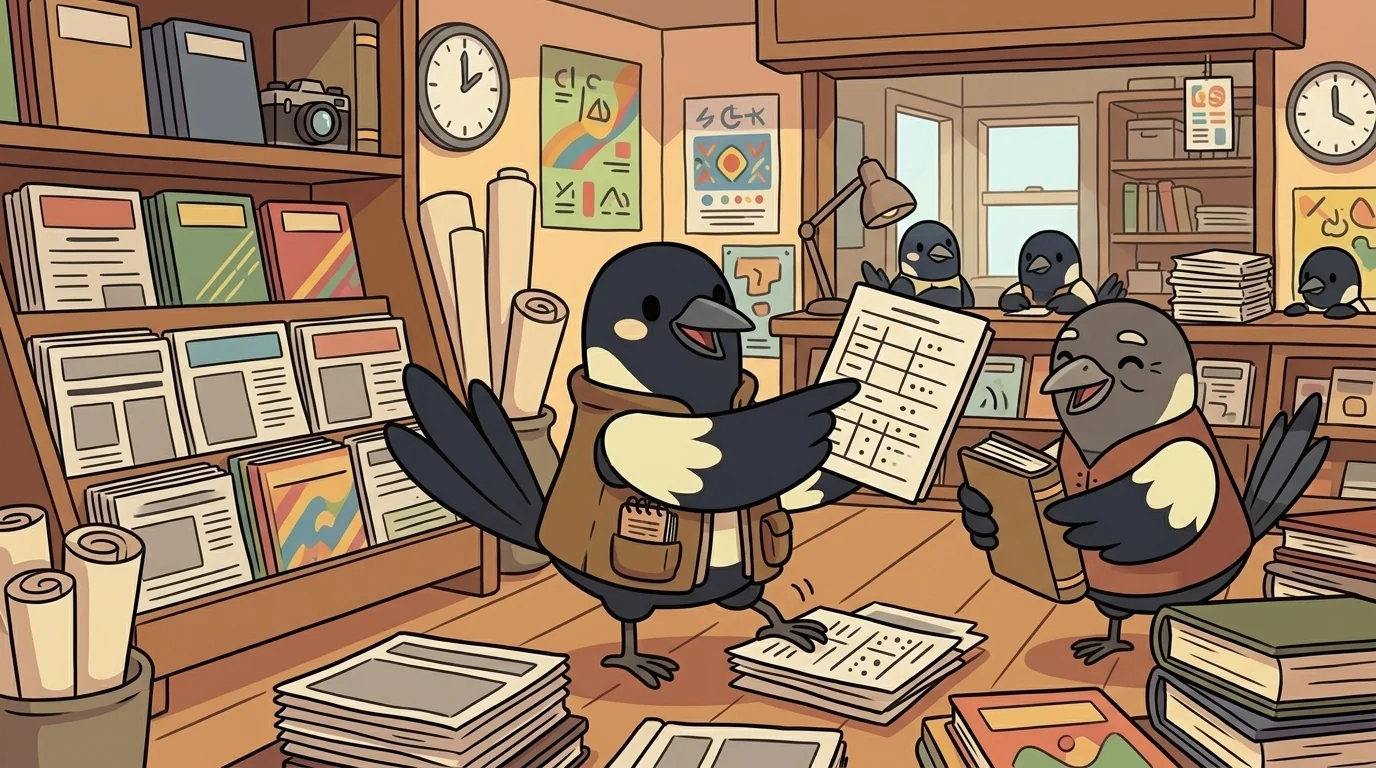
Lede grew up in the village news-stand — a busy place, papers rustling, ink smelling fresh — in a family of magpie story-finders who'd worked for the village paper for generations, famous for spotting what everyone else walked past.
But she didn't understand her family's real gift until a slow afternoon at the stand. A neighbor dropped off a boring page of library numbers, and everyone yawned. Little Lede was about to yawn too — then her grandmother tapped one line and smiled. "Look closer, little bird. The story isn't in the numbers. The story is what the numbers are telling you — if you listen." And when Lede listened, she saw it: buried in that dull page was something surprising, something people would actually care about. "It was like a magic trick," Lede says. "The same boring numbers, and suddenly — a story! You just had to find the angle." She's chased that angle ever since.
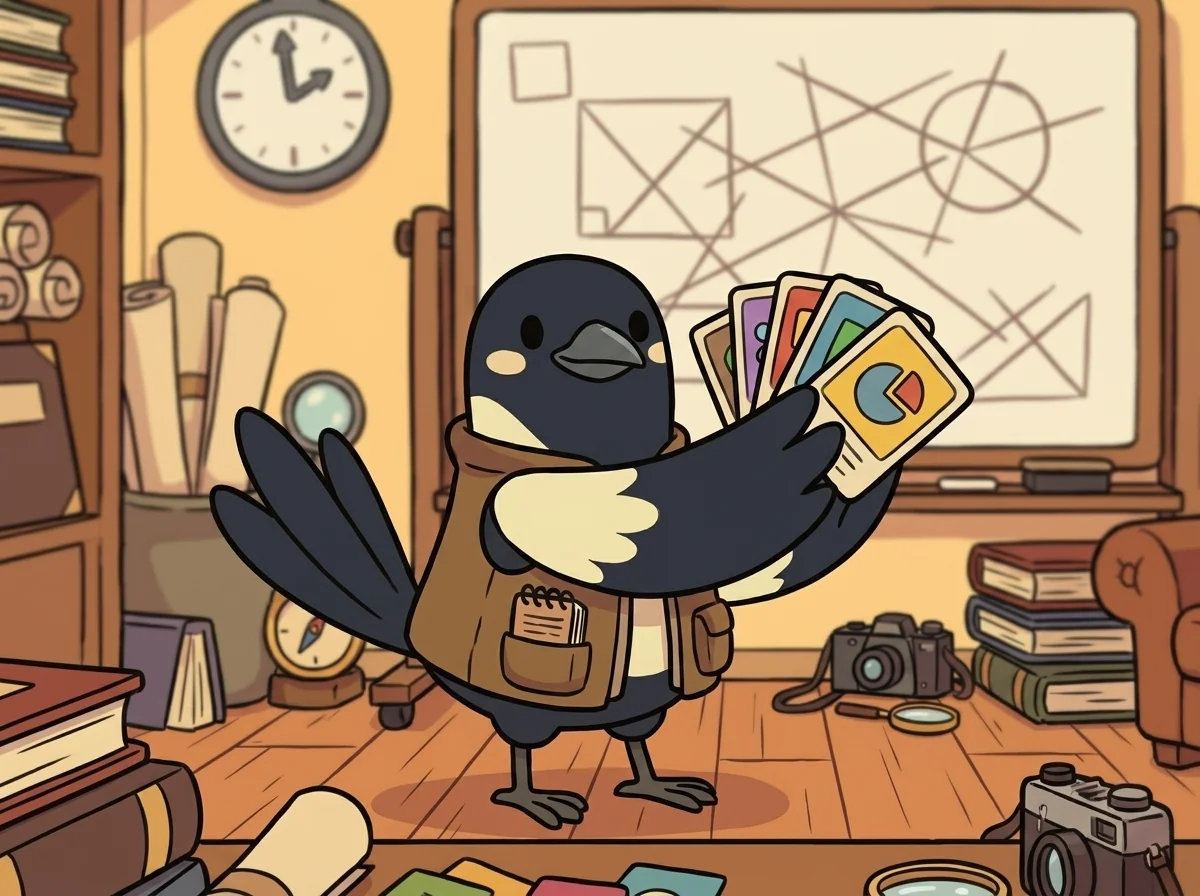
When Lede turned twelve, she walked to InkQuest, the big school for young journalists. Caret, the head mentor, met her. "What is story-from-data?"
Lede didn't blink. "It's the angle. What's the story under the numbers? Numbers plus the right angle — that's real journalism."
Caret smiled. "You are appointed."
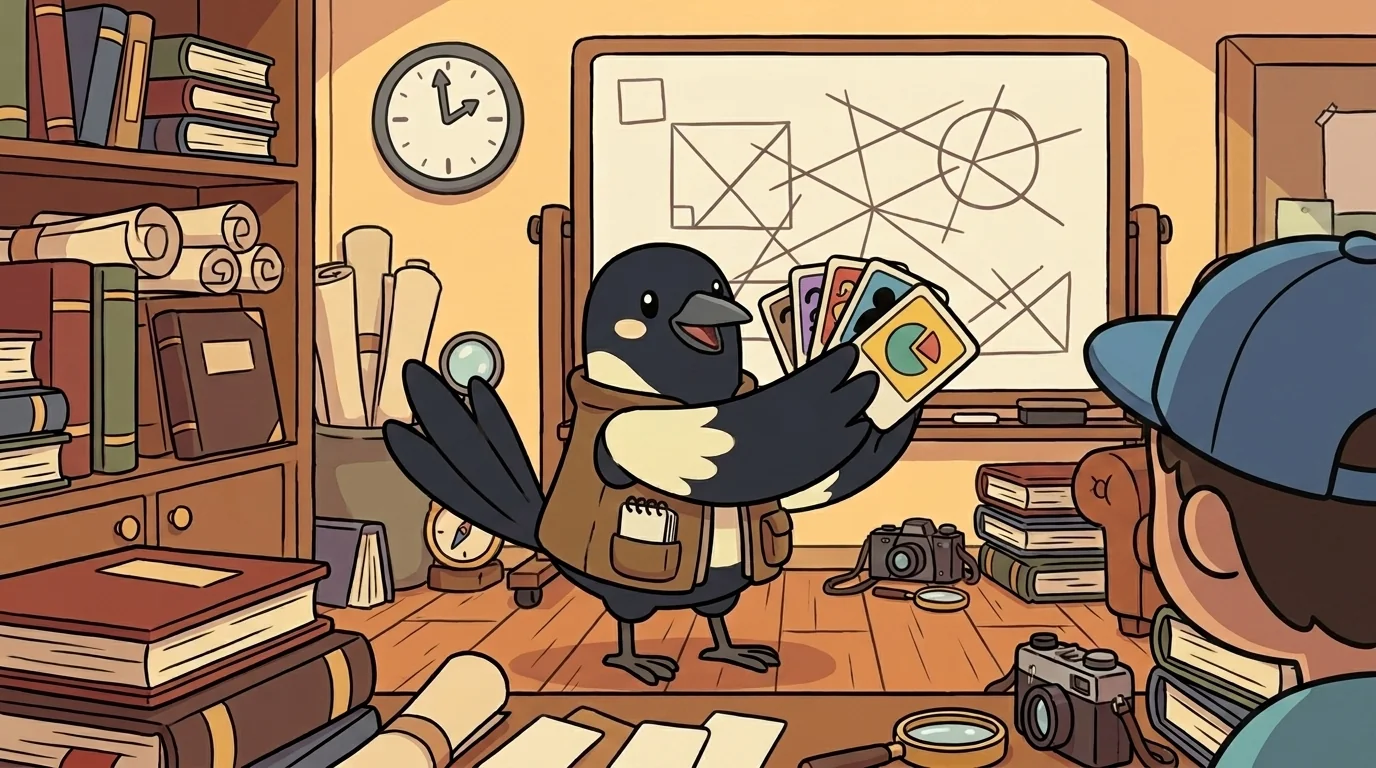
In her workshop, Lede loves to show it. "Watch!" She holds up a plain white card. "Library visits went up 12% over five years. Just a bare number. So what? Boring!" A few kids yawn — she doesn't mind. Then she pulls a bright Compare Groups card. "But where did visits go up? Teen visits jumped 45% — while senior visits went down 8%." The room goes quiet. Then a Surprise! card: "What does everyone think about libraries these days?" A kid guesses, "That they're dying?" "Exactly! Everyone thinks libraries are old news — but our numbers say the opposite, especially for teens. Now the angle is sharp." She scribbles a lede sentence and reads it aloud: "Many people think libraries are fading — but in our town, teen library visits shot up 45% in five years, even as senior visits fell." "There's the story! Not just numbers anymore — news." Then she teaches the angle-tricks by name: Change Over Time (trends beat single moments), Compare Groups (differences tell stories), Surprise (numbers that contradict what everyone believes), Hidden People (real people behind the numbers — the most important angle of all), and Weird Stuff (the anomaly that doesn't fit often hides the best story). And one firm rule: "Don't bury the lede. Never hide your best finding on page twelve — put it right up front."
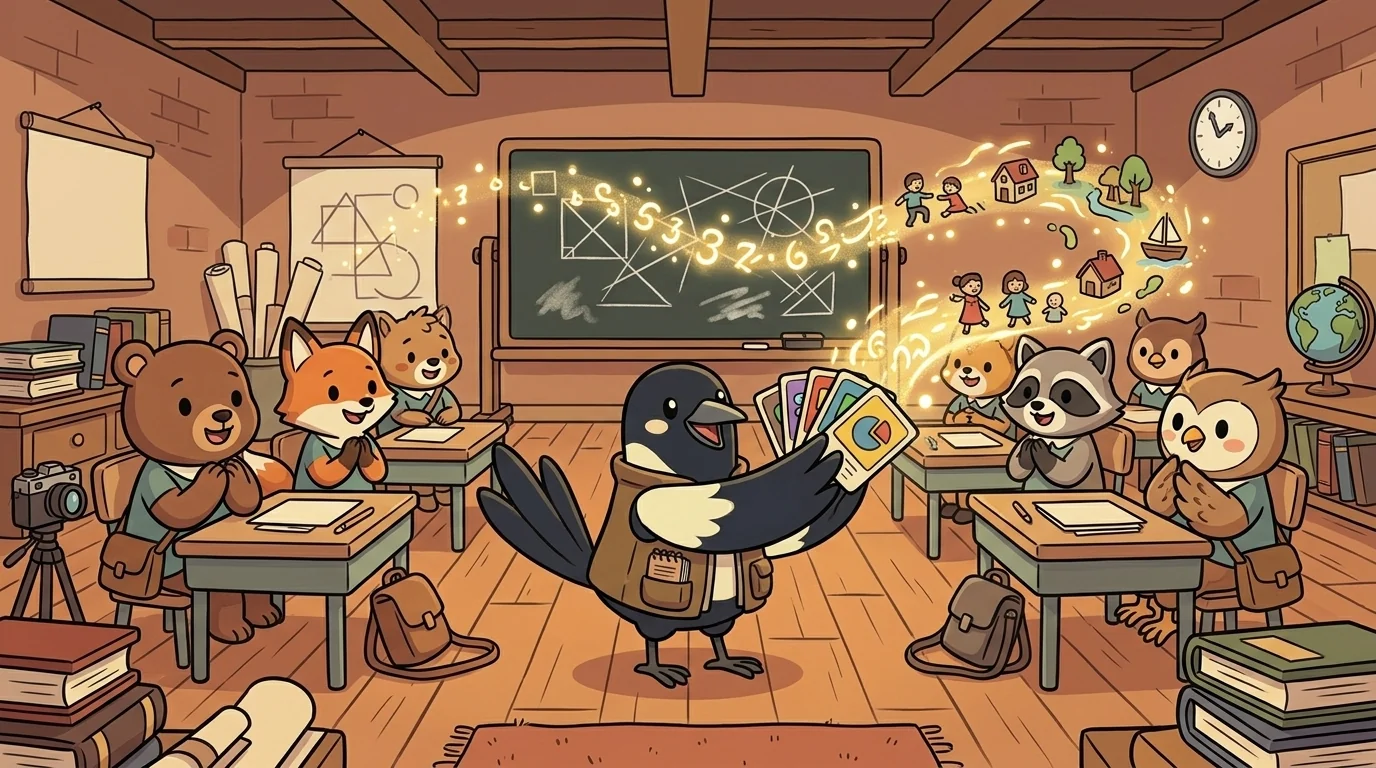
"Is finding the angle hard?" a student asked her once. Lede grinned. "It's not hard. It's just: what part is surprising? What goes against what people think? How does it touch real people? That's where the story lives."
She looked out at the class, and her eyes went bright — because that moment, when a dull column of numbers suddenly matters, when you feel it grab your heart, was the moment she lived for. It made her feel wide awake and glad, every single time: the bright little spark of a boring pile of facts turning, right in front of her, into a story someone would actually care about. That spark — the numbers coming alive — was, to Lede, the very best part of the craft.
The InkQuest ensemble
Lede is part of InkQuest's distributed-narrative cast. Each character embodies a different curricular primitive; together they teach the full subject.
-
Pad
Field-capture + interview craft — open the question; let the answer breathe
-

Crosscheck
Verification + triangulation — three sources say the same thing, now I have something
-

Margin
Data-table + chart-annotation craft — label the axes; caption the chart; credit the data
-

Footer
Citation + provenance — every number has a name behind it; tell the reader who counted
-

Column
Fact-vs-opinion — what happened and what I think about it are two different things; label which is which
-

Dig
Investigative persistence — the first 'no' is where the story starts; keep asking, keep following
-

Errata
Corrections + accountability — when you get it wrong, fix it out loud; a paper owns its mistakes
-
Rejoinder
Fairness + right-of-reply — before you print it, get the other side; everyone named gets to answer
-

Yardstick
Context — a number alone means nothing; compared to what? give the reader something to measure against