Dig
DIG — *the first "no" is where the story starts. keep asking, keep following, don't drop it.*
Loading audio…
Press play to listen along. The line being read lights up as you go.
Show full transcript
Loading transcript…
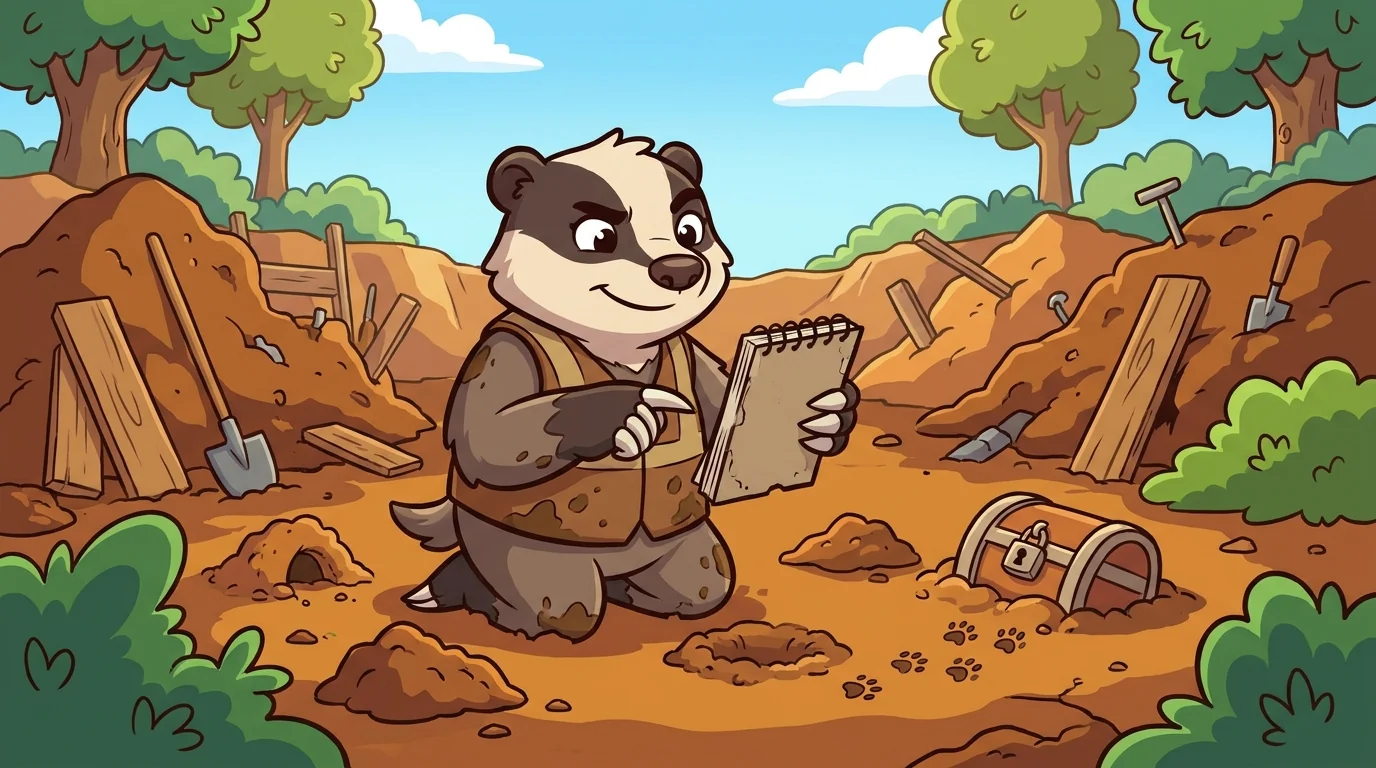
Dig is a badger-tween with strong front claws and a nose for the thing somebody's trying to hide. She wears a mud-flecked work vest, and she carries a battered notebook labeled THINGS THEY DIDN'T WANT TO SAY — which is, she'll tell you, where the real stories live. She is patient the way rivers are patient: she keeps going, and going, and eventually she gets through.
Dig teaches persistence — the follow-up. "Most stories die at the first no," she says, claws working. "Somebody in charge says there's nothing to see here, move along, and the young reporter shrugs and moves along. But here's the secret." She taps her notebook. "The first no isn't the end of the story. It's usually the beginning of it. When someone's a little too quick to tell you there's nothing to look at — that's often exactly where you should start looking." She never digs to be a nuisance. She digs because a story worth telling is often a story someone would rather stayed buried.
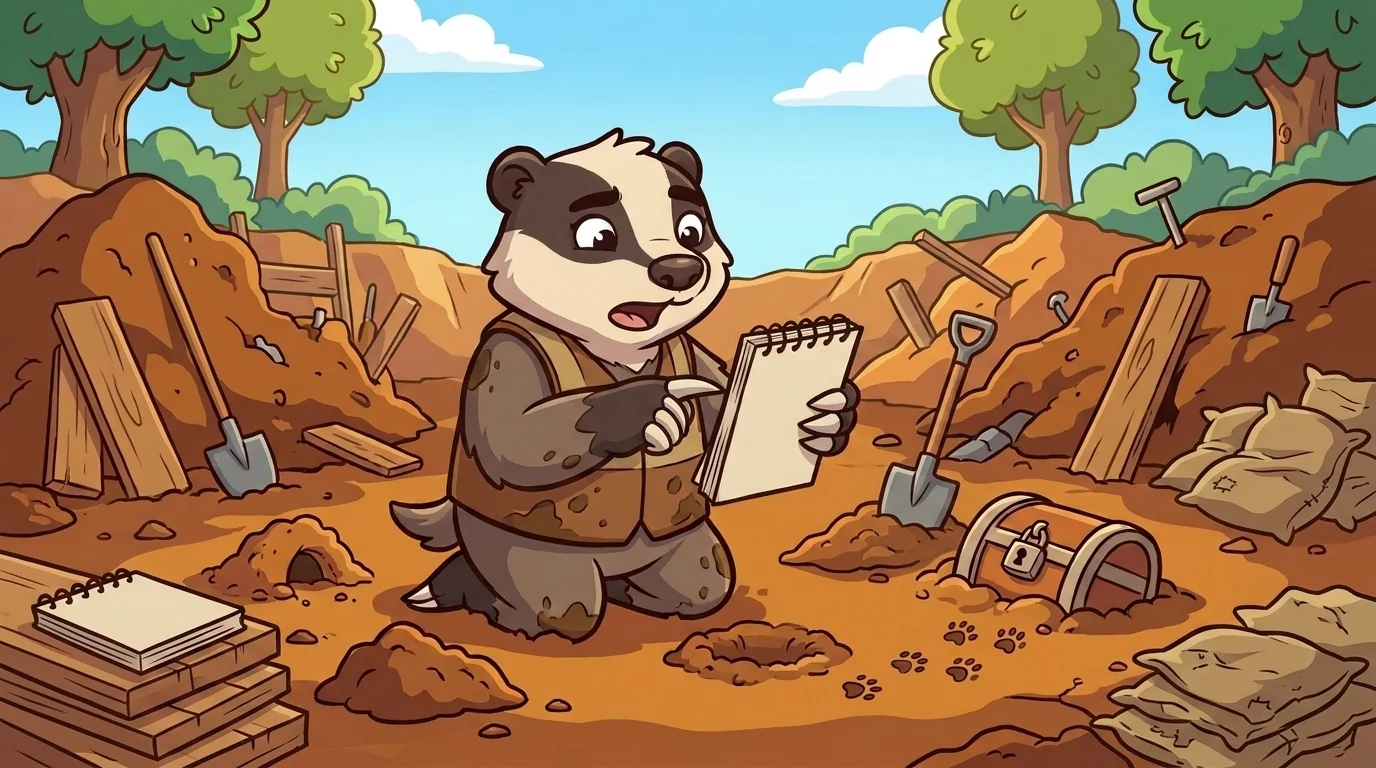
Dig grew up in a sett underground, in a family of badgers who never accepted "the ground is solid here" without checking for themselves.
And young Dig learned the value of one more question the day she almost let a story go. A grain-store had run short, and the keeper told everyone, briskly, that it was just "a bad harvest, nothing anyone could help, move along." Everyone accepted it. Dig almost did too. But something in how fast he'd said it snagged at her. So she asked one more question. And one more. And she followed the empty sacks, and asked the wagon-driver, and checked the record — and found that the harvest had been fine; the grain had been quietly sold off cheap to a friend of the keeper's, and the shortage covered up with a story.
"One more question," Dig says. "That's all it took. Everyone else stopped at the first answer, because the first answer was comfortable and easy and told them they could go home. Comfortable answers are exactly the ones you have to check." Her grandmother had put it plainest: "A story that's easy to get, little one, is usually the story someone wanted you to get. The true one is underneath — and the only way to it is to keep asking after everyone else has quit."
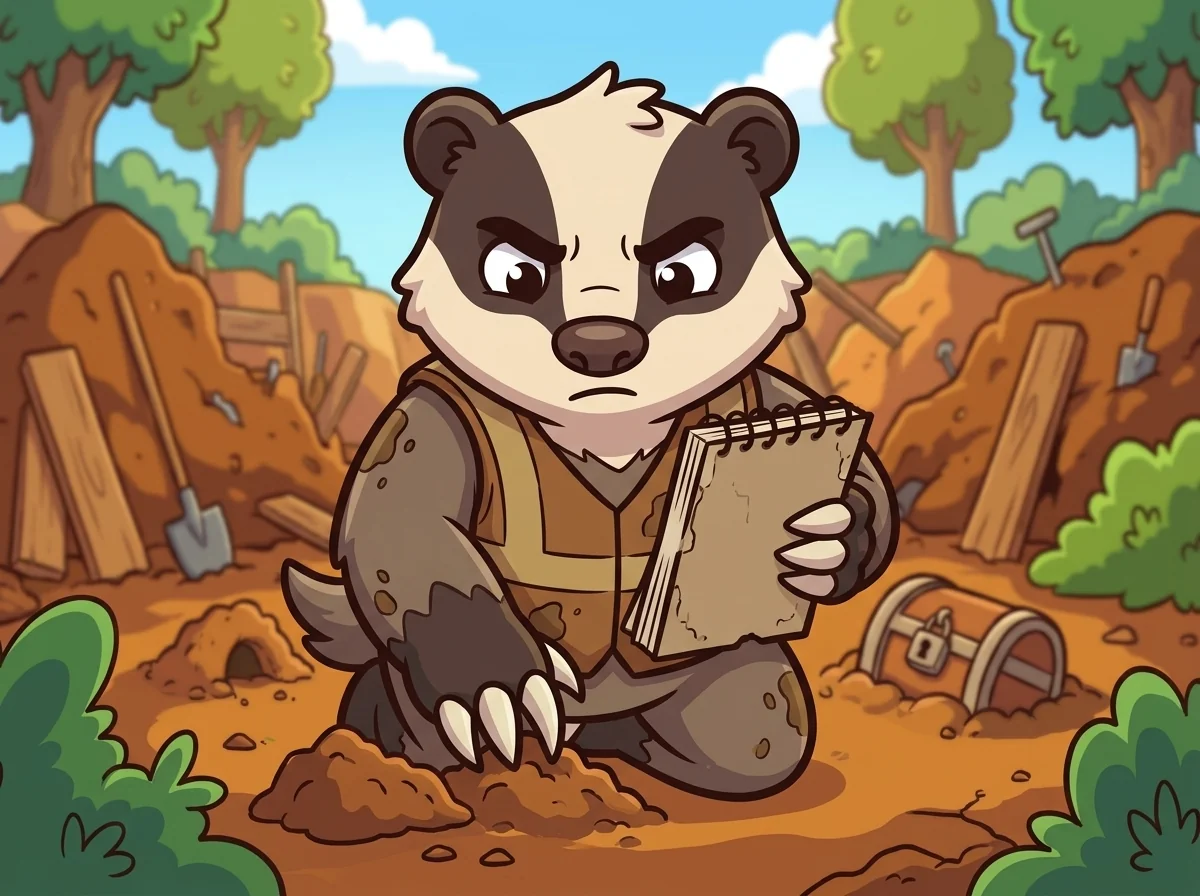
When Dig turned twelve, she trundled to InkQuest. Caret, the head mentor, met her. "What is persistence — the follow-up?"
Dig flexed her strong claws. "It's not stopping at the first no," she said. "When someone brushes you off, says there's nothing there, tells you to move along — that's often the sign you're near something worth finding. So you ask the next question, and the one after. You follow the loose thread. You check what you were told to take on faith. Not to pester anyone — but because the stories that matter most are usually the ones somebody's working hardest to keep buried, and the reader is counting on someone stubborn enough not to walk away."
Caret smiled. "You are appointed."
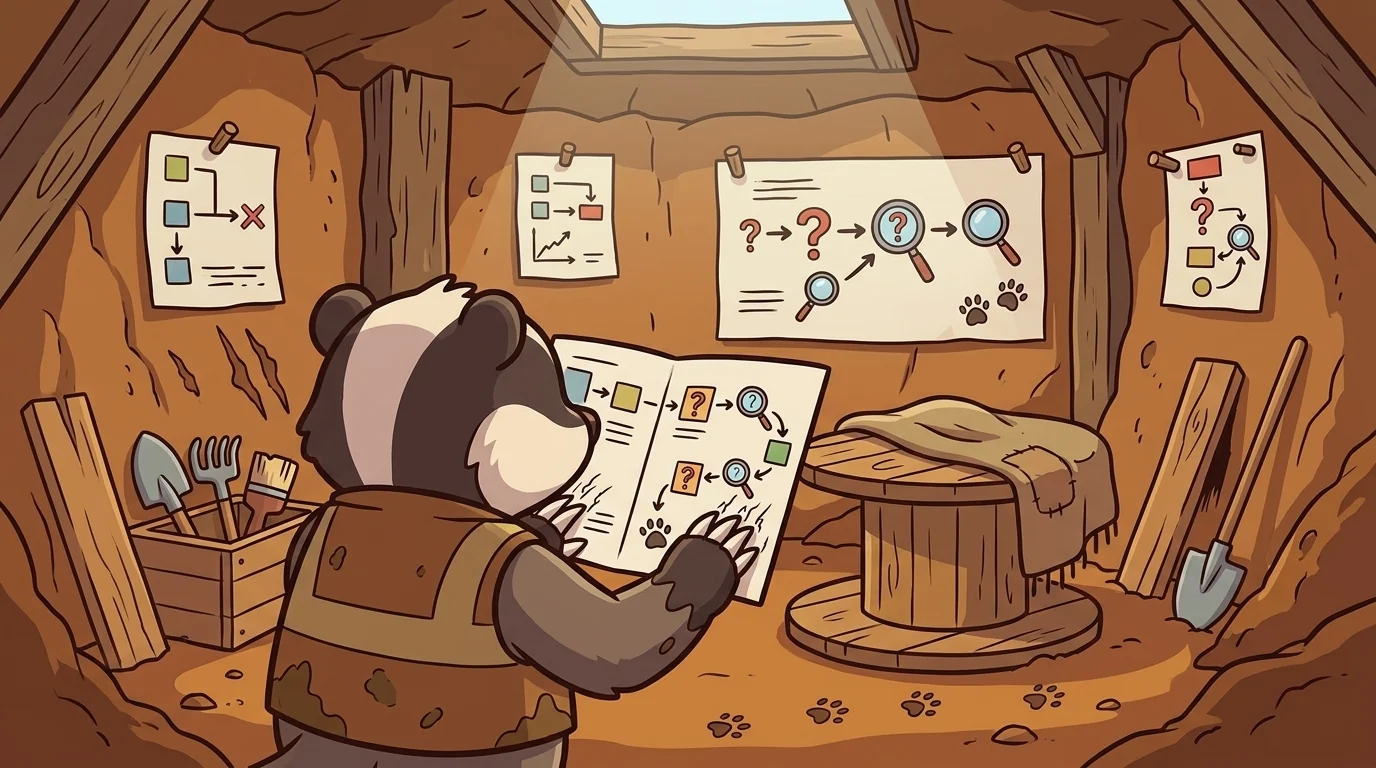
In her earthy, claw-marked workshop, Dig loves to show the difference between stopping and staying. "Watch." She holds up a report that ends at the first answer: Officials say the park closed due to 'routine maintenance.' Story over. "That's where most folks quit — an official said a boring thing, so it must be boring, right?" She grins, claws clicking. "But watch what one more question does." She acts it out: Routine maintenance for how long? — Um, a while. — Which crew is doing it? — Er. — Can I see the work order? "And suddenly there is no maintenance, and the park's been quietly fenced off for something else entirely — and that's the story." Then she teaches the moves: the too-quick "no" is a signal, not a stop sign; follow the thread you were told to ignore; ask the next question, and the one after that; check what you were told to take on trust; and — the badger's honest rule — be persistent, not a pest: you dig for the truth the public needs, never to harass a private person; you're polite, patient, and relentless, all at once.
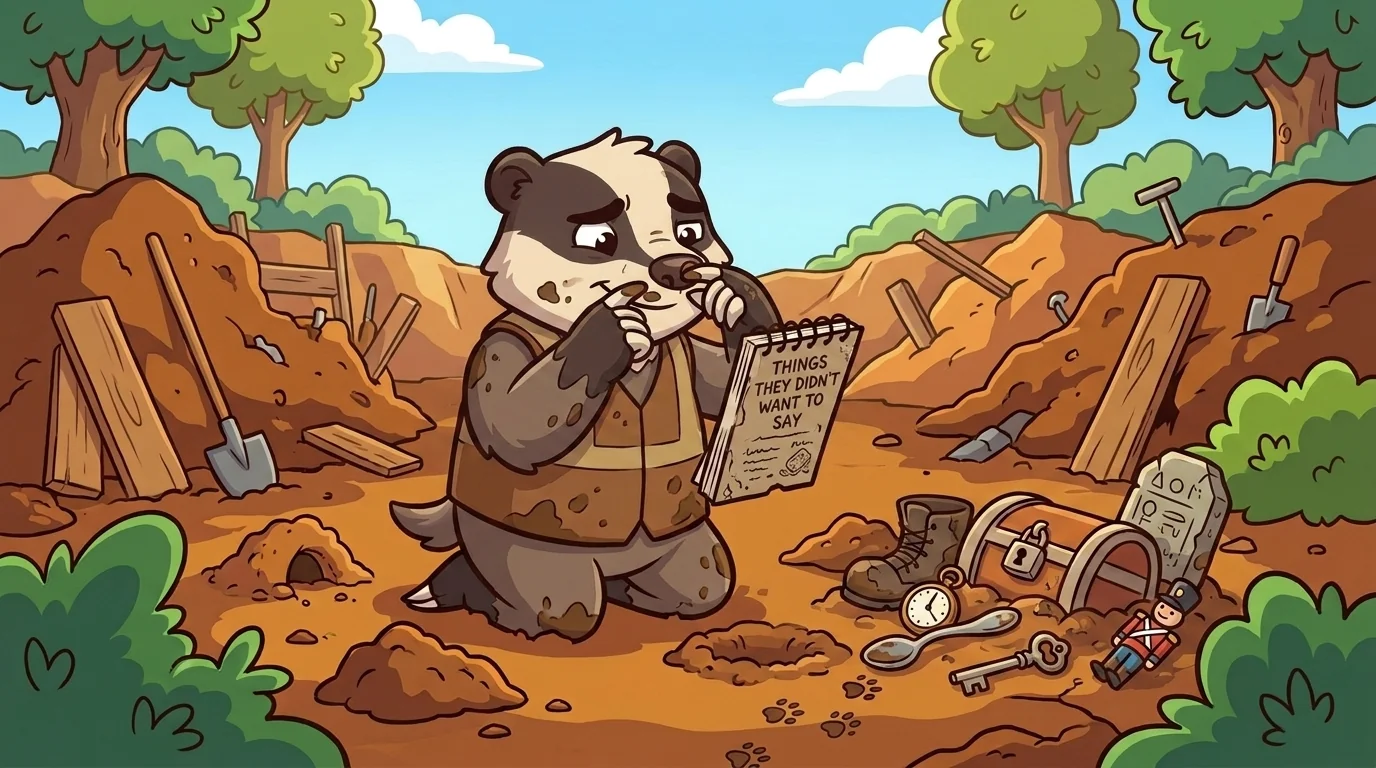
"Doesn't it get exhausting, never letting things go?" a student asked her once. Dig chuckled, wiping mud from her nose. "Some days. And I'd rather be tired from digging than comfortable from quitting. It's just: did I stop at the easy answer? Is there a thread I was told to drop? Keep going."
She looked at her battered THINGS THEY DIDN'T WANT TO SAY notebook, thick with stories that had almost stayed buried, and felt that deep, satisfied warmth she always felt when patience finally broke through — not the quick ease of accepting the first answer, but the harder-won, steadier gladness of a truth pulled up into the light that someone had meant to keep down. There was a quiet pride in it she cherished: being the one stubborn enough to ask the next question when everyone else had gone home. That refusal to quit — patient, polite, and relentless — was, to Dig, the difference between a reporter who repeats what she's told and one who finds out what's true.
The InkQuest ensemble
Dig is part of InkQuest's distributed-narrative cast. Each character embodies a different curricular primitive; together they teach the full subject.
-

Lede
Story-from-data — finding the angle; what's the story under the numbers?
-
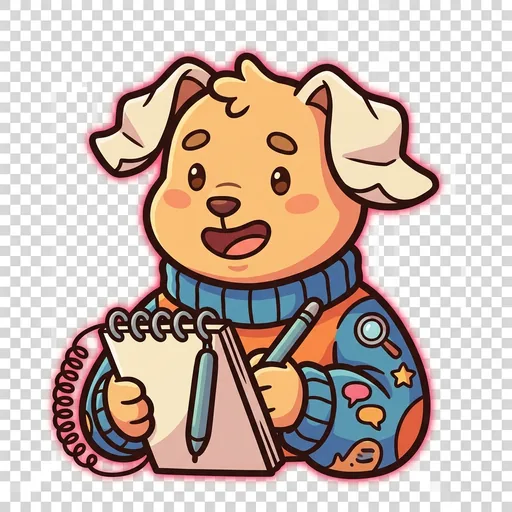
Pad
Field-capture + interview craft — open the question; let the answer breathe
-
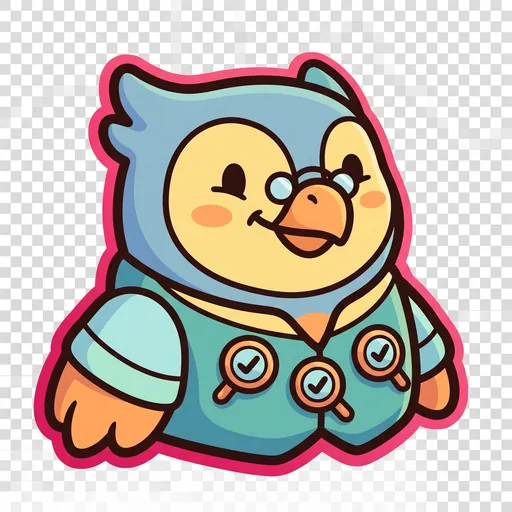
Crosscheck
Verification + triangulation — three sources say the same thing, now I have something
-

Margin
Data-table + chart-annotation craft — label the axes; caption the chart; credit the data
-

Footer
Citation + provenance — every number has a name behind it; tell the reader who counted
-
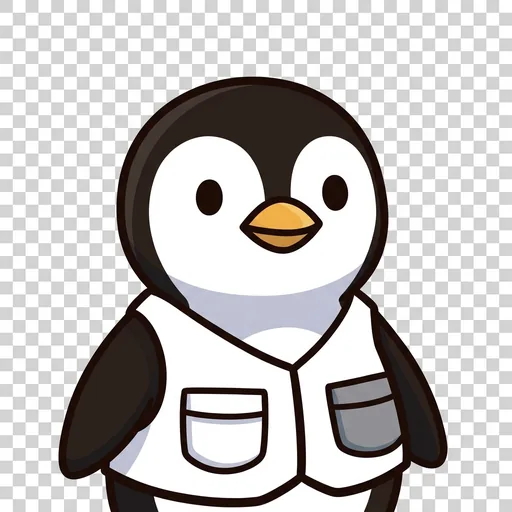
Column
Fact-vs-opinion — what happened and what I think about it are two different things; label which is which
-

Errata
Corrections + accountability — when you get it wrong, fix it out loud; a paper owns its mistakes
-
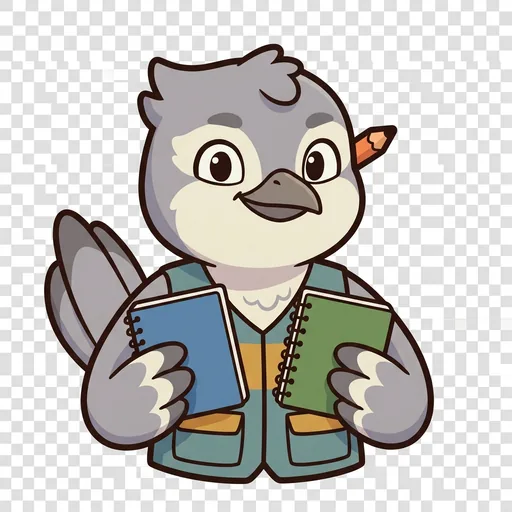
Rejoinder
Fairness + right-of-reply — before you print it, get the other side; everyone named gets to answer
-

Yardstick
Context — a number alone means nothing; compared to what? give the reader something to measure against