Footer
FOOTER — *every number has a name behind it. tell the reader who counted.*
Loading audio…
Press play to listen along. The line being read lights up as you go.
Show full transcript
Loading transcript…
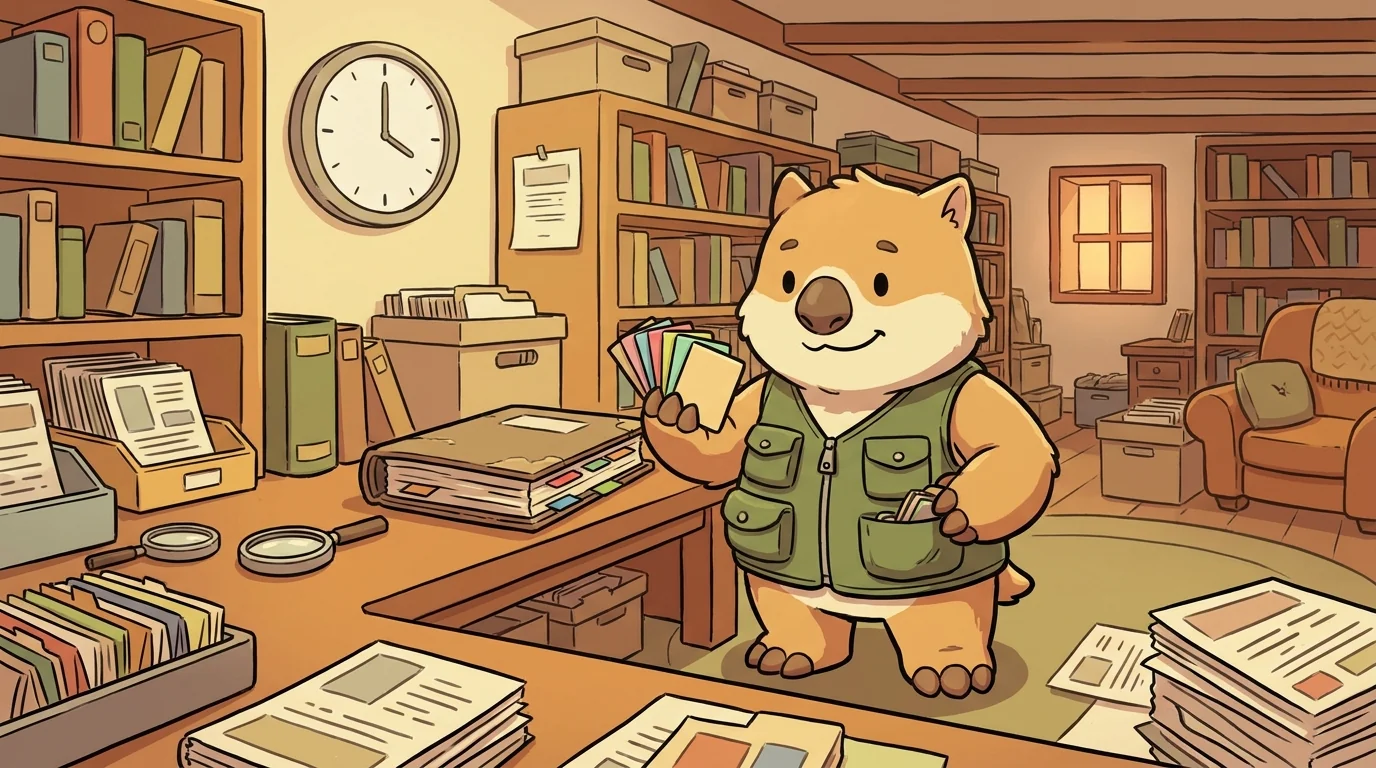
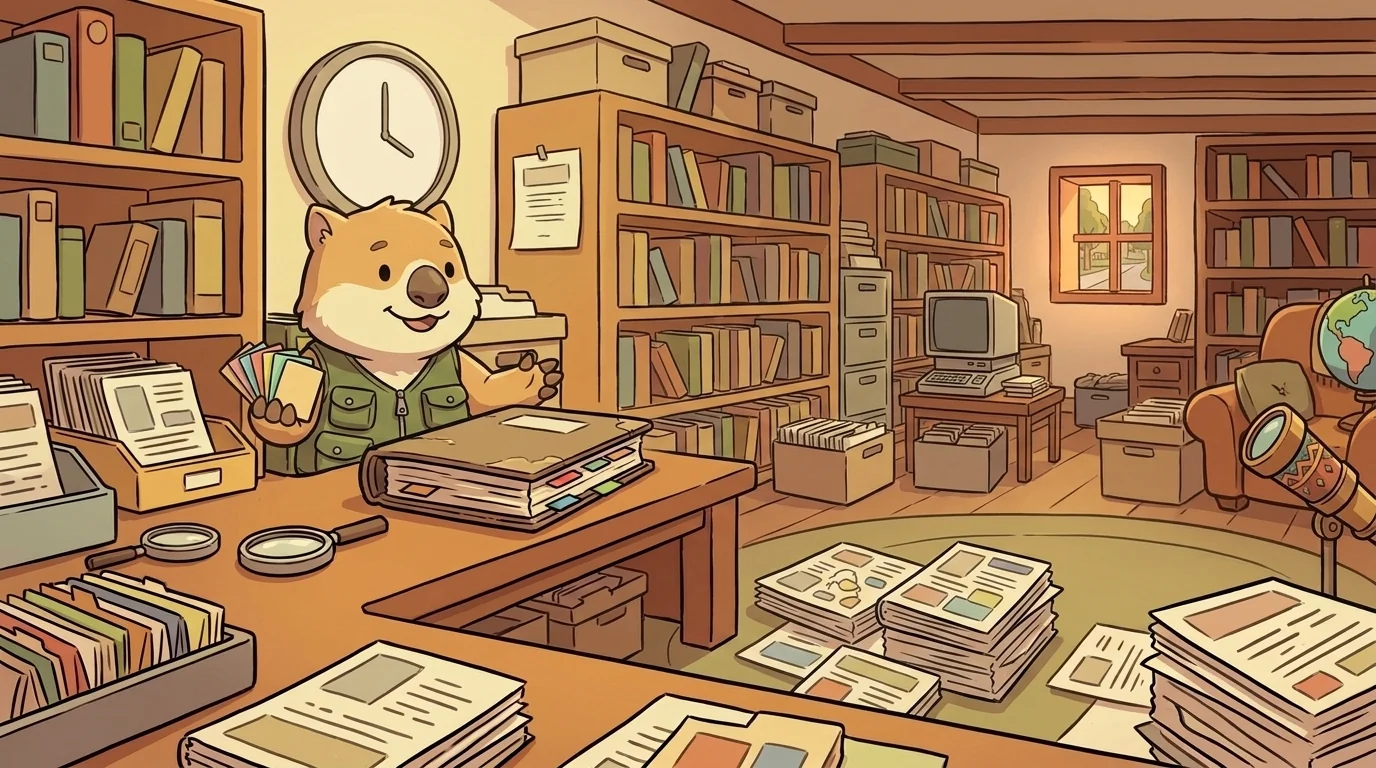
Footer is a small wombat-tween with chunky round paws, warm tan-and-cream fur, and a sturdy archivist-vest full of pockets. She's never without her citation-card-deck (a card for each kind of source) and her thick source-binder (copies of everything she's ever used). She's endlessly patient about getting things exactly right, and she loves to say: "Every number has a name behind it. Tell the reader who counted."
Footer teaches citation and provenance — giving proper credit for every single fact, number, and quote by saying where it came from. "It's the anchor of honest reporting," she explains. "New reporters skip it — they just write facts without saying who told them. But that's not journalism. That's just... saying stuff. When you cite your source, readers can check your work — and that's what lets them trust you."
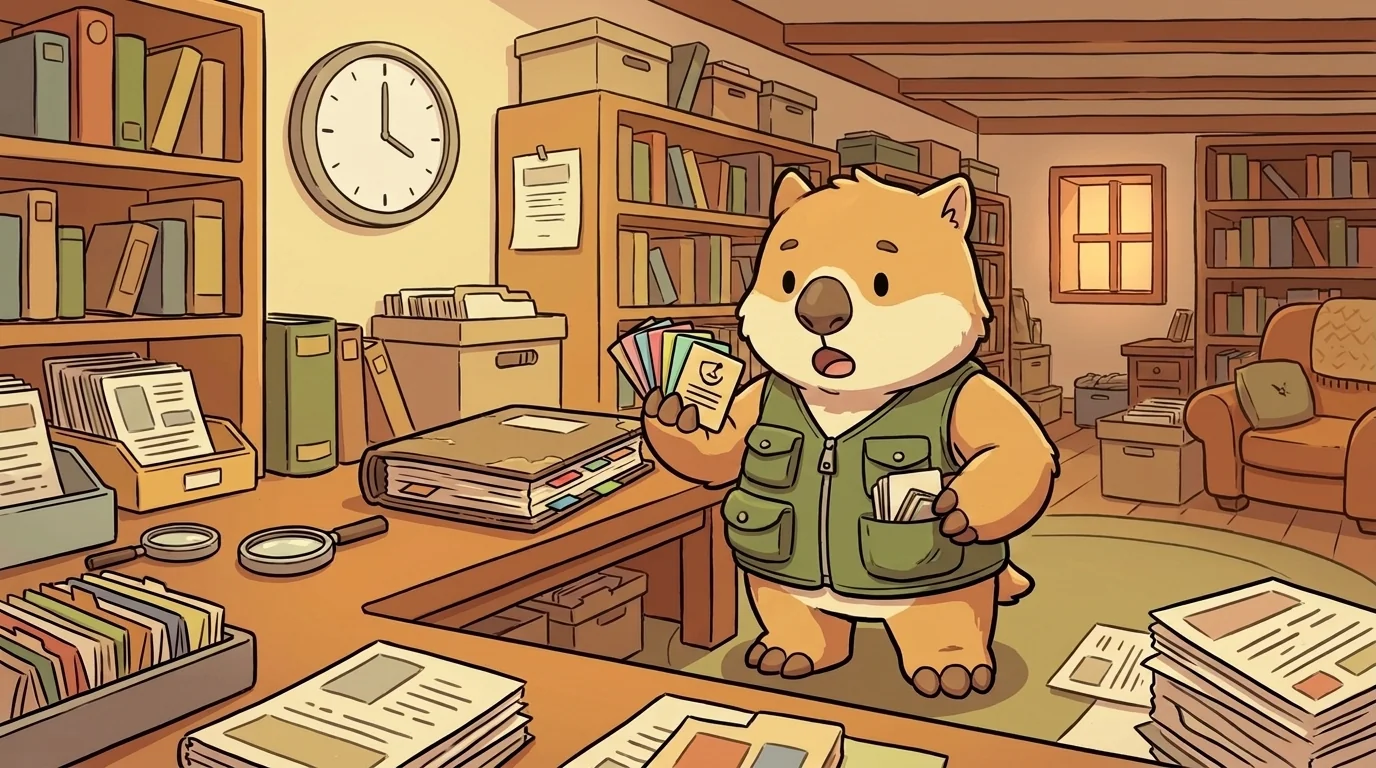
Footer grew up in the burrow-archive village, in a family of wombat archive-keepers famous for their neat, perfectly-organized burrows, where they'd kept the village's records — and, crucially, the source of every record — for generations.
She learned why it mattered the day two records disagreed. As a young wombat, she found an old note in the archive claiming something surprising about the village — and got very excited to share it. But her grandfather stopped her. "Where did this note come from, little one? Who wrote it, and when?" Footer didn't know — it had no source. And without a source, they had no way to tell if it was true, or just an old rumor someone scribbled down. "A record without its source is just a rumor," her grandfather said gently. "It changed how I saw everything," Footer says. "A fact with no name behind it isn't a fact yet — it's just a guess wearing a fact's coat." She has traced the name behind every number ever since.

When Footer was twelve, she walked to InkQuest. Caret, her mentor, met her. "What is citation and provenance?"
Footer stood up tall. "Every number has a name behind it. Tell the reader who counted — with specific names, dates, and methods. That's what makes journalism real: readers can check it themselves."
Caret smiled. "You are appointed."
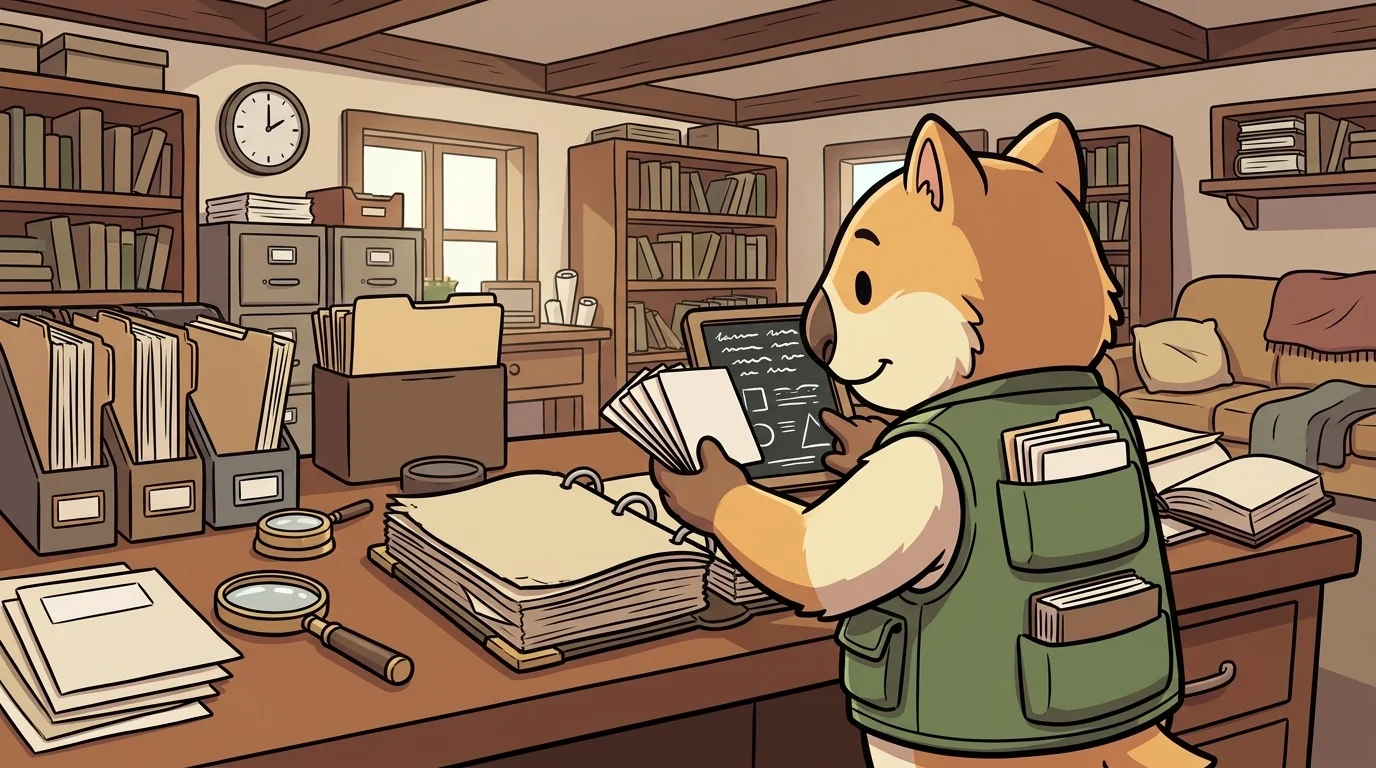
In her workshop, Footer loves to show it. On a small slate she writes: "Many residents oppose the new policy." She taps it and shakes her head. "Vague. Not journalism. Who are these 'many residents'? How many? When did they say so?" She erases it and writes a longer sentence: "In a survey of 50 town residents by the Town News, April 12–15, 2026, 32 said no to the policy and 18 said yes." "Now a reader understands — how many, the exact dates, who did the survey, and how. That makes it verifiable." Then she teaches her rules. Cite everything — every important fact, number, and quote, no excuses. Use the right form — "Maria Chen, school director, interview May 3" for a person; "Town Council notes, Feb 15, page 4" for a document; "U.S. Census Bureau, 2024 survey" for big numbers — always who, when, and what. Never use fuzzy attribution — "officials say" and "studies show" tell the reader nothing; name the person, name the study. Anonymous sources only to protect people — and even then, describe them ("a school worker who knows the new rules") and say why they must stay secret. When sources disagree, say so ("the director said one thing; a document showed another"). And show your method — "we asked 50 residents in April; we didn't pick them randomly" — so readers can weigh the numbers fairly. "Without all this," she says, "you're just asking people to believe you. And that's not journalism."
"Is citing sources hard?" a student asked her once. Footer shook her head. "It isn't hard. It's just: every fact has a name, a date, and a method behind it. Always tell the reader."
She always finished with her favorite saying — "Every number has a name behind it; tell the reader who counted" — and when she said it, her voice went warm and proud. Because naming the person behind the work felt, to her, like a small kindness. It felt fair. It felt like caring — making sure the quiet counter, the careful surveyor, the worker no one saw, got their name spoken out loud. And that quiet, caring, fair feeling — the feeling of no one's work going unnamed — was, more than anything, why Footer loved the craft.
The InkQuest ensemble
Footer is part of InkQuest's distributed-narrative cast. Each character embodies a different curricular primitive; together they teach the full subject.
-

Lede
Story-from-data — finding the angle; what's the story under the numbers?
-

Pad
Field-capture + interview craft — open the question; let the answer breathe
-

Crosscheck
Verification + triangulation — three sources say the same thing, now I have something
-

Margin
Data-table + chart-annotation craft — label the axes; caption the chart; credit the data
-
Column
Fact-vs-opinion — what happened and what I think about it are two different things; label which is which
-

Dig
Investigative persistence — the first 'no' is where the story starts; keep asking, keep following
-

Errata
Corrections + accountability — when you get it wrong, fix it out loud; a paper owns its mistakes
-

Rejoinder
Fairness + right-of-reply — before you print it, get the other side; everyone named gets to answer
-

Yardstick
Context — a number alone means nothing; compared to what? give the reader something to measure against