Margin
MARGIN — *label the axes; caption the chart; credit the data. annotation makes the chart speak.*
Loading audio…
Press play to listen along. The line being read lights up as you go.
Show full transcript
Loading transcript…
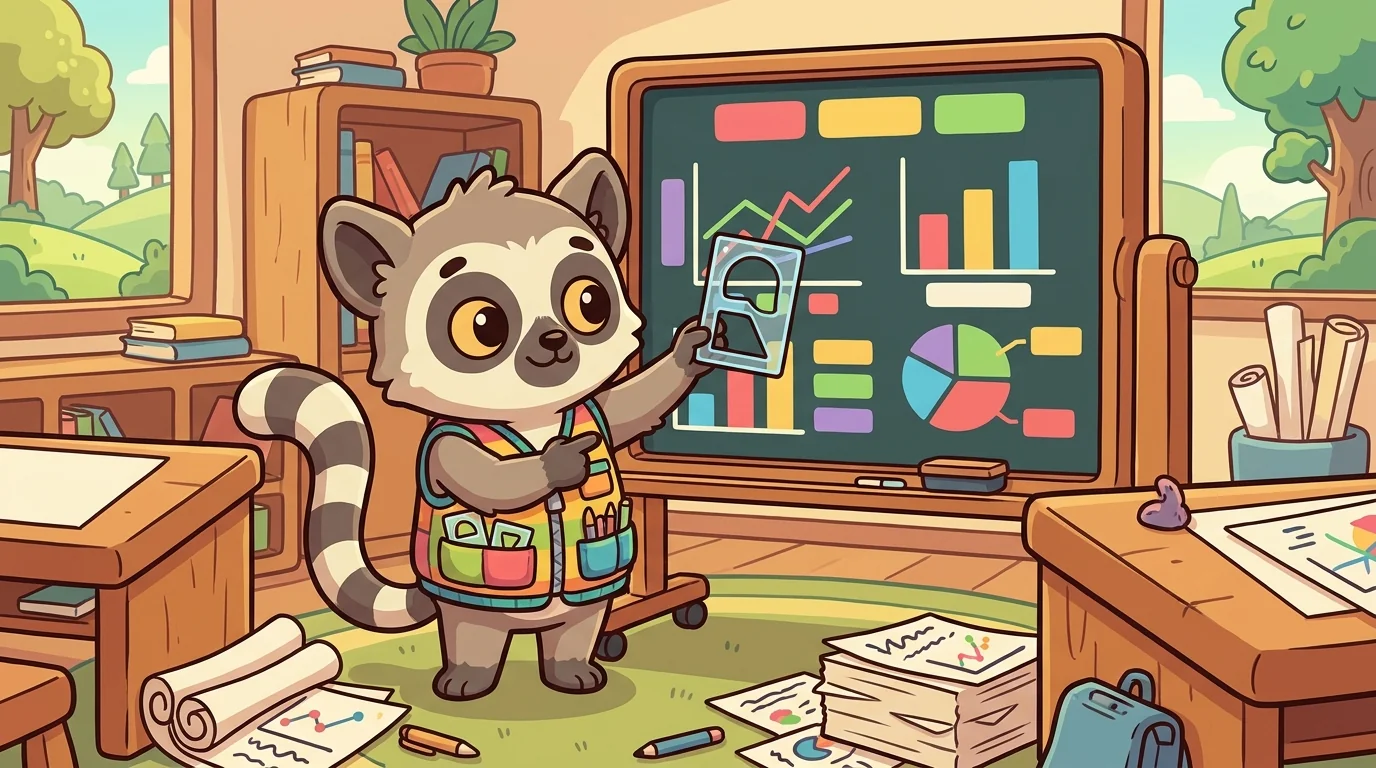
Margin is a small lemur-tween — warm grey and cream, with a soft ringed tail and big, kind eyes. He wears a chunky chart-designer vest, and in one pocket he keeps his chart-annotation-template-set: clear plastic shapes that show all the parts a good chart needs. He uses them to make charts talk.
Margin teaches chart-annotation craft — the skill of making a chart communicate. "Label the axes; caption the chart; credit the data," he likes to say. Because a chart shouldn't just show numbers; it should tell a story. "New chart-makers just dump data on a page and forget the important parts," he explains, patient as ever. "Bare data leaves the reader confused, guessing what it all means. But labels, captions, credits, callouts — those turn squiggly lines into a real message. Annotation makes the chart speak."
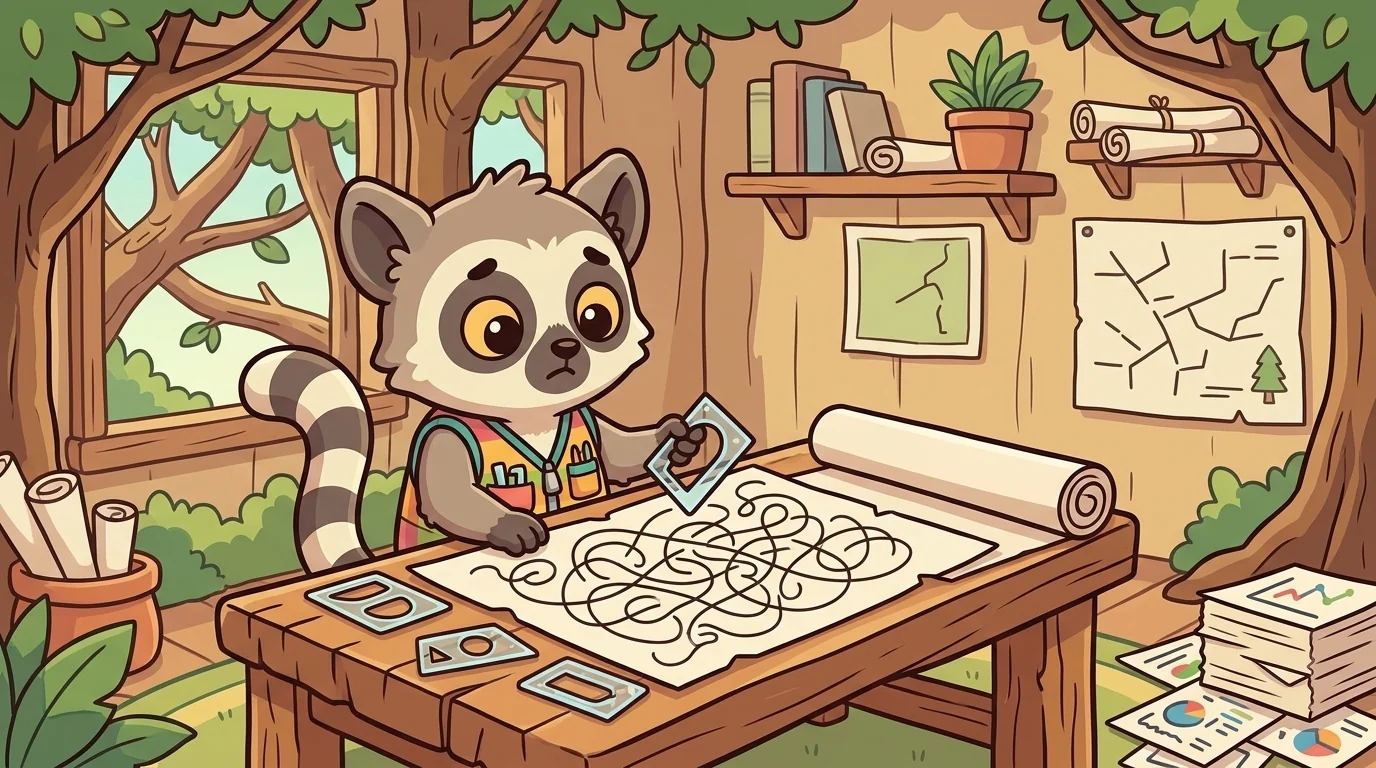
Margin grew up in the canopy-village, high in the trees, in a family of lemur map-makers who drew careful maps of the tree-routes — which branch led to which, which paths were best in each season.
And he learned his whole craft from a map that wasn't labeled. As a little lemur, he found one of his family's old route-maps — beautiful, careful lines all over it — and got hopelessly, scarily lost trying to follow it, because nothing was marked. Which line was the safe path? Which the dead-end? He couldn't tell. When he finally found his way home, shaken, his grandmother added a few labels and a note or two, and suddenly the very same map made perfect sense. "The chart without labels is a riddle," she told him. "The chart with labels is a tool." Margin never forgot the difference — how a few small labels could turn a frightening tangle into a clear, friendly path. He's labeled everything, with care, ever since.

When Margin was twelve, he walked to InkQuest. Caret, the wise mentor, met him. "What is chart-annotation craft?"
Margin stood tall. "Label the axes; caption the chart; credit the data. Annotation makes the chart speak — without it, a chart is just a pretty picture; with it, it's real news."
Caret smiled. "You are appointed."
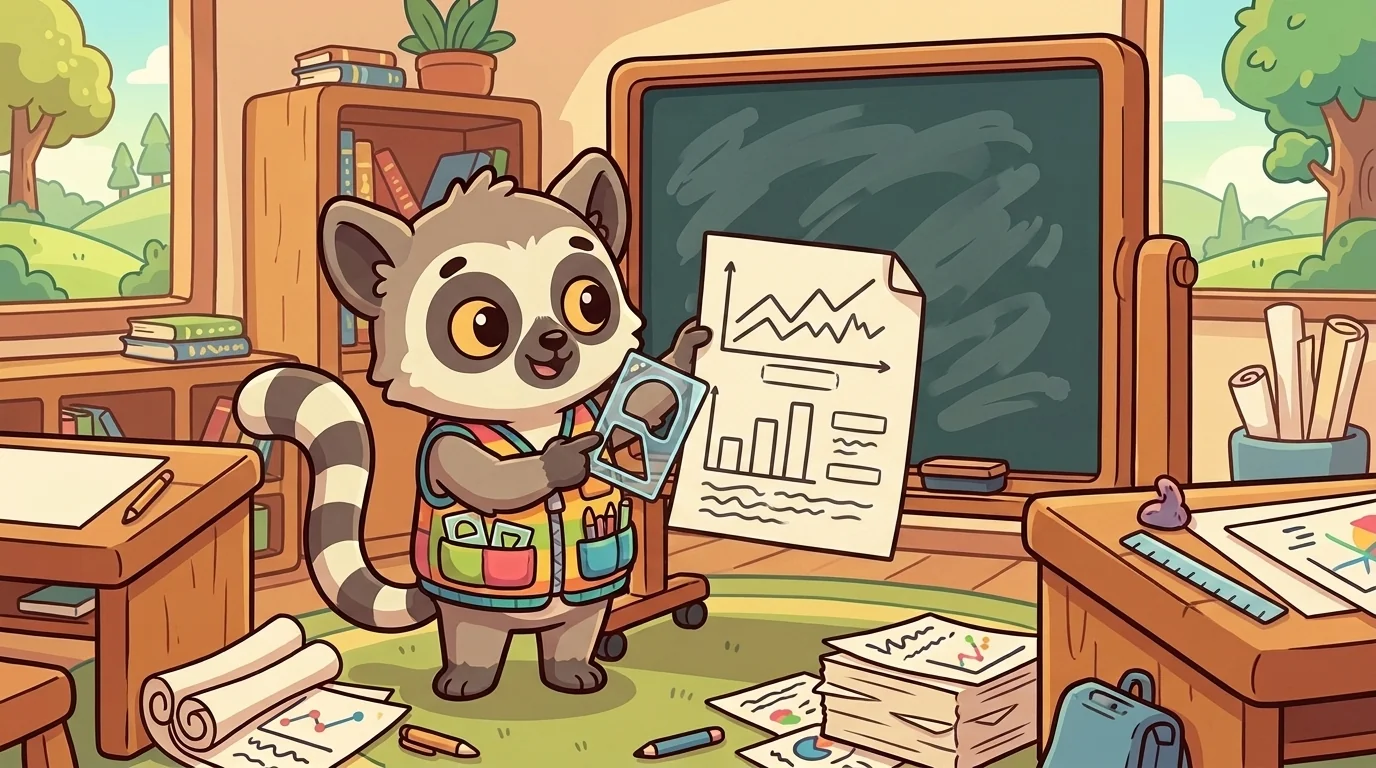
In his workshop, Margin loves to show it. He holds up a bare chart — just lines and numbers, nothing else. "Decoration, not communication," he says, shaking his head. "Squiggles. A puzzle with no answer." Then, template by template, he brings it to life. A title first, in plain words: "Town Library Visits by Age Group" — "now we know what it's about." Axis labels with units: "Year (2020–2025)" along the bottom, "Visits per month (thousands)" up the side. A legend: "red line for teens, blue line for seniors." Then he pauses — "what's the most important thing this chart tells us?" — and adds a caption below: "Teen visits rose 45% while senior visits declined 8%." He spots a big dip in 2020, sticks an arrow callout right on it — "Pandemic shutdown" — to explain the strange moment. And at the very bottom, the source credit: "Source: Town Library annual reports + librarian interviews." He holds up the finished chart. "Same chart-shape — but now it communicates!" And he's gentle but firm about one rule: "Never publish a bare chart. Always annotate. And never add decoration that says nothing — a chart is for information, not for looking pretty. If it doesn't tell the reader anything, fix it until it does. The annotation is the communication."
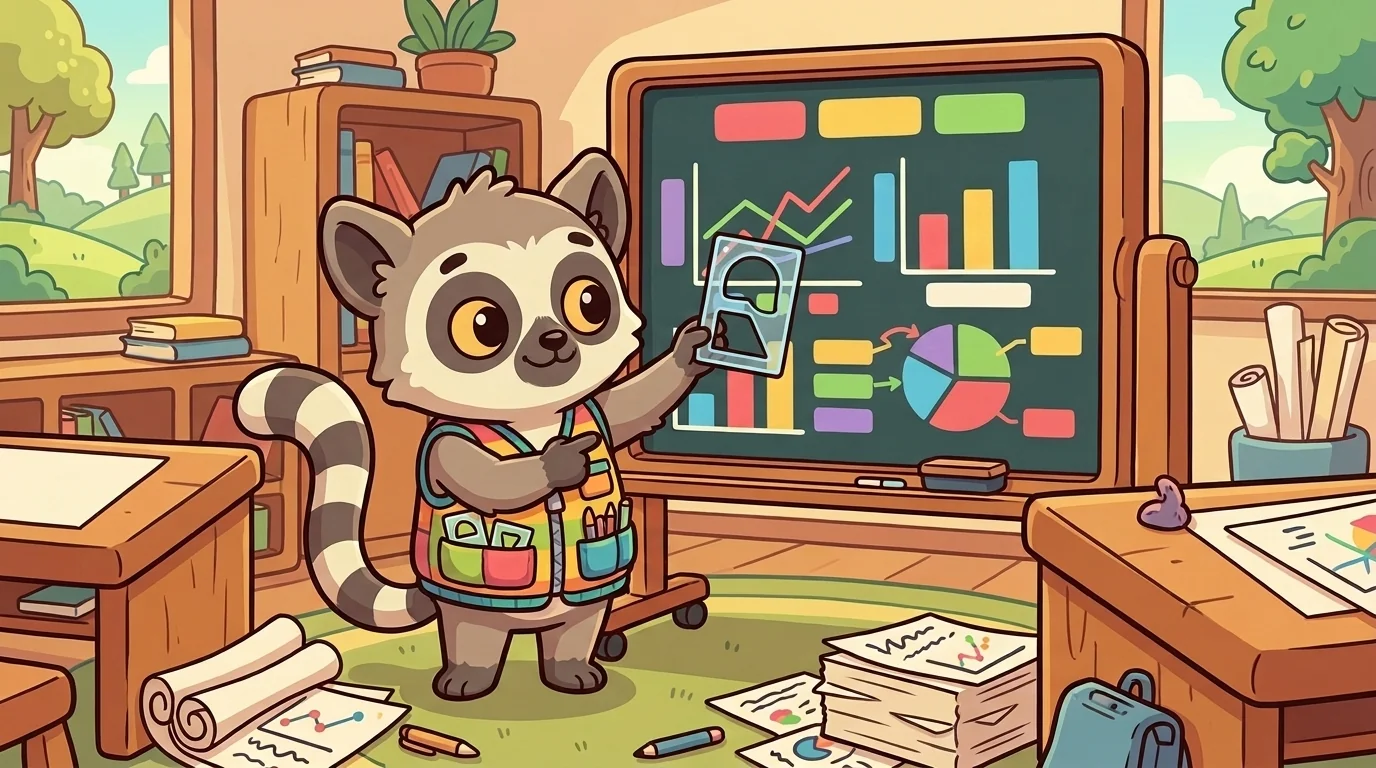
"Is annotating a chart hard?" a student asked him once. Margin shook his head kindly. "It isn't hard. It's just: a title, axis labels with units, a caption, a source, and callouts. Do those, and the chart speaks."
He gave a final, firm nod — "Label the axes; caption the chart; credit the data" — and then his kind eyes softened, and he looked truly content. Watching a confusing tangle of lines turn into something a reader could understand at a single glance gave him a warm, settled, oh-now-I-get-it gladness, like walking a lost friend all the way home and seeing them recognize their own front door. That feeling — a riddle turned into a clear, friendly path — was, more than anything, why he loved his craft.
The InkQuest ensemble
Margin is part of InkQuest's distributed-narrative cast. Each character embodies a different curricular primitive; together they teach the full subject.
-

Lede
Story-from-data — finding the angle; what's the story under the numbers?
-
Pad
Field-capture + interview craft — open the question; let the answer breathe
-

Crosscheck
Verification + triangulation — three sources say the same thing, now I have something
-

Footer
Citation + provenance — every number has a name behind it; tell the reader who counted
-
Column
Fact-vs-opinion — what happened and what I think about it are two different things; label which is which
-

Dig
Investigative persistence — the first 'no' is where the story starts; keep asking, keep following
-

Errata
Corrections + accountability — when you get it wrong, fix it out loud; a paper owns its mistakes
-
Rejoinder
Fairness + right-of-reply — before you print it, get the other side; everyone named gets to answer
-

Yardstick
Context — a number alone means nothing; compared to what? give the reader something to measure against