
Rejoinder and Errata
REJOINDER & ERRATA — being fair to the people in your story is two duties, not one: ask the other side BEFORE you print (get it right the first time), and fix the mistake AFTER if one slips through (make it right when you know better). Before and after, together.
Loading audio…
Press play to listen along. The line being read lights up as you go.
Show full transcript
Loading transcript…
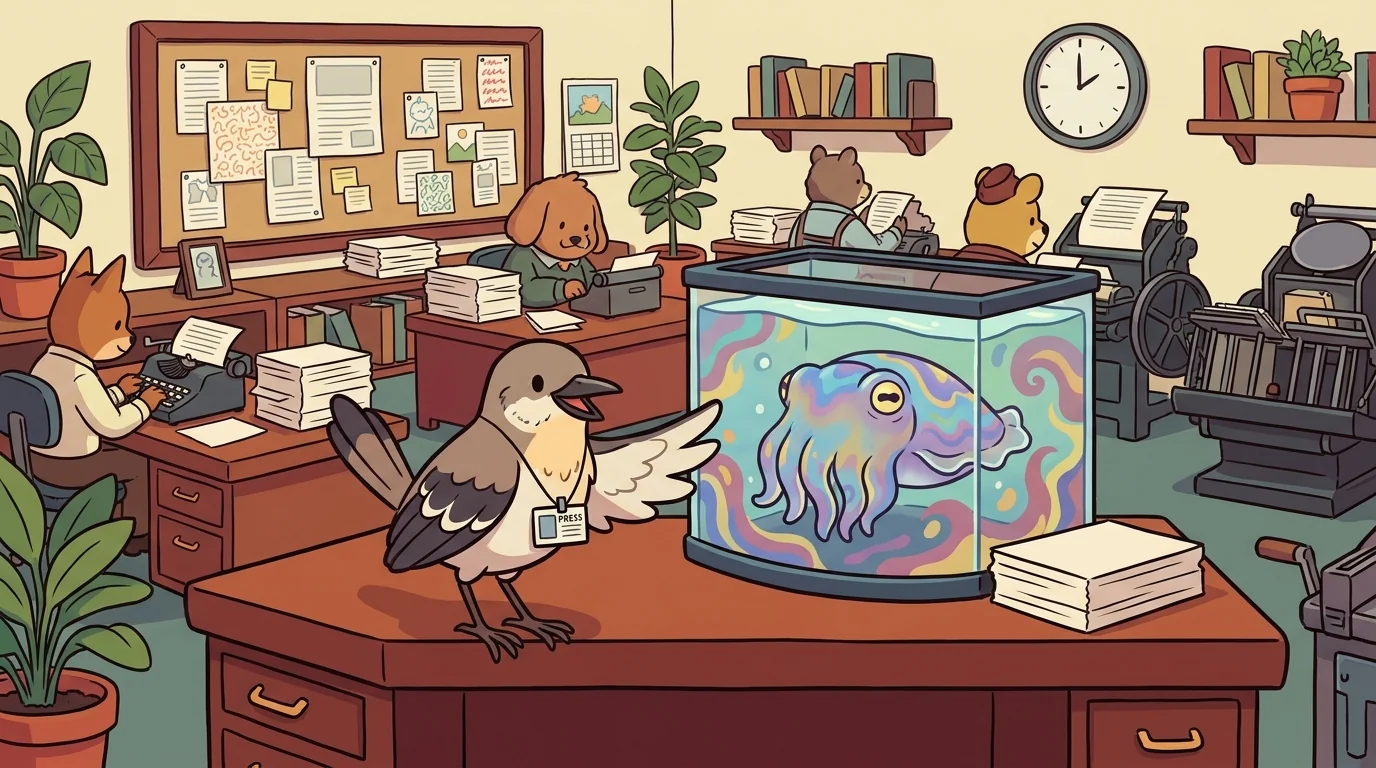
Rejoinder the mockingbird and Errata the cuttlefish shared a workshop wall at InkQuest, and the students who worked between them learned that being fair to the people in a story is not one duty but two — one that happens before the story runs, and one that happens after.
"Everyone thinks fairness is a single thing you either do or don't," said Rejoinder, holding up her two notebooks. "It's really two things, at two different times."
"Before, and after," said Errata, her skin rippling. "Rejoinder guards the before. I guard the after. And the hard truth is — you can't skip one by doing the other well."
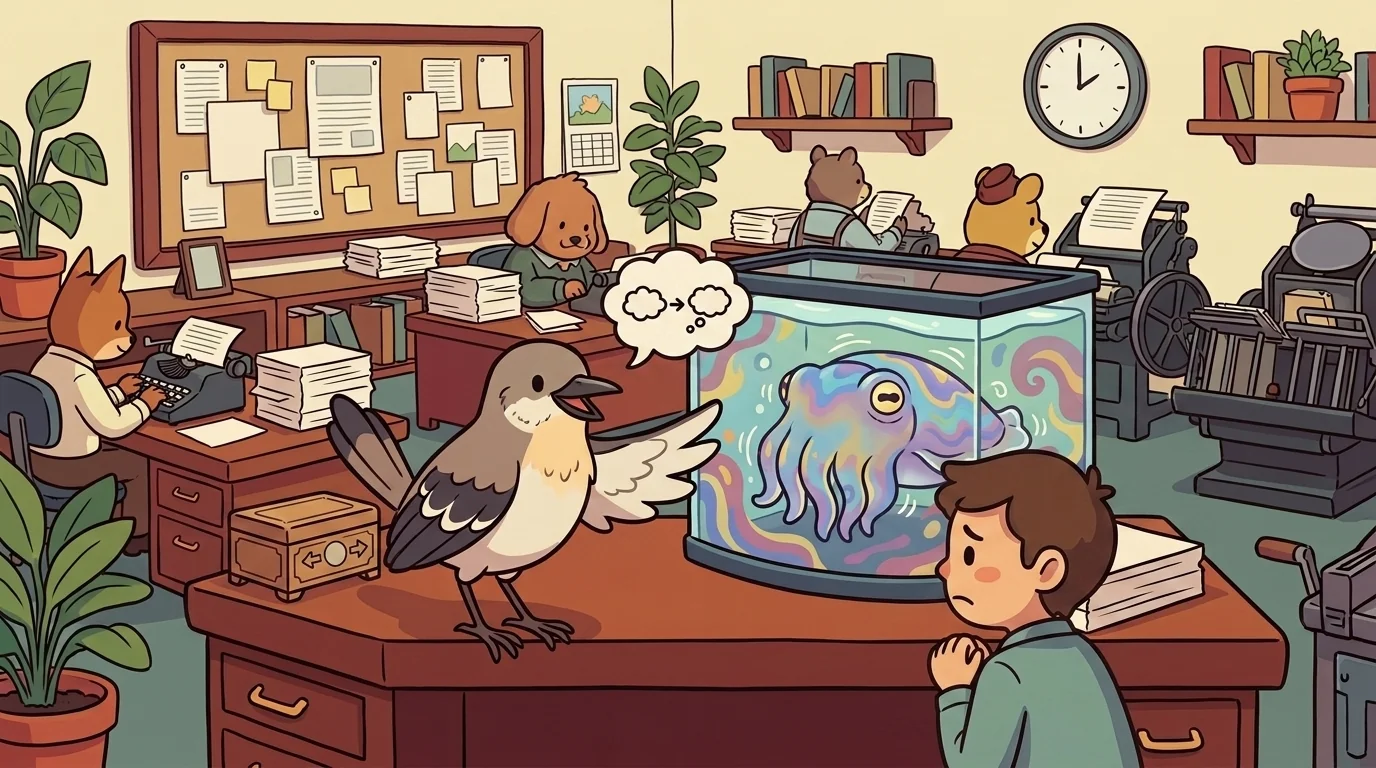
Rejoinder went first, because her duty comes first in time. "Before you print a word about someone," she said, "you go to them and let them answer. This is the right of reply — audi alteram partem, hear the other side. Every person your story names or accuses gets a real, meaningful, pre-publication chance to respond, and their answer goes in near the claim." She lifted the second notebook. "The shopkeeper accused of cheating? I asked her — and it turned out to be a mix-up over a confusing sign, with a refund she'd offered and the customer refused. Asking first is how you get it right the first time, before the wrong version is out in the world doing harm. Because once a false story flies, no correction ever fully catches it. The before is your best and cheapest protection — for the reader, and for the person in the story."
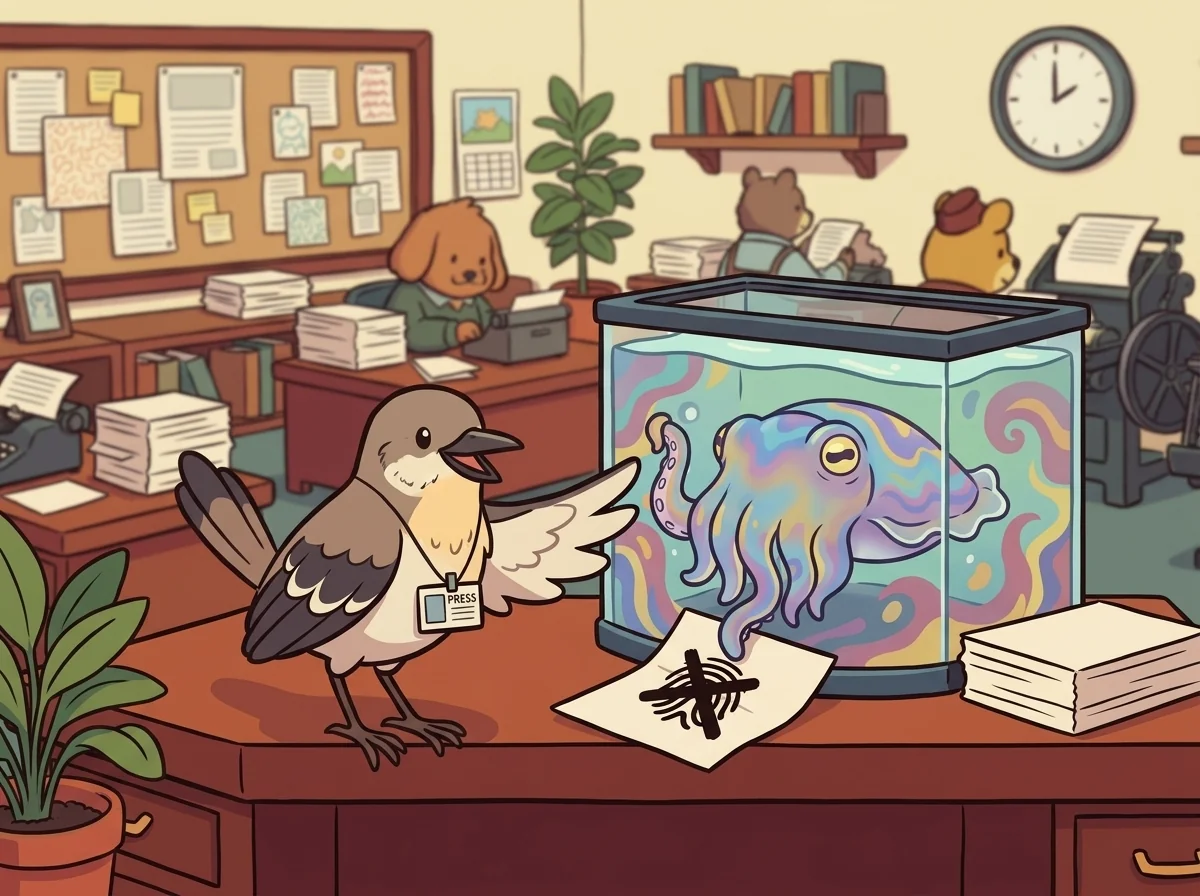
Then Errata leaned in, skin flushing clear, because no reporter gets the before right every single time. "And when one slips through anyway — a wrong name, a wrong number, an accusation that didn't hold — my duty begins. You fix it after: out loud, up front, fast, at the same prominence as the error, with an apology if it caused harm." She stamped a page CORRECTION. "Here's what matters, though, and it's the thing people get wrong: my after does not excuse a skipped before. You don't get to run an unchecked, one-sided story and shrug that you'll 'correct it if someone complains.' That's using the correction as a license to be careless — and it isn't fair to the person who was harmed in between." She settled her color. "And Rejoinder's before doesn't excuse a buried after, either. Ask first and fix honestly. Both, or you've only done half the job."
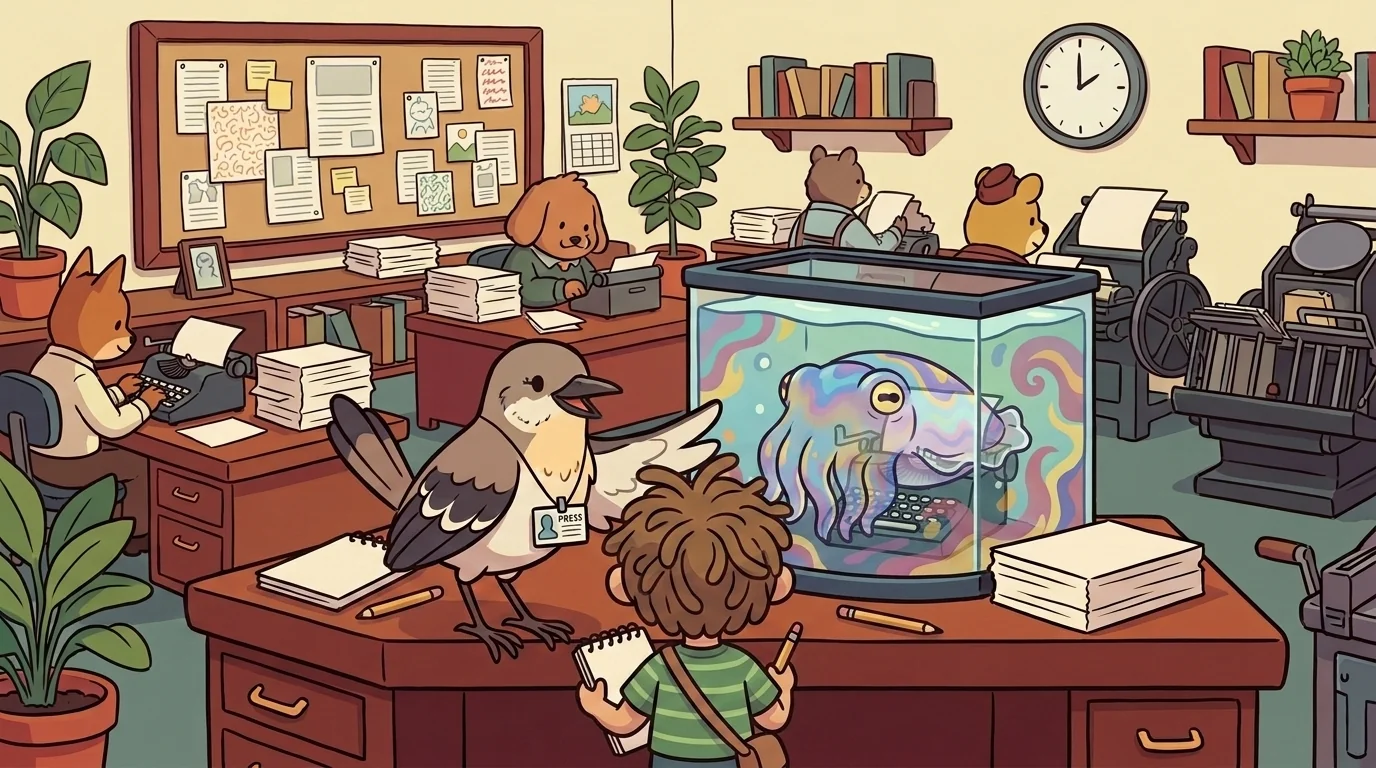
A student who worked between the two desks said the thing they'd been waiting for: "So it's not enough to ask the other side, and it's not enough to run corrections. You have to do both — the asking before, and the fixing after."
"That," said Rejoinder, "is the whole of it."
"Fairness isn't a moment," said Errata. "It's a posture you hold toward the people in your story from before you publish to long after. The before is Rejoinder: get it right by asking. The after is me: make it right by owning up. Skip the before and you harm someone you never had to. Skip the after and you leave a harm standing that you could have healed. A paper people trust does both, every time — and that trust is the only thing that makes the reader believe a word you print."
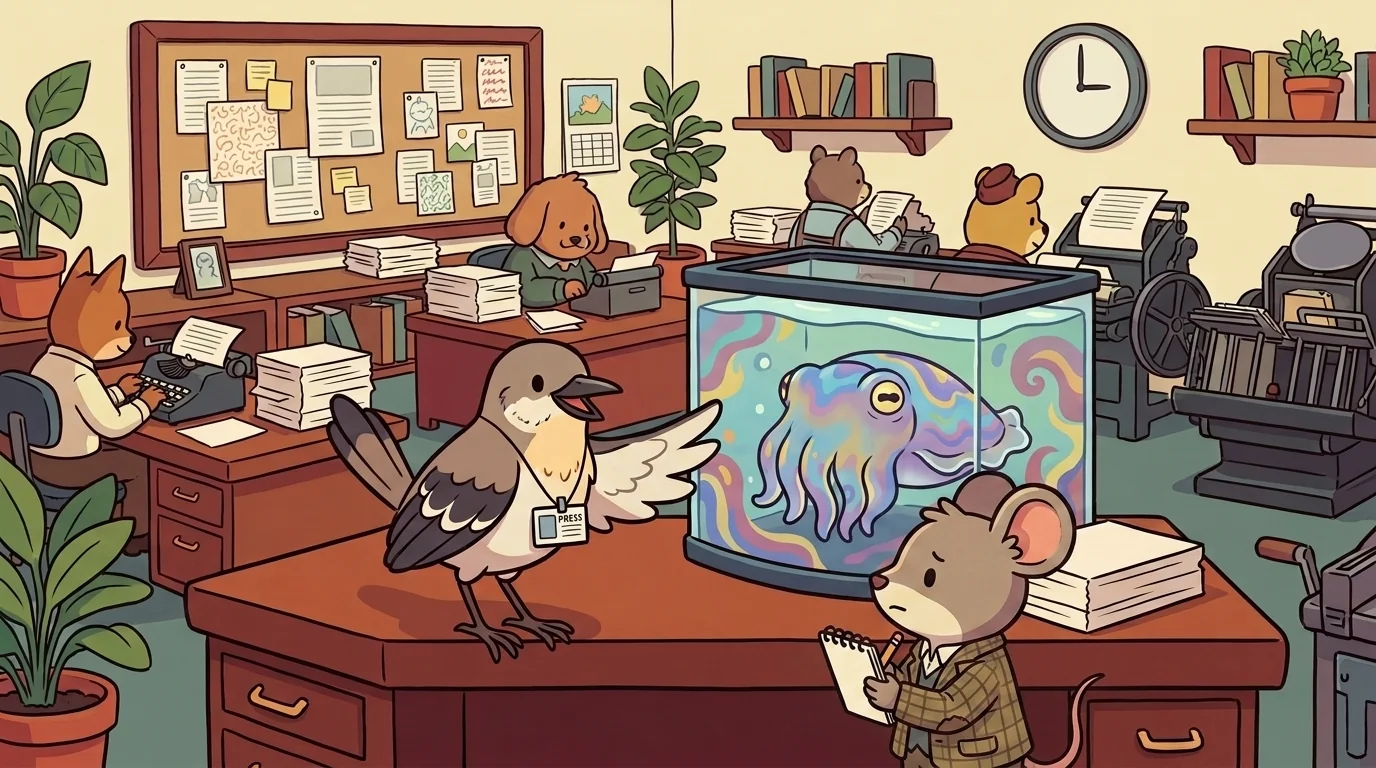
And so the students stopped thinking of fairness as a single box to tick. They learned it runs in two directions in time: ask the other side before you print — Rejoinder's duty, the one that prevents the harm — and fix the mistake after if one slips through — Errata's duty, the one that heals it. Neither substitutes for the other. The careful reporter holds both.
"Ask first," said Rejoinder.
"Own it after," said Errata.
There is a quiet maturity in learning that fairness to a person is not a single generous act but a standing responsibility — that you owe someone your care before you write about them and after, and that doing one beautifully never buys you out of the other. The reporter who only asks the other side but hides her errors, and the reporter who corrects freely but never bothered to ask, have each done half a fairness — which, to the person on the wrong end of it, can feel like none at all. Before and after, together: that is what it actually means to be fair to the people in your story.
The InkQuest ensemble
Rejoinder and Errata is part of InkQuest's distributed-narrative cast. Each character embodies a different curricular primitive; together they teach the full subject.
-

Lede
Story-from-data — finding the angle; what's the story under the numbers?
-
Pad
Field-capture + interview craft — open the question; let the answer breathe
-
Crosscheck
Verification + triangulation — three sources say the same thing, now I have something
-

Margin
Data-table + chart-annotation craft — label the axes; caption the chart; credit the data
-

Footer
Citation + provenance — every number has a name behind it; tell the reader who counted
-
Column
Fact-vs-opinion — what happened and what I think about it are two different things; label which is which
-

Dig
Investigative persistence — the first 'no' is where the story starts; keep asking, keep following
-

Errata
Corrections + accountability — when you get it wrong, fix it out loud; a paper owns its mistakes
-
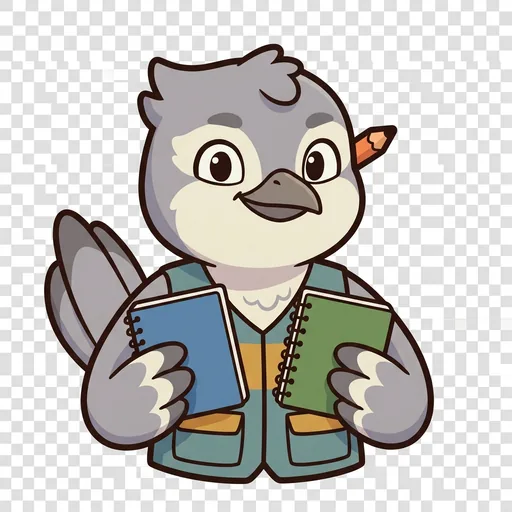
Rejoinder
Fairness + right-of-reply — before you print it, get the other side; everyone named gets to answer
-

Yardstick
Context — a number alone means nothing; compared to what? give the reader something to measure against