Before you start
Most popular
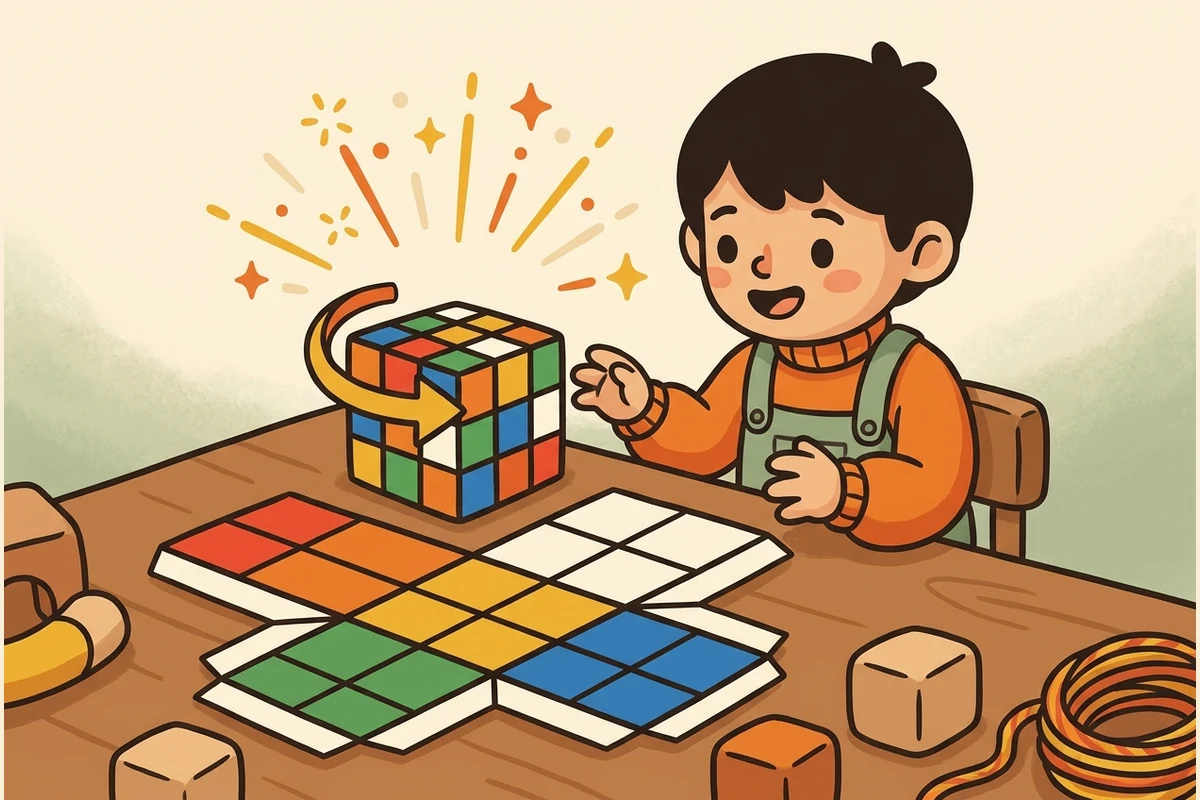 Cube-Net Trainer Turn an unfolded cube with real notation buttons — or drag it in 3-D — every sticker colour-labelled.
 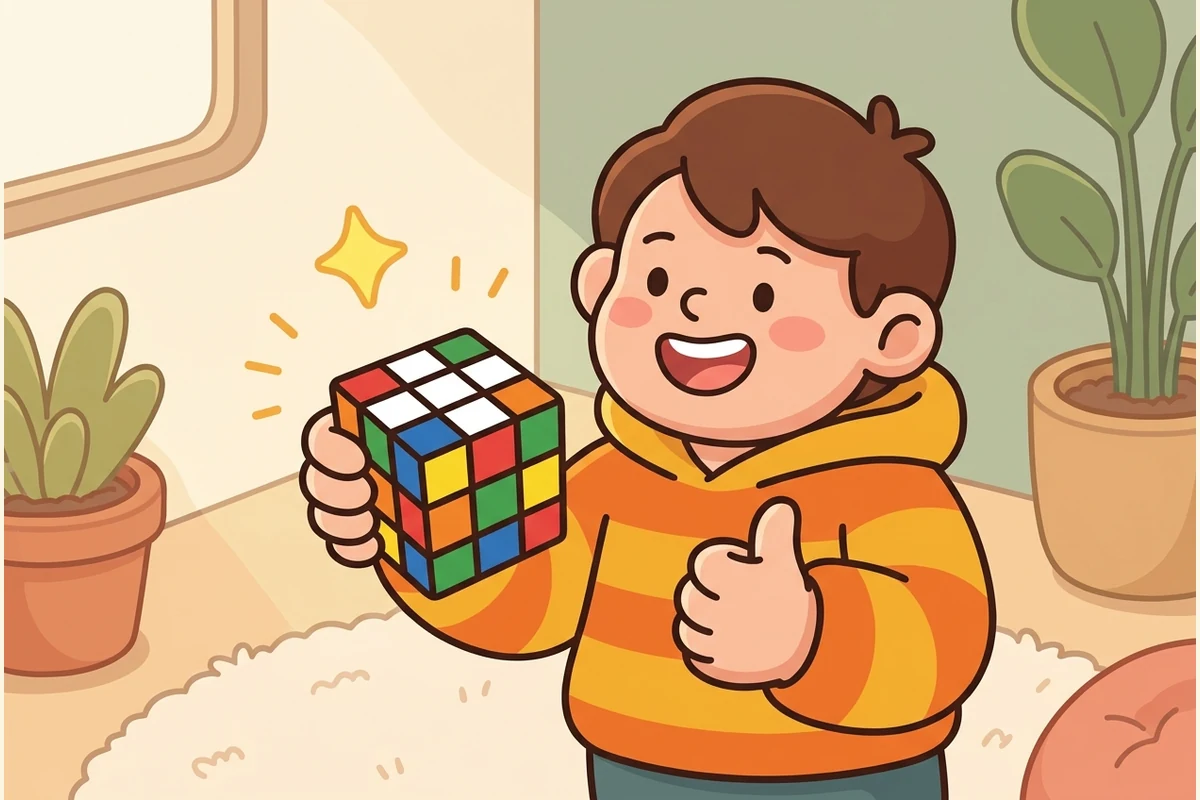 Solve It Learn the beginner method step by step — from the white cross to the last layer.
  Foundations Start here — faces, notation, and the pieces (centres, edges, corners) that make a cube.
 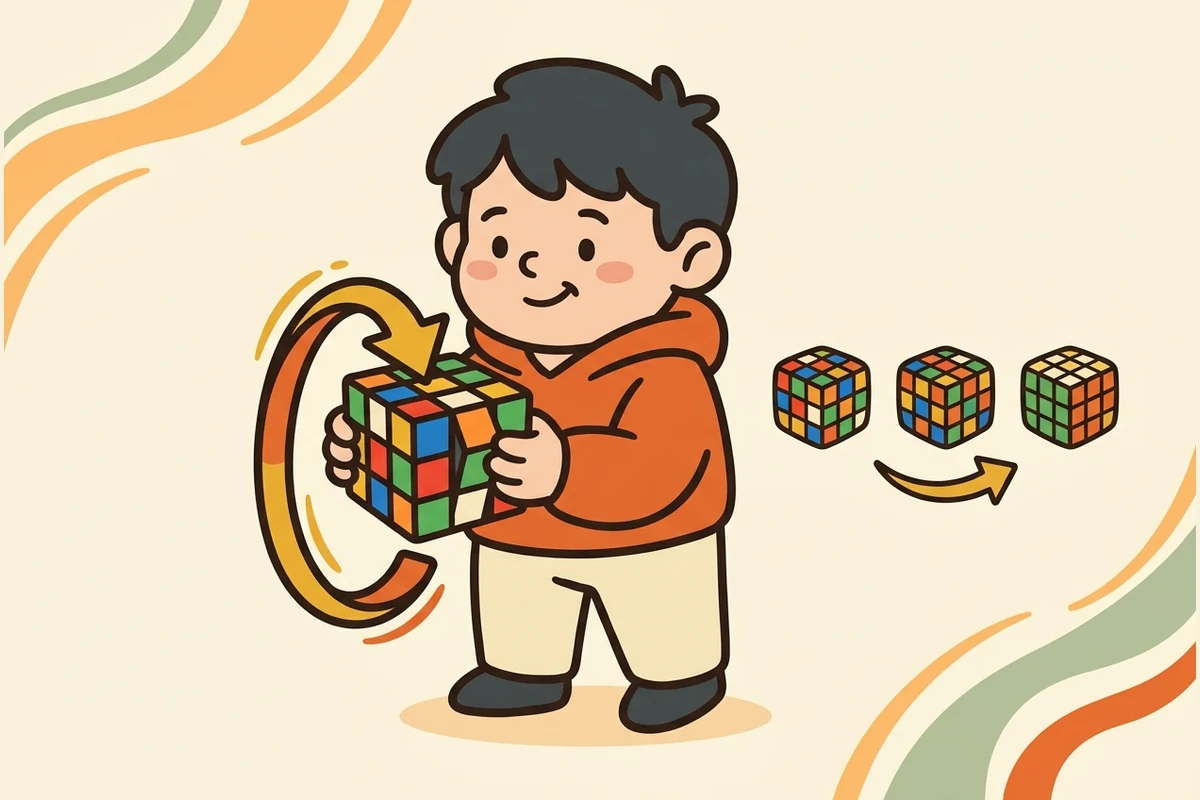 Notation Lab Type a sequence, watch each turn, and build the inverse that undoes it.
 All activities
Turn & solve
Cube-Net Trainer Turn an unfolded cube with real notation buttons — or drag it in 3-D. No camera, no 3-D required; every sticker is colour-labelled. Solve It The beginner method, step by step — white cross, first two layers, and the last-layer algorithms. Foundations Faces, notation, and the pieces — centres, edges, and corners — that a cube is made of. Notation Lab Type a turn sequence, watch each move, and build the inverse that undoes it.
More
Algorithm Drill Practice a cube sequence until your fingers know it — the way speedcubers build muscle memory. Cube Types Meet the whole family in 3-D — 2×2 up through the big cubes, and how each one differs. Predict the Pattern Before you turn — predict what the cube will look like, then run it and check.
Learn & practice
Play together
Concept Kits — 16 kits of cube notation, anatomy & methods
Kit 1: Cube Notation & Terminology Notation · 4-5 · 25 questions Kit 2: Cube Anatomy & Structure Cube anatomy · 4-5 · 25 questions Kit 3: Beginner Solving Method Solving methods · 5-6 · 25 questions Kit 4: Pattern Recognition & Puzzles Patterns & spatial · 5-6 · 25 questions Kit 5: Speed Solving Techniques Solving methods · 6-7 · 25 questions Kit 6: Advanced Algorithms: OLL & PLL Solving methods · 6-7 · 25 questions Kit 7: Non-Cubic Puzzles Patterns & spatial · 7-8 · 25 questions Kit 8: Spatial Reasoning & Math Patterns & spatial · 7-8 · 25 questions Kit 9: F2L: First Two Layers Solving methods · 6-8 · 25 questions Kit 10: OLL: Orientation of the Last Layer Solving methods · 6-8 · 25 questions Kit 11: PLL: Permutation of the Last Layer Solving methods · 6-8 · 25 questions Kit 12: Competition & Speedcubing Culture Cubing culture · 6-8 · 25 questions Kit 13: Cross-Topic Connections Notation · 5-6 · 25 questions Kit 14: Real-World Applications Cubing culture · 6-7 · 25 questions Kit 15: Misconceptions & Reasoning Patterns & spatial · 6-7 · 25 questions Kit 16: Advanced Synthesis Solving methods · 7-8 · 25 questions
More ways to play
😄 Brain break
Meet the cast — the characters who teach this
-
 Layer Beginner method — layer-by-layer steward; 'Bottom first. Always.'
 -
 Cross CFOP method — speedcubing steward; 'Cross, F2L, OLL, PLL — that's the road.'
 -
 Block Roux method — block-building steward; 'Build the blocks. Skip the cross.'
 -
 Edge ZZ method — edge-orientation steward; 'Orient first. Then everything's faster.'
 -
 Pair Ortega method — 2x2 specialist; 'Two-by-two has its own rules.'
 -
 Look Cross-method look-ahead coordinator; 'Eyes ahead. Hands following.'
 -
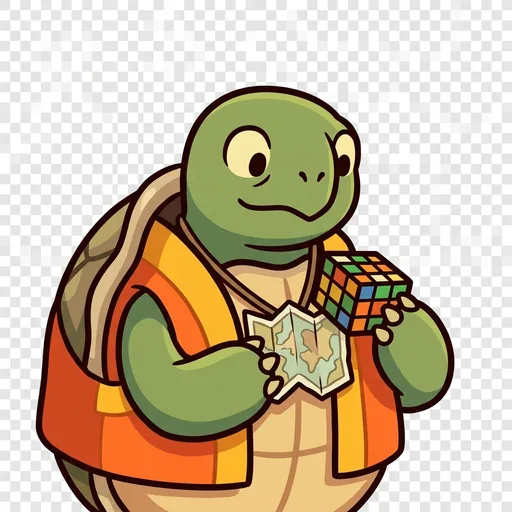 Chart Lessons-layer cast (inspection planner — the fifteen-second pre-solve read)
 -
 Parity Lessons-layer cast (the big-cube even-odd special case)
 -
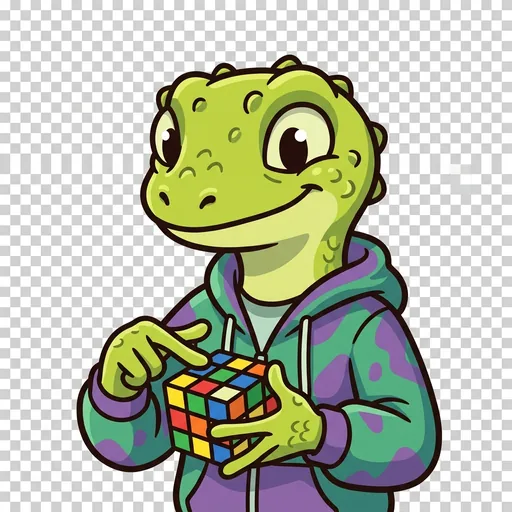 Grip Fingertricks — turning the cube with small, smooth fingertip pushes, not big arm twists
 -
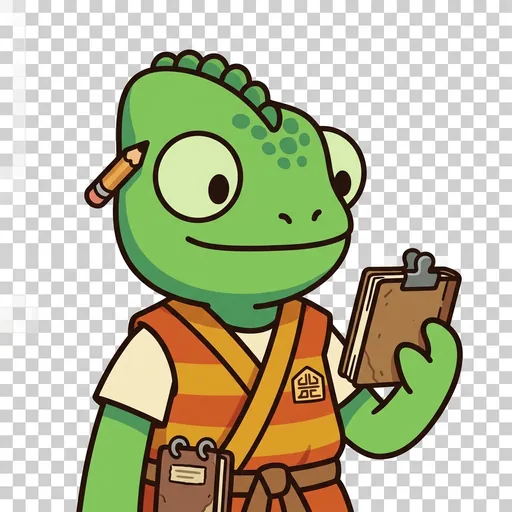 Notate Notation — the shared shorthand (a letter per turn) that lets you write down and share a solve
Ensemble stories — the cast together