Think it through first
Start here
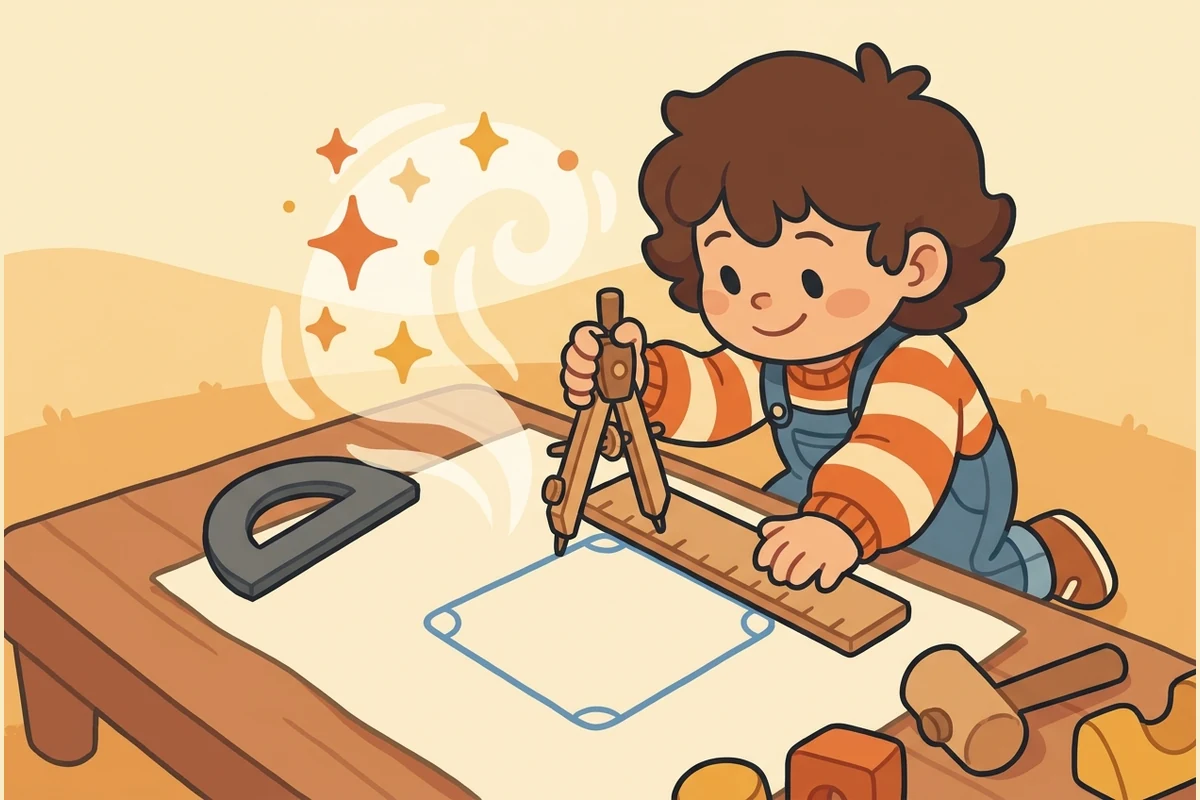 Construction Lab Compass and straightedge, exactly — an engine checks your construction and scores your move economy.
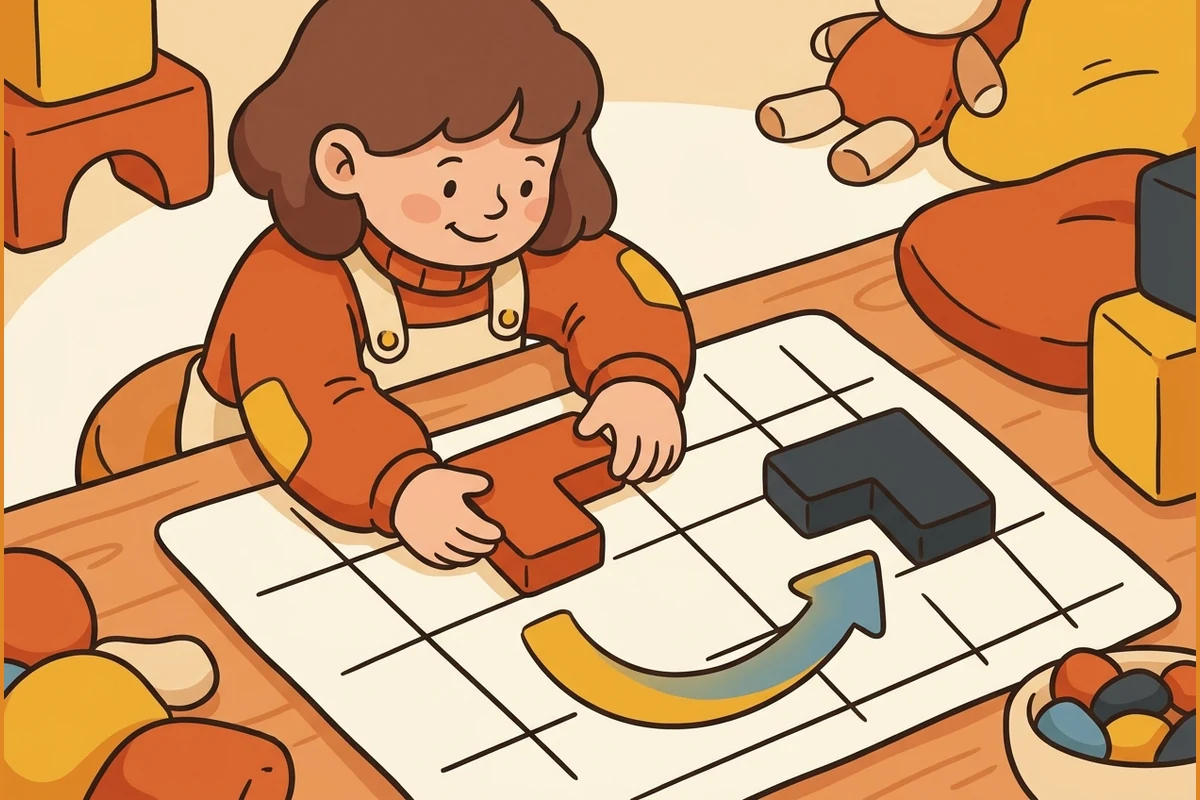 Transformation Lab Slide, flip, turn, and scale shapes on a coordinate grid — name the move, predict where a vertex lands.
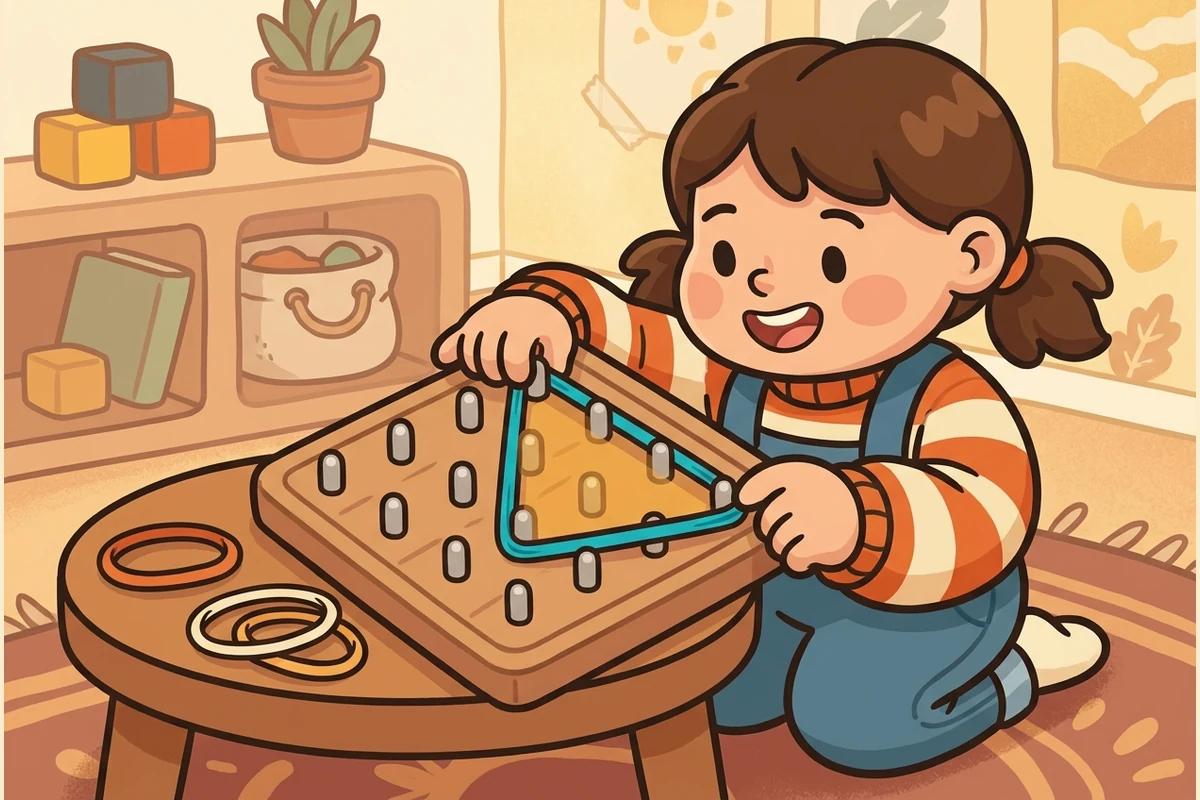 Geoboard Stretch a rubber band around the pegs to enclose an exact area — and watch Pick’s Theorem balance.
 Geometry Duel A head-to-head kit round for 2–4 players — one device or an online room by code. Highest first-try score wins.
How are you feeling?
All activities
Build & reason
Practice & play
Practice the concepts
All 17 kits
For grown-ups — progress report →
More ways in
More ways to play
Where this idea comes from
Plimpton 322
A clay tablet written in Babylonia (now Iraq) around 1800 BCE, in cuneiform with base-60 numbers. The publisher George Plimpton bought it in the 1920s; it has been at Columbia University in New York since 1936.
One thing to hold: A broken clay tablet about the size of a postcard, with fifteen rows of numbers.
Why it matters: Its rows are linked to right-angled triangles whose sides are whole numbers. The first row has 119 and 169, the short side and the long slanted side of a triangle whose other side is 120 — more than a thousand years before Pythagoras.
What we don’t know: Nobody knows what it was for. Scholars still argue whether it was a teacher’s table, a list of practice problems, or something else.
Kolam
Patterns drawn each morning with rice flour at the threshold of homes in Tamil Nadu and other parts of South India, mostly by women.
One thing to hold: A grid of dots (pulli) with a line looping around them, often drawn without lifting the hand.
Why it matters: Many kolams are one closed curve around a dot grid; mathematicians have studied them as rules for drawing curves.
Sangaku
Wooden tablets of geometry problems hung in Shinto shrines and Buddhist temples in Japan during the Edo period (1603–1867).
One thing to hold: A painted wooden board with circles inside triangles and a problem written beside it.
Why it matters: People offered a hard geometry problem, sometimes with its answer, as a gift and a challenge to visitors.
What we don’t know: Many tablets were lost; who wrote some problems is not known.
Same idea, another world
😄 Brain break
Meet the cast — the characters who teach this
-
 Master Hypotenuse Right-triangle relations: a² + b² = c²
-
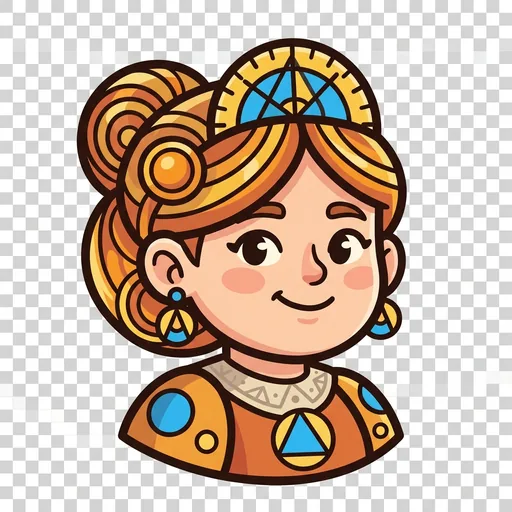 Lady Inscribed-Angle Circle theorems (inscribed-angle, central-angle, tangent-chord, cyclic quadrilateral)
-
 Sir Transverse Parallel-line transversals + intercept theorem (proportional segments cut by parallel lines)
-
 Apprentice Sides Area formulas (triangle area from side lengths; rectangle / parallelogram / trapezoid area)
-
 Captain Construction Compass-and-straightedge constructions (bisector, perpendicular, equilateral triangle, regular hexagon, circle-given-three-points)
-
 Compass Wraith Locus problems + circle-as-set-of-equidistant-points
-
 Madame Polygon Regular-polygon facts (interior-angle sum, exterior-angle sum, regular-tessellation, symmetry of regular n-gons)
-
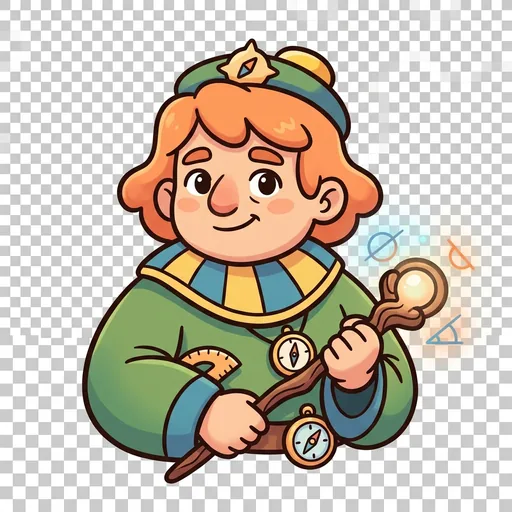 Master Tangent Limit-and-touch problems (tangent to a circle from external point, tangent-chord angle, tangent-as-limit-of-secant)
-
 Axia & Theora Twin theorists
-
 Madame Motion Rigid motions and congruence
-
 Scout Scale Dilation and similarity
-
 Lady Lattice The coordinate plane
Ensemble stories — the cast together
What next? Pick a door
- More like this VoxelForge Is that shape turned, or flipped? ProofQuest Is this always true, or just sometimes? MeasureQuest Can you read a broken ruler?
- A bit harder BridgeForge Where does this math show up in life? MathCircle What is your plan before you solve? SplitForge How much faster were you than last time?
- Something different BugTales Which line is the bug on? FigureForge Which figure of speech is hiding here? StageForge Where should this actor stand?