← Play · Browse by topic · Math
Number Sense
26 apps to play — grouped by age.
🐣 Ages 3–5 · Pre-K & K
CubbyTots
Ages 3–5 · Gr K–K Level 1
A sorting game for ages 3–5: guess first whether every mitten can have a cubby of its own, then put them away and see. When there are more mittens than cubbies, one cubby has to hold two. On-device.
Play CubbyTots →
Stack Home
Ages 3–5 · Gr K–K Level 1
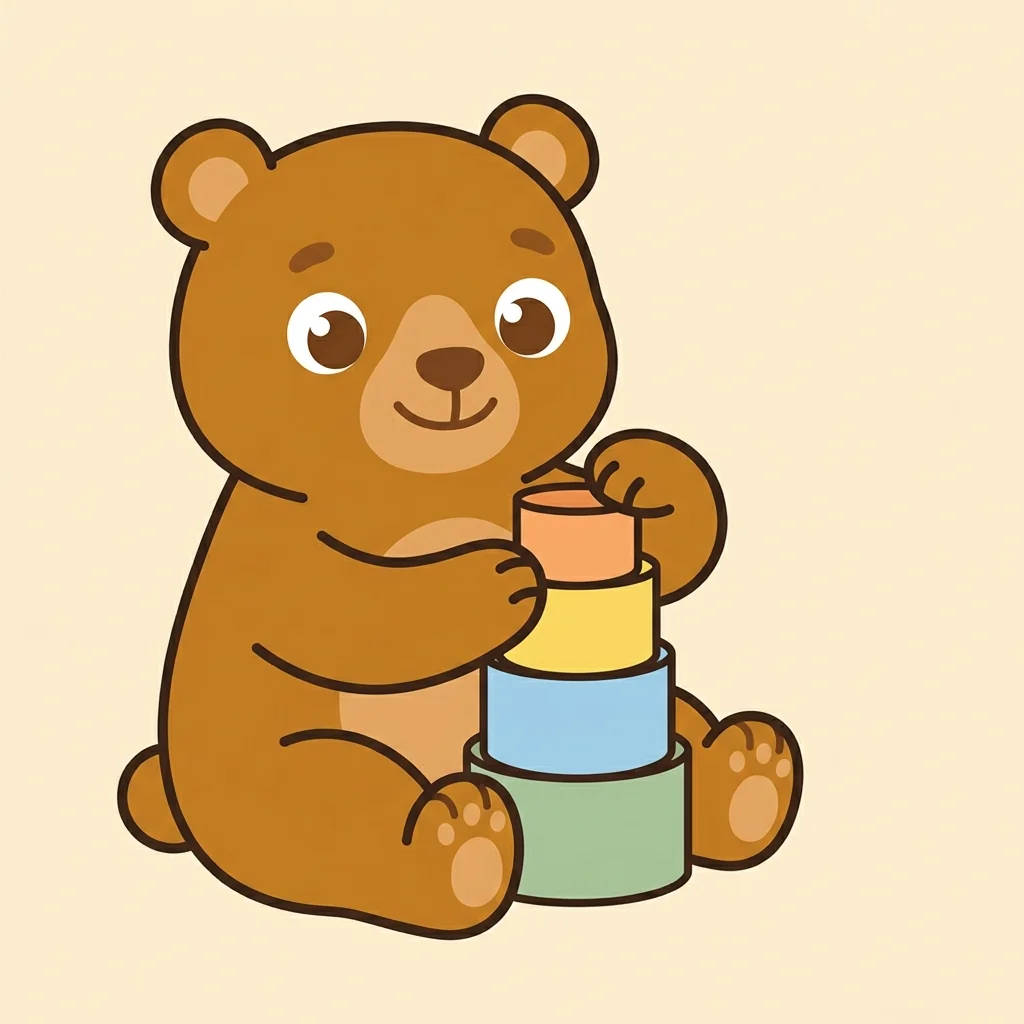
Help Tucker the bear cub put everything home! First sort toys by colour, then by colour and shape, then count cards home 1, 2, 3, 4, 5 — and at last play a tiny card game: send the hearts and spades home in order. Tap a card, then tap where it goes. Every game can be finished, and you can always undo. No timer, no internet. Ages 3–5.
Play Stack Home →

BuilderTots
Ages 3–5 · Gr K–K Level 1
A first building game for ages 3–5: Timber the beaver builds cozy things from parts! Each thing has a little recipe — a birdhouse needs 2 logs and 1 leaf. Tap the piles to gather the right number of each part, then tap Build. No reading needed (tap to hear it), no score, no losing — just a workshop full of things you made.
Play BuilderTots →

EnoughTots
Ages 3–5 · Gr K–K Level 1
A tea party where you pour until it is enough. Each guest wants a different amount, and the pour rings higher as the bowl fills. When everyone is served, the bowls line up with words first, then the numbers. Ages 3–5.
Play EnoughTots →

GuessTots
Ages 3–5 · Gr K–K Level 1
How many fish are in the jar — a few, some, or a lot? GuessTots gives your littlest learner a jar full of fish and a fun guess to make, then counts them out loud together to check. It says everything aloud (no reading needed), the fish are big and easy to count, and there is no way to lose — a good guess or a fun count, both are a win. Guessing with a benchmark and then counting is the very first taste of estimation. On-device, no account. Ages 3–5.
Play GuessTots →
PairTots
Ages 3–5 · Gr K–K Level 1
Shoes come in twos. Give each teddy a pair, then: how many shoes altogether? Count by twos out loud: 2, 4, 6. Teddies, ducks, snowmen and cats, then count the real shoes by your door. Ages 3–5, with a grown-up.
Play PairTots →

RollTots
Ages 3–5 · Gr K–K Level 1
The very first counting game, for ages 3–5: Puff the frog is waking up the pond! Roll the big die, count the dots, then tap the lily-pad with that many fish — it wakes up with a splash. No reading needed (tap to hear it), no score, no losing — just a happy, wide-awake pond.
Play RollTots →

StirTots
Ages 3–5 · Gr K–K Level 1
Make a real snack together — no cooking needed! StirTots is a picture recipe card: wash hands with a 20-second timer, scoop three spoons, drop on the berries, stir. Every step shows who does it, and the grown-up always does the cutting. Your child practises first-then-next, counting, and safe hands, then plays “what comes next?”. Everything is said aloud, no reading needed, no way to lose. On-device, no account. Ages 3–5.
Play StirTots →

TandemTots
Ages 3–5 · Gr K–K Level 1
Big hands know, little hands do. Lay the tablet flat between an older and a younger child: one side shows a picture recipe and has nothing to touch, the other side has boats and bells to set out. The one with the picture has to tell. Halfway the board turns, and the little one gets the secret. Both hold the stones to check. Ages 3–5, with an older child.
Play TandemTots →
🎈 Ages 6–8 · Grades 1–3
JarPals
Ages 6–8 · Gr 1–3 Level 1
How many beans in the jar? Guess first — a good guess isn’t luck, it uses a benchmark (about ten fit in a scoop, the jar looks like about four scoops, so… about forty). Then COUNT to check: line the beans up in tens (four tens and two more is forty-two) and see how close your guess was on a number line. A tiny, gentle estimation game, no internet. Ages 6–8.
Play JarPals →
PacePals
Ages 6–8 · Gr 1–3 Level 1
Walk your town at child height. Pick a neighbour and a place, and the app counts the steps in tens, out loud, as they walk the shortest way. A bench waits every ten steps. Then move the bakery, add a footbridge or paint a crossing, and walk it again. No score, no timer; your street is kept on this device.
Play PacePals →
SumPals
Ages 6–8 · Gr 1–3 Level 1
Count on to add all the way to fluent facts with Sumi the squirrel — ten-frames, number bonds, place value, and fact fluency for grade 1–2.
Play SumPals →
CarryPals
Ages 6–8 · Gr 1–3 Level 2
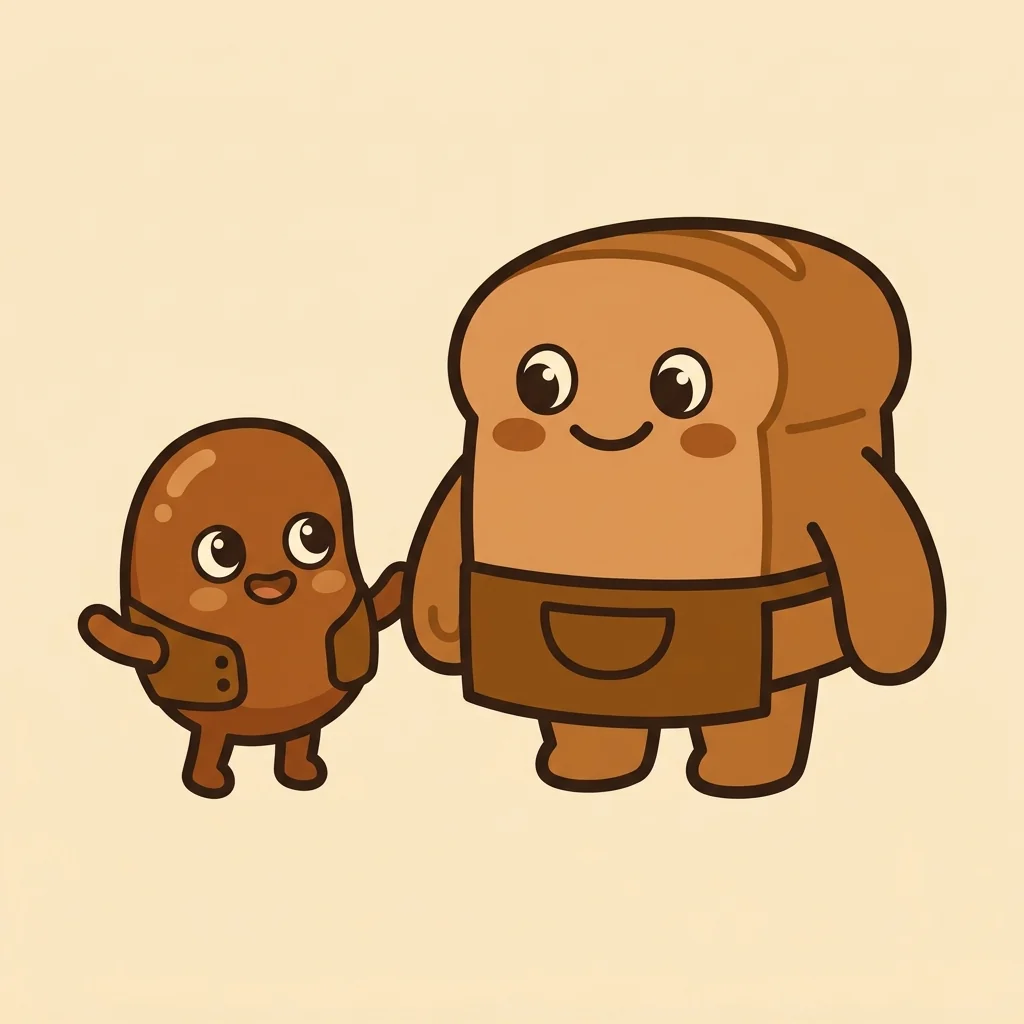
Ten is strong. One is small. Neither can cross alone. Two players share one keyboard: Bop is a bouncy bean worth one, Loaf is a soft heavy loaf worth ten. Doors want exact numbers, and at the trade machine ten ones squish into a ten only Loaf can carry. Five rooms, no falls, no timer. Ages 6–8, two players.
Play CarryPals →

SevenPals
Ages 6–8 · Gr 1–3 Level 2
A first probability game for ages 6–8: place your ladybirds on the flower patches (2–12) you think will bloom most, roll two dice, count the dots — and find out why 7 comes up most of all. Play 5 rounds with Lucky the ladybird, or pass the tablet. On-device, no accounts, no clock — a wrong guess is part of the fun.
Play SevenPals →

TwoWaysPals
Ages 6–8 · Gr 1–3 Level 2
Same answer, two ways. Show 8 + 5 your way with jumps on a rope number line, then Ropeling shows a different way. Which felt easier, and why? Then the grown-up shows their way, and the strip names the school's strategies — making ten, doubles, counting on. Pass-and-play with a grown-up. Ages 6–8.
Play TwoWaysPals →

StandPals
Ages 7–8 · Gr 2–3 Level 2
Run a lemonade stand and use the friendly till — take an order, make change, add up the day, take away the supplies, and see your profit on a bar chart. Real money math with 4 little stand-keeper friends. No ads, no account, no AI, and no money ever touches the app.
Play StandPals →
🎒 Ages 9–14 · Grades 4–8

NumberSense
Ages 8–13 · Gr 3–8 Level 1
Guess first, then compute — a daily estimation workout that builds a real feel for numbers.
Play NumberSense →

NumberVerse
Ages 9–10 · Gr 4–5 Level 1
Build numbers from base-ten blocks, place and round on the number line, solve by jumping, subitize on a rekenrek, and practice place value, operations, factors, primes & integers across 12 kits.
Play NumberVerse →

CardForge
Ages 9–12 · Gr 4–7 Level 2
Build runs and sets at the card table, predict how a card trick is forced, and practice 16 kits from the deck to combinatorics.
Play CardForge →

TileTales
Ages 10–12 · Gr 5–7 Level 2
Dominoes as number sense — read the pips at a glance, add the open ends to a multiple of five to score. Race a graded bot or a friend on this device to 61 over a few hands, or play a friend online one Block hand at a time.
Play TileTales →

SwarmQuest
Ages 10–13 · Gr 5–8 Level 3
A whole-room estimation game on one screen. Everyone looks at a picture for a few seconds, then points to their guess on a number line while the host taps it in. Then the truth and the room's middle guess drop together, and you see how close the crowd got. One room score, no names, nothing typed. For middle-school clubs and classes.
Play SwarmQuest →

TradeForge
Ages 9–13 · Gr 4–8 Level 3
A day on the job with twelve trades, for ages 9–14. The electrician sizing a circuit, the plumber’s slope, the baker’s ratio, the nurse’s dose — each worker is one piece of real math. You see a real job, GUESS the answer, then watch the worker compute it and explain. Applied arithmetic + a look at real careers. On-device, no accounts.
Play TradeForge →

CalendarForge
Ages 10–13 · Gr 5–8 Level 3
Why does Tết move? Why does Ramadan slide earlier every year? Because the sun and the moon keep two clocks that don’t divide evenly — and you can do the arithmetic. Predict how far a solar, a lunar and a lunisolar calendar drift against the seasons, see the arithmetic, then drift any calendar across the centuries in the Calendar lab. Real, tiny, deterministic maths — no internet. Ages 9–14.
Play CalendarForge →
🎓 Ages 15–18 · Grades 9–12
VectorForge
Ages 15–18 · Gr 9–12 Level 5
Linear algebra you can see, for ages 15–18. A 2×2 matrix is a transform of the plane — rotate, stretch, shear, reflect, flatten. Predict where a point lands, then watch the matrix move a shape: the determinant is how much it scales area, and the eigenvectors are the directions that don’t turn. It’s the on-ramp to the maths behind AI — a matrix is a neural layer. On-device, exact arithmetic.
Play VectorForge →
PrimeDojo
Ages 15–18 · Gr 9–12 Level 4
Multiply two primes: easy. Un-multiply their product: very hard. That gap is part of the padlock on a web page. PrimeDojo walks you from clock arithmetic to a working RSA key you build, encrypt with, decrypt with — and then BREAK by factoring, all by hand and all on your device. Predict each step, then watch the maths. Ages 15–18.
Play PrimeDojo →
AxiomForge
Ages 15–18 · Gr 9–12 Level 4
Build arithmetic from nothing. Start with zero, "the next number" and two rules for adding. Prove 2 + 2 = 4, then that adding in either order gives the same answer, then multiplication. Every move is a legal rewrite or it is refused. Twenty levels in three worlds, with a tiny checker that cannot be bluffed.
Play AxiomForge →