
Evan
PARITY — *counting swaps mod 2 to know, before you start, whether a scramble can EVER be solved.*
Listen along — Evan
Loading audio…
Press play to listen along. The line being read lights up as you go.
Show full transcript
Loading transcript…
Evan and the Puzzle That Couldn’t Be Solved
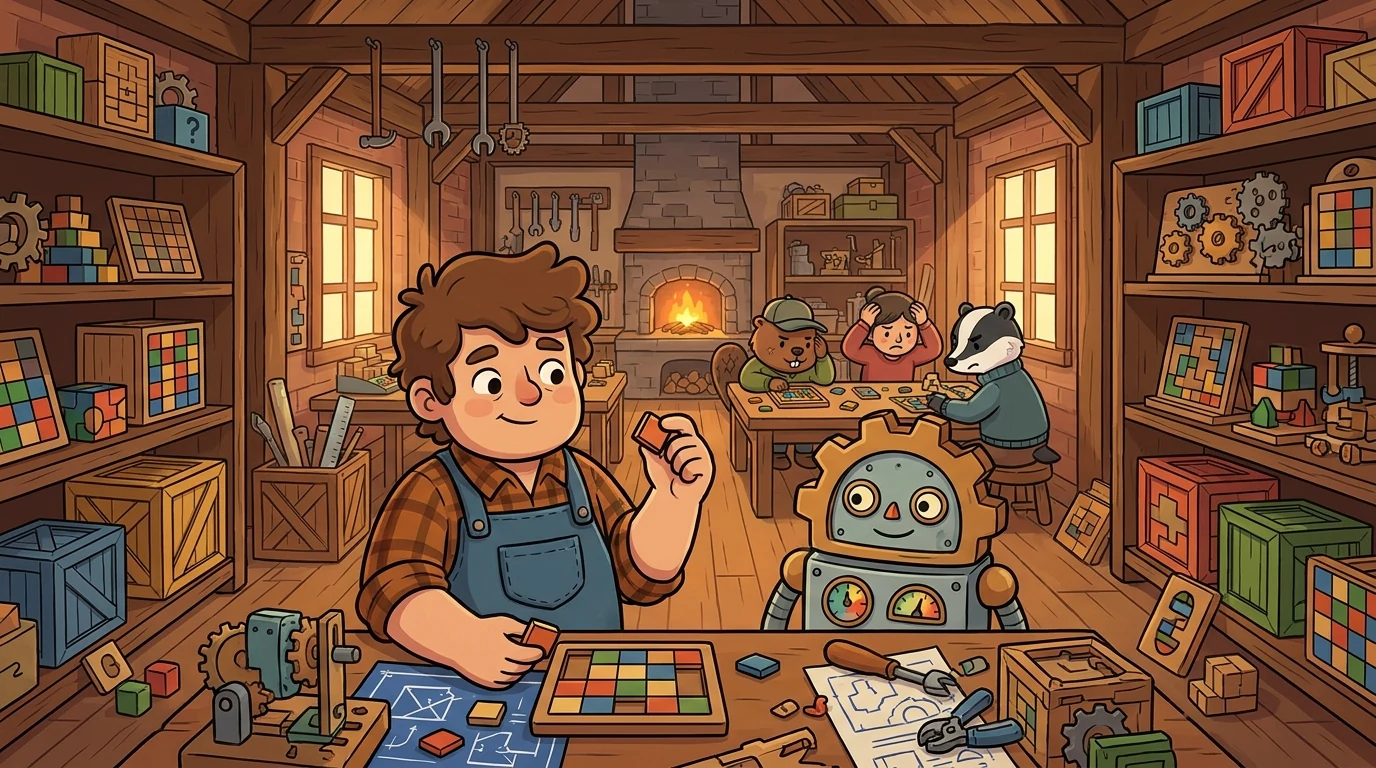
Evan had the strangest job in the PuzzleForge workshop: Evan looked at scrambled puzzles and, sometimes, said the impossible thing out loud.
“That one,” Evan would say, pointing at a sliding-tile puzzle a visitor had been sweating over for twenty minutes, “cannot be solved. Not by you, not by me, not by anyone. Somebody popped two tiles out and swapped them, and now it’s the wrong kind of scramble.”
Visitors hated hearing this. Then Evan would show them why, and hating turned to astonishment. Because Evan could tell — just by counting — which scrambles were solvable and which were forever stuck, before moving a single tile. “I don’t test whether it can be solved by trying,” Evan said. “Trying could take all year and still not be sure. I count. Counting is sure.”
Evan learned to count after being cruelly pranked.
As an apprentice, Evan was handed a sliding-tile puzzle and told to solve it. Evan tried for a full day. Two full days. Evan slid tiles until fingers ached and began to wonder, in a small cold voice, whether Evan was simply stupid. On the third day Sprocket took pity and confessed: the puzzle had been rigged. Two tiles secretly swapped. “It was never solvable,” Sprocket said gently. “You didn’t fail. You were sent up a mountain with no top.”
Evan was angry — and then Evan asked the question that changed everything: “How did you know it had no top?”
Sprocket smiled and taught the counting trick. Every legal slide, it turns out, swaps the empty space with a tile, and if you track those swaps carefully, solvable scrambles and unsolvable ones fall into two separate families that can never cross over — like even numbers and odd numbers. Count the swaps that turn the scramble back into order; if that count is even, it’s solvable, and if it’s odd (with the blank home), it never, ever will be. “The puzzle wears its fate on the outside,” Sprocket said, “if you know how to read it.”
Evan never wasted another day climbing a mountain with no top.
When the kid arrived, Evan was mid-count over a row of scrambles, sorting them into two piles: solvable and don’t bother.
“Before you sweat over any puzzle,” Evan told the kid, “it’s worth asking a rude little question: is this even possible? Most of the time — yes, go, have fun. But every so often the answer is no, and it’s far kinder to know that up front than to blame yourself for three days.”
Evan showed the kid the counting. It was fiddly at first — tracking which tiles were out of order, counting the swaps to fix them, watching whether the number came out even or odd. The kid miscounted twice. Evan never sighed. “Count it again — slower. Counting rewards patience, not speed.” On the third count the number came out clean, and Evan nodded: “Even. So this one is solvable. Now you can throw yourself at it with your whole heart, because you know there’s a top to this mountain.”
Then Evan slid over the rigged one. “Count this.”
The kid counted. Odd. The kid looked up, half-laughing, half-spooked. “It’s… it can’t be done?”
“It cannot,” said Evan, with great satisfaction. “And you know it in a minute of counting, not three days of tears.”
The kid sat with that — the odd little power of it.
“Here’s the feeling I’m actually giving you,” Evan said, quieter now. “It’s not the fun of solving. It’s relief from a particular kind of dread — the dread of not knowing whether the thing you’re pouring yourself into is even possible. That gnawing maybe it’s me, maybe I’m just not good enough. Counting takes that dread away. If it’s solvable, you strive with a free heart. If it isn’t, you set it down with a clear conscience. Either way, the not-knowing is gone.”
The kid felt it — the strange, steadying comfort of certainty, even the certainty of no. It was so much better than the cold small voice.
“That’s what I count for,” Evan said, sliding the impossible puzzle into the don’t bother pile with a flick — warm, as always, with that quiet steadying calm, the relief of a certainty that spares somebody the cold small voice. “So nobody ever spends three days blaming themselves for a mountain that never had a top.”
The PuzzleForge ensemble
Evan is part of PuzzleForge's distributed-narrative cast. Each character embodies a different curricular primitive; together they teach the full subject.
-

Nestor
Recursion / decomposition — solves the big tower by first solving the smaller tower off to the side (Hanoi self-reference)
-
Minim
Optimality — refuses any solution longer than the fewest possible moves
-
Wend
State-space search — maps which positions are reachable before committing to a move
-
Faro
Look-ahead / planning — looks several moves ahead to clear a path before touching a piece
-
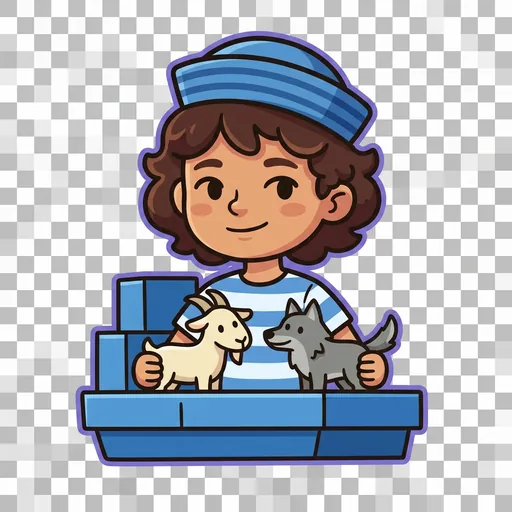
Skiff
Constraint satisfaction — ferries across the river without ever leaving the wolf with the goat
-

Gill
GCD / number reasoning — measures an exact amount by pouring back and forth between two jugs
-

Gray
Binary / Gray-code — frees the rings by changing exactly one at a time in a fixed order
-
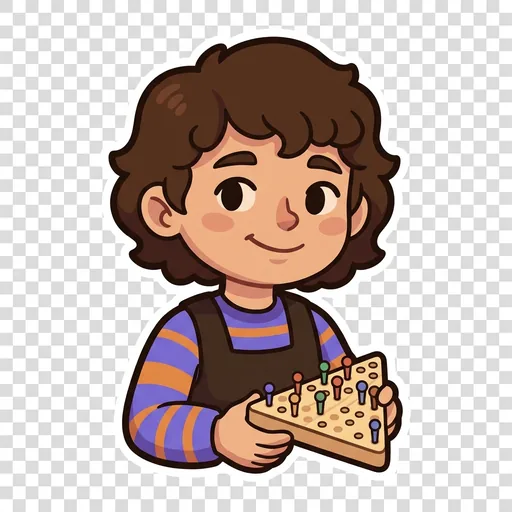
Vault
Reduction / monovariant — jumps one peg over another and removes it, shrinking the board toward a single survivor
-
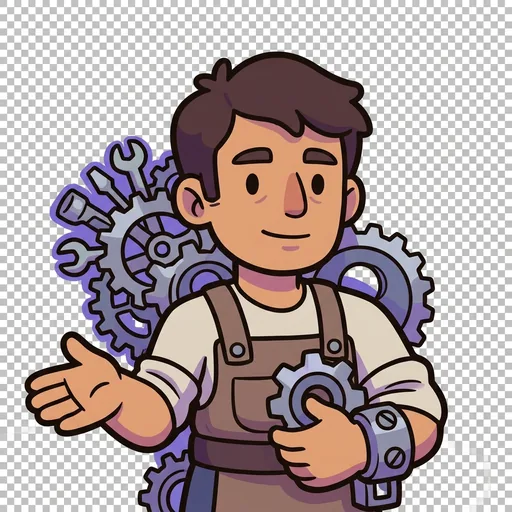
Sprocket
The workshop keeper (mentor) — frames 'make your solving strategy visible' and normalizes being stuck