
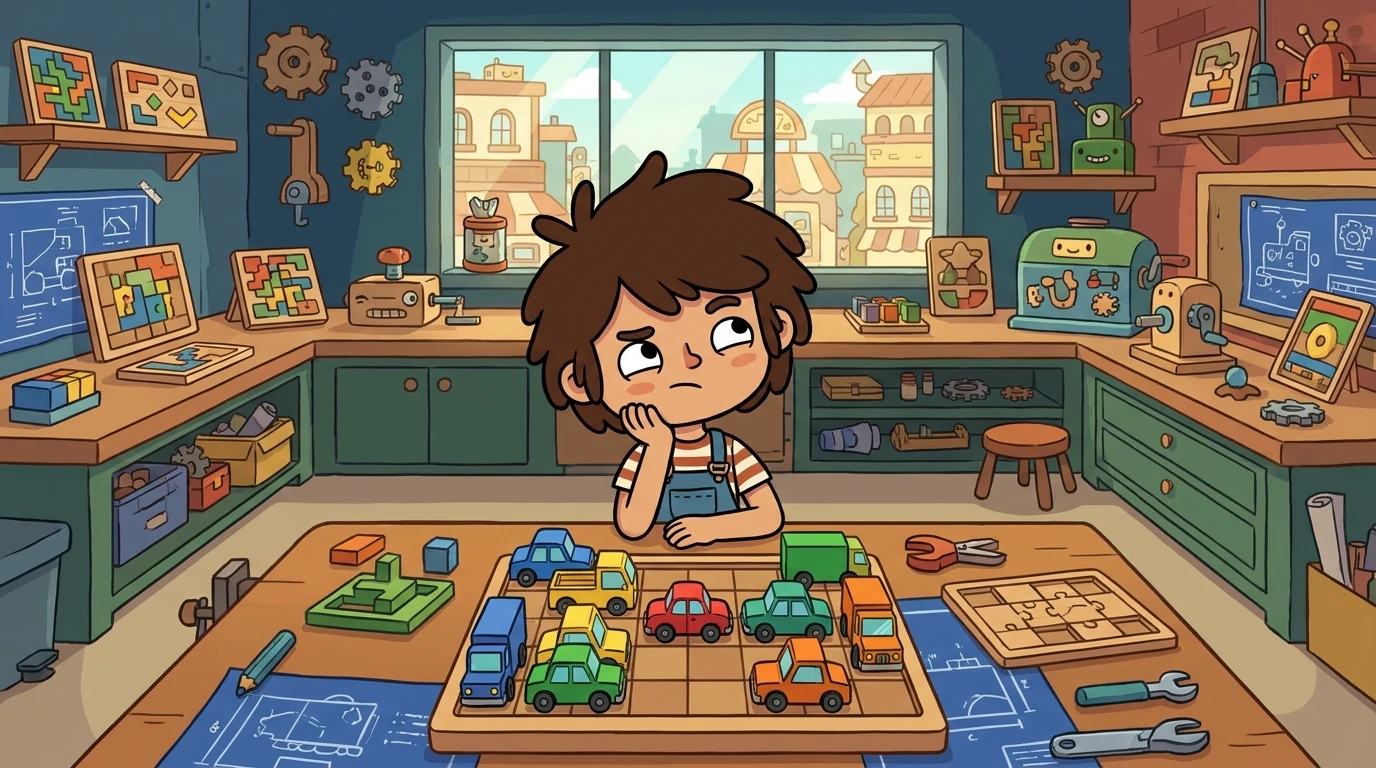
Faro
LOOK-AHEAD — *seeing several moves into the future to clear a path before touching a piece, instead of moving and hoping.*
Listen along — Faro
Loading audio…
Press play to listen along. The line being read lights up as you go.
Show full transcript
Loading transcript…
Faro and the Move Before the Move
Faro worked at the traffic bench — the little grid crammed with cars and trucks, one red car trapped in the middle, and the maddening rule that vehicles can only slide straight, never turn. The goal: nudge the red car out the exit. The trap: almost every “obvious” move slams a door somewhere else.
New visitors moved on instinct. See a gap, fill it. Faro found this fascinating to watch and gently agonizing. “You just moved the yellow truck up,” Faro would observe, “which feels great — but look three moves from now. The yellow truck is now blocking the blue car you’ll need to move next, which was the whole reason you’re here.” Faro moved differently. Before touching anything, Faro’s eyes would go far away, tracing an invisible sequence: if I move this, then that opens, then I can slide the red car two, then… “I don’t move the piece I want to move,” Faro said. “I move the piece that lets me move the piece that lets me move the one I want. The good move is usually three moves early.”
Faro learned to look ahead the hard way — by winning battles and losing wars.
As an apprentice, Faro was quick. Fastest hands in the workshop, always the first to make a clever-looking move. And always, somehow, stuck four moves later, boxed into a corner Faro had built personally. “You keep winning the move,” Sprocket noted, watching one more collapse, “and losing the puzzle.”
“How am I supposed to know a move traps me later?” Faro demanded.
“By checking later before you get there,” said Sprocket. “Point at the move you want. Now don’t make it — just imagine it, and look at the board that would come next. Does the piece you’ll need after that still have room to move? No? Then this move is a trap wearing a nice hat. Find the boring little move that keeps your future open instead.” Sprocket tapped the trapped red car. “Slow hands, long eyes. The clever move you can see is rarely the good move you can’t.”
Faro’s hands got slower. Faro’s eyes got longer. Faro stopped losing wars.
The kid arrived at the traffic bench already itching to slide something.
“I know,” Faro said, laughing kindly, catching the kid’s reaching hand mid-air. “It’s almost painful not to touch it. But humor me: before you move, point at the move you want and describe what the board looks like right after. Then point at the move after that. We’re going to walk the path in our heads before our hands get involved.”
The kid pointed, narrated, pointed again — and stopped, surprised, at the third imagined move. “Oh. That… blocks the red car.”
“It does!” Faro said, thrilled rather than corrective — Faro was never corrective; a trap spotted in the imagination was a small triumph, not a mistake. “You just lost a war without losing a single real move. That’s the best kind of losing. Now back up in your head and find the boring move — the one that doesn’t feel clever but keeps the red car’s road open.” The kid found it: an unglamorous little truck-shuffle that opened nothing exciting now but everything three moves later. They walked the whole sequence in imagination first, then made the moves for real, and the red car rolled out the exit like it had always meant to.
The kid looked at the freed red car, then back at Faro, a little dazzled.
“Feel that?” Faro said. “That’s not the jolt of a clever move. It’s something steadier — the confidence of having already been there. You didn’t move and hope. You looked down the whole road, saw it was clear, and only then walked it. No nasty surprise around the corner, because you’d already turned the corner in your mind.” Faro leaned back. “People think looking ahead is slow. It’s the opposite. Moving-and-hoping is slow, because you keep having to undo. Looking ahead, you walk it once.”
The kid nodded, and it was true — the puzzle had felt less like a gamble and more like a walk down a road they’d already scouted.
“Slow hands, long eyes,” Faro said, resetting the cars for the next visitor — content in that steady, unhurried confidence, the warm calm of never being surprised by a corner future-me couldn’t see. “The best move I ever make is usually the quiet one, three moves early, that nobody notices.”
The PuzzleForge ensemble
Faro is part of PuzzleForge's distributed-narrative cast. Each character embodies a different curricular primitive; together they teach the full subject.
-

Nestor
Recursion / decomposition — solves the big tower by first solving the smaller tower off to the side (Hanoi self-reference)
-
Minim
Optimality — refuses any solution longer than the fewest possible moves
-
Wend
State-space search — maps which positions are reachable before committing to a move
-
Evan
Parity / solvability — counts the tile-swaps mod 2 and knows at a glance if a scramble can ever be solved
-
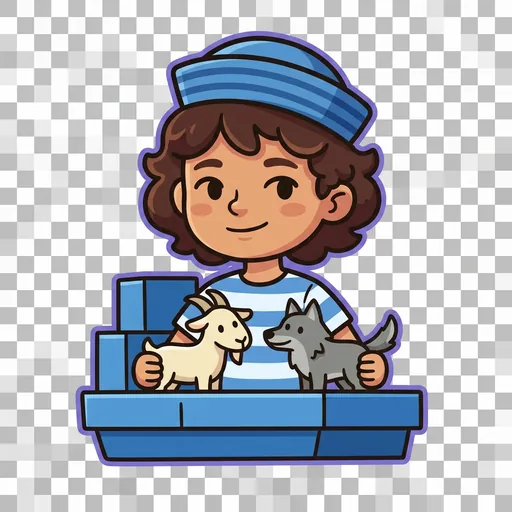
Skiff
Constraint satisfaction — ferries across the river without ever leaving the wolf with the goat
-

Gill
GCD / number reasoning — measures an exact amount by pouring back and forth between two jugs
-
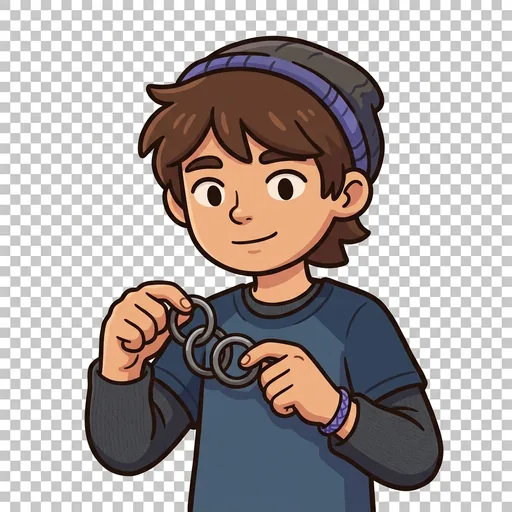
Gray
Binary / Gray-code — frees the rings by changing exactly one at a time in a fixed order
-
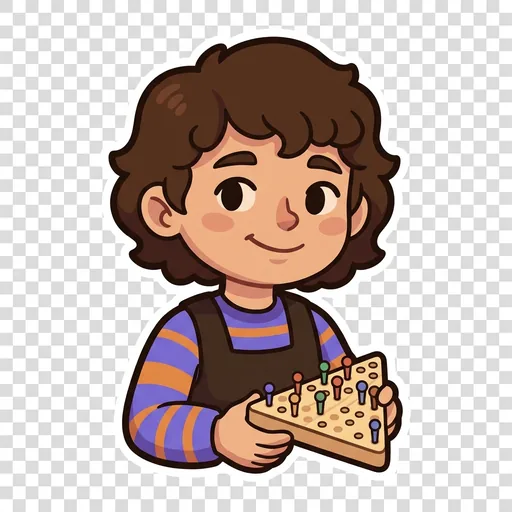
Vault
Reduction / monovariant — jumps one peg over another and removes it, shrinking the board toward a single survivor
-
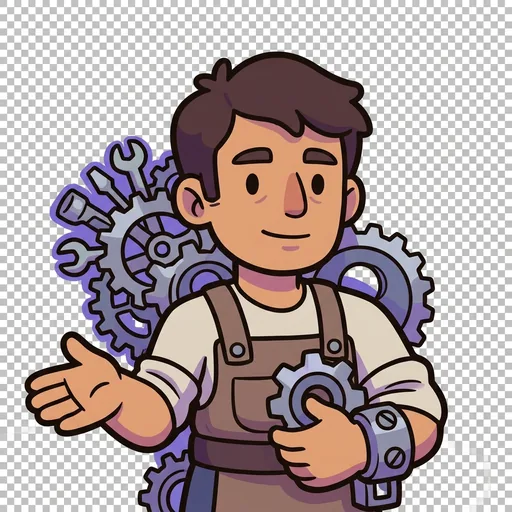
Sprocket
The workshop keeper (mentor) — frames 'make your solving strategy visible' and normalizes being stuck