
Bigsby
sample size - a small test gives a wide, blurry range; testing more deals narrows it, though each extra deal helps a little less
Loading audio…
Press play to listen along. The line being read lights up as you go.
Show full transcript
Loading transcript…

Bigsby is the biggest animal in the Card Lab. He is a badger, broad and gentle, with a white stripe down his nose and a canvas apron tied around his middle. When he walks between the tables, the floorboards creak a friendly creak. And he is almost always carrying the same thing: a tall, neat stack of face-down cards, held carefully in both paws so not one of them slips.
"More deals," Bigsby likes to say, in his slow, rumbly voice. "Always more deals."
The younger animals sometimes tease him about it. What's the point of so many? they ask. You could test a rule on five deals and be done before lunch.

Bigsby doesn't mind the teasing. He just smiles and tells them about the Great Five-Deal Mistake.
It happened one spring. A pair of mice tested whether a solitaire rule helped. They ran it on five deals. The new rule won four of them. "Eighty percent!" they squeaked, and they were ready to tell the whole valley.
Bigsby set down his stack and asked them to run the same test again, on five different deals.
This time the new rule won two.

"Forty percent?" said the mice, bewildered. "But it was eighty a minute ago!"
"With five deals," Bigsby said gently, "luck is loud. One easy deal or one hard deal swings the answer a long way. Your rule might truly win half the time and simply got lucky the first time, and unlucky the second. Five deals can't tell the difference. The honest range is very wide."
The lab's screen can show that range. After a test, it draws a bar called an interval: the stretch of answers the data can really support. With five deals, the mice's bar stretched almost across the whole screen, from a little to a lot. It was like trying to see a far-off hill through thick fog.
"So how do we clear the fog?" asked one mouse.
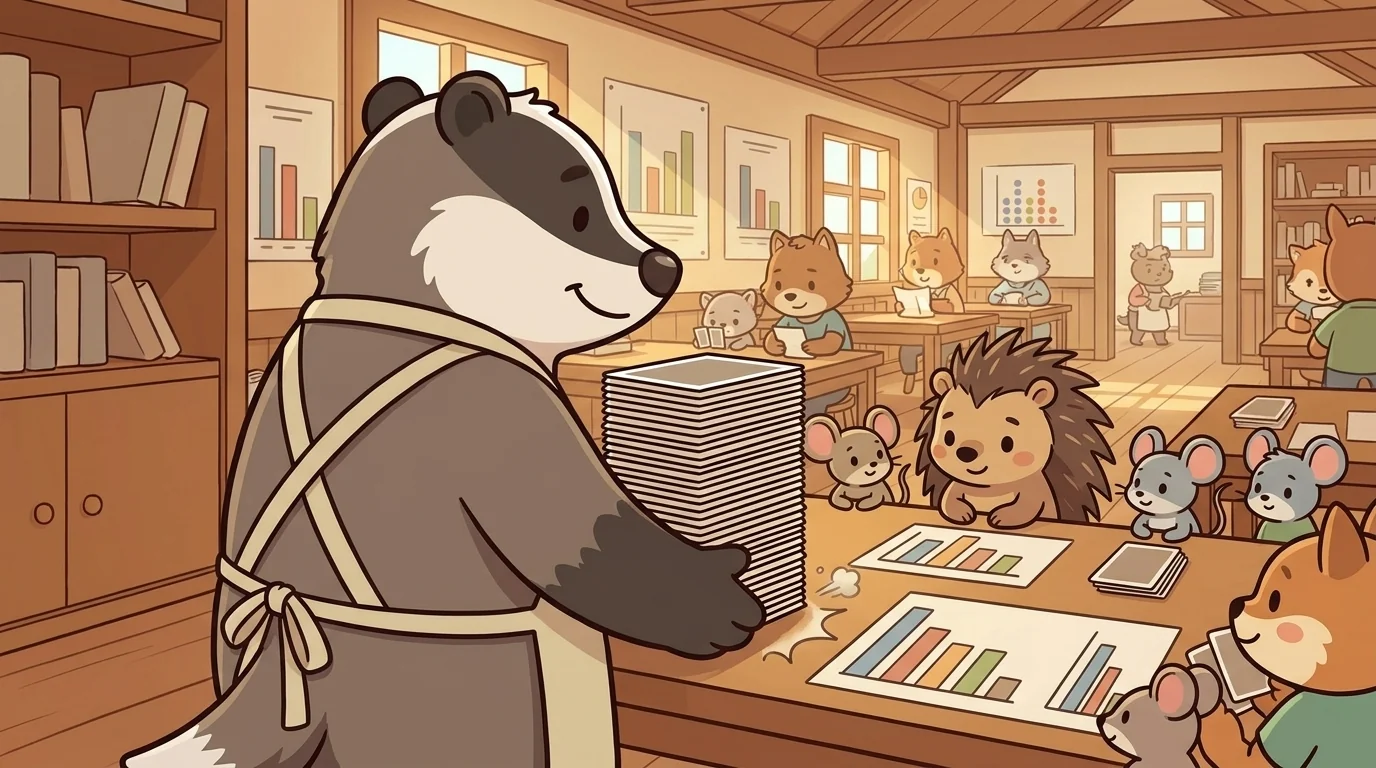
Bigsby lifted his tall stack and set it on the table with a soft thump. "We test more deals."
They ran the rule on fifty. The interval shrank, a good way in from both ends. Then they ran it on two hundred, and the interval shrank again, narrower and narrower, until it sat in a tight little band. The fog was lifting. Now they could actually see the hill: the rule helped a little, and they could say so with confidence.
The mice noticed something else too. Going from five deals to fifty narrowed the bar a lot. Going from fifty to two hundred narrowed it a bit less, even though it was far more deals.
"Each new deal helps," Bigsby said, "but the first ones help the most. To make the range half as wide, you need about four times as many deals. That is why you can't just add a handful and call it certain. Sharp answers take a big, patient stack."
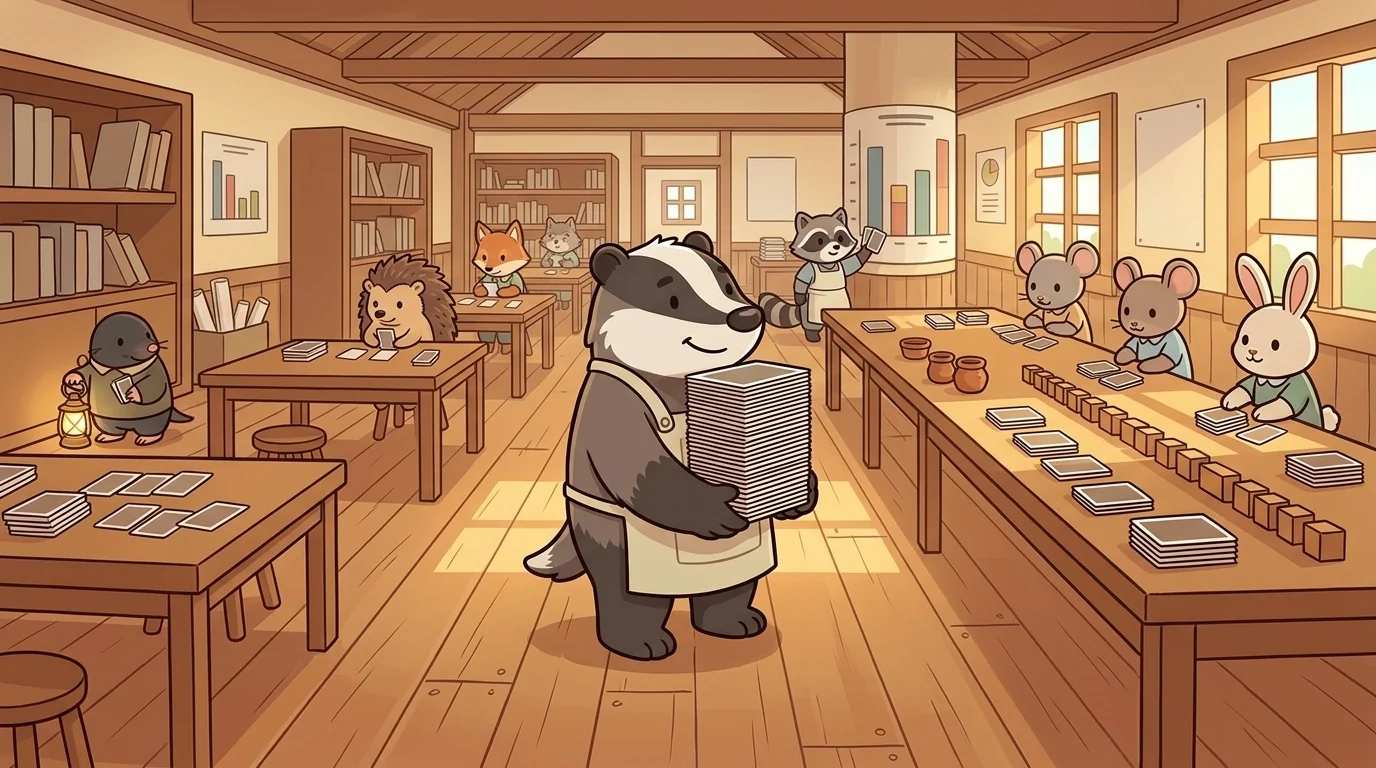
The mice looked at Bigsby's stack with new respect.
Bigsby feels most like Bigsby at the very end of a long test, when the last deal is played and the interval settles into a thin, clear band. It is a deep, warm, satisfied feeling, like finishing the last bite of a huge meal, or placing the final block on a wall you built yourself. It took a long time. It was worth it.
You have a bit of Bigsby in you whenever you choose to be patient instead of fast. Before you trust an answer, ask whether you tested enough, and say it the way he does: "Bigsby piles on more deals, and the answer comes into focus."
Then keep dealing, one steady card at a time.
The Solitaire Lab ensemble
Bigsby is part of Solitaire Lab's distributed-narrative cast. Each character embodies a different curricular primitive; together they teach the full subject.
-

Dealia
(Mentor, a card-dealing raccoon) - asks what you predicted BEFORE you look at the data
-

Twinnie
Deals every hand twice - the same deals for both rules, so the test is fair
-

Hedgeworth
Never says more than the data can - reports at least ... and at most ...
-

Maybelle
Knows an unknown is a maybe, not a no - the search ran out of time
-

Lopsy
Counts the deals where only ONE rule won - those odd pairs are the whole story
-

Lanternby
Knows the measuring tool is part of the result - a bigger search proves more wins of the SAME deals
-

Glassby
Knows FreeCell hides nothing, so a 'lost' there is a proof about the deal itself
-

Tiebelle
Calls it a tie when the two ranges overlap - no winner the data cannot back
-

Seedwick
Knows the same run seed rebuilds the same deals, so anyone can re-check your test
-

Tabitha
Keeps one row per deal in the CSV so you can draw the chart yourself
-

Addison
Knows a rule that only ADDS moves can never truly win less - reason before you run