
Lanternby
the tool is part of the result - a longer search can prove more wins of the same deals, so a result only means something next to how hard you looked
Loading audio…
Press play to listen along. The line being read lights up as you go.
Show full transcript
Loading transcript…
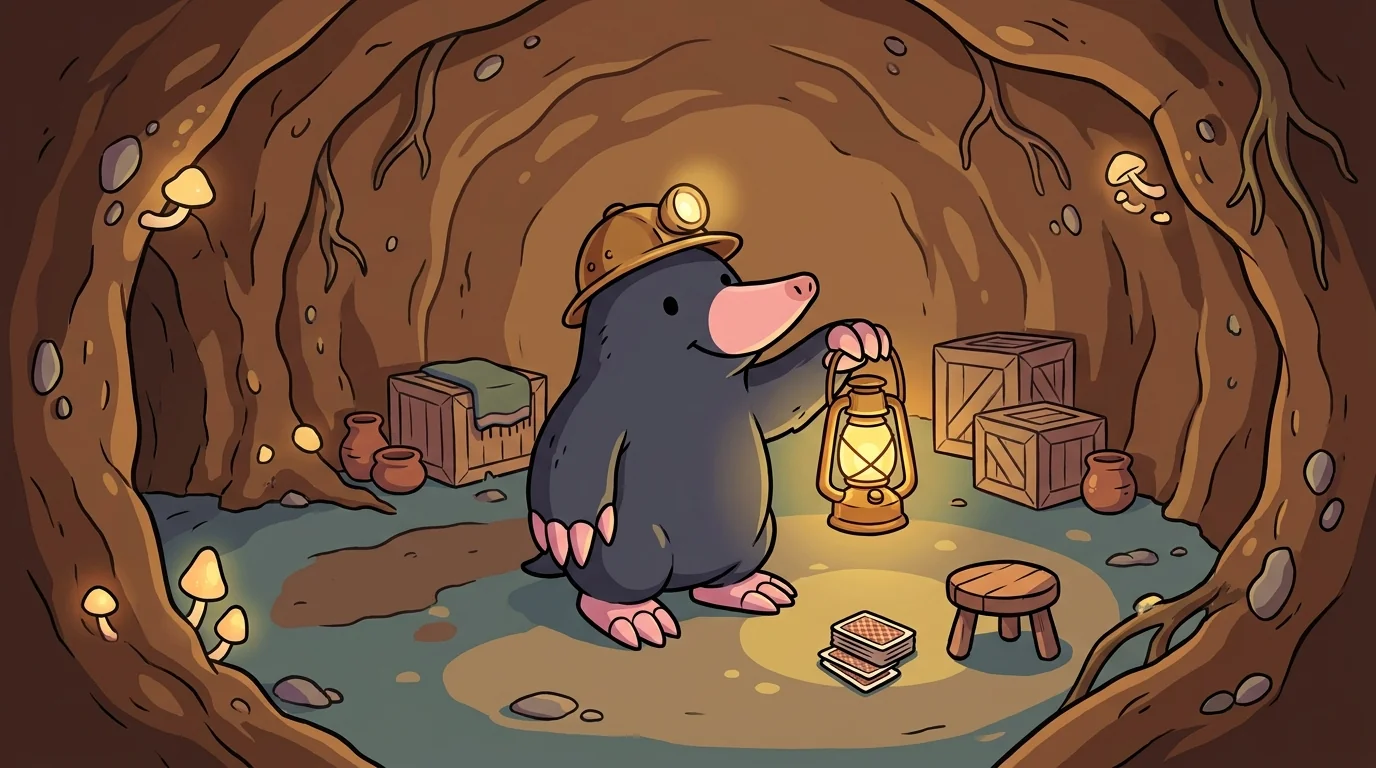
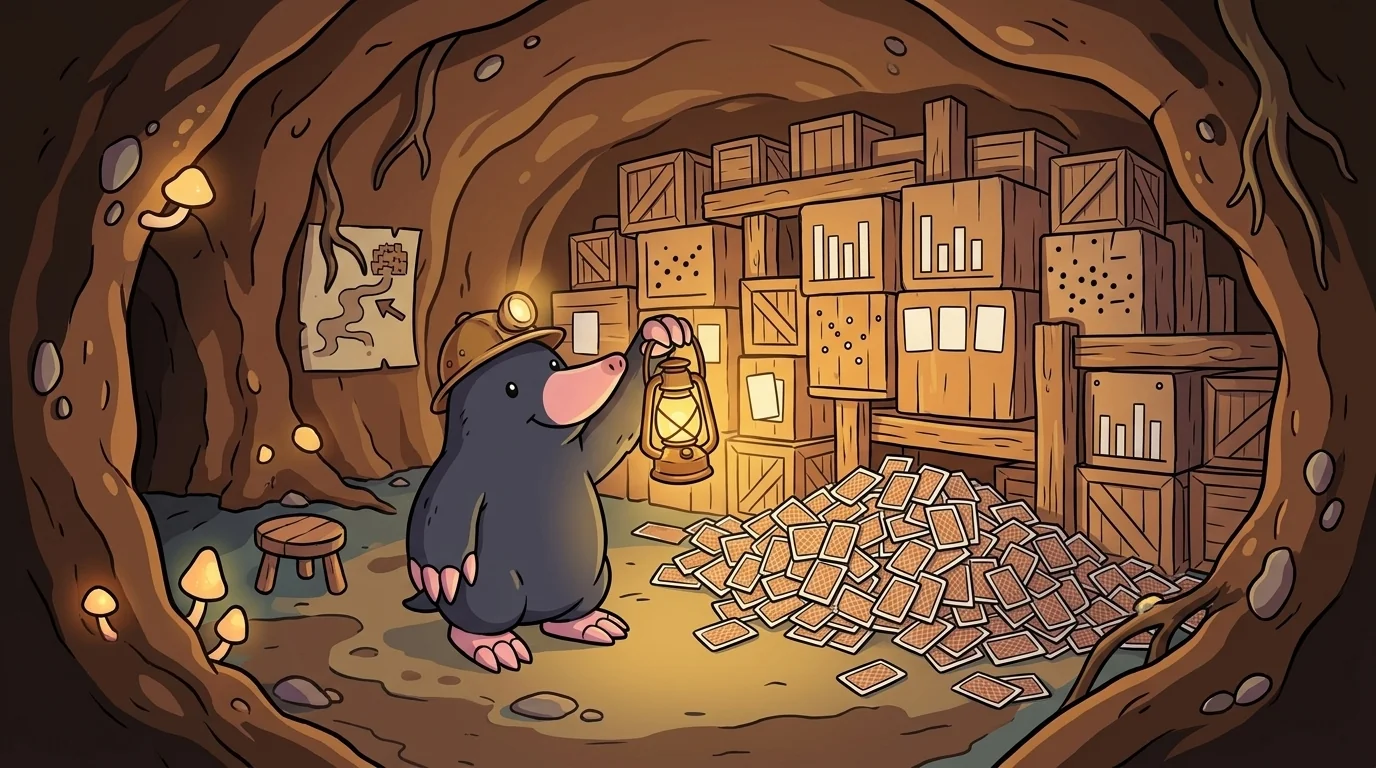
Deep under the Card Lab, where the floor gives way to cool earth, there is a mole named Lanternby. He is small, with velvety dark-grey fur, a long pink snout, and big pink paws shaped like little spades. Like most moles, his eyes are tiny and don't see far. So he carries a warm brass lantern everywhere he goes, and wears a miner's cap tipped at a jaunty angle.
"You can only find what your light reaches," Lanternby says. It is the most important thing he knows.
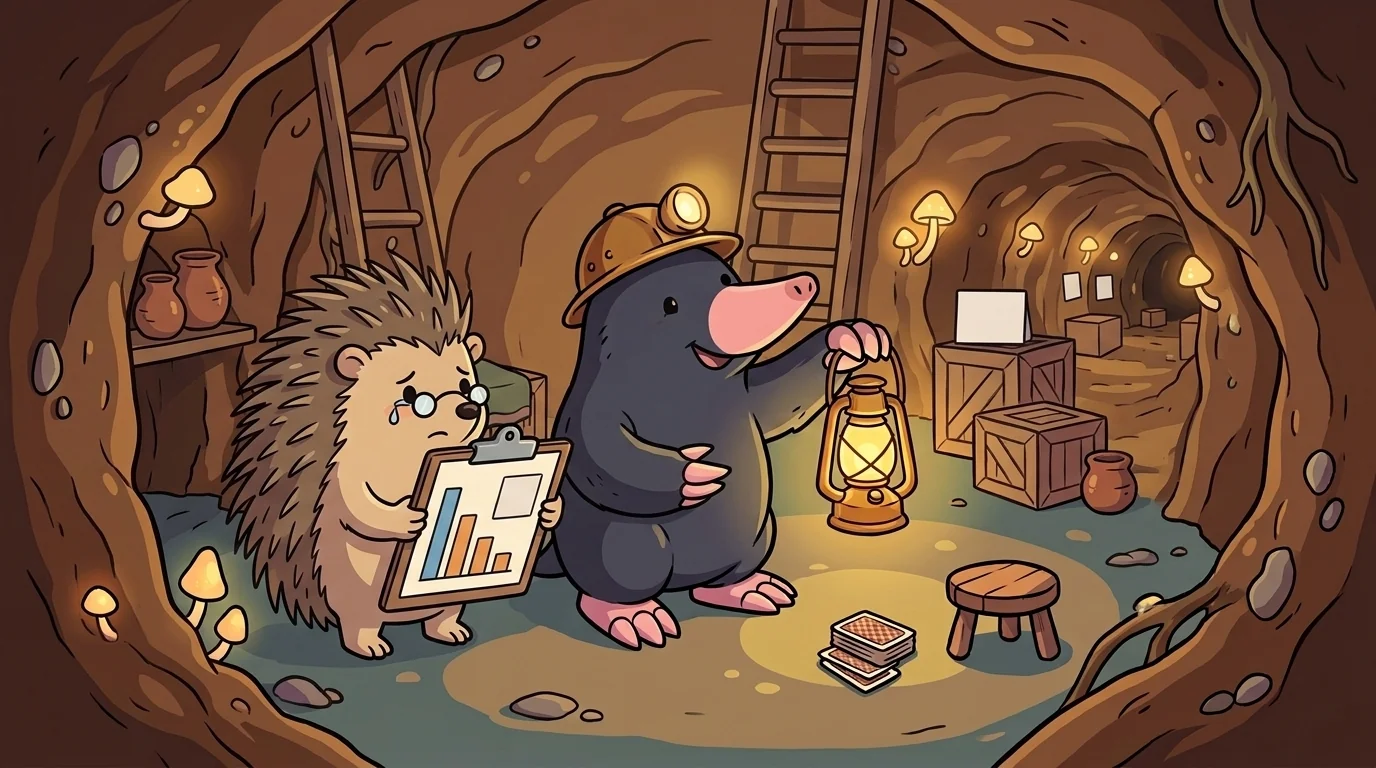
Lanternby's lantern is a way of thinking about the solver. When the solver plays a deal, it searches through the possible moves, trying one path, then another, looking for a way to win. But it can't search forever. It has a budget, a limit on how many positions it will look at before it stops. A small budget is a small lantern: it lights up only the paths close by. A big budget is a bright lantern: it lights up far down the tunnels.
One afternoon a young hedgehog came down the ladder, quills drooping. She had run a test with a small search and gotten a disappointing number of wins. "I think these deals are just hard," she said. "Most of them can't be won."
Lanternby held his lantern up so it lit her face. "Are you sure they can't be won," he asked kindly, "or did your lantern just not reach the ending?"
She didn't know.
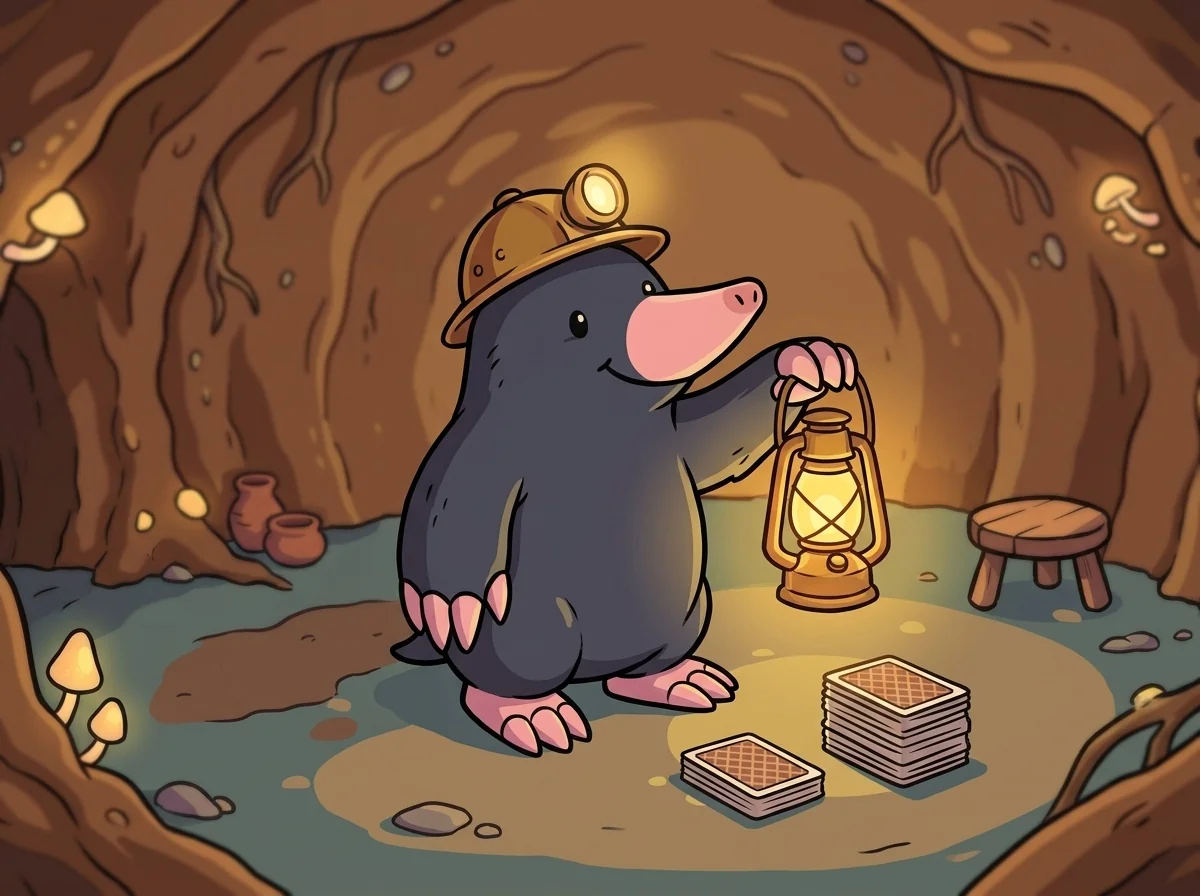
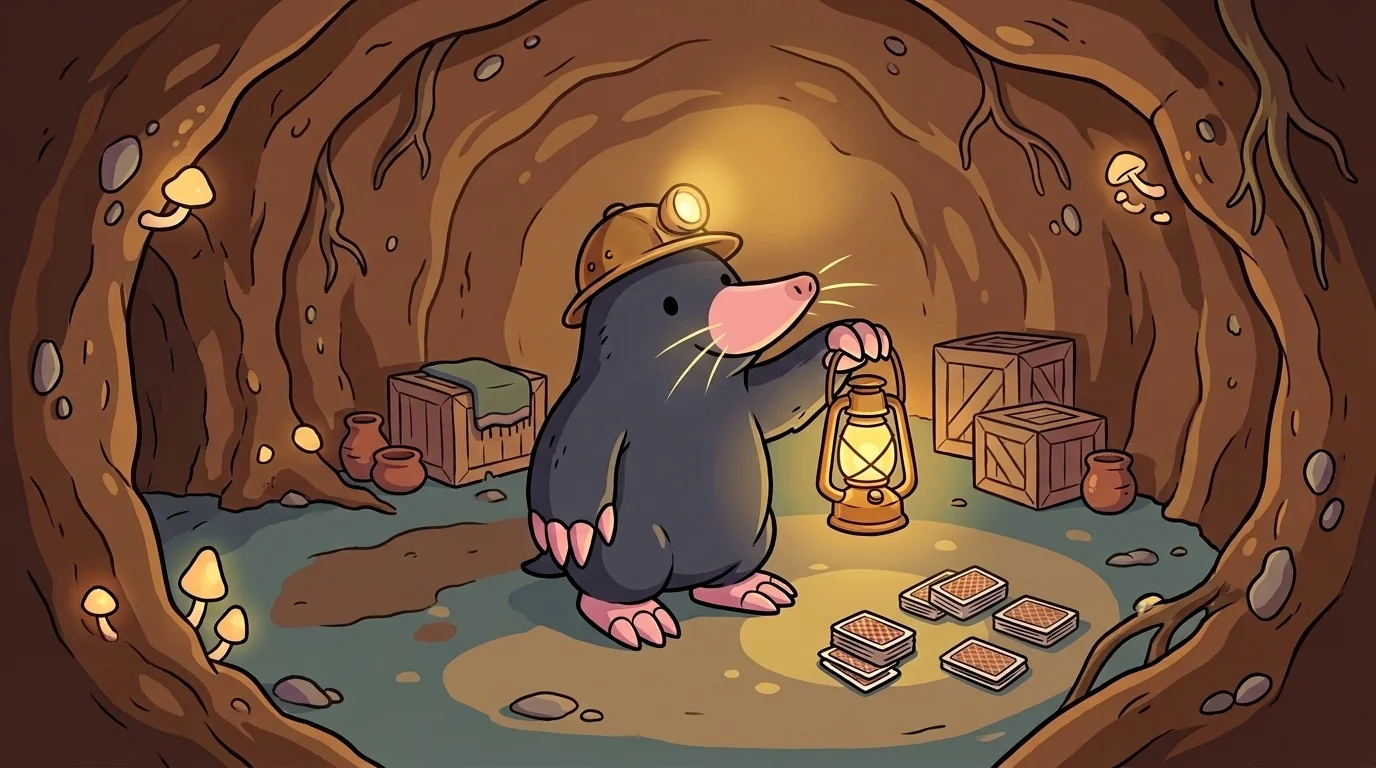
So Lanternby did an experiment that he loves more than any other. He took the very same deals, not new ones, the exact same deals, and had the solver play them twice. Once with a small lantern, a search of a few thousand positions. Once with a big lantern, a search five times larger.
The small lantern proved some wins. The big lantern proved those same wins, and then more. Deals that had come back not sure yet under the small light came back won under the bright one.
The hedgehog stared. "But they're the same deals. Nothing about the deals changed."
"Exactly," said Lanternby, and his whiskers glowed gold in the lamplight. "The deals didn't change. Only the lantern did. Those wins were there all along, waiting down the tunnel. A bigger search didn't make the deals easier. It just let us see further."
"So my number wasn't really about the deals," she said slowly. "It was about the deals and my lantern."
"That's it," said Lanternby. "When you tell someone how many deals you won, you have to tell them how big your lantern was too. Otherwise they might think the deals are hard, when really the light was small. The tool you measure with is part of the answer."
Then he added something that made her smile. "And notice, the bigger lantern never turned a win into a loss. A win it proves is a real win, forever. Looking harder only adds."
Lanternby feels most like Lanternby at the moment his light reaches the end of a long tunnel and suddenly shows something that was hidden there all along. It is a soft, glowing, wonder-full feeling, like turning on a lamp in an attic and finding treasures you didn't know you had.
You have a bit of Lanternby in you whenever you remember that "I couldn't find it" might mean "I haven't looked far enough yet." When you share a result, share how hard you looked, and say it the way he does: "Lanternby knows a brighter lantern finds more wins in the very same deals."
Then raise your lantern a little higher.
The Solitaire Lab ensemble
Lanternby is part of Solitaire Lab's distributed-narrative cast. Each character embodies a different curricular primitive; together they teach the full subject.
-

Dealia
(Mentor, a card-dealing raccoon) - asks what you predicted BEFORE you look at the data
-

Twinnie
Deals every hand twice - the same deals for both rules, so the test is fair
-

Hedgeworth
Never says more than the data can - reports at least ... and at most ...
-

Maybelle
Knows an unknown is a maybe, not a no - the search ran out of time
-

Bigsby
Knows more deals make the answer sharper - the interval gets narrower
-

Lopsy
Counts the deals where only ONE rule won - those odd pairs are the whole story
-

Glassby
Knows FreeCell hides nothing, so a 'lost' there is a proof about the deal itself
-

Tiebelle
Calls it a tie when the two ranges overlap - no winner the data cannot back
-

Seedwick
Knows the same run seed rebuilds the same deals, so anyone can re-check your test
-

Tabitha
Keeps one row per deal in the CSV so you can draw the chart yourself
-

Addison
Knows a rule that only ADDS moves can never truly win less - reason before you run