Lint, Fulcra, Tandy, and Hedda
FROM A PILE TO AN EXPLANATION - after you find the causes, take out what isn't one, weigh the rest, compare with another event, and say how sure you are.
Listen along — Lint, Fulcra, Tandy, and Hedda
Loading audio…
Press play to listen along. The line being read lights up as you go.
Show full transcript
Loading transcript…
The Weighing
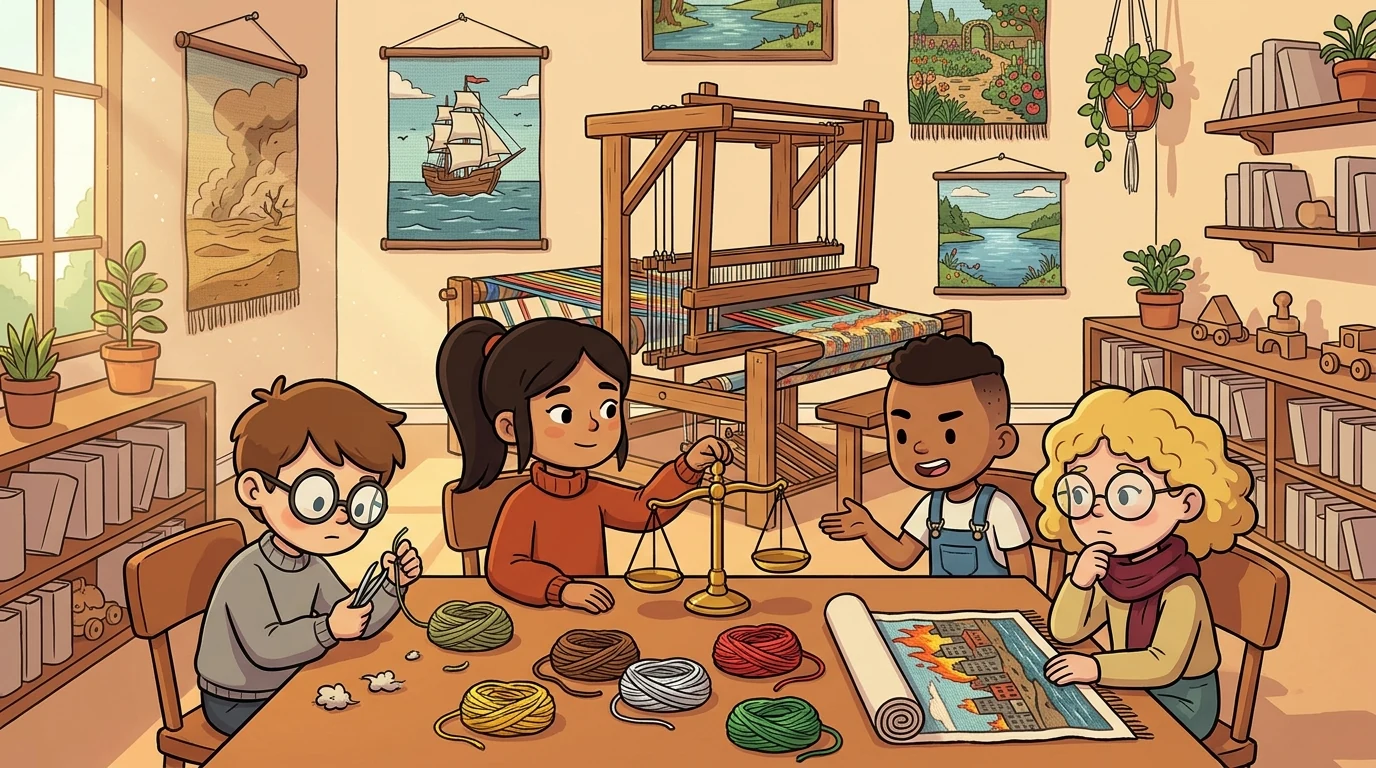
The Great Fire cloth was still on the big table on Sunday afternoon, with five neat piles of thread beside it: yellow, brown, silver, red and green. Kindling, Moss, Hap, Bobbin and Folk had found them the day before.
Now four different weavers pulled up chairs.
“Right,” said Lint, adjusting his glasses and taking out his tweezers. “Before anyone weighs anything, let’s make sure everything here is actually a thread.”
The others groaned, but fondly. Lint always goes first, because there’s no point weighing fluff.
He went through every pile. In the green one he found a note that said the Lord Mayor was a rich man. “True,” said Lint. “But is it why the fire spread?” Nobody thought so. Being rich didn’t burn anything. Hesitating over the firebreaks did. Out came the note with the tweezers. In the brown pile he found the bakery made bread for the navy. “Interesting,” said Lint. “Also lint.” That came out too.
He felt the small click of satisfaction he gets every time the pile becomes a little more honest. Two bits of fluff, gone. Everything left was a real thread.
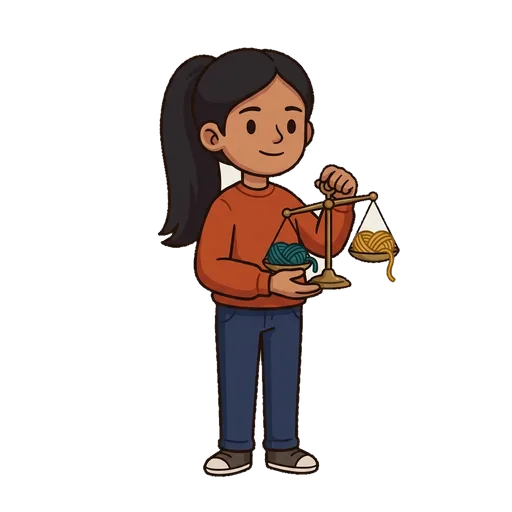
Fulcra set her brass balance scale in the middle of the table. “Now the hard part,” she said. “These aren’t all the same size. Which mattered most?”
Everyone had a view, which is what usually happens.
“The wind,” said Tandy. “Without the wind it wouldn’t have spread like that.”
“The houses,” said Hedda. “Wood, packed tight. A city like that was always going to burn badly one day.”
“The firebreaks,” said Lint. “If they’d pulled down houses early, it might have been stopped on the first day.”
Fulcra didn’t pick a winner straight away. She felt the steady, patient feeling she always feels when good friends disagree: not tense, more like everyone leaning on the same table from different sides. “Okay,” she said. “For each one, ask: if this thread had been different, how much would the story change?”
They tried it. A still night instead of a strong wind? The fire might have stayed small. Big change. Brick and stone houses with gaps between them? Bakery fires happened all the time and didn’t burn down cities, so probably a big change too. Firebreaks on the first morning? Maybe, but with that wind behind it, perhaps not enough.
Slowly, the wind and the houses ended up in the heavy pans. The firebreak thread sat just behind. The bakery Spark, though it started everything, sat lighter than you’d expect.
Then Tandy said, “Ooh, hang on.”
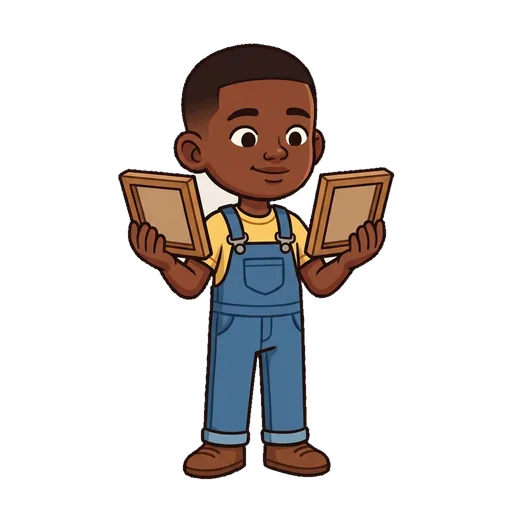
He fetched the Titanic cloth and laid it beside the fire. Then he held up his two empty frames. “Look. On the Titanic, the heaviest thread was a rule about lifeboats that had been around for years. Here, one of the heaviest is the way the city had been built for hundreds of years. Different disasters, but in both, a slow thing made a sudden thing much worse.”
“So slow causes keep being heavy,” said Lint.
“Often,” said Tandy. “Not always. The lost cup final was mostly luck. But it’s worth looking for.”
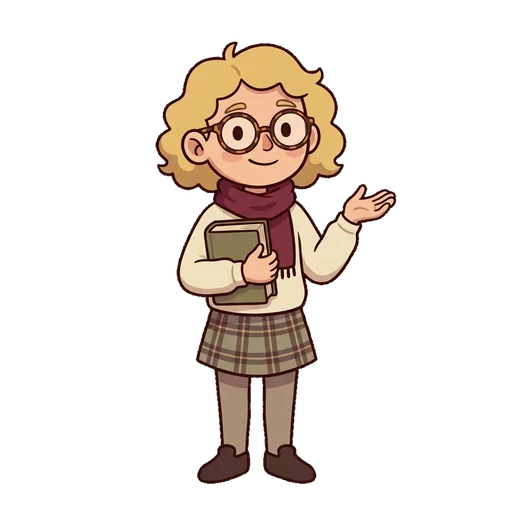
That’s when Hedda opened her untitled book. “Before we write this down,” she said, “how sure are we?”
The others knew what she meant. They’d learned a lot from one cloth and a few library books. Historians who have spent years on the Great Fire don’t all agree about which thread mattered most. Some put more weight on the wind and the dry summer. Some put more on how the city was built. Some on how slowly the firebreaks were made.
“So we say what we think, and how sure we are,” said Hedda.
Fulcra wrote it on a card, and they all checked it:
The Great Fire of London started in a bakery. It spread because of a strong east wind and a dry summer, because the city was built of crowded wooden houses, and because there was no real system for fighting a fire that big. Firebreaks weren’t made fast enough. We think it was mostly the wind and the wooden city together. Historians weigh these differently, and we might change our minds if we learn more.
They read it out loud. It was longer than “a bakery caught fire.” It was much more true.
Manywhy came over, read the card twice, and pinned it to the cloth.
“From a pile to an explanation,” Manywhy said. “That’s the whole Loom Room in one afternoon.”
The ThreadForge ensemble
Lint, Fulcra, Tandy, and Hedda is part of ThreadForge's distributed-narrative cast. Each character embodies a different curricular primitive; together they teach the full subject.
-
Manywhy
(Mentor, carried over from TreeForge's trunk) - never stops at one reason; asks what ELSE made it happen
-
Kindling
The Spark thread - finds the trigger that set it off
-
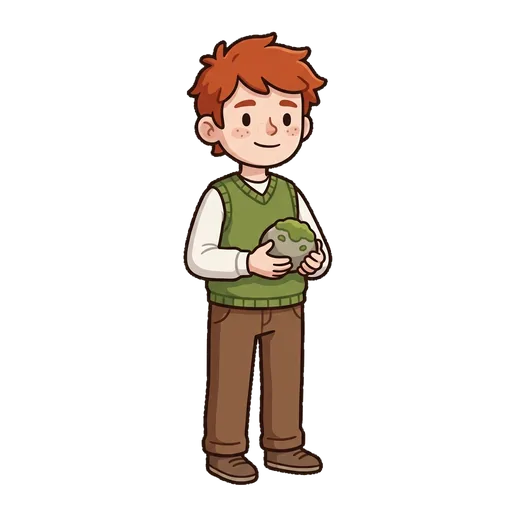
Moss
The Slow thread - finds the cause that built up over years
-
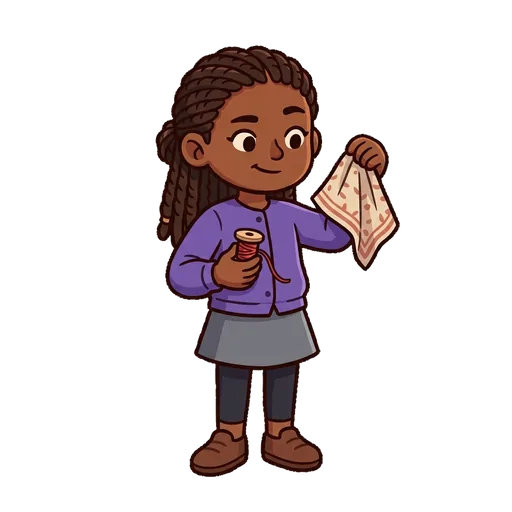
Bobbin
The Hidden thread - finds the cause nobody names at first
-

Hap
The Chance thread - says honestly when luck lined things up
-
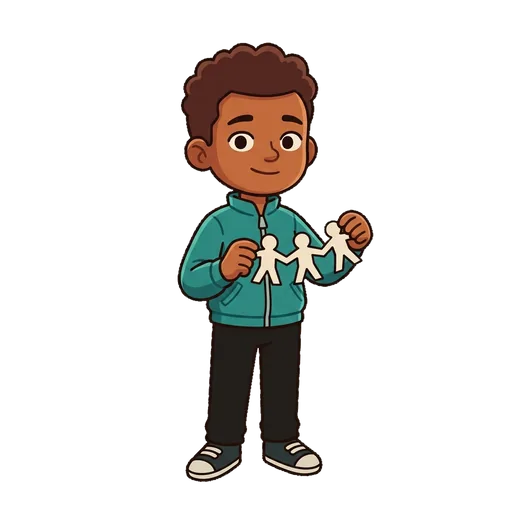
Folk
The People thread - finds the part people's choices played
-
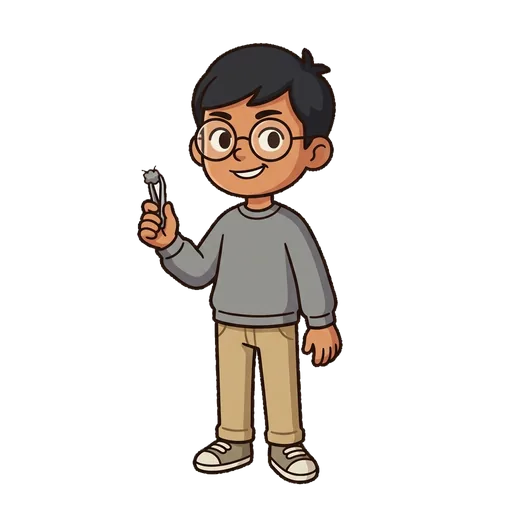
Lint
Spots the detail that is true but is not a cause
-
Fulcra
Weighs the threads and says which one mattered MOSTLY
-
Tandy
Lays a second event beside the first to compare
-
Hedda
Says how sure we are, the way historians and scientists do