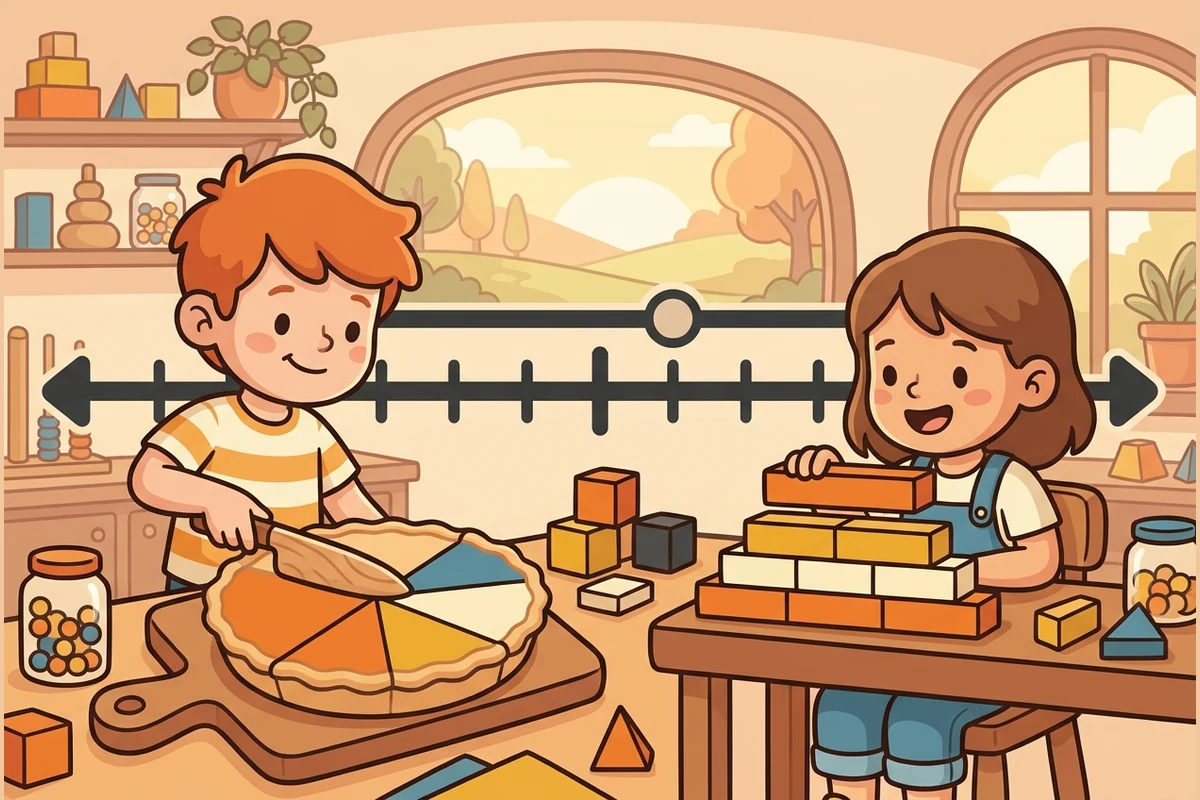
Start here
 Number Line Slide a marker to place a fraction between the whole-number ticks.
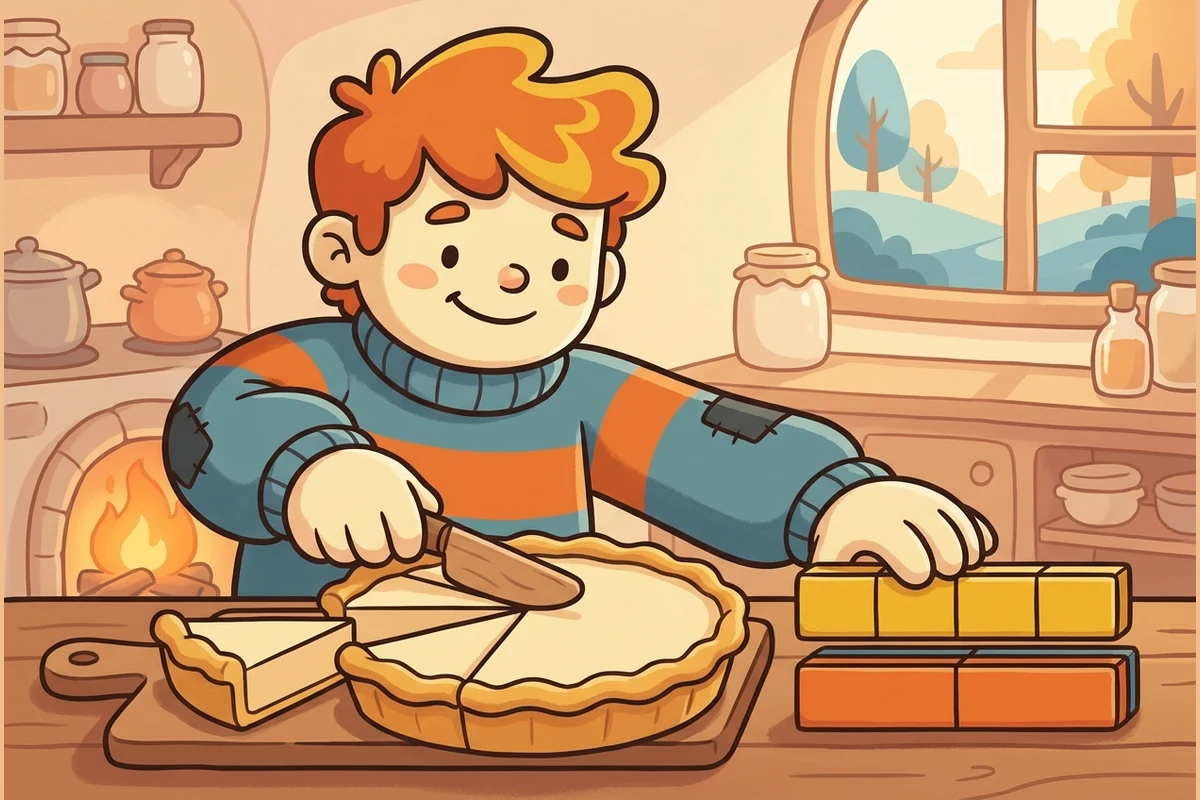 Change the Whole Pick which rod is the whole, and watch the same rod become a different fraction.
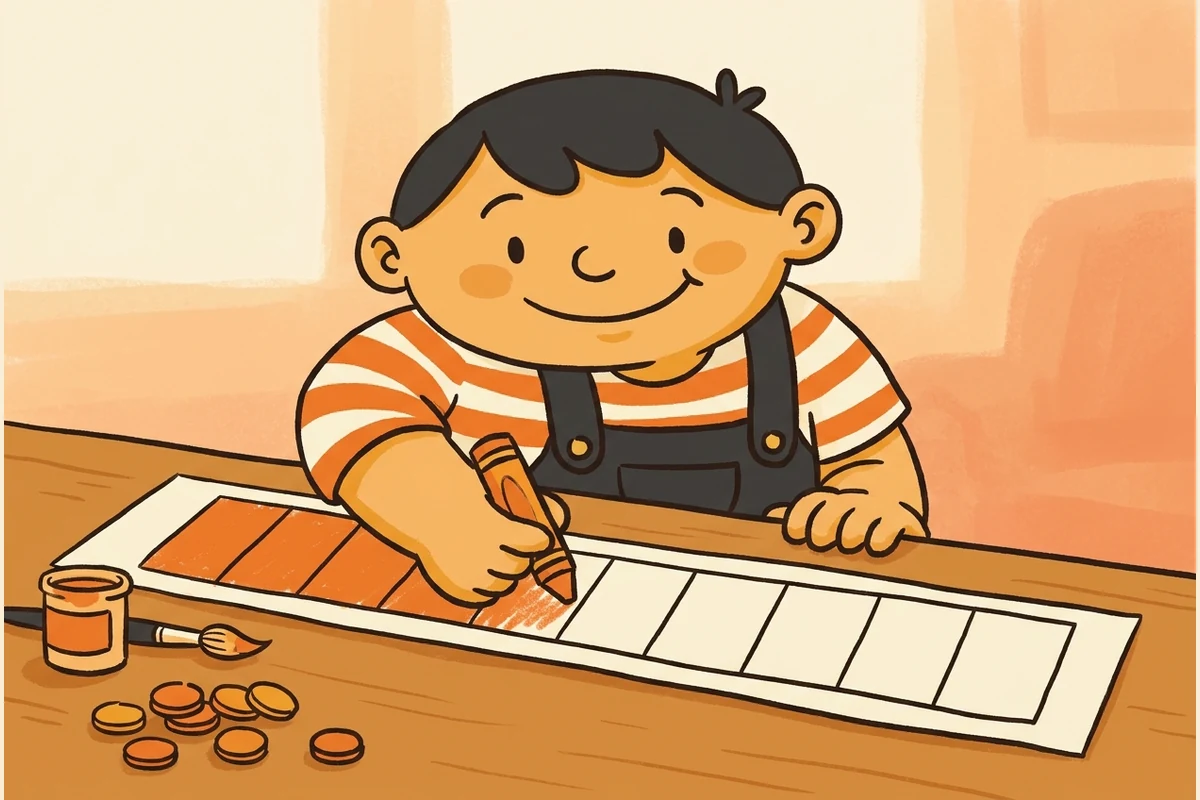 Tape Diagram Shade equal parts of a bar to picture a fraction of the whole.
 Word Problems Share a cake fairly and solve real fraction story problems.
How are you feeling?
✨ New — The Fair-Share Kitchen
🍰 Open the kitchen → What the six tools do
Choose a challenge
Kit 1: Fraction Basics
Number Line ✓ doneKit 2: Equivalent Fractions
Compare & Order ✓ doneKit 3: Comparing & Ordering Fractions
Operation Lab ✓ doneKit 4: Adding & Subtracting Fractions
Show the other 12 challenges
Kit 5: Multiplying Fractions
Fraction Workshop ✓ doneKit 6: Mixed Numbers & Improper Fractions
Decimal Bridge ✓ doneKit 7: Fractions, Decimals & Percents
Fraction Workshop ✓ doneKit 8: Ratios & Proportional Relationships
Fraction Workshop ✓ doneKit 9: Fractions in Real-World Contexts
Operation Lab ✓ doneKit 10: Fraction Operations Mastery
Fraction Workshop ✓ doneKit 11: Critical Analysis & Evaluation
Fraction Workshop ✓ doneKit 12: Integration & Review
Fraction Workshop ✓ doneKit 13: Cross-Topic Connections
Fraction Workshop ✓ doneKit 14: Real-World Applications
Fraction Workshop ✓ doneKit 15: Misconceptions & Reasoning
Fraction Workshop ✓ doneKit 16: Advanced Synthesis
Boss trials
More ways to play
Where this idea comes from
The Rhind papyrus
An Egyptian scribe named Ahmose copied this book of maths problems around 1550 BCE, from an older text about 300 years earlier. The Scottish lawyer Alexander Henry Rhind bought it in Luxor in 1858; it is now in the British Museum.
One thing to hold: A papyrus scroll about five metres long, written in ink, with dozens of problems: sharing bread, measuring fields, the slope of a pyramid.
Why it matters: Egyptian scribes wrote fractions as sums of different unit fractions (one-over-something); only 2/3 had a sign of its own. The scroll opens with a table for 2 divided by every odd number up to 101 — so 2/5 is written 1/3 + 1/15.
What we don’t know: How scribes chose which unit fractions to use is not fully known; the table does not explain itself.
😄 Brain break
Think it through first

Meet the cast — the characters who teach this
-
 Halver Partitioning
-
 Pie Wholes and parts
-
 Equi Equivalent fractions
-
 Stretch Common denominators
-
 Dot The decimal point and fraction-decimal-percent equivalence
-
 Liner Number-line placement
-
 Gather Adding and subtracting fractions
-
 Times Multiplying fractions
-
 Tenth Decimal place value
-
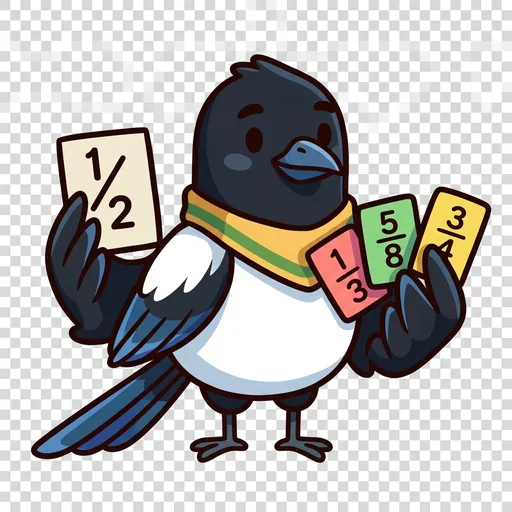 Rank Comparing and ordering fractions using benchmarks and reasoning
Ensemble stories — the cast together
What next? Pick a door
- More like this NumberVerse Where does this number sit on the line? CardForge How many ways can these cards combine? TileTales Do the open ends make five?
- A bit harder MintForge How does interest grow your money? DataForge What story does this data tell? SwarmQuest Can a whole room guess better than one?
- Something different PactForge What small promise will you make yourself? EffectsForge How do movies fake giant and tiny? CivicForge How would your town council vote?