
Before you start
Most popular
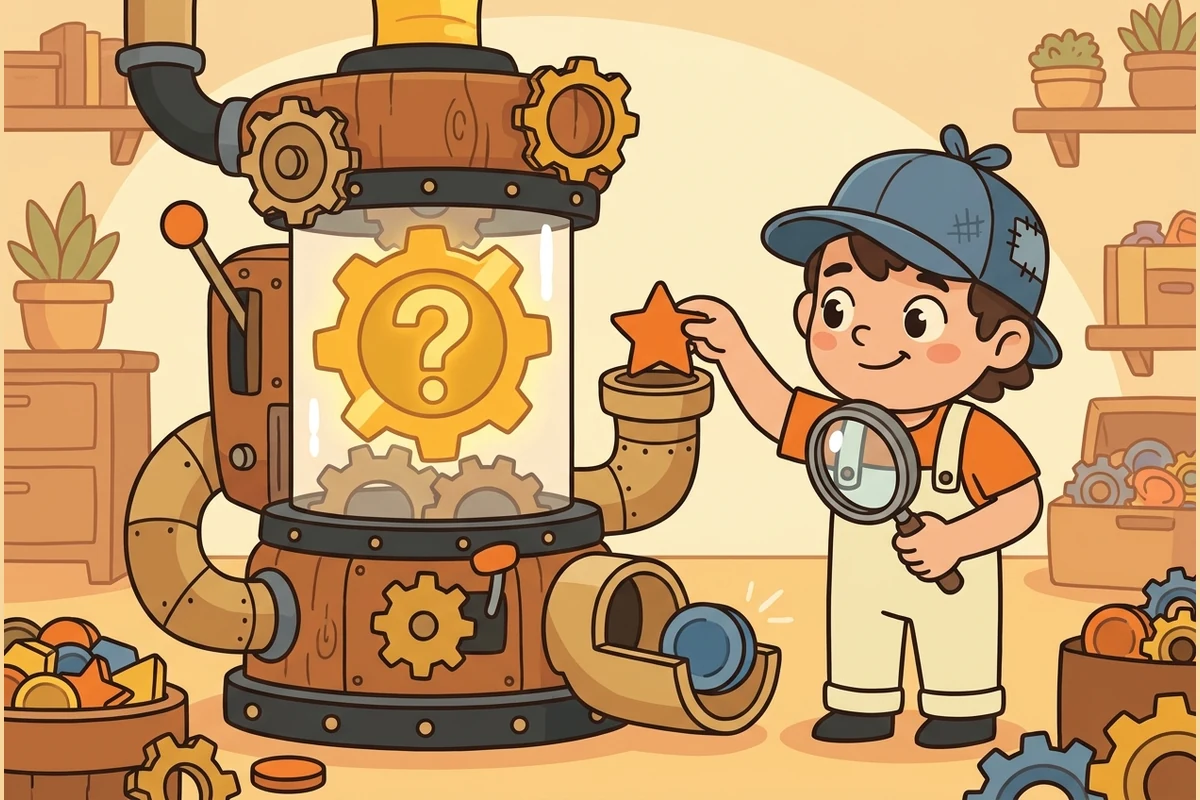 Guess My Rule The machine hides its rule. Feed numbers in, read what comes out, and deduce the rule that fits every pair.
 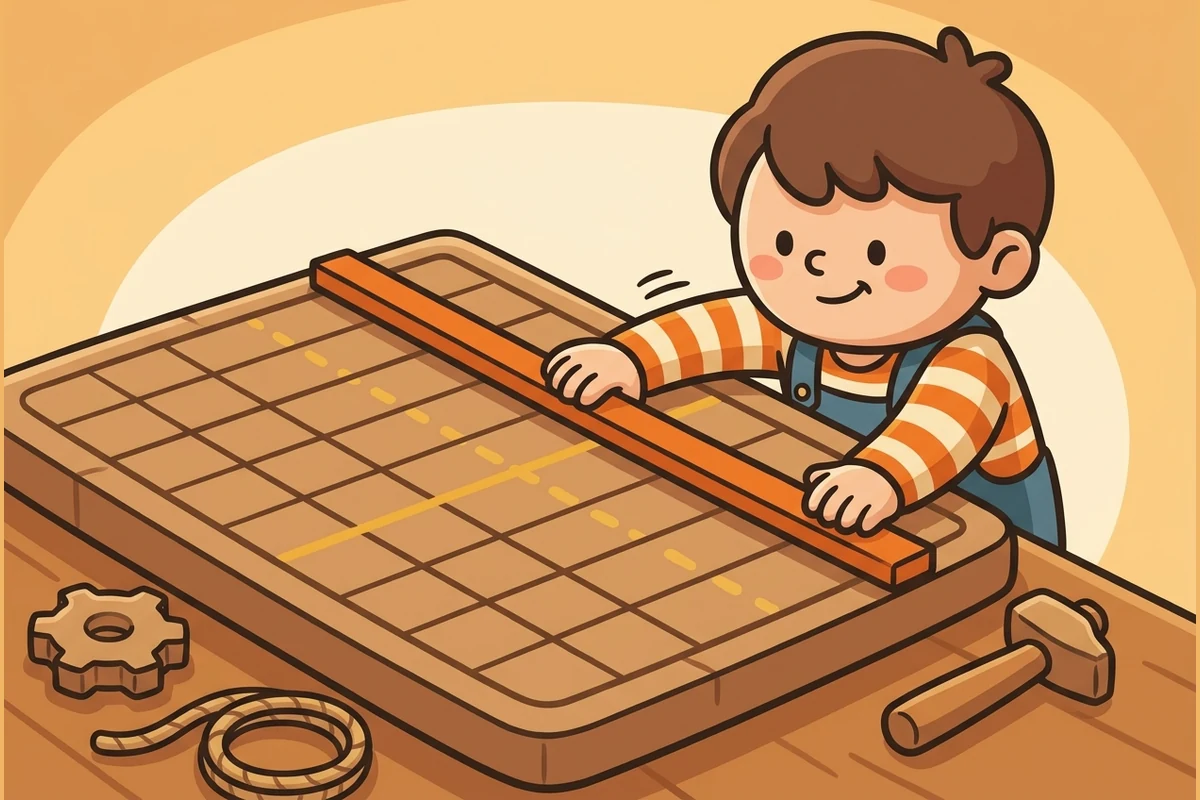 Graph Plotter Nudge slope & intercept to build y = mx + b and match a target line on the coordinate grid.
  Read the Motion Two runners on a distance-time graph — which is faster? “Faster” is the steeper line, not the higher one.
  Function Duel A head-to-head kit round for 2–4 players — one device or an online room by code. Highest first-try score wins.
 All activities
Function machines
Guess My Rule Deduce the hidden rule that fits every input–output pair — real function-detective work. Apply the rule Given the rule, what comes out? Feed a number through the gears. Work backwards Given the output, what went in? Run the machine in reverse. Chain two machines Send one machine’s output into the next and predict the result.
Graphs & motion
Build y = mx + b Nudge slope & intercept to match the target line. Read the line Name the equation from a plotted line — read slope and intercept. Vertical line test Is this relation a function? Use the vertical line test. Read the Motion Distance-time graphs — the steeper line is faster, not the higher one. Data Lab Drag a line of best fit through a scattered cloud, then reveal the true fit and read what the slope means. Rep Bridge One function three ways — apply the rule to build the input–output table, then match the graph that shows the same function.
Practice & play
Function Duel A head-to-head kit round for 2–4 players; take turns on one device or join a friend by room code. No chat, no accounts. Team Coordinates Co-op for two: the Column Captain owns the across number, the Row Ranger owns the up number — a coordinate needs BOTH, so you combine your halves to land on the star. One device or a friend by room code. Mixed Practice Shuffles questions from the kits you’ve played, brought back when they’re ready to review — great for making it stick.
Concepts — choose a kit
All 16 kits
Kit 1: Input-Output Machines: Understanding Functions Kit 2: Function Tables and Growing Patterns Kit 3: Variables, Expressions, and Simple Equations Kit 4: Graphing Functions on the Coordinate Plane Kit 5: Linear Functions and Rate of Change Kit 6: Non-Linear Functions: Quadratics and Exponentials Kit 7: Function Analysis: Domain, Range, and Transformations Kit 8: Capstone: Real-World Modeling and Function Fluency Kit 9: Foundational Concepts Review Kit 10: Applied Problem Solving Kit 11: Critical Analysis & Evaluation Kit 12: Advanced Integration & Synthesis Kit 13: Cross-Topic Connections Kit 14: Real-World Applications Kit 15: Misconceptions & Reasoning Kit 16: Advanced Synthesis
For grown-ups — progress report →
More ways to play
Same idea, another world
😄 Brain break

Meet the cast — the characters who teach this
-
 Stride the Pattern-Walker Linear functions (constant rate of change)
 -
 Echo the Sameness-Keeper Constant functions (zero rate of change; output unchanged regardless of input)
 -
 Arc the Curve-Catcher Quadratic functions (parabola — symmetric rate-of-change-changes)
 -
 Burst the Doubler Exponential functions (constant *multiplicative* rate of change)
 -
 Pivot the Rule-Switcher Piecewise functions (different rules for different input ranges)
 -
 Rewind the Step-Reverser Inverse functions (undoing a rule step-by-step to recover the original input)
 -
 Roundel the Round-Returner Periodic functions (a pattern that repeats at a fixed interval)
 -
 Sill the Threshold-Keeper Domain and range (which inputs are allowed and which outputs can appear)
 -
 Vale the Valley-Folder Absolute value (folding the number line at zero so distance is always positive)
 -
 Weir the Chain-Linker Composite functions (feeding one rule's output into the next)
Ensemble stories — the cast together