Baron Tarry
The ZUGZWANG
Loading audio…
Press play to listen along. The line being read lights up as you go.
Show full transcript
Loading transcript…
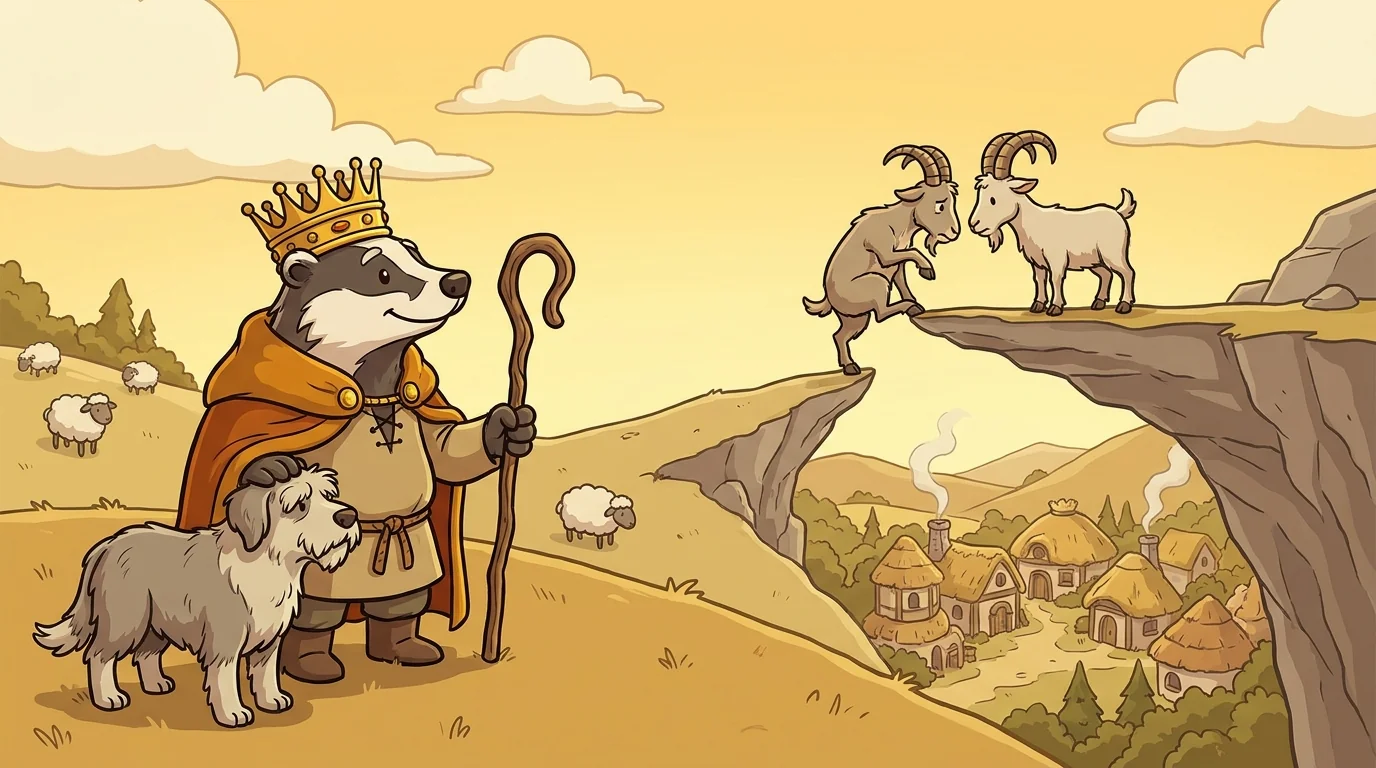
On the high cold pastures above a village called Wend, there was a shepherd named Tarry who was famous, in a small way, for never being in a hurry.
The other shepherds hurried. They ran after strays, they shifted their flocks at the first grumble of weather, they were always moving. Tarry moved as little as any person his neighbours had ever seen. He would stand on his hill with his crook and his patient old dog and simply... wait. And somehow his sheep were always fine, and his neighbours' were always scattered.
He had learned the thing young, in the narrow places. Up on the ridges there were ledges so thin that two animals meeting nose-to-nose could not pass — one of them had to give way, had to step back or step down. And Tarry had noticed, watching goats meet on the ridge year after year, that the one forced to move first was the one who lost. Every step it could take was a step downhill, onto worse footing, away from the good grass. Not because the other goat had pushed it. Only because it had to move, and had nowhere good to move to.
"It's a strange kind of strong," Tarry told his dog once, the two of them watching a stubborn ram lose a ledge simply by having to be the one who blinked. "Doing nothing. Making the other fellow spend the step."
He did not know, up on his cold hill, that far to the south there was a board where players prized this exact strange strength — where sometimes the surest win was to make a quiet, useless-looking move and hand the turn to your opponent, so that they, and not you, had to spend a step they could not spare. He only knew his ledges, and his sheep, and the deep worth of standing still.
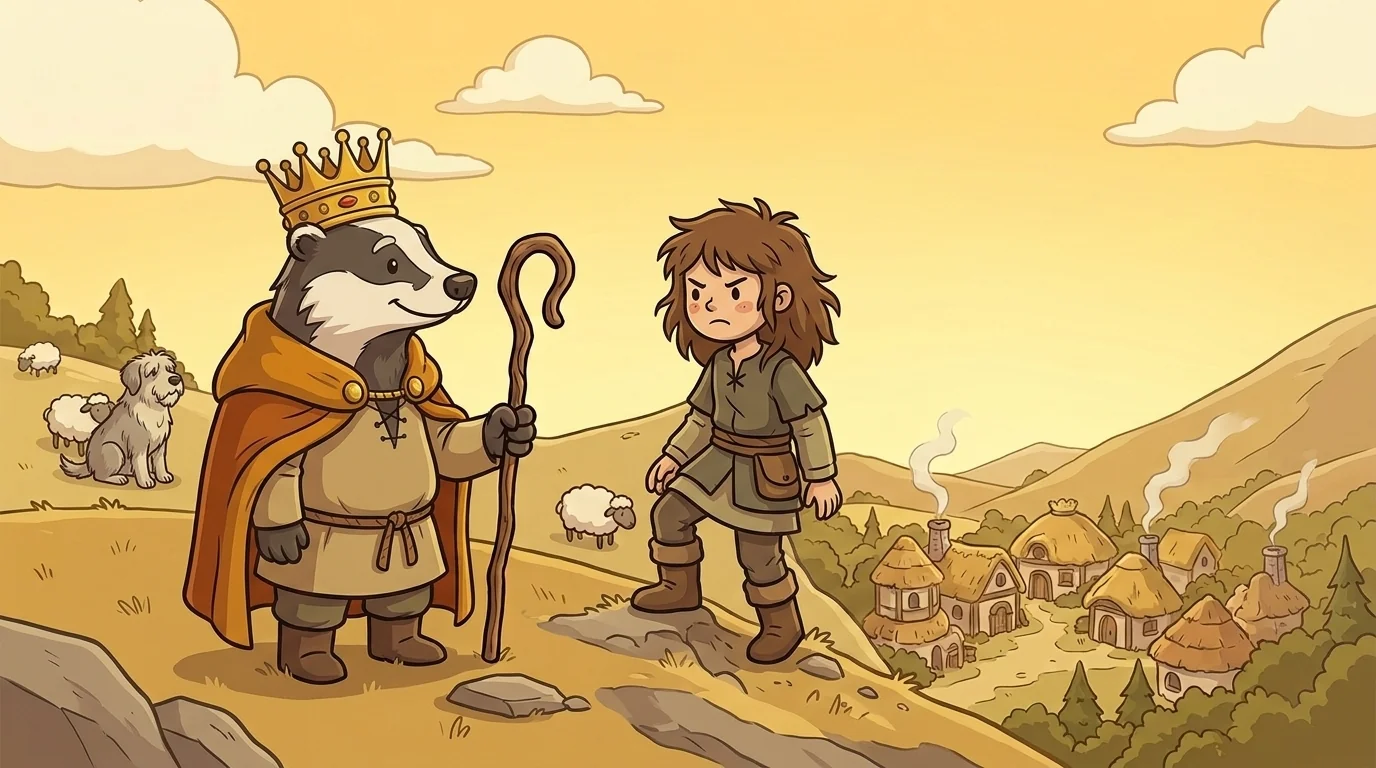
The word came from a girl named Pim.
Pim was eight and hated to lose, which made her a very determined player of the game the Wend children called Last Foot — where two players stand toe-to-toe in a chalk ring and the first to move a foot is out. Pim lost at it constantly, because she could never bear the stillness; she always twitched, shifted, moved first.
One frosty evening she climbed to Tarry's hill in a temper and demanded to know his secret, because everyone said Old Tarry had never lost a standing contest in his life.
"I don't have a secret," said Tarry. "I only wait. And I make sure that when the waiting gets hard, it's harder for the other fellow than for me."
He showed her. He stood her on a slope, on the good flat top, and stood himself just below her, and they waited. Pim was comfortable at first. But the flat ran out behind her heels, and soon her legs ached, and there was nowhere to shift to that wasn't the cold downward slope — while Tarry, below, could have stood there till spring.
Pim held out as long as she could. Then, aching, she stepped back — downhill, onto worse ground — and lost.
She was furious. And then she was thinking. "You didn't beat me," she said slowly. "You just made it so I had to move. And every place I could move was worse." Her eyes went wide. "It was the have-to-move. You gave me the have-to-move."
Tarry smiled, which he did not often do. "The have-to-move," he said. "Yes. That's the name for it." That night, on the beam of his sheep-shed, he carved it small with his knife: THE HAVE-TO-MOVE. And under it: win by making them spend the step.
After that, Pim and Tarry saw the have-to-move all through the valley.
They saw it in checkers by the fire, where a player with no safe square left had to give one up. They saw it in the way a cornered fox, forced to break first, ran straight into the open. They saw that patience was not the same as doing nothing — that a well-timed stillness could be the strongest move on the board, if it left the other person with only bad steps to take.
Two more winters passed on the cold hill.
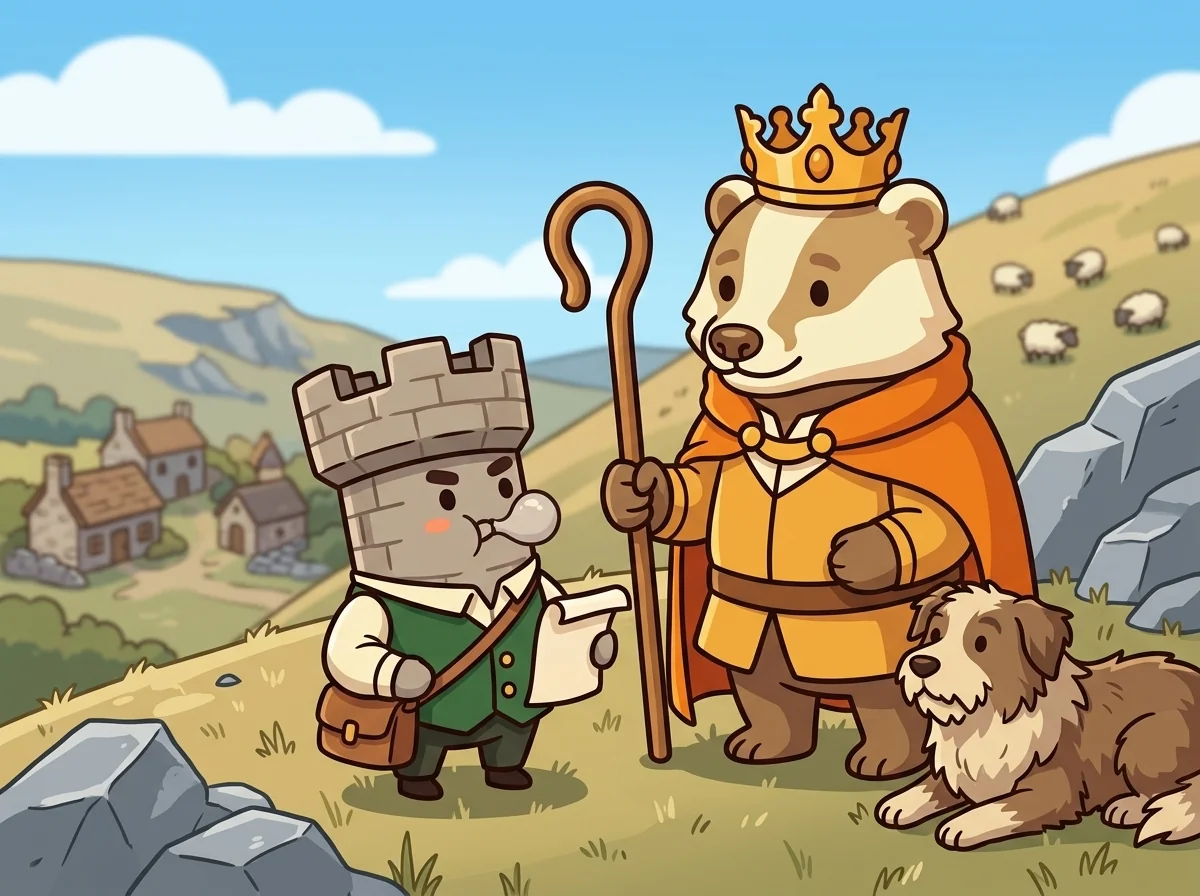
Then, one clear morning, a chunky rook in a brass-buttoned waistcoat came puffing up the pasture path — he was not built for hills — and found Tarry leaning on his crook.
He said his name was Captain Castle. He said he kept an academy in the warm south where children learned the board. And he said he had climbed a very great many hills because he had heard there was a shepherd above Wend who could win a standoff by standing still.
Tarry considered him for a while, the way he considered everything.
"I can't teach a child to like waiting," he said at last. "That part they have to grow into."
"Then teach them why it's worth it," said Captain Castle. "That's plenty."
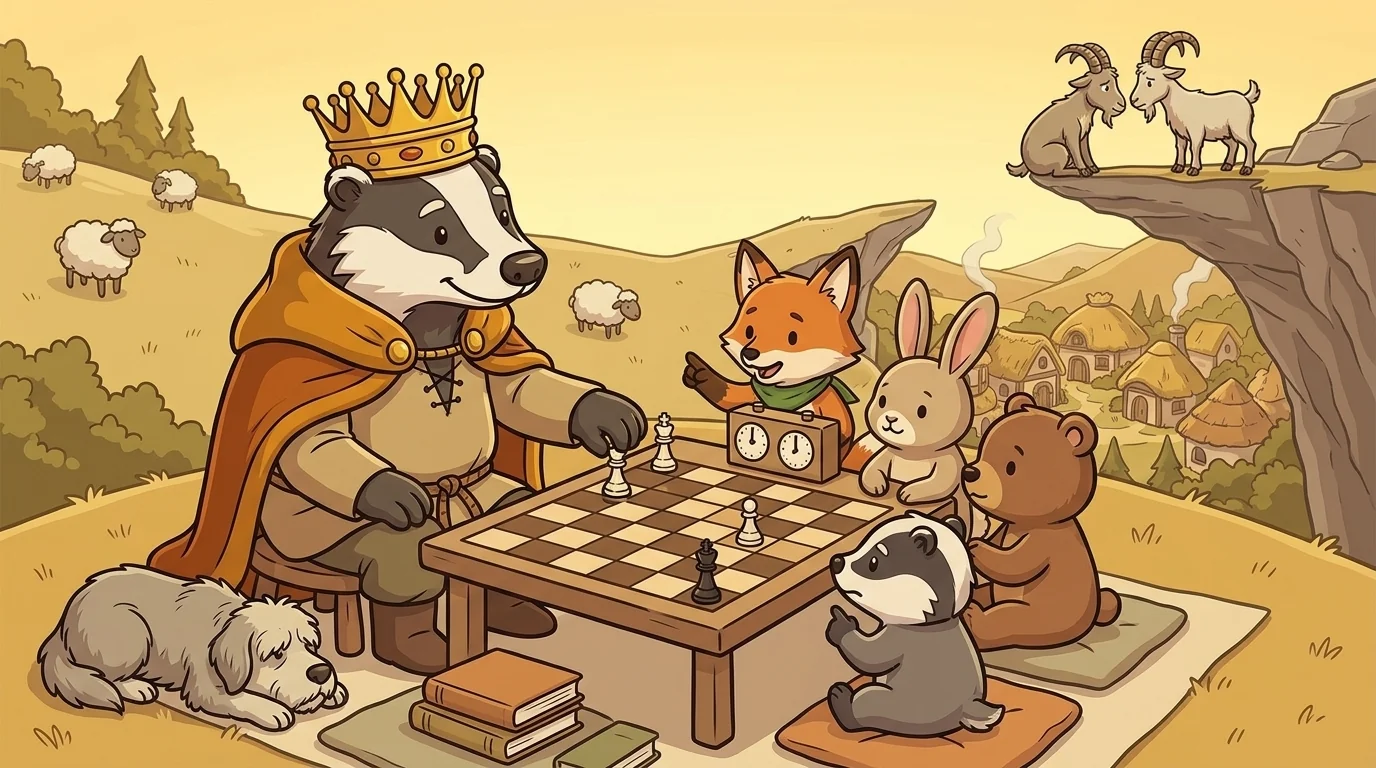
The board, Tarry found, was a ridge folded up small — full of narrow places where one side would run out of good steps.
He set up his first lesson with great care. A white king and one white pawn against a lone black king, in the tight corner of the board, at a moment when it was Black's turn to move. Black was not in check. Black was not being chased. But every square the black king could step to gave something up — let the pawn march, or lost the square that had been holding everything together.
"Look," said Tarry, and the children leaned in even though he had barely raised his voice. "It is Black's turn. Black is not being attacked. And yet Black is in terrible trouble. Do you see why?"
The children studied it. The fox with the green scarf got there first. "Because it has to move," she said. "And there's nowhere good to go."
"There it is," said Tarry. "Every step is downhill. If it were our turn, we might be the ones stuck. So the whole art —" and here he made a tiny, quiet move with his own king, a move that changed almost nothing, a move that only handed the turn back to Black — "is to make the smallest move you can, and give the have-to-move to them."
The room was silent as the black king, forced to step, gave up its square, and the white pawn walked home.
"You didn't chase him," said the fox, wonderingly. "You just... waited better."
Tarry felt the slow warm satisfaction of a standoff won on the good flat ground.
"Waited better," he agreed. "That's the whole of it."
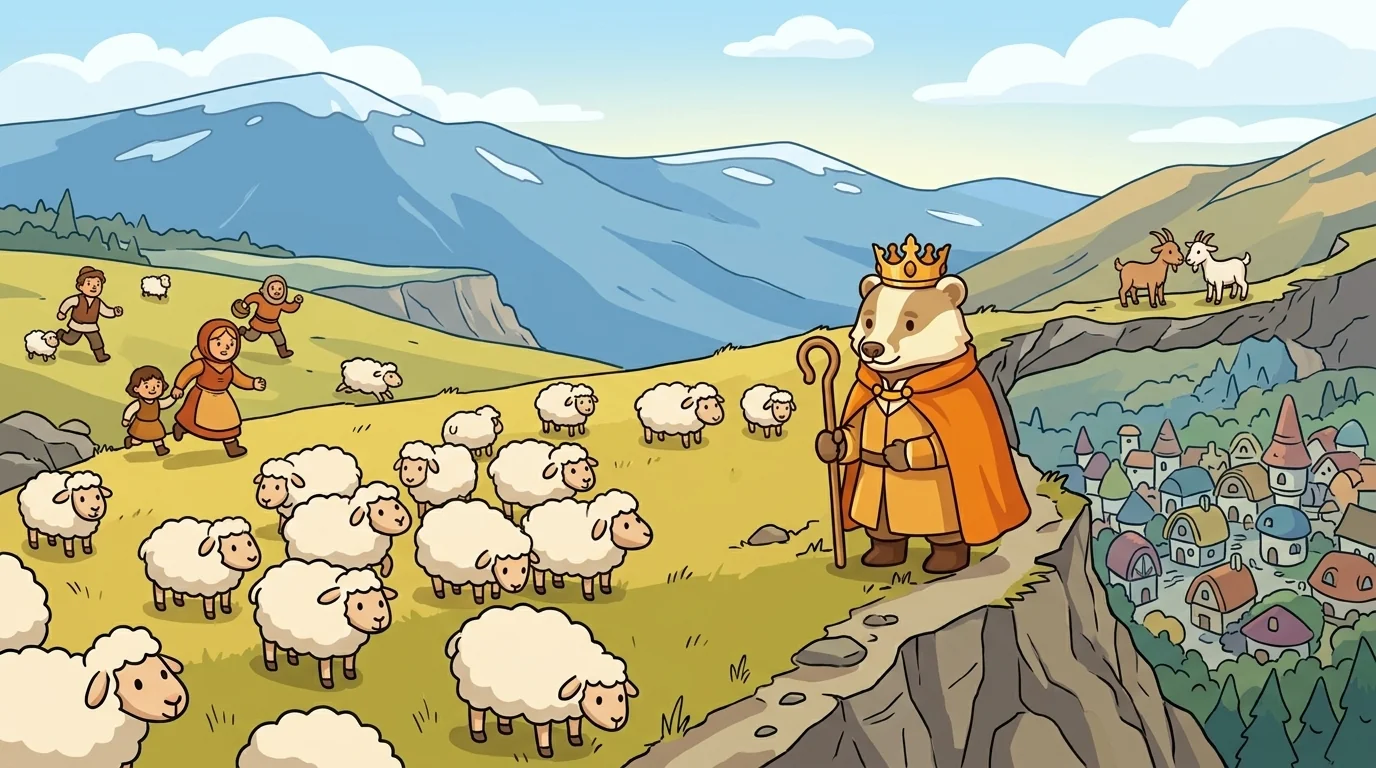
He still keeps his flock above Wend, on the weeks the academy lets him climb home.
He still moves as little as any shepherd in the valley. His neighbours still hurry, and still lose sheep, and still cannot quite understand how the old man on the hill does so well by doing so little.
The thing Tarry hopes the children carry down off his hill is not really about winning at all. It is that stillness is allowed. That you are not weak for waiting. That there are moments — hard, aching, toe-to-toe moments — when the bravest and the smartest thing you can do is hold your ground and let the other person be the one who has to spend the step.
Sometimes Pim, who is older now and still hates to lose, climbs the hill and asks, "Doesn't it ever feel like nothing, Baron Tarry? Just standing there?"
And Tarry looks out over the cold bright pasture, and the sheep, and the long patient line of the ridge, and he says:
"It never feels like nothing. It feels like the one moment I get to choose — and choosing to wait, when everyone expects you to rush, is the fullest kind of still there is."
Pim does not write it down; she is not the notebook sort. But she stands beside him a while, on the good flat ground, and lets herself feel, for once, entirely unhurried.
Hear it as an audio drama
A short play starring Baron Tarry, from GambitTales. Different voices, same idea. Listen any time after you read.
Loading audio…
Read the drama script
- Narrator: From Spark and Anvil and GambitTales — this is Baron Tarry, in chapter 1 of the GambitTales cast.
- Narrator: This drama uses an AI-generated voice. Voiced via Gemini 2.5.
- Narrator: On the high cold pastures above a village called Wend, there was a shepherd named Tarry who was famous, in a small way, for never being in a hurry.
- Narrator: The other shepherds ran after strays and shifted their flocks at the first grumble of weather. Tarry simply stood on his hill with his crook and his patient old dog, and waited.
- Baron Tarry: I do not have a secret. I only wait. And I make sure that when the waiting gets hard, it is harder for the other fellow than for me.
- Narrator: A restless girl named Pim, who hated to lose, climbed the hill in a temper and demanded to know how he never lost a standing contest.
- Narrator: Tarry stood her on the good flat top of a slope, and stood himself just below her, and they waited. Soon the flat ran out behind her heels.
- Baron Tarry: There is nowhere to shift to now that is not the cold downward slope. I could stand here till spring. You cannot.
- Narrator: Aching, Pim stepped back — downhill, onto worse ground — and lost. And then she was thinking.
- Narrator: Her eyes went wide, and she gave the thing a name.
- Baron Tarry: The have-to-move. Yes. That is the name for it. I did not beat you. I only made it so you had to move, and every place you could move was worse.
- Narrator: Years later, a chunky rook in a brass-buttoned waistcoat came puffing up the pasture path, and said his name was Captain Castle, and that far to the south there was a board where players prized this exact strange strength.
- Baron Tarry: The board is a ridge folded up small — full of narrow places where one side will run out of good steps.
- Narrator: He set his first lesson with great care: a white king and one pawn against a lone black king, and it was Black's turn to move. Black was not in check. Black was not being chased.
- Baron Tarry: And yet Black is in terrible trouble. Every square it can step to gives something up. So I make the smallest move I can — a move that changes almost nothing — and hand the turn back.
- Narrator: The black king, forced to step, gave up its square, and the white pawn walked home.
- Baron Tarry: Stillness is allowed. You are not weak for waiting. There are hard, aching, toe-to-toe moments when the bravest thing you can do is hold your ground — and let the other fellow be the one who has to spend the step.
- Narrator: You've been listening to a Spark and Anvil chapter, written by the Spark and Anvil writing team for ages 9 to 14.
- Narrator: Apps stay free forever.
- Narrator: Curriculum aligned to Common Core and Next Generation Science Standards.
- Narrator: Released under Creative Commons BY-NC-SA 4.0 for educational reuse. Visit Spark and Anvil for the full transcript.
The position from the story
This is the board Baron Tarry set up. Try the move from the story.
How sure are we? Every board position in this story is checked by the chess engine, so you can set it up on a real board.
You are Black, and you must move. Find a move.
👪 Read it together, then play it on: a grown-up takes one side, you take the other. Captain Castle asks: imagine it were White to move here instead. Could White still win? Look out for a stalemate.
The GambitTales ensemble
Baron Tarry is one of the friends in GambitTales. Each friend shows you one idea by how they act; meet them all and you have the whole subject.
-

Sir Pinwell
Pin pattern — freezes pieces along a line
-
Twin Knights of Fork Hill
Fork pattern — attack two targets at once
-

Lady Skewer
Skewer pattern — force a valuable piece out of the way
-

Veil & Vow
X-ray attack — see through one piece to strike the piece behind it
-

Captain Crossfire
Discovered attack — step aside to reveal a hidden threat
-

The Glass Lantern
Double attack — one light sees two targets at once
-

King Pumble & King Sable
Two kings — librarian and gardener; one step at a time
-

Queen Vesper
Queen — ranger-messenger; any direction, any distance
-

Captain Castle
Mentor + narrator — rook archetype; the mascot who introduces the cast + scaffolds the lesson
-

The Pawn Cohort
Ensemble piece — the four pawn-paired sets (Pawn Patrol + Sienna & Bran + Trotter & Trundle + Gable & Garrett) acting as one in the world layer
-
Merle the Gleaner
Hanging Piece — a piece with no defender is a free piece
-

Sir Sidetrack
Deflection — chase the guard off its duty, then take what it protected
-

Warden Snare
Trapped Piece — a piece with no safe square falls where it stands
-
Mason the Interposer
Interference — cut the line between a defender and its charge
-
Siren Lyra
Attraction — lure a piece onto the square where your next move wins it
-
Vale the Wayclearer
Clearance — move your own piece off the line so the power behind lands
-

Kester the Finisher
Checkmate — a check the king cannot escape, block, or capture
-
Linnet the Netweaver
Checkmate in Two — the first move forces the reply, the second springs the mate
-

Dame Bulwark
Bishop archetype — the line-cutter
-
Lady Divert
Rook archetype — the tower




