Dame Bulwark
The INTERFERENCE
Loading audio…
Press play to listen along. The line being read lights up as you go.
Show full transcript
Loading transcript…
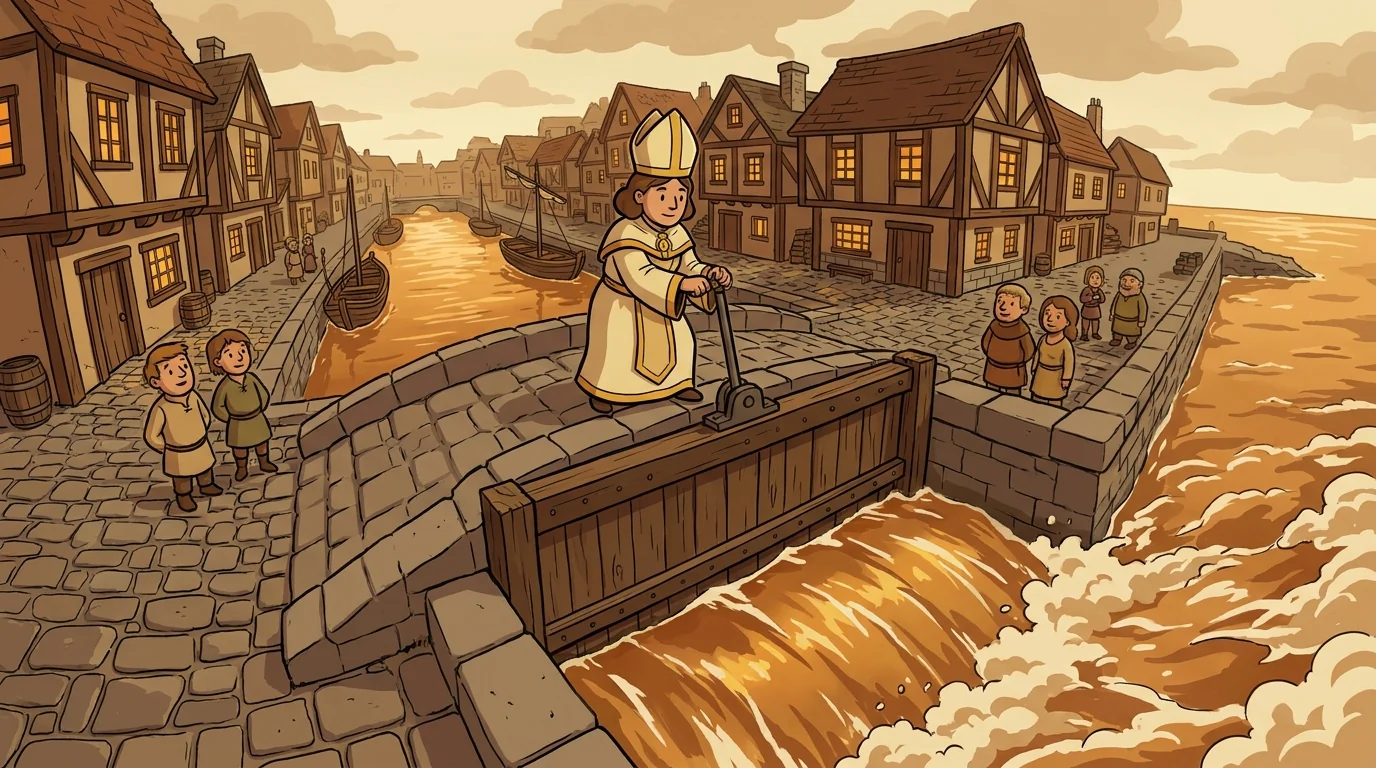
In a harbour town called Cinderhaven, where the sea came in twice a day whether you were ready or not, there lived a sluice-keeper named Bulwark whose whole job was knowing where to put a gate.
The town was laced with narrow channels — little canals that carried the tide in and out between the houses. When the sea rushed in too fast, a channel could flood a cellar in minutes. Bulwark's task was to drop the heavy wooden sluice-gates at exactly the right places, at exactly the right moments, so the water went where it should and not where it shouldn't.
She was very good at it. And over the years she had learned something the younger keepers had not: you did not have to fight the whole sea. You only had to get one gate into the middle of one channel at the right moment. The water might be rushing straight at a doorway with all its weight — but drop a gate across the channel between the sea and the door, and the door went quiet. Dry. Safe. Not because you had pushed the water back, but because you had cut the line it was travelling.
"The sea isn't strong because it's big," she liked to say, watching a channel go still behind a gate she had just dropped. "It's strong because it's connected. Break the middle, and the far end never even knows."
She did not know, in her drizzling harbour town, that far to the south there was a board where players did the very same thing — where you could stop a piece from reaching another not by blocking the piece and not by guarding the target, but by dropping something into the space between them. She only knew her channels, and her gates, and the exact right middles.
The word came from a boy named Tup.
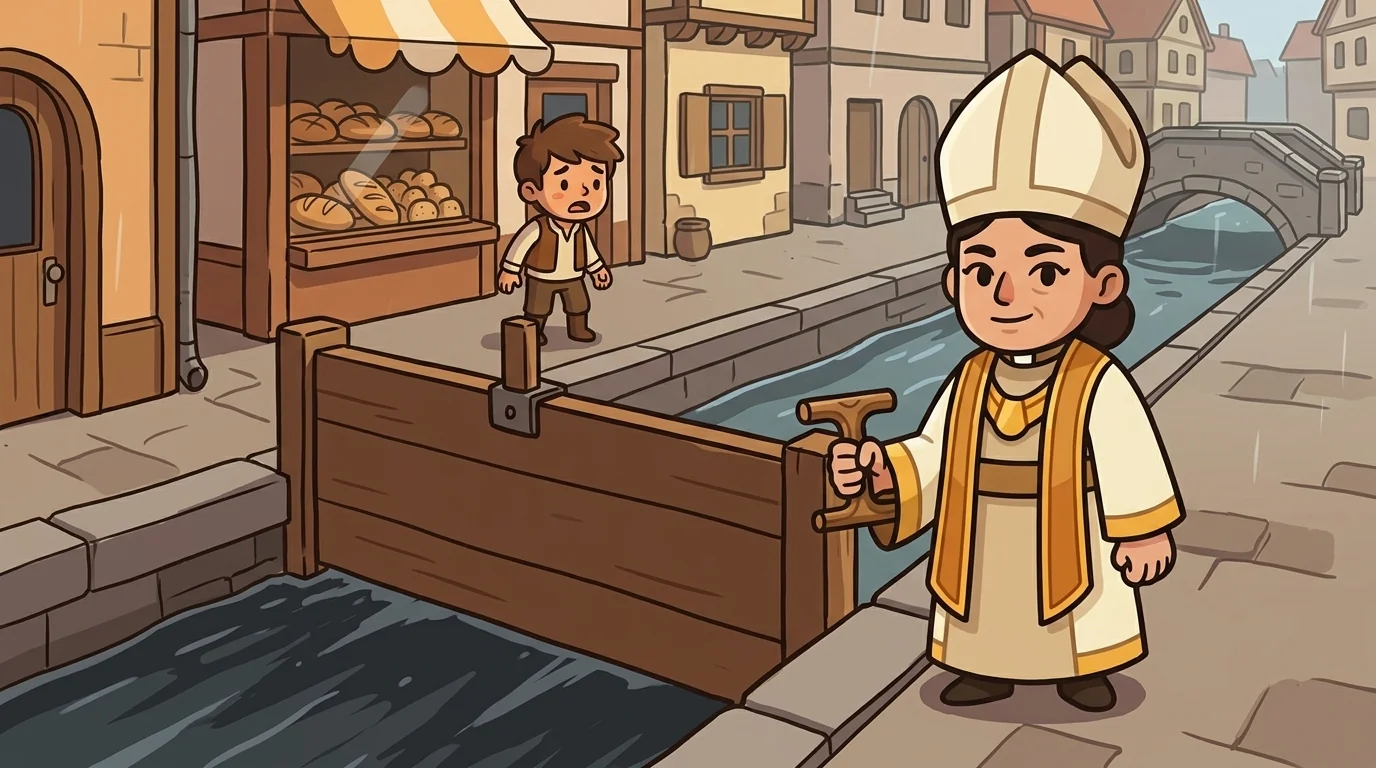
Tup was ten, and he was afraid of the flood tides, which is a sensible thing to be afraid of. One autumn the biggest tide in years came racing up the Baker's Channel, straight at the bakery where Tup's aunt made the town's bread, and Tup stood frozen in the street, certain the bakery was lost.
Bulwark did not run to the bakery. She ran to a spot halfway up the channel — a plain, unremarkable spot, nowhere near the bakery at all — and dropped a gate.
The water hit the gate. And on the far side, in front of the bakery, the racing channel simply... stopped racing. It sat. It lapped. The bread was safe.
Tup could not understand it. "You weren't even near the bakery," he said, half angry with relief. "You stopped it from all the way over there."
"I got in the middle," said Bulwark.
Tup stared at the still water in front of the bakery, and at the gate far up the channel, and something clicked behind his eyes. "You got in-between," he said. "You didn't stop the water and you didn't guard the bakery. You just — you broke the line between them. So the water couldn't get through."
"In-between," Bulwark repeated. She liked it. It was exactly right. That night she painted the word on the side of her gate-shed: IN-BETWEEN. Under it, smaller: cut the line, and the far end goes still.
After the Baker's Channel, Bulwark saw in-betweens everywhere.
She saw a fallen branch cut a path in two, so the sheep on the near side could not reach the wolf-scented far side, and stayed calm. She saw a curtain drawn across a doorway stop a draught that a locked door never could. She saw that so much of keeping a town safe was not about strength at all — it was about finding the one middle place where a whole rushing line could be quietly severed.
Tup helped her chart the channels. Two winters went by.
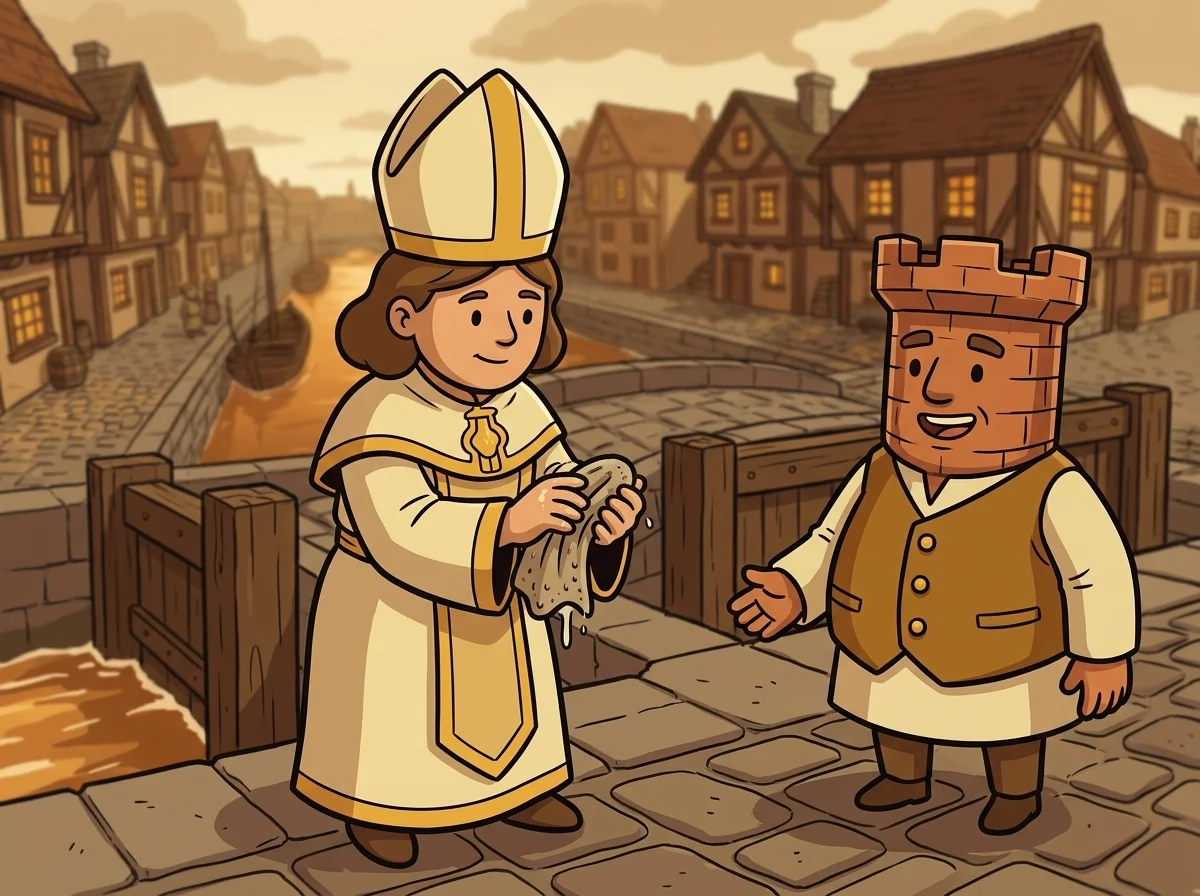
Then, on a morning of low grey mist, a chunky rook in a brass-buttoned waistcoat came up the harbour road, stepping carefully over the channels, and found Bulwark at her gate-shed.
He said his name was Captain Castle. He said he taught children the shapes of a board, far to the south. He said he had heard there was a sluice-keeper in Cinderhaven who could stop a thing from reaching another without ever touching either one.
Bulwark wiped the salt from her hands.
"I only drop gates," she said. "In the right middle."
"The right middle," said Captain Castle, delighted, "is the entire lesson."
The board, Bulwark decided when she first saw it, was a very dry sort of harbour — but it had channels all the same. The long straight lines where a rook or a bishop sent its force rushing down were channels, plain as day. And where there were channels, there were middles.
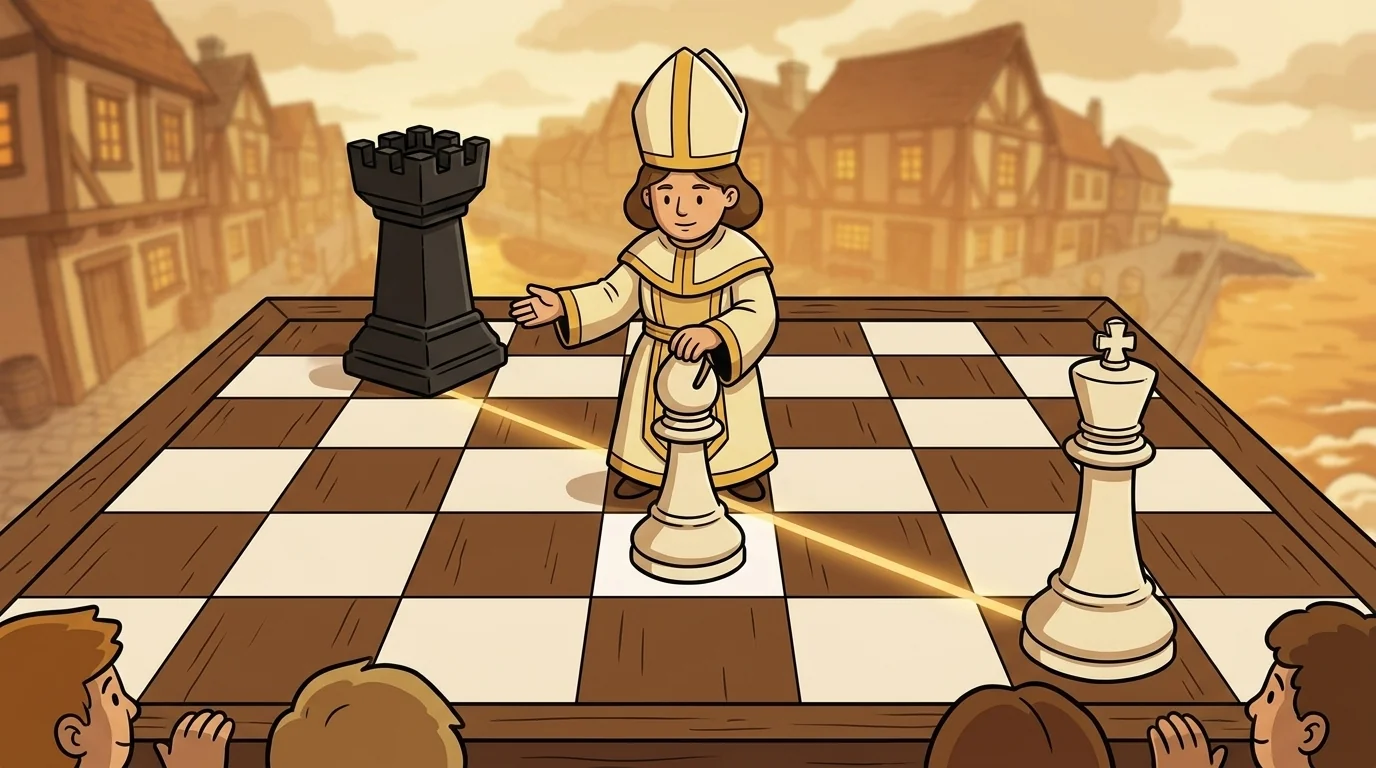
She set up her first lesson. A black rook stood at one end of an open line, aiming all its weight down the file at a white king with nowhere kind to run — a check, rushing in like a flood tide.
"This is a flood," said Bulwark. The children watched the black rook the way Tup had watched the Baker's Channel. "It is coming straight down this line at the king. We cannot take the rook — it is too far. We cannot run the king — there is nowhere dry."
"So the king's caught," said a small child.
"The king is not caught," said Bulwark, "if we have a gate." She lifted a white bishop and set it down on a single square — a plain square, halfway up the line, between the rook and the king. "There. Not near the king. Not attacking the rook. Just... in the middle. The line is cut. The flood stops here, and the far end — the king — goes still. And safe."
The fox with the green scarf, who had watched a great many lessons, breathed out slowly. "You didn't block the rook and you didn't guard the king," she said. "You got in-between."
Bulwark felt the warm, steady gladness she felt whenever a dropped gate held.
"In-between," she agreed. "That's the whole of it."
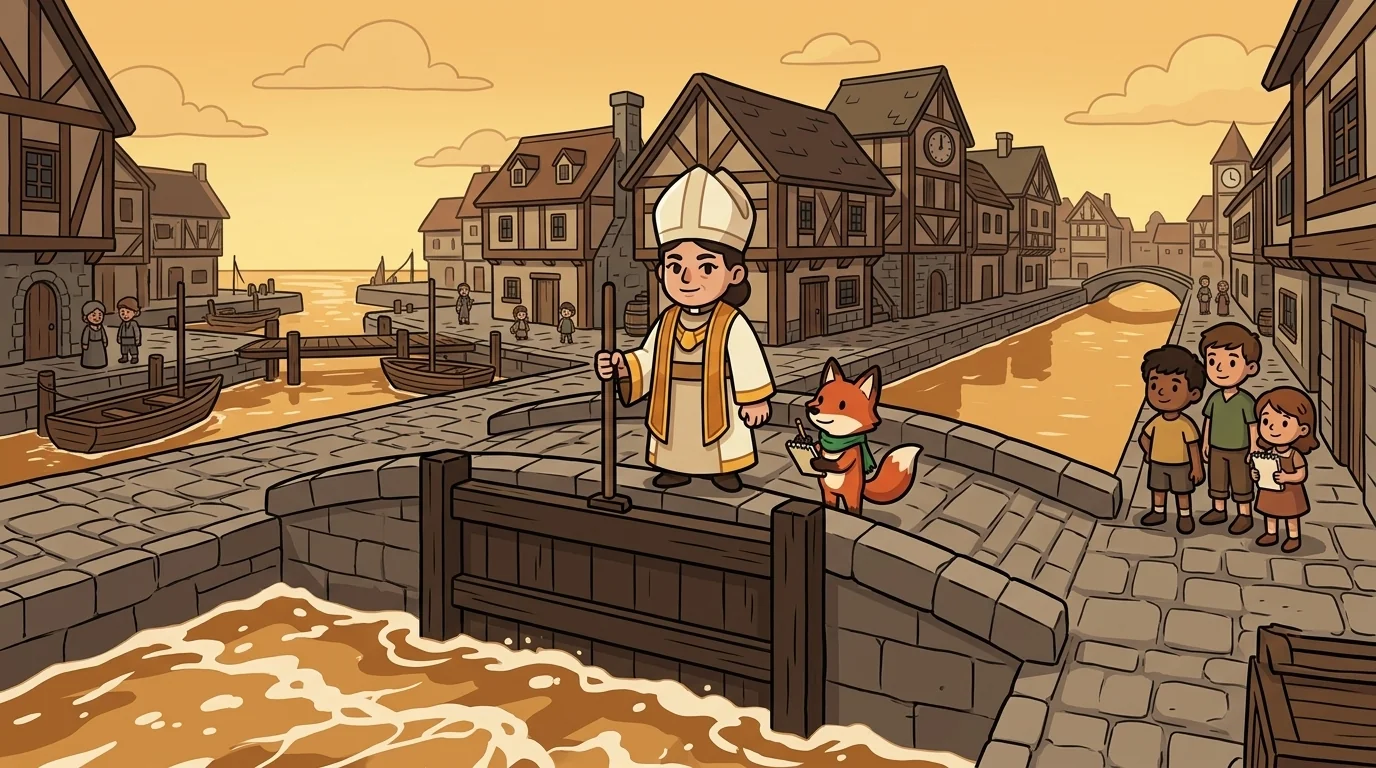
She still keeps the gates in Cinderhaven, on the days the academy can spare her.
The sea still comes in twice a day, whether anyone is ready or not. That has never troubled Bulwark. A tide is only a line of water travelling, and any line — she knows this the way she knows the weight of her own gates — can be met, somewhere in its middle, and quietly parted.
The thing she tries hardest to teach the children is that the middle is a gentle place. You do not have to be the strongest thing in the channel. You do not have to meet the flood where it is fiercest. You only have to find the one still spot between the danger and the thing you love, and stand there.
Sometimes the fox with the green scarf stays behind and asks, "Why the middle, Dame Bulwark? Why not the front, where it's brave?"
And Bulwark looks toward the north, where Cinderhaven's channels are filling with the evening tide, and she says:
"Because the front is where you get swept away. The middle is where you get to keep what matters. Standing between is not the coward's place. It is the keeper's."
The fox writes it down. Bulwark watches her, and feels — steady, and quietly full, like a channel that has been made safe — that she is exactly where she ought to be.
Hear it as an audio drama
A short play starring Dame Bulwark, from GambitTales. Different voices, same idea. Listen any time after you read.
Loading audio…
Read the drama script
- Narrator: From Spark and Anvil and GambitTales — this is Dame Bulwark, in chapter 1 of the GambitTales cast.
- Narrator: This drama uses an AI-generated voice. Voiced via Gemini 2.5.
- Narrator: In a harbour town called Cinderhaven, where the sea came in twice a day whether you were ready or not, there lived a sluice-keeper named Bulwark whose whole job was knowing where to put a gate.
- Narrator: The town was laced with narrow channels that carried the tide between the houses. When the sea rushed in too fast, a channel could flood a cellar in minutes.
- Dame Bulwark: You do not have to fight the whole sea. You only have to get one gate into the middle of one channel, at the right moment.
- Narrator: One autumn the biggest tide in years came racing up the Baker's Channel, straight at the bakery. A boy named Tup stood frozen in the street, certain the bakery was lost.
- Narrator: Bulwark did not run to the bakery. She ran to a plain, unremarkable spot halfway up the channel — nowhere near the bakery at all — and dropped a gate.
- Dame Bulwark: The water hits the gate here. And on the far side, in front of the bakery, the racing channel simply stops racing. It sits. It laps. The bread is safe.
- Narrator: Tup could not understand it. She had not been anywhere near the bakery, and yet the flood in front of it had gone still.
- Narrator: And then something clicked behind his eyes, and he hunted for the word.
- Dame Bulwark: In-between. Yes. I did not stop the water and I did not guard the door. I broke the line between them, so the water could not get through.
- Narrator: Years later, a chunky rook in a brass-buttoned waistcoat came up the harbour road, stepping carefully over the channels, and said his name was Captain Castle, and that far to the south there was a board with channels of its own.
- Dame Bulwark: The board is a very dry sort of harbour. But the long straight lines where a rook sends its force rushing down are channels, plain as day. And where there are channels, there are middles.
- Narrator: She set her first lesson: a black rook aiming all its weight down an open line at a white king with nowhere kind to run — a check, rushing in like a flood tide.
- Dame Bulwark: We cannot take the rook — it is too far. We cannot run the king — there is nowhere dry. But the king is not caught if we have a gate.
- Narrator: She set a white bishop on a single plain square, halfway up the line, between the rook and the king.
- Dame Bulwark: Not near the king. Not attacking the rook. Just in the middle. The line is cut. The flood stops here, and the far end goes still, and safe.
- Dame Bulwark: Standing between is not the coward's place. It is the keeper's. You only have to find the one still spot between the danger and the thing you love — and stand there.
- Narrator: You've been listening to a Spark and Anvil chapter, written by the Spark and Anvil writing team for ages 9 to 14.
- Narrator: Apps stay free forever.
- Narrator: Curriculum aligned to Common Core and Next Generation Science Standards.
- Narrator: Released under Creative Commons BY-NC-SA 4.0 for educational reuse. Visit Spark and Anvil for the full transcript.
The position from the story
This is the board Dame Bulwark set up. Try the move from the story.
How sure are we? Every board position in this story is checked by the chess engine, so you can set it up on a real board.
You are White, and your king is in check. Don't run. Put a gate in the line.
👪 Read it together, then play it on: a grown-up takes one side, you take the other. Captain Castle asks: the king had no square to run to. Which black piece guards d1?
The GambitTales ensemble
Dame Bulwark is one of the friends in GambitTales. Each friend shows you one idea by how they act; meet them all and you have the whole subject.
-

Sir Pinwell
Pin pattern — freezes pieces along a line
-

Twin Knights of Fork Hill
Fork pattern — attack two targets at once
-

Lady Skewer
Skewer pattern — force a valuable piece out of the way
-

Veil & Vow
X-ray attack — see through one piece to strike the piece behind it
-
Captain Crossfire
Discovered attack — step aside to reveal a hidden threat
-

The Glass Lantern
Double attack — one light sees two targets at once
-

King Pumble & King Sable
Two kings — librarian and gardener; one step at a time
-
Queen Vesper
Queen — ranger-messenger; any direction, any distance
-
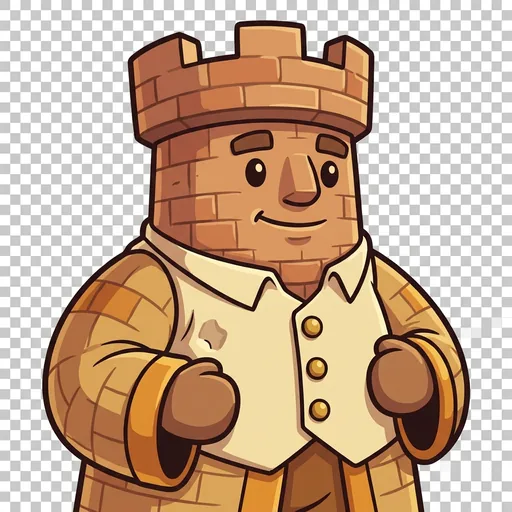
Captain Castle
Mentor + narrator — rook archetype; the mascot who introduces the cast + scaffolds the lesson
-

The Pawn Cohort
Ensemble piece — the four pawn-paired sets (Pawn Patrol + Sienna & Bran + Trotter & Trundle + Gable & Garrett) acting as one in the world layer
-
Merle the Gleaner
Hanging Piece — a piece with no defender is a free piece
-

Sir Sidetrack
Deflection — chase the guard off its duty, then take what it protected
-

Warden Snare
Trapped Piece — a piece with no safe square falls where it stands
-

Mason the Interposer
Interference — cut the line between a defender and its charge
-
Siren Lyra
Attraction — lure a piece onto the square where your next move wins it
-

Vale the Wayclearer
Clearance — move your own piece off the line so the power behind lands
-

Kester the Finisher
Checkmate — a check the king cannot escape, block, or capture
-
Linnet the Netweaver
Checkmate in Two — the first move forces the reply, the second springs the mate
-

Baron Tarry
King archetype — the patient endgame
-
Lady Divert
Rook archetype — the tower