Linnet the Netweaver
CHECKMATE IN TWO — a first move that forces the only reply, and a second move that springs the mate
Loading audio…
Press play to listen along. The line being read lights up as you go.
Show full transcript
Loading transcript…
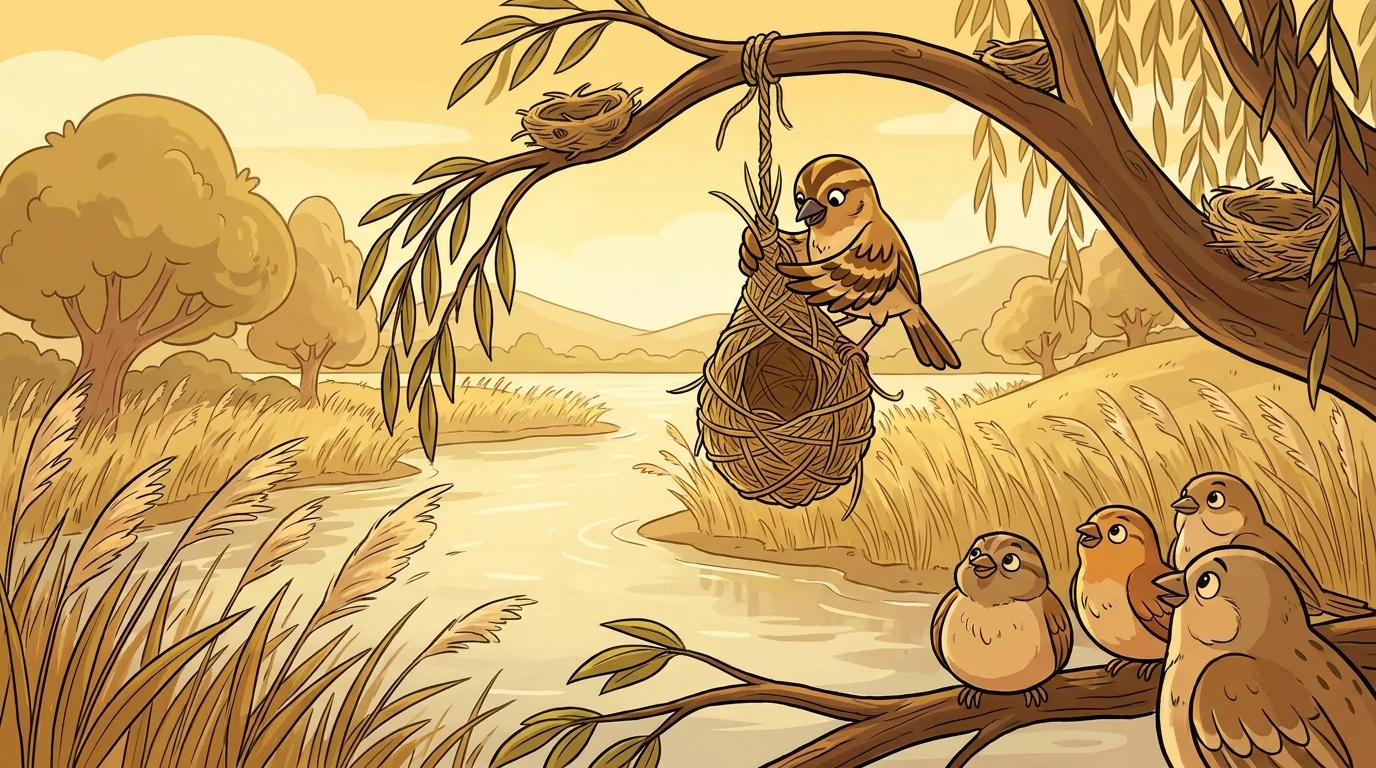
Along the willow-banks of the Slow Lake, where the reeds grew tall and the wind combed them all one way, there lived a weaverbird named Linnet whose nests were the wonder of the whole shore.
Anyone can build a rough nest — a heap of twigs, a dab of mud. But Linnet wove. She wove hanging baskets of grass, knot over knot, in patterns so fine that the older birds came just to watch her work. And the thing that made Linnet remarkable was not her quick beak or her clever feet. It was this: before she pulled her very first strand of grass, Linnet could already see the whole finished nest in her mind — every knot, every loop, exactly where it would go.
Because of this, Linnet never wasted a strand. She knew that the first strand was not important for its own sake. It was important for what it forced. Once she looped the first strand around a particular reed, that reed could bend only one way — which meant the second strand had exactly one place it could go — which meant the whole nest, from the very first knot, was already decided. She did not build one piece at a time and hope. She saw the net entire, then cast it, knowing that her first move would leave the world only one reply, and that her second move would finish it.
She had noticed, in years of weaving, that most creatures could not do this. They thought only one step ahead. They made a move, and looked, and then thought about the next. But Linnet thought in pairs. First this — which forces that — which lets me do the thing I meant all along. The first move was never the point. The first move was the one that took every choice but one away.
She had never given this a name. She simply saw the finished thing, and wove toward it.
It would take a small warbler named Reed to name it.
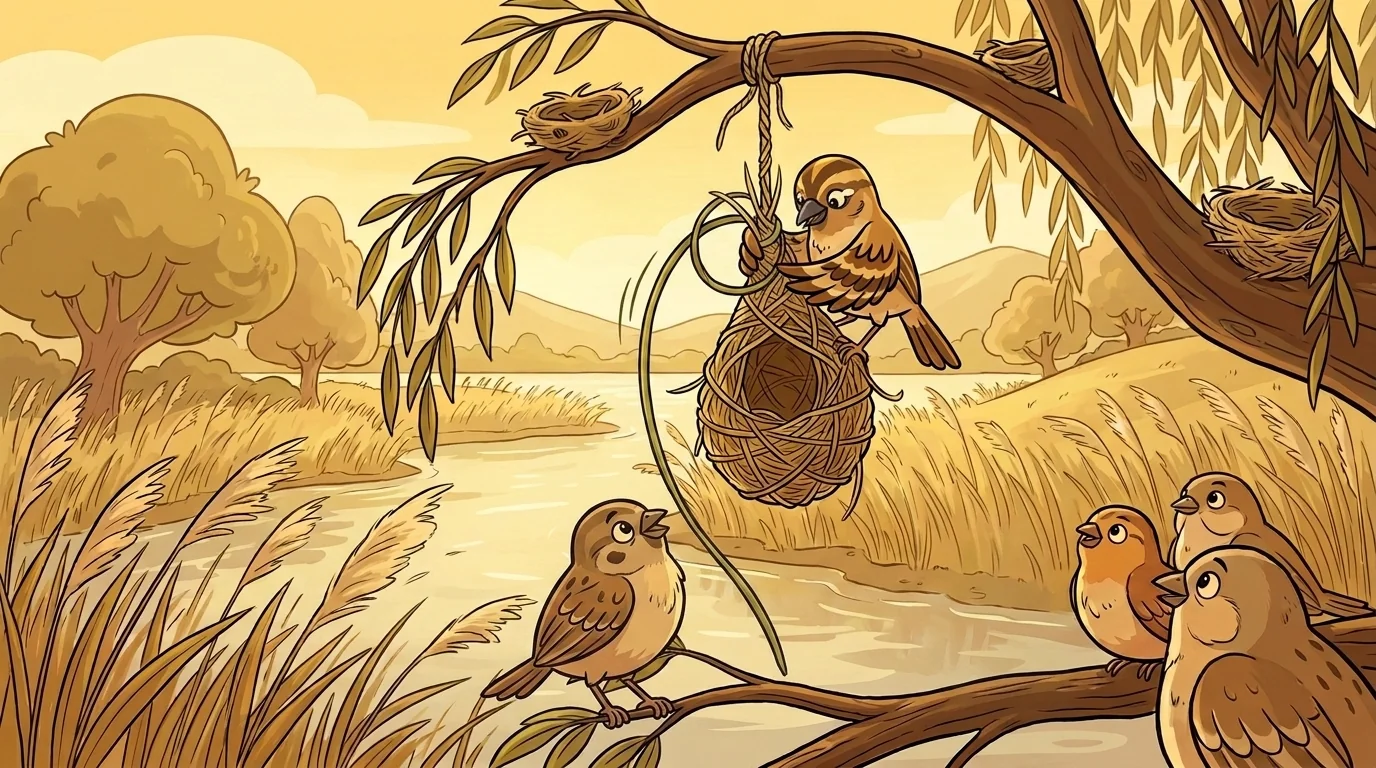
Reed was seven, and impatient, and always built her nests one twig at a time, and they always sagged. One morning she watched Linnet make a hanging basket in what seemed like two clean motions, and she could not understand it.
"You only did two things," Reed complained. "Two! And it's perfect. Mine take a hundred and they fall apart."
"I did two things," Linnet agreed. "But I saw them both before I did either. Watch the first strand." She looped a blade of grass around a reed. "Now — because of that loop, this reed can only bend this way. It has no other choice. Do you see? The first strand didn't finish anything. It just took away every possibility except one."
"And then?"
"And then the second strand," said Linnet, tucking it home, "goes into the one place that's left, and the nest is done. The trick was never the second move. The trick was making the first move so that only one answer was possible."
Reed stared at the finished basket, swinging gently in the wind. "You saw both moves," she said slowly, "before you started. Like — like you'd already caught the thing in a net before you even threw it."
Linnet ruffled her feathers, pleased.
"A net," she said. "Two moves deep. First the strand that leaves one reply — then the strand that closes it. Yes. That is exactly what I weave."
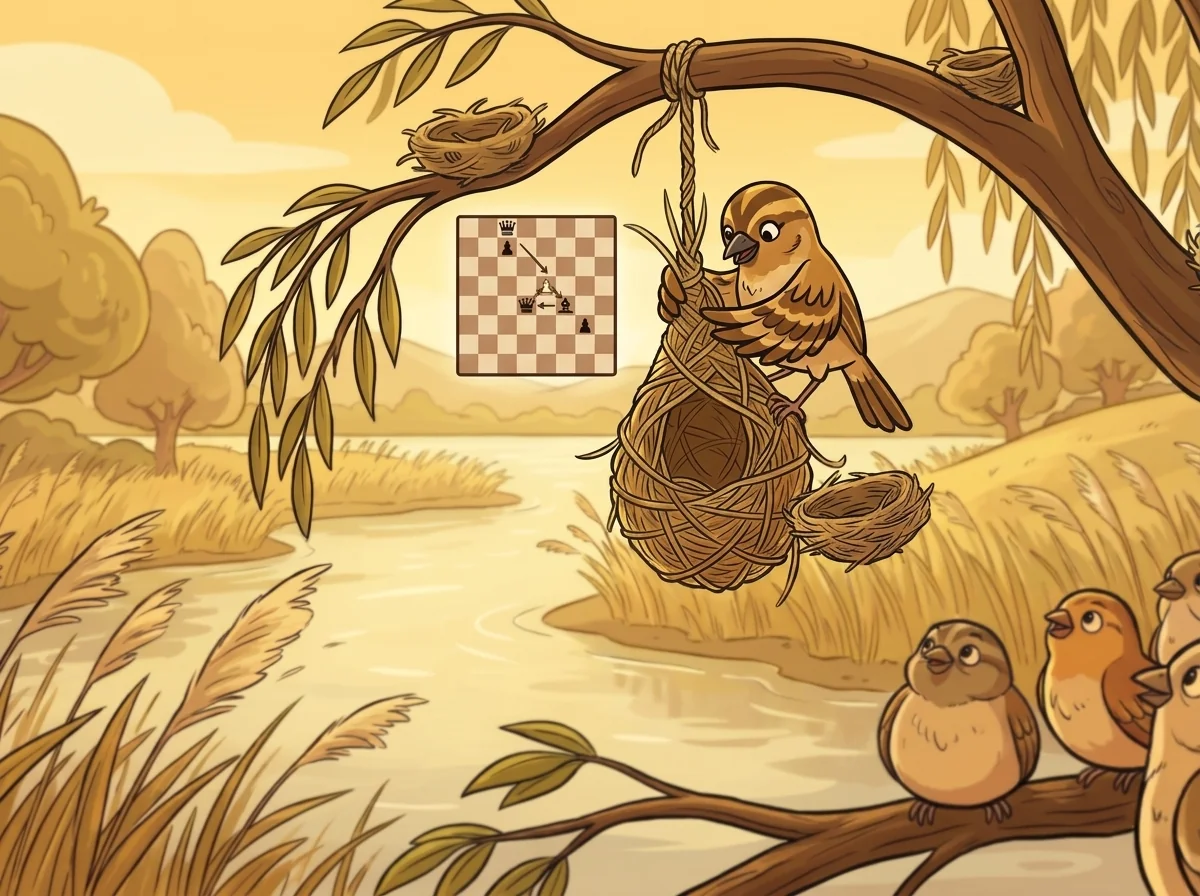
Several winters on, a chunky cheerful rook in a brass-buttoned waistcoat rowed out to the willow-banks to see the famous nests.
Captain Castle introduced himself and said he ran an academy where children learned the game of sixty-four squares, and that his very best students had one wall they kept hitting: they could see a mate that was right there, in one move — but they could not see a mate that took two. "They cannot think in pairs," he said. "They cannot make a first move whose only purpose is to force the reply that lets the second move mate. And I have looked a long while for someone who sees two moves as one whole thing."
Linnet finished a knot and let the nest swing.
"I have spent my life," she said, "seeing the whole net before I cast the first strand. A board of sixty-four squares is only a reed-bank with the wind combed straighter. I should love to weave a mate two moves deep."
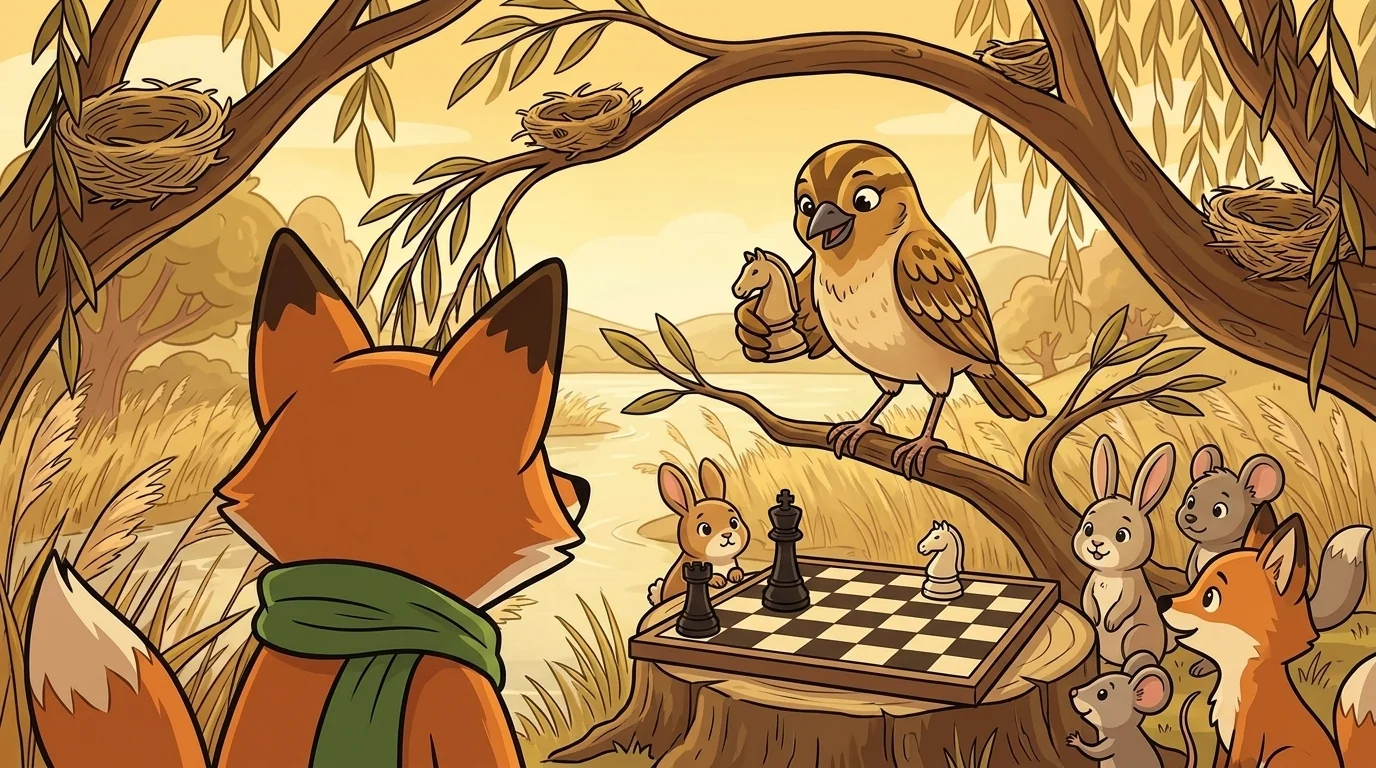
The chessboard, Linnet found, was a willow-bank with the reeds set in rows.
She met her first class on a windy morning. Captain Castle set a position where the black king was nearly caught — but not caught in one. The children hunted for a one-move mate, found none, and slumped.
"There's no mate," said a fox in a green scarf. "We checked everything. Nothing wins right now."
"Not in one," said Linnet, gently. "So let us weave it in two. Watch the first strand." She made a quiet, forcing move — not a check, not a capture, but a move that left the black king only a single square to go to. "See what I have done. The king now has exactly one reply. Every other square is taken from it. I have not mated it — I have forced it. Like looping the first strand so the reed can bend only one way."
The children watched the black king shuffle to its one legal square, exactly as Linnet had said it must.
"And now," said Linnet, "the second strand." She brought her knight around and set it down with a soft click, and this time it was mate — a mate that had not existed a move ago, that only existed because the king had been forced onto that one square. "The net is closed. I saw it whole before I cast the first move. The first move was never the point. It was the strand that left only one answer — so that the second move could finish."
The fox in the green scarf wrote make the first move leave only one reply — then the second move mates in her notebook, and read it back twice, because it opened a door in her head she had not known was there. Captain Castle, in his little boat, sat very still, the way you sit still watching something being woven.
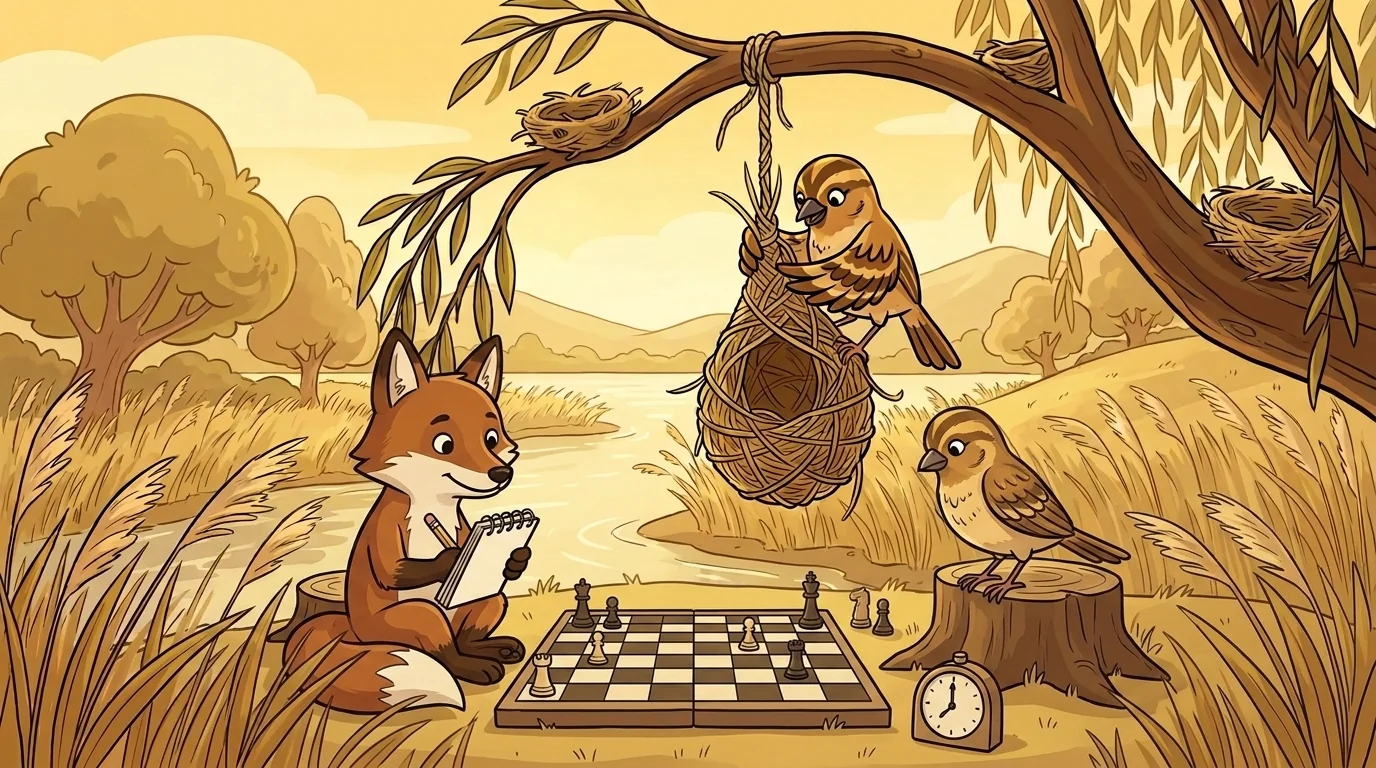
She still weaves her nests along the willow-banks, seeing each one whole before she begins.
But when the lessons end and the children have gone home, Linnet studies the folded board the way she studies a reed before the first strand — looking not for a move that wins now, but for a first move that forces, that leaves the enemy only one reply, so that a second move, already seen, can close the net.
Sometimes the fox with the notebook stays behind, and asks, "How do you hold two whole moves in your head at once, Linnet? I lose the first one thinking about the second."
And Linnet will settle on her perch, and consider, and say:
"Do not think one move at a time — that is how nests sag and mates slip away. See the finish first. Then find the first move that forces it: the move that leaves your opponent only one possible reply. Once there is only one reply, the future stops being a guess. You have already caught the game in a net two moves deep. All that remains is to close it."
The fox writes it down. Linnet watches her write, and feels — in a way she would never say plainly — the calm, complete satisfaction of a weaver whose nest hangs finished and true in the wind. She closes the board. She flies home along the willow-banks, into the combed reeds.
The GambitTales ensemble
Linnet the Netweaver is part of GambitTales's distributed-narrative cast. Each character embodies a different curricular primitive; together they teach the full subject.
-

Sir Pinwell
Pin pattern — freezes pieces along a line
-

Twin Knights of Fork Hill
Fork pattern — attack two targets at once
-

Lady Skewer
Skewer pattern — force a valuable piece out of the way
-

Veil & Vow
Discovered attack — step aside to reveal a hidden threat
-

Captain Crossfire
Double attack — one move threatens two targets
-

The Glass Lantern
X-ray attack — light pierces through to the piece behind
-

King Pumble & King Sable
Two kings — librarian and gardener; one step at a time
-
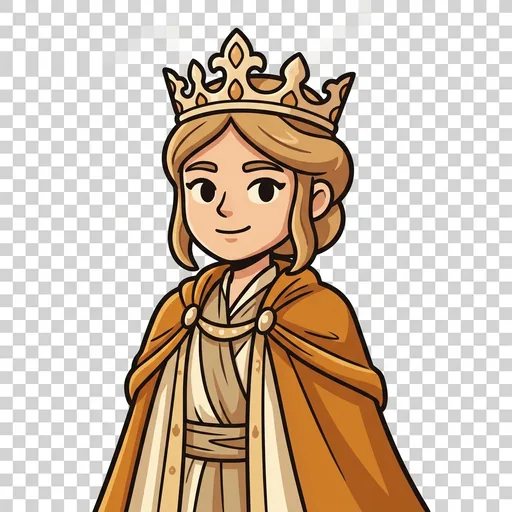
Queen Vesper
Queen — ranger-messenger; any direction, any distance
-

Captain Castle
Mentor + narrator — rook archetype; the mascot who introduces the cast + scaffolds the lesson
-

The Pawn Cohort
Ensemble piece — the four pawn-paired sets (Pawn Patrol + Sienna & Bran + Trotter & Trundle + Gable & Garrett) acting as one in the world layer
-
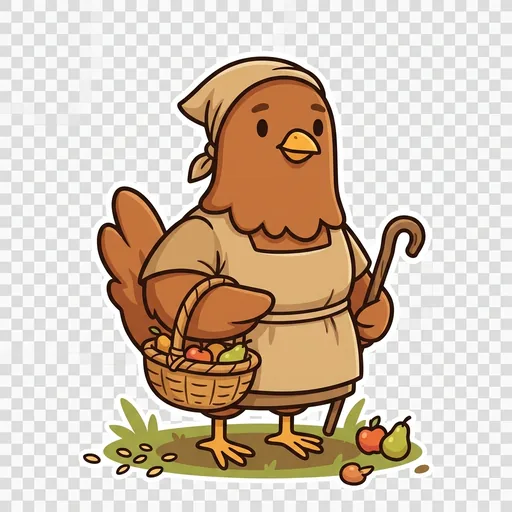
Merle the Gleaner
Hanging Piece — a piece with no defender is a free piece
-

Sir Sidetrack
Deflection — chase the guard off its duty, then take what it protected
-

Warden Snare
Trapped Piece — a piece with no safe square falls where it stands
-

Mason the Interposer
Interference — cut the line between a defender and its charge
-
Siren Lyra
Attraction — lure a piece onto the square where your next move wins it
-

Vale the Wayclearer
Clearance — move your own piece off the line so the power behind lands
-

Kester the Finisher
Checkmate — a check the king cannot escape, block, or capture