Kester the Finisher
CHECKMATE
Loading audio…
Press play to listen along. The line being read lights up as you go.
Show full transcript
Loading transcript…
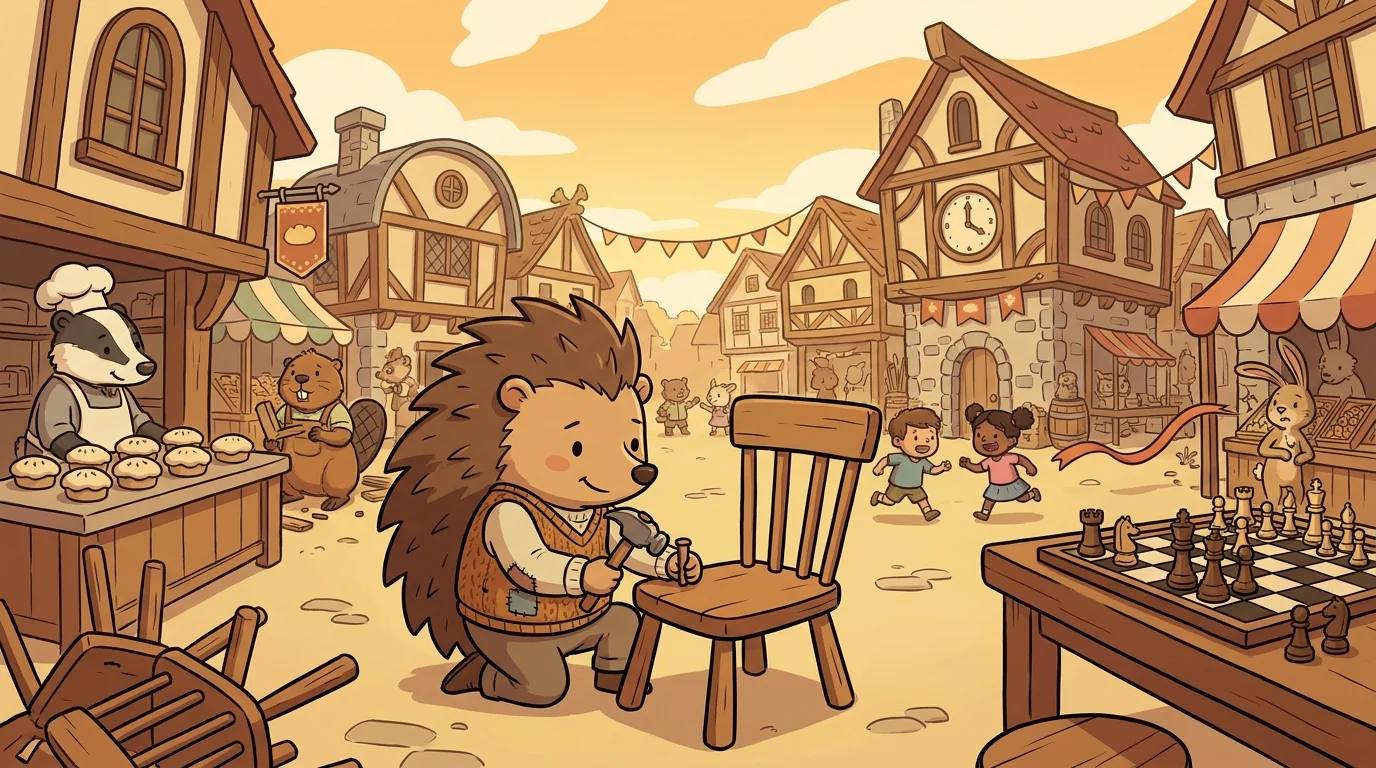
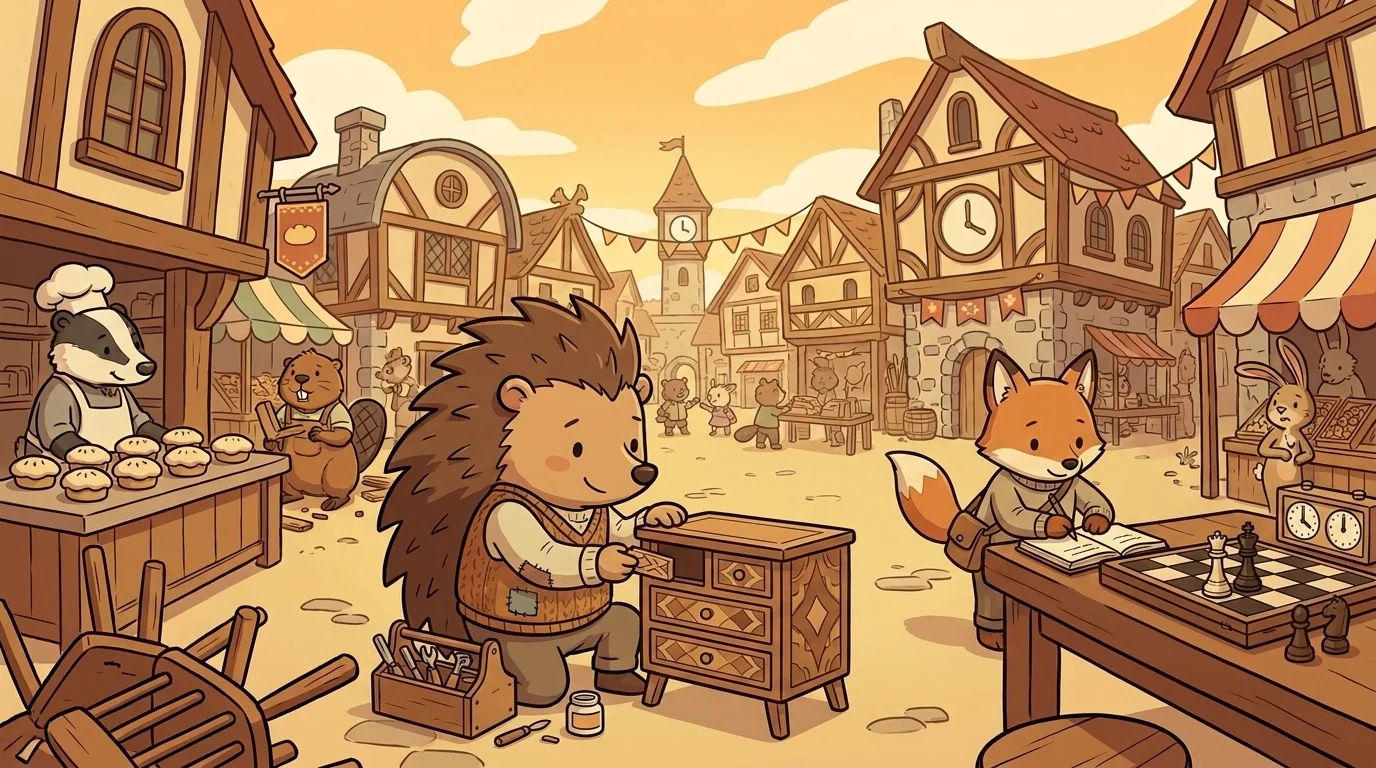
In the market town of Endby, a young hedgehog named Kester possessed an unusual reputation. Everyone knew him as the boy who finished things.
Other folk in town were splendid at starting grand projects. The carpenter began a dozen pine chairs every spring. The baker mixed massive bowls of dough for spiced fruit cakes. The neighborhood children started long games across the muddy market square every single morning.
Yet Endby remained a town littered with half-done work. You could find three-legged stools in every cottage, half-baked loaves on kitchen counters, and abandoned races two paces from the finish line.
Kester did not invent clever plans or run faster than the other children. Instead, he owned a quiet gift for seeing when a job was one move away from complete. He carried a small leather pouch containing wooden pegs, brass nails, and a stub of charcoal.
When a fence post needed its final brace, the neighbors called Kester. When a game of tag lasted so long that everyone forgot who was It, Kester stepped in. He calmly made the final tag, ending the confusion without any shouting or fuss.
Through all his quiet work, Kester understood a truth that most townsfolk overlooked. Being nearly finished with a job is not the same as completing it. A wall is not standing until you set the last stone squarely in place. The final move requires the surest hand, not the fastest stroke. You check the work carefully, make the move, and let the task rest.
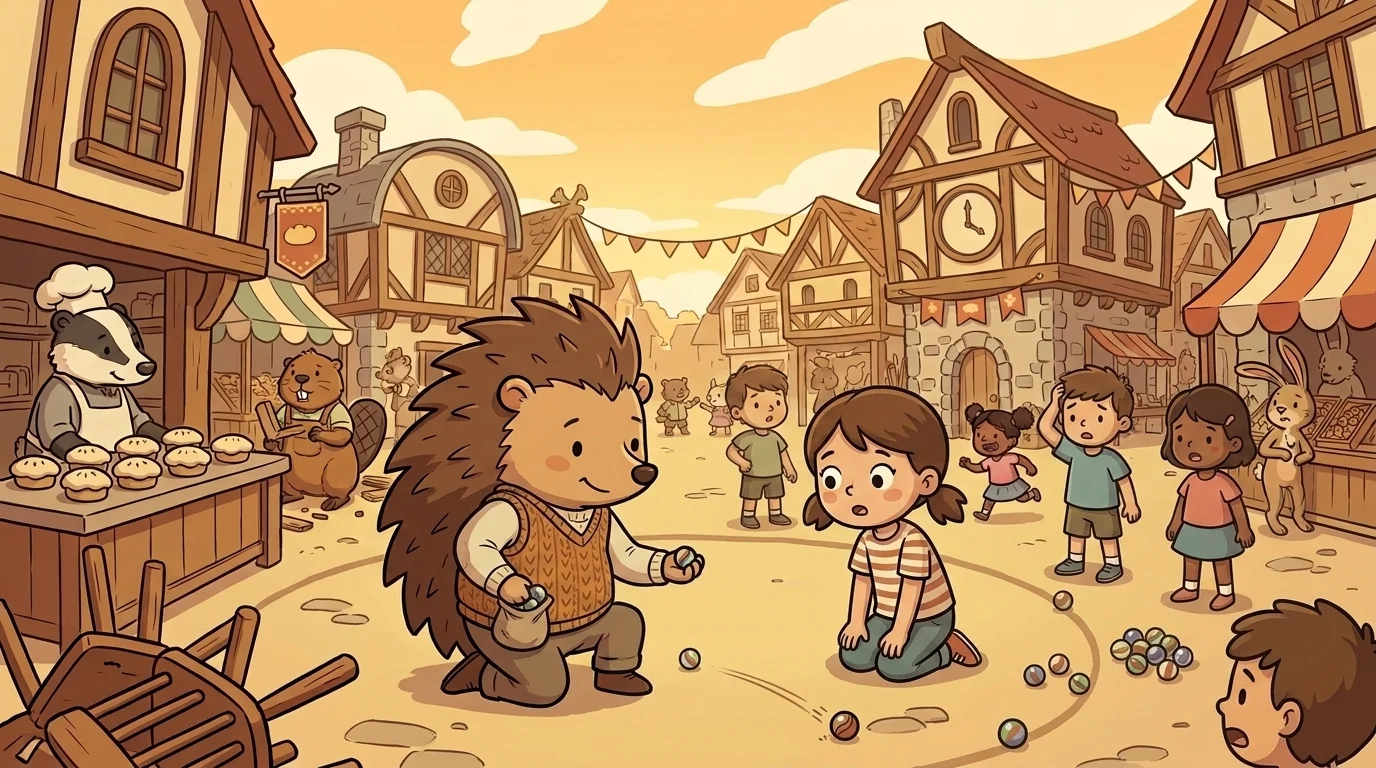
On a dry autumn afternoon behind the weaver’s workshop, six children gathered around a circle scraped into hard dirt. A marbles match had dragged on for nearly an hour, and everyone was getting restless. Most of the players had drifted away to chase frogs down by the mill stream.
Only two marbles remained inside the scratched ring. One was Kester’s green glass agate, and the other was a chipped clay marble owned by a red squirrel named Barnaby. A young wren named Pib sat on a low apple branch above the ring, swinging her scuffed legs.
Barnaby took a wild, desperate shot from the edge of the circle. His marble bounced off a pebble, spun uselessly across the dirt, and lodged near the root of a thorn bush.
The ring belonged entirely to Kester now. Everyone expected him to spend minutes studying the dirt, setting up a complex angle. Instead, Kester knelt on one knee, positioned his thumb behind his green agate, and flicked his wrist.
The glass marble struck the clay sphere with a sharp, clear click. Barnaby’s marble flew out of the dirt circle and skittered into the dry grass. Kester’s agate stopped dead in the exact center of the ring. He stood up, dusted off his knees, and picked up his marble.
Pib dropped down from her apple branch with a flutter of feathers.
"That was it?" she asked, her tail twitching in surprise. "You just ended the whole game?"
"It was one move from finished," Kester said, slipping his green agate into his pouch. "It had been one move away for ten minutes. Everyone else was playing around the edges, trying to set up spectacular shots. I simply made the single move that closed the game."
Pib crossed her small arms and tilted her head. "How did you know it was ready?"
"His marble had nowhere to hide," Kester explained. "No stone stood in front of it to block my shot. He could not knock my agate out on his turn, and he had no open space to roll away. No escape, no block, no counter-shot. When those three things happen at once, the next move is the last move."
Pib tapped her beak thoughtfully. She remembered listening to old traveling players who played board games on the inn porch during midsummer.
"You put him in checkmate," she said softly.
Kester considered the sound of the word. "Checkmate," he repeated, tasting the weight of it.
"No running away, no shield in the middle, no taking the piece that threatens you," Pib said. "Three closed doors, and then the game is done."
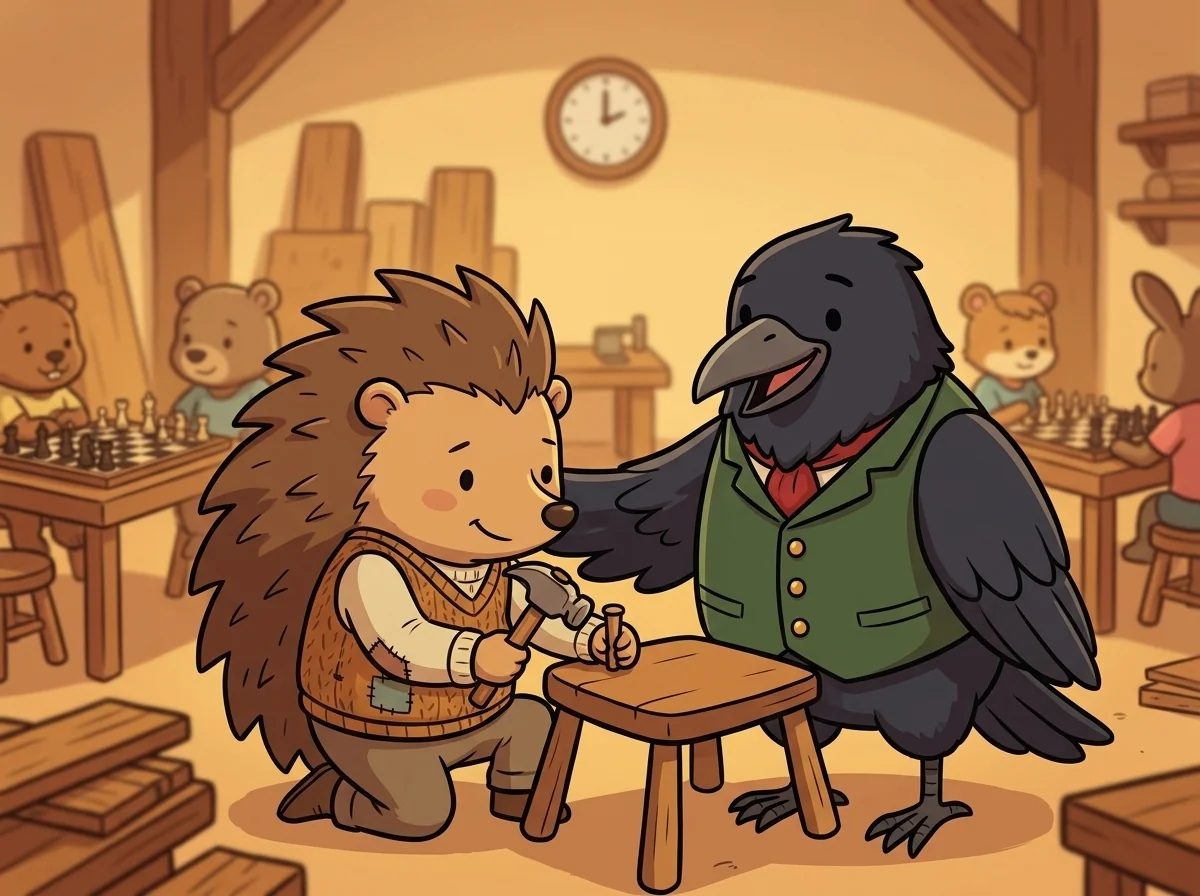
A month later, rain fell steadily over the rooftops of Endby. Kester sat inside the carpenter’s shop, working on a heavy oak table that had wobbled for weeks. He tapped a hardwood peg into the final leg joint, trimmed the wooden head flush with his saw, and sanded the edge smooth.
A tall rook wearing a brass-buttoned waistcoat and a high linen collar stepped into the dry shop, shaking water from his umbrella. Captain Castle watched the young hedgehog test the table with one firm hand. The oak table did not shake or creak.
"I run an academy three miles down the river," Captain Castle said, his voice loud and rich. "My students learn the game of sixty-four squares, and they play glorious, noisy attacks. They charge across the board, corner the enemy king, and build up a furious storm."
Captain Castle sighed, adjusting his brass buttons.
"And then?" Kester asked, setting his saw on the workbench.
"And then they fumble," the rook admitted. "They get nervous at the edge of victory. They grab a free pawn on the side of the board, or give a meaningless check that lets the enemy king slip away. They can start a wild battle, but they cannot land the final move."
Kester picked up his cloth and wiped away the remaining sawdust. "A game almost won is not won," Kester said quietly. "I can teach them how to close the doors."
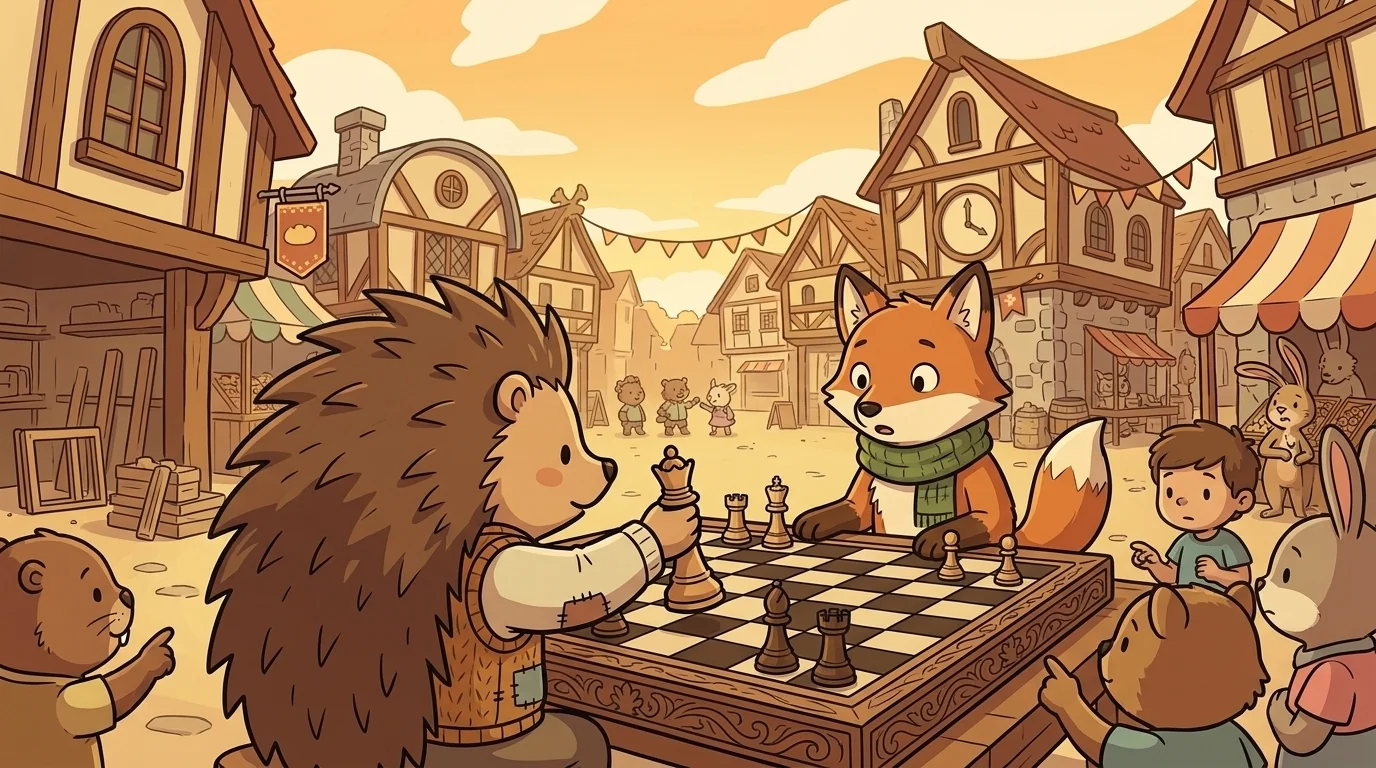
The following week, Kester stood before a massive wooden demonstration board hanging on the stone wall of the academy classroom. Ten young animal students sat at long oak desks, their wooden pieces resting in velvet-lined boxes. In the front row sat a young fox wearing a bright green scarf around her neck.
Captain Castle had arranged a position on the board where the black king was pinned against the corner square. The children leaned forward, murmuring among themselves as they studied the carved pieces.
"The black king is trapped," said the fox in the green scarf, furrowing her brow. "It looks completely lost, but whenever I reach positions like this, I get confused. I make three weak checks, and suddenly their king slips back into the middle."
"That happens when you rush," Kester said, lifting a long wooden pointer. "Before you touch a piece at the end, you must check the three doors."
He pointed the tip of his stick at the black king huddled on the h8 square. "Door number one is escape. Can the king step to any neighboring square?"
He touched g8, g7, and h7 with the wooden tip. "Our rook on f7 guards g7 and h7, our queen will guard g8, and the edge of the board blocks the rest. No escape."
"Door number two is block," Kester continued, moving the pointer to the white queen on c5. "If our queen moves to f8, can any enemy piece step between our queen and their king?"
The fox scanned the ranks carefully. "No, the path is completely open."
"Door number three is capture," Kester said. "If our queen steps onto f8, two squares from their king, can they take her?"
He tapped the white rook standing firmly on f7. "Their king cannot reach her, and no piece of theirs can either. Our rook guards her anyway. They cannot take her."
Kester placed his hand on the carved white queen, picked her up, and set her down on f8 with a firm, solid clack.
"No escape, no block, no capture," Kester said softly. "All three doors are shut. This is checkmate, and the game is over."
The room fell completely quiet. The fox in the green scarf opened her paper notebook and wrote down every word: Check the three doors: escape, block, capture. When all three are closed, make the final move.
She did not underline the sentence, because some things were so solid they needed no extra marks.
Later that evening, after the other students had gathered their bags and headed home, the fox remained behind in the quiet classroom. She watched Kester pack his wooden pointer and clean the chalkboard with a damp rag.
"How do you stay so calm at the very end?" she asked softly. "Doesn't your heart pound when you see the final move?"
Kester stopped wiping the board and turned to face her. "The end is not the time to hurry," he said, settling his shoulders comfortably. "It is the time to be sure. When you feel like rushing, that is when you must slow down and test each door."
He closed his leather toolkit with a quiet click. "A thing almost done is not done. Land the finish cleanly, and let it rest."
The fox nodded slowly, satisfied with the answer. Kester walked home through the winding lanes of Endby under a purple dusk. He passed the half-built pine fence, the gate waiting for a latch, and the weaver’s wobbling bench. He did not feel hurried or annoyed by any of them. Tomorrow he would bring his pouch of oak pegs and brass nails, and he would finish those too.
Hear it as an audio drama
A short play starring Kester the Finisher, from GambitTales. Different voices, same idea. Listen any time after you read.
Loading audio…
Read the drama script
- Narrator: From Spark and Anvil and GambitTales — this is Kester, in chapter 1 of the GambitTales cast.
- Narrator: This drama uses an AI-generated voice. Voiced via Gemini 2.5.
- Narrator: In the market town of Endby lived a young hedgehog named Kester, and he had one small, unusual gift. He was the one who finished things.
- Narrator: Endby was splendid at starting. The carpenter began a hundred chairs. The baker mixed a dozen grand cakes. The children began a hundred races. But Endby was a town of half-done things — a chair short one leg, a race abandoned two strides from the ribbon.
- Kester: I am not the fastest child in Endby. I am not the cleverest. But I finish. When a game of tag has gone on so long that everyone forgot who was even It, I am the one who makes the tag that ends it.
- Narrator: One afternoon the children were playing a chasing game, and the fox-cub they were chasing was almost cornered against the mill wall.
- Kester: Almost cornered is not cornered. Before I finish, I check three doors. Can he run? Can someone step in front to block me? Can he simply take the one who tags him?
- Narrator: Kester looked left — no room to run. He looked at the space between — no friend could step into it. He looked at the tagger — safe, untouchable.
- Kester: All three doors are shut. Escape, block, capture — none of them open. So now the last move actually counts.
- Narrator: And Kester made it. The game was over — not almost over, not nearly over. Over.
- Kester: A race is not won until you cross the line. So many almosts in Endby, because someone stopped one stride early. I do not stop one stride early.
- Narrator: A girl watching gave the finish a name. She called it a checkmate.
- Kester: Checkmate. A precise label. A check the king cannot escape, cannot block, and cannot capture — so the game ends, right there, in one move.
- Kester: That is my whole trade. Check all three doors first. Then, when every door is shut, play the move that finishes it. That is what makes a checkmate a checkmate.
- Narrator: You've been listening to a Spark and Anvil chapter, written by the Spark and Anvil writing team for ages 9 to 14.
- Narrator: Apps stay free forever.
- Narrator: Curriculum aligned to Common Core and Next Generation Science Standards.
- Narrator: Released under Creative Commons BY-NC-SA 4.0 for educational reuse. Visit Spark and Anvil for the full transcript.
The position from the story
This is the board Kester the Finisher set up. Try the move from the story.
How sure are we? Every board position in this story is checked by the chess engine, so you can set it up on a real board.
You are White. Find the one move that ends the game.
👪 Read it together, then play it on: a grown-up takes one side, you take the other. Captain Castle asks: if the rook were not on f7, would Qf8 still be checkmate? Move it and see.
The GambitTales ensemble
Kester the Finisher is one of the friends in GambitTales. Each friend shows you one idea by how they act; meet them all and you have the whole subject.
-

Sir Pinwell
Pin pattern — freezes pieces along a line
-

Twin Knights of Fork Hill
Fork pattern — attack two targets at once
-

Lady Skewer
Skewer pattern — force a valuable piece out of the way
-

Veil & Vow
X-ray attack — see through one piece to strike the piece behind it
-

Captain Crossfire
Discovered attack — step aside to reveal a hidden threat
-

The Glass Lantern
Double attack — one light sees two targets at once
-

King Pumble & King Sable
Two kings — librarian and gardener; one step at a time
-

Queen Vesper
Queen — ranger-messenger; any direction, any distance
-

Captain Castle
Mentor + narrator — rook archetype; the mascot who introduces the cast + scaffolds the lesson
-

The Pawn Cohort
Ensemble piece — the four pawn-paired sets (Pawn Patrol + Sienna & Bran + Trotter & Trundle + Gable & Garrett) acting as one in the world layer
-
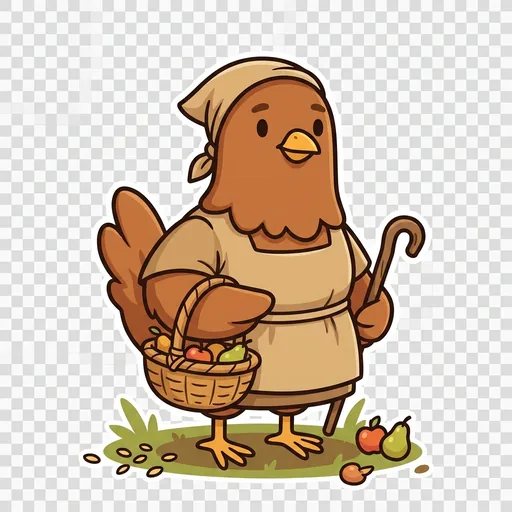
Merle the Gleaner
Hanging Piece — a piece with no defender is a free piece
-

Sir Sidetrack
Deflection — chase the guard off its duty, then take what it protected
-

Warden Snare
Trapped Piece — a piece with no safe square falls where it stands
-

Mason the Interposer
Interference — cut the line between a defender and its charge
-

Siren Lyra
Attraction — lure a piece onto the square where your next move wins it
-

Vale the Wayclearer
Clearance — move your own piece off the line so the power behind lands
-
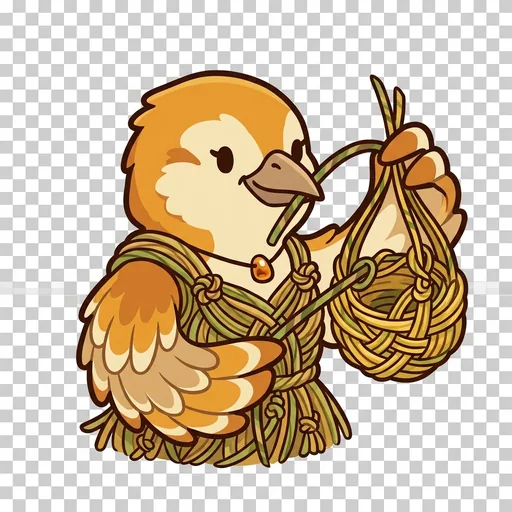
Linnet the Netweaver
Checkmate in Two — the first move forces the reply, the second springs the mate
-

Baron Tarry
King archetype — the patient endgame
-

Dame Bulwark
Bishop archetype — the line-cutter
-
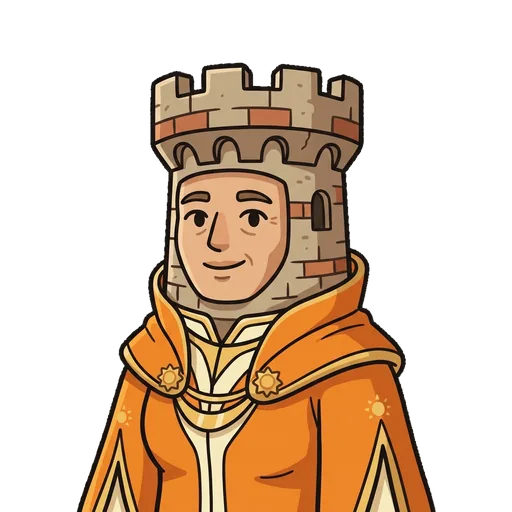
Lady Divert
Rook archetype — the tower