
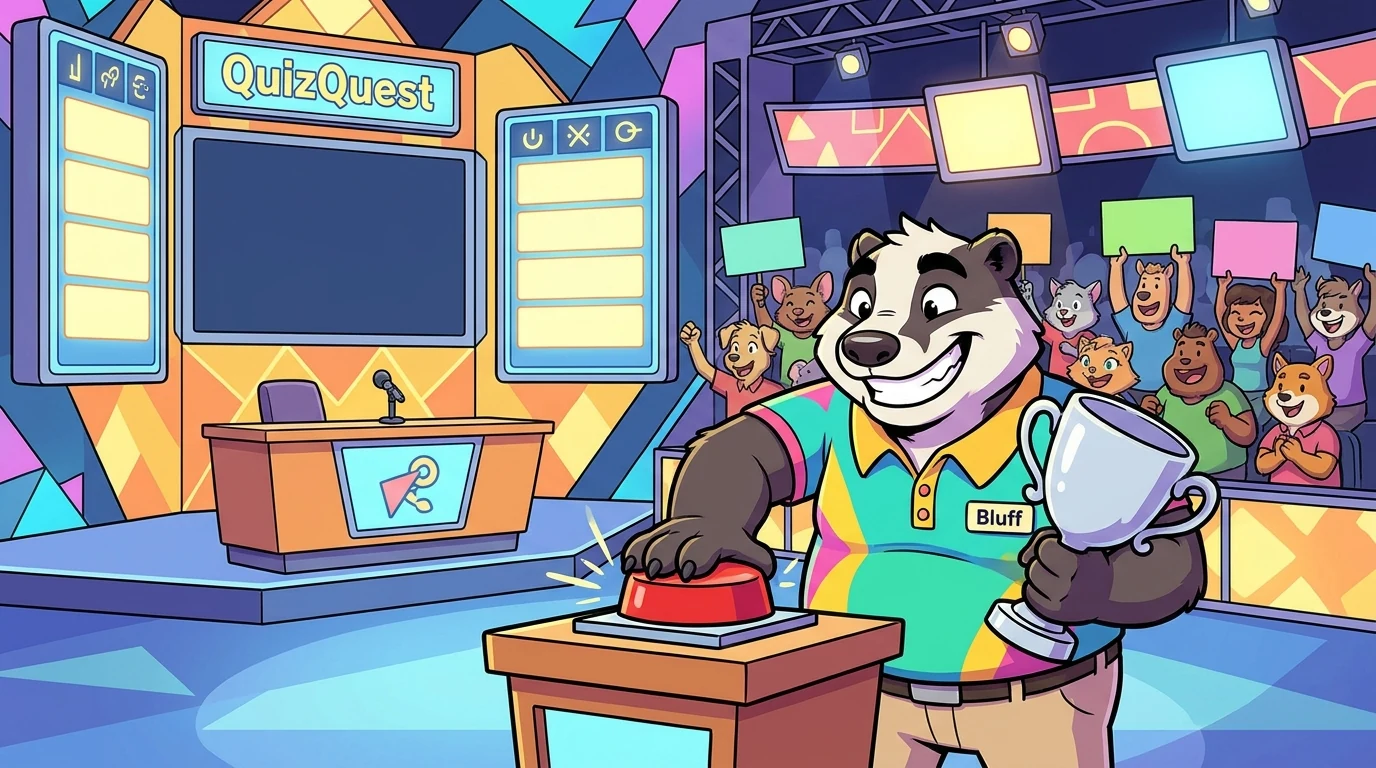
Bluff
CATCHING THE CONFIDENT-WRONG ANSWER (Advanced) — judging by evidence not confidence still holds, but the advanced traps are harder: the wrong answer from a real AUTHORITY (an expert can be confidently wrong, and their credential makes it more persuasive, not less), the answer that's wrong BECAUSE it's the famous/familiar one, and — hardest of all — catching your OWN confident-wrong (the certainty you can't feel from inside). The advanced move adds: steelman the confident claim before you check it, separate the claimant's authority from the claim's evidence, and treat your own strongest certainties as the ones most worth checking.
Chapter — Bluff, and the Confident-Wrong Answer the Host Couldn’t See
The host — Jo, now well past her first season — long ago learned to catch Bluff: judge the answer by the card, not the volume, and treat loud certainty as a reason to check. She catches the booming contestant almost every round now. What Emcee brings her in the advanced season are the confident-wrong answers that Bluff’s cheerful loudness trained her to miss — because they don’t come loud, or from a fool, or from someone else at all.
“You’ve mastered the obvious confident-wrong,” Emcee tells her. “The loud stranger who never checked. But the dangerous ones are quieter. Some come from experts — sure, credentialed, and wrong. Some are wrong because they’re the famous answer everybody knows. And the very worst one comes from inside your own head, in a voice you can’t hear as loud — because from the inside, your own certainty just sounds like knowing.”
The answer that humbled her came from a guest expert.
A real historian sat in the contestant chair, and on a question about a famous date, she gave an answer — calm, credentialed, certain. Jo, who catches Bluff all day, let it sail through. The historian was an expert; the card was surely a formality. But the card said otherwise: the historian, confident and credentialed, was wrong — she’d conflated two similar events. “You checked Bluff every time,” Emcee said afterward, “and you waved her through. Why?” “She’s an expert,” Jo said. “Exactly,” Emcee said. “Her authority made you check less, when a confident claim should always make you check the same. Authority is a reason the claim is probably good — a real, useful signal. It is not a substitute for the card. An expert who’s wrong is more persuasive than Bluff, not less — because you don’t even think to look.”
Jo felt the trap invert. “So the more credible someone is, the more their errors slip through.” “Which is why you check the claim, not the credential,” Emcee said. “Respect the expert and check the card. Those aren’t in conflict.”
So advanced Jo widened the host’s move into three harder catches:
Separate the authority from the evidence. When a credible source makes a claim, ask two questions, not one: how good is the source (a fair prior) AND what’s the evidence for this specific claim (the actual test). A trustworthy source raises the odds; it never closes the check. “Trust as a starting point, verify as a habit.”
Watch the famous-because-familiar answer. The most dangerous wrong answer is often the one everyone “knows” — the popular myth, the too-clean story. Familiarity feels like truth. “If an answer is suspiciously famous and suspiciously tidy,” Jo says, “check it harder, not softer. Famous wrong answers are famous because they’re easy to believe.”
Steelman before you strike. Before catching a confident claim, state the strongest version of it — give it its best case. “If it survives the strong version, maybe it’s right. If it collapses even at its strongest, your catch is solid and fair. Catching a strawman proves nothing.”
And the hardest: treat your own strongest certainties as prime suspects. “You can catch Bluff because his certainty is out loud. Yours is silent — it just feels like knowing. So the answers you feel surest about, with the least urge to check, are exactly the ones most worth checking. Be your own toughest host.”
The confident contestant handed Jo a compound trap: “Everyone knows Einstein failed math, and my professor said the tongue has four taste zones, and I’m absolutely certain the answer to this one is B — I don’t even need to check.”
Jo ran the advanced catches.
Everyone knows Einstein failed math — famous-because-familiar. Suspiciously tidy, endlessly repeated. Checked: false, a myth. “Famous and false — the classic pair.”
my professor said the tongue has four taste zones — an authority claim. Separate credential from evidence: the professor is credible, but this specific claim (the “tongue map”) is a debunked textbook error. “A real authority repeating an old error — the trap I fell for.”
I’m absolutely certain, I don’t even need to check — Jo stopped. This one was her contestant’s version of her own worst habit: maximal certainty, zero desire to verify. “That’s the tell,” she said. “‘I don’t need to check’ is the exact feeling that precedes being wrong. The urge to skip the check is the strongest reason to run it.” She checked. It was C.
“Three confident-wrong answers,” Jo said, “and not one of them came from loud foolishness. One was famous, one was an expert’s, one was pure inner certainty. The loud stranger was the easy case. These are the ones that actually fool people.”
An advanced contestant pushed the uncomfortable question. “If even experts and my own certainty can be wrong, how do I ever trust anything? Do I have to check literally everything?” Jo shook her head, because paranoia isn’t the lesson. “No — that’s exhausting and impossible,” she said. “You calibrate. Trust scales with two things: the source’s track record, and the stakes. Low stakes, credible source — trust it, move on. High stakes, or a claim that would change something important — check it, no matter who said it or how sure you feel. And your own certainties: you don’t doubt all of them, you spot-check your strongest ones, because those are where overconfidence hides.” She tapped the card. “The goal was never ‘trust nothing.’ It’s ‘let your checking match the stakes and the evidence — especially when a confident voice, even your own, is telling you not to bother.’”
The contestant admitted, “The ‘I don’t need to check’ feeling is going to be hard to catch in myself.” “It’s the hardest catch there is,” said Jo. “That’s why it’s the advanced lesson. Bluff you can hear. You, you have to choose to check anyway.”
That night Jo hosted a round seeded with the hard confident-wrongs — an expert’s slip, a famous myth, a too-tidy story — and caught them by checking the claim regardless of the source, steelmanning before striking, and running the check hardest exactly where she least wanted to. Then, at the end, she took the contestant chair herself and had another host quiz her — so someone could catch the confident-wrong answers she couldn’t hear from inside.
“A sure voice isn’t a right answer — that’s the floor,” she said, stacking the cards. “The advanced truth is that the surest voices are the quiet ones: the expert you didn’t think to doubt, the famous answer everyone repeats, and the certainty in your own head that feels exactly like knowing. Check the claim, not the credential. Steelman, then strike. And save your hardest check for the answer you’re absolutely sure you don’t need to check.”
The QuizQuest ensemble
Bluff is part of QuizQuest's distributed-narrative cast. Each character embodies a different curricular primitive; together they teach the full subject.
-

Recalla
Retrieval practice — pulls a fact from memory instead of re-reading it; recalling it (the testing effect) is what makes it stick
-

Nix
Elimination — crosses out the options that can't be right to narrow the field down to the answer
-
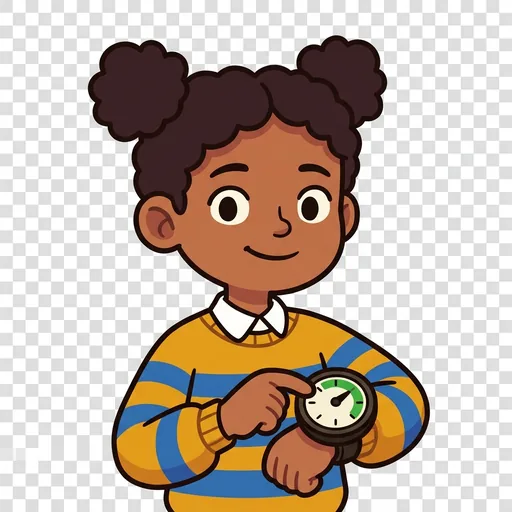
Gauge
Confidence calibration — checks HOW sure you are before you lock in, so your certainty matches your correctness
-

Switcheroo
Interleaving — jumps between subjects round to round so recall stays flexible instead of crammed
-

Tick
Speed-vs-accuracy — the buzzer-timer who trades a little speed to get the answer right
-
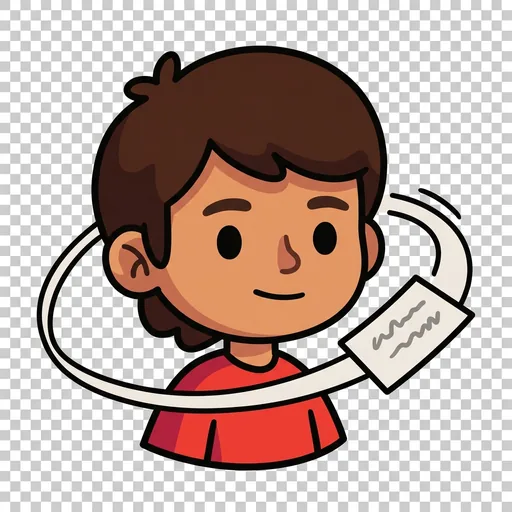
Encore
Spaced recall — brings a fact BACK a few rounds later so it moves into long-term memory
-

Facta
Fact vs. opinion — sorts what is checkable and true from what is only a view
-

Hinta
Clue-reading — reads the question stem for the hint hidden inside it before answering
-

Nuance
The almost-right answer — knows the close-but-not-complete answer and why the full answer is better