
Facta
FACT VS. OPINION — a FACT is a claim that can be checked against evidence and is either true or false (water boils at 100°C at sea level); an OPINION is a personal judgment or preference that can't be settled by evidence (this song is the best). The test: 'Could I check this and prove it right or wrong?' If yes, it's a fact-claim; if it comes down to taste or values, it's an opinion.
Chapter — Facta and the Two Kinds of Answer
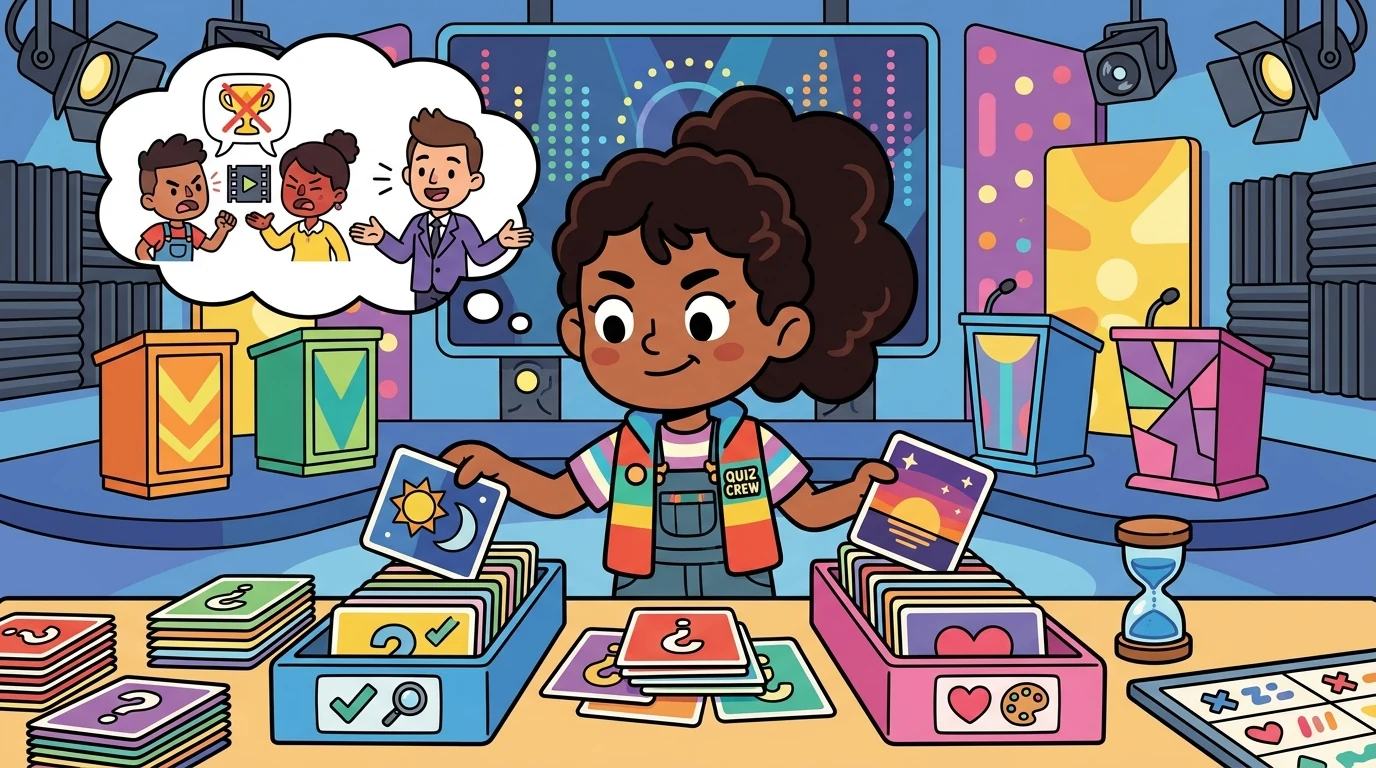
Facta sorts the QuizQuest question cards into two trays, and she’s fierce about which goes where. One tray says CHECKABLE. The other says MATTER OF TASTE. “Every claim in the world lands in one of these,” she says. “And the single most useful question you can ask about anything anyone tells you is: which tray does this go in?”
She holds up two cards. “‘The sun is bigger than the moon.’ — CHECKABLE. I can measure, and it’s true whether I like it or not. ‘Sunsets are the prettiest thing in the sky.’ — TASTE. Lovely, but I can’t measure ‘prettiest’; someone who prefers stars isn’t wrong. A fact is true or false. An opinion is just yours.”
Facta got serious about this because she once lost an argument that couldn’t be won — and didn’t realize that was the problem.
She’d argued for an hour with a friend about whether a certain movie was “the best ever made,” each of them piling up reasons, getting frustrated, neither budging. She’d treated it like a fact-argument — as if enough evidence would prove her right. But “best movie ever” isn’t checkable; it’s taste dressed up as a fact. No evidence could ever settle it, so the argument had no end, only exhaustion.
Emcee, refereeing, finally stopped them. “You two are arguing as if this has a right answer,” he said. “But ‘best’ is an opinion — there’s no measurement that decides it. You can share why you love it, but you can’t prove it, because it was never a fact to begin with. You’ve been running a fact-race on an opinion-track.” Facta felt something click: she’d wasted an hour because she hadn’t sorted the claim first.
So Facta built her sorting move: before you argue, answer, or believe a claim, ask “could I check this?”
If the claim could be verified against evidence — measured, looked up, tested — it’s a fact-claim, and it’s either right or wrong regardless of anyone’s feelings. If settling it comes down to preference, values, or taste, it’s an opinion, and the right response isn’t “prove it” but “tell me why you feel that way.”
“The test is the question ‘could I check it?’” she says. “‘It rained here yesterday’ — checkable, fact. ‘Rainy days are gloomy’ — taste, opinion. Same weather, two kinds of claim. Sort first, then you know what to do with it: facts you verify, opinions you share and respect.”
A contestant named Otis got tangled on the tricky middle cases. “What about ‘this food is disgusting’? People say it like a fact.” Facta grinned — the good question, because opinions love to disguise themselves as facts.
“Say it out loud with the test,” she said. “‘This food is disgusting.’ Could I check ‘disgusting’? No — you can’t measure disgust; it’s in the taster, not the food. So it’s an opinion wearing fact-clothes. But watch: ‘this food contains peanuts’ — that’s checkable, a real fact, and it might matter a lot. The disguise is everywhere: people state opinions in a confident fact-voice all the time. Your job is to run the check-test and undress the claim.” She flipped a card. “‘This is the hardest quiz question.’ Fact or opinion?” Otis thought. “…Opinion — ‘hardest’ depends on who’s answering.” “Now you’re sorting,” said Facta.
The subtle part, Facta insists, is that opinions aren’t bad or lesser — they’re just a different kind of thing. “I’m not here to say facts win and opinions lose,” she says. “Opinions are how we share what we value, what we love, who we are. The mistake isn’t having opinions — it’s confusing them for facts, on either side. Don’t demand evidence for someone’s taste, and don’t accept someone’s taste as proof. Just know which tray you’re in, so you argue about facts with evidence and share opinions with respect.”
That night Facta re-sorted the whole QuizQuest deck, holding each card up to the check-test. Most were clean facts — checkable, true-or-false, perfect for a recall show. A few sneaky “best/worst/prettiest” cards had crept in disguised as facts; she moved those to the TASTE tray or rewrote them into something checkable.
She held up the last card, an old one from that hour-long movie argument. “Could I check ‘best movie ever’?” No. Into the TASTE tray it went, finally in its right home. “A fact can be checked and proven,” she said, patting the two neat trays. “An opinion is a view no checking can settle. Ask ‘could I check this?’ first — then you’ll always know which kind of answer you’re holding.”
The QuizQuest ensemble
Facta is part of QuizQuest's distributed-narrative cast. Each character embodies a different curricular primitive; together they teach the full subject.
-

Recalla
Retrieval practice — pulls a fact from memory instead of re-reading it; recalling it (the testing effect) is what makes it stick
-
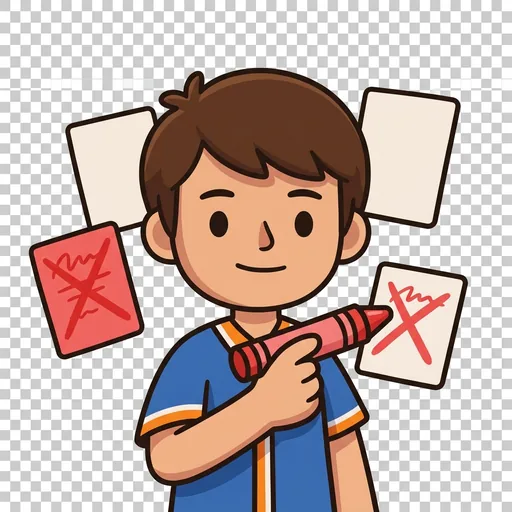
Nix
Elimination — crosses out the options that can't be right to narrow the field down to the answer
-
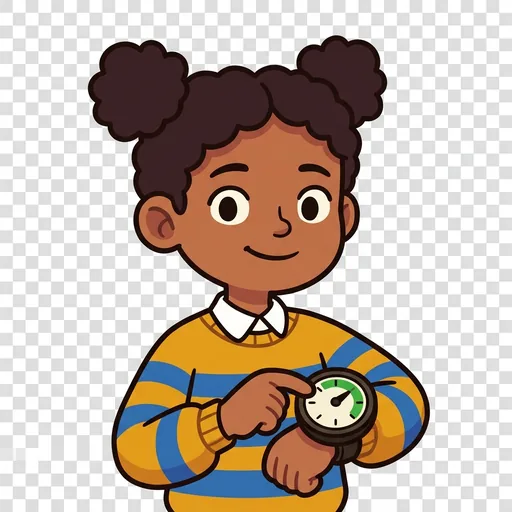
Gauge
Confidence calibration — checks HOW sure you are before you lock in, so your certainty matches your correctness
-

Bluff
The confident-wrong contestant — gives a fast, sure, WRONG answer; the one the host must catch (misconception-spotting)
-

Switcheroo
Interleaving — jumps between subjects round to round so recall stays flexible instead of crammed
-
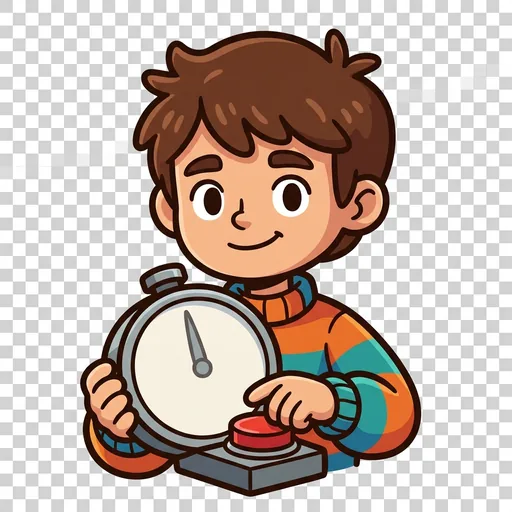
Tick
Speed-vs-accuracy — the buzzer-timer who trades a little speed to get the answer right
-
Encore
Spaced recall — brings a fact BACK a few rounds later so it moves into long-term memory
-

Hinta
Clue-reading — reads the question stem for the hint hidden inside it before answering
-

Nuance
The almost-right answer — knows the close-but-not-complete answer and why the full answer is better