
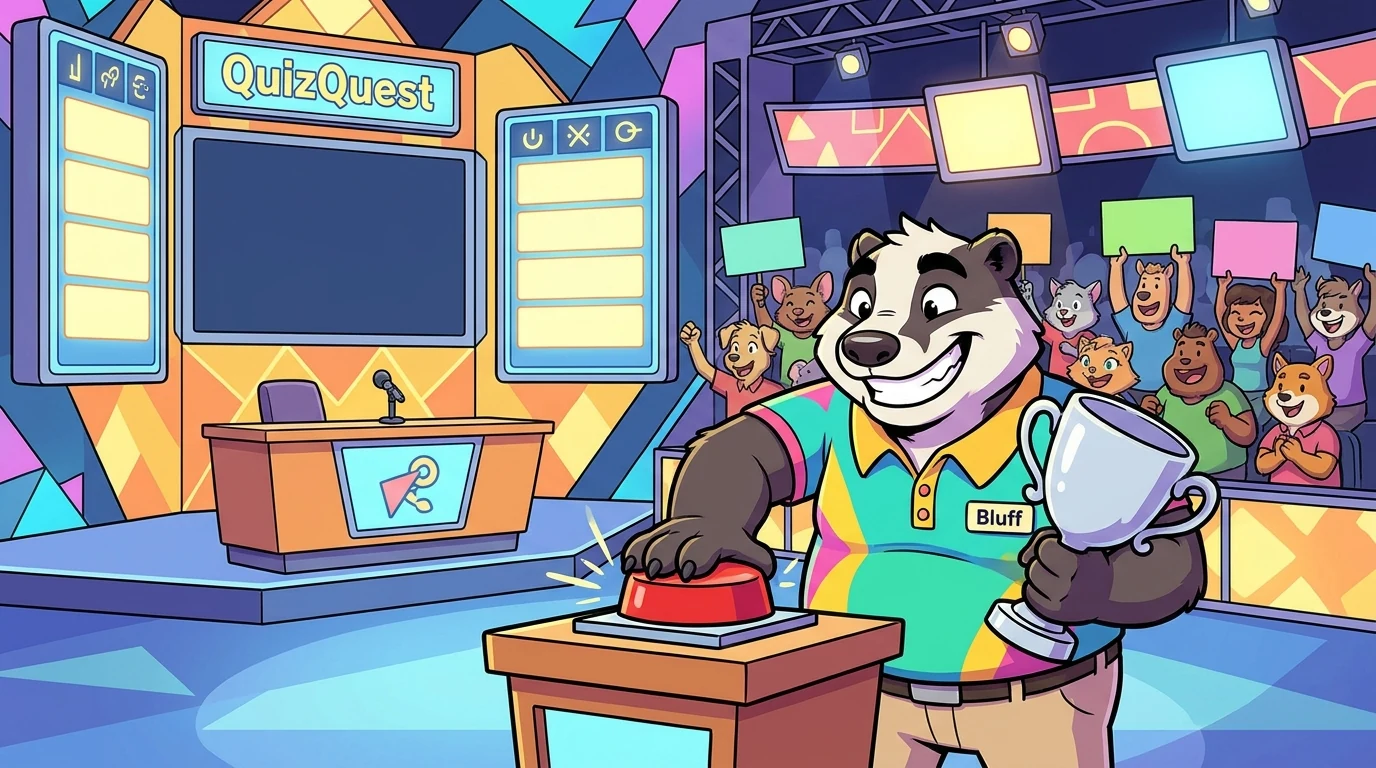
Bluff
CATCHING THE CONFIDENT-WRONG ANSWER — a wrong answer delivered with high confidence (loud, fast, sure) is the most dangerous kind, because certainty is persuasive. The skill is to judge an answer by its EVIDENCE, not its confidence: when someone sounds very sure, that is a cue to CHECK the claim, not to accept it. Spotting the plausible-sounding error is how you avoid being fooled by it.
Chapter — Bluff, and How the Host Learns to Catch Him
Every quiz show needs a Bluff, and QuizQuest’s is a cheerful, booming contestant who slams his buzzer before the question even finishes and announces his answer like it’s already engraved on a trophy. He is confident. He is fast. He is loud. And he is wrong a great deal of the time — which is exactly why he’s on the show.
“I’m not here to fool you,” Bluff says, grinning, because he’s in on the joke. “I’m here to train you. Out in the world, plenty of people answer just like me — sure, quick, certain — and they’re wrong, and their confidence makes everyone believe them anyway. The host’s whole job is to catch me. Not because I’m bad — because catching a confident-wrong answer is a real superpower.”
The kid who was learning to host — call her Jo — did not have that superpower at first, and Bluff walked all over her.
He’d boom an answer, and it sounded so certain that Jo would just… nod and move on. His confidence did the convincing. She wasn’t checking his answers against the cards; she was checking them against how sure he seemed, and he always seemed sure. Half the show, wrong answers sailed through because nobody wanted to doubt someone that confident.
Emcee pulled her aside. “You’re the host,” he said. “You hold the cards. You know the answer. So why are you letting Bluff’s voice decide what’s right?” Jo hadn’t realized she was. “His job is to sound sure,” Emcee said. “Your job is to check the card — every time, especially when he’s loudest. The louder and faster the answer, the more it needs checking, not less. Confidence is a performance. The card is the truth.”
So Jo built the host’s move: judge the answer by the evidence on the card, never by the confidence in the voice — and treat loud certainty as a reason to check harder.
When Bluff boomed an answer, she stopped nodding along. She’d hold his answer up against what she actually knew and what the card said. If it matched — great, credit where due. If it didn’t — she caught it, out loud, kindly: “Big confident answer, Bluff! Let’s check the card… ah — not quite. Here’s the real one, and here’s the little thing that tripped you.”
“That’s the reframe,” Emcee told her. “A confident-wrong answer isn’t a trap that makes you feel dumb. It’s a catch — and every catch is you getting sharper. You start to feel it: the too-fast, too-loud, too-sure answer that hasn’t actually been checked. That feeling is the skill.”
But there was a second thing Jo had to learn, and it was about how she caught him. Early on, when she caught Bluff, she’d do it with a little sting — “Wrong! Ha!” — and it made everyone tense, including her.
Emcee shook his head. “You’re catching the mistake, not the person. Bluff isn’t dumb — he answered a hard question fast, and the fast answer had a flaw. That happens to everyone. Catch the flaw, show the fix, and point at the reason he slipped — never at him.” So Jo changed her tone. “Ooh, so close — this one sounds right because it’s the famous answer, but the question asked something sneakier. Look…” She’d show the correct answer, and then — the important part — she’d ask why the wrong one was so tempting. Naming the trap out loud is what kept anyone else from falling into it.
Bluff loved being caught that way. “See, that’s a good host,” he’d boom, entirely un-stung. “She got me, she showed the real answer, and she said why I bit. Now the whole room won’t bite.”
A contestant asked Jo the deep question once: “If I get good at catching Bluff, does that mean I should just… never trust confident people?” Jo thought about it. “No,” she said. “Confidence with good reasons is wonderful — that’s just someone who knows their stuff. The thing to catch isn’t confidence. It’s confidence with nothing behind it — the sure voice that never checked the card. When someone’s very sure, you don’t have to doubt them. You just… check. If they’re right, checking cost you nothing. If they’re wrong, checking just saved you.”
“So checking is always free,” the contestant said. “Checking is always free,” Jo agreed. “Being fooled is what’s expensive.”
That night, Jo hosted a full round with Bluff at full volume, and she caught almost every confident-wrong answer — kindly, card in hand, naming each trap as she went. Bluff had a wonderful time being wrong on purpose, and the whole room got sharper watching her do it.
“A sure voice isn’t a right answer,” Jo said, stacking the cards. “The louder and faster someone’s certain, the more I check — kindly, on the card, showing the fix and the reason. Catch the mistake, never the person. Catching Bluff isn’t mean. It’s the best thing a host can teach.”
The QuizQuest ensemble
Bluff is part of QuizQuest's distributed-narrative cast. Each character embodies a different curricular primitive; together they teach the full subject.
-

Recalla
Retrieval practice — pulls a fact from memory instead of re-reading it; recalling it (the testing effect) is what makes it stick
-

Nix
Elimination — crosses out the options that can't be right to narrow the field down to the answer
-
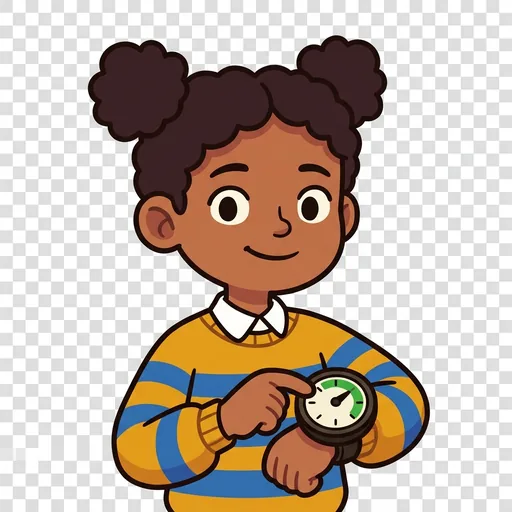
Gauge
Confidence calibration — checks HOW sure you are before you lock in, so your certainty matches your correctness
-

Switcheroo
Interleaving — jumps between subjects round to round so recall stays flexible instead of crammed
-

Tick
Speed-vs-accuracy — the buzzer-timer who trades a little speed to get the answer right
-
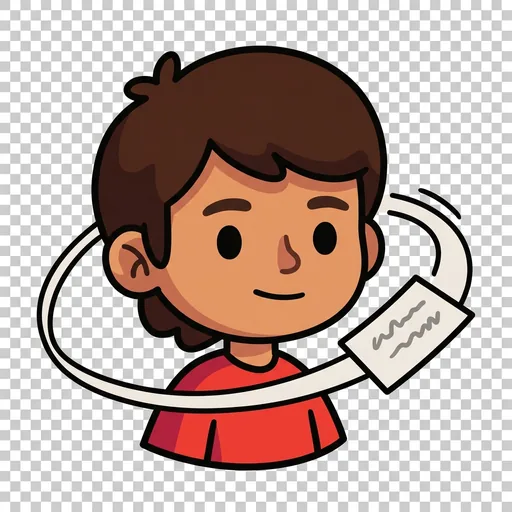
Encore
Spaced recall — brings a fact BACK a few rounds later so it moves into long-term memory
-

Facta
Fact vs. opinion — sorts what is checkable and true from what is only a view
-

Hinta
Clue-reading — reads the question stem for the hint hidden inside it before answering
-

Nuance
The almost-right answer — knows the close-but-not-complete answer and why the full answer is better