

Gauge
CONFIDENCE CALIBRATION — before committing an answer, check HOW sure you are and WHY, so your certainty matches your actual evidence. A well-calibrated person is confident when they have good reason and cautious when they don't; the trap is feeling sure because an answer is loud, familiar, or fast — not because it's supported.
Chapter — Gauge and the Meter That Told the Truth
Gauge wears a little dial on her wrist — a confidence meter — and before she locks in any answer she glances at it and asks one question: “How sure am I, really, and why?”
“There are two things people mix up,” she says, tapping the dial. “How sure you FEEL and how sure you should BE. Sometimes those match — you feel certain and you have great reasons. But sometimes an answer just feels sure because it’s loud, or familiar, or came fast — and that feeling has nothing to do with whether it’s right. My job is to make the feeling match the evidence.”
Gauge learned to distrust the loud feeling the hard way, at a school quiz bowl.
A question came, and an answer leapt into her head, fast and bright and certain. She slammed the buzzer without a second’s thought — and she was wrong. Badly, publicly wrong. The answer had felt like knowing, but it turned out she was remembering a similar-sounding thing from a completely different topic. The confidence had been real; the evidence behind it had been nothing.
Emcee found her afterward, stinging. “That answer felt certain,” he said. It wasn’t a question. “It did,” she admitted. “So here’s the thing to learn,” Emcee said gently. “Certainty is a feeling, and feelings can lie. Before you trust a big feeling, ask it for its reasons. ‘I’m sure because I actually studied this and I can explain why’ is a good reason. ‘I’m sure because it popped up fast and loud’ is not a reason at all — it’s just volume.”
So Gauge built her calibration move: before locking in, read the meter, then demand a reason for wherever the needle points.
If she feels very sure, she checks: can I say WHY? Can I explain it, connect it to something I actually know? If yes, the confidence is earned — buzz. If she’s sure but can’t say why, that’s a warning: the feeling is running ahead of the evidence, slow down.
If she feels unsure, she doesn’t just panic-guess — she checks whether the unsure feeling is fair (she genuinely doesn’t know) or too harsh (she actually does have a clue, she’s just nervous).
“Calibration isn’t about always being confident or always being cautious,” Gauge says. “It’s about being confident exactly as much as your reasons deserve. Sure with good reasons: go. Sure with no reasons: careful. Unsure but you’ve got a thread: pull it.”
The confident-wrong contestant, Sure-Sam — or on this set, Bluff — is Gauge’s perfect opposite, and she studies him like a warning label. Bluff is always at maximum confidence, needle pinned, buzzing first and loudest on every question. And he’s wrong constantly, because his confidence isn’t connected to anything — it’s just his default volume.
“Bluff feels exactly as sure about things he knows and things he’s never heard of,” Gauge says. “His meter is broken — it’s stuck on MAX. That’s the danger of confidence with no calibration: you can’t tell your real knowledge from your guesses, so you bet big on both.” She taps her own dial. “The goal isn’t to be Bluff-confident. It’s to have a meter that actually moves — high when you’ve earned it, low when you haven’t. A needle that moves is worth more than a needle stuck on sure.”
A quiet contestant named Theo had the opposite problem — his meter was stuck on LOW, so he never buzzed even when he knew things. “I’m never sure enough,” he said. Gauge nodded; miscalibration cuts both ways.
“Your meter’s broken too,” she said kindly, “just in the other direction. You feel unsure even when you have good reasons. So let’s calibrate: this question — do you actually know it? Can you say why?” Theo, hesitant, explained the answer perfectly. “You just gave three solid reasons,” Gauge said. “Your evidence says high. Your feeling says low. Trust the evidence, not the nervous feeling — buzz.” Theo buzzed. He was right. “See? Under-confidence loses just as many points as over-confidence. Calibration means matching the needle to the reasons, whichever way it’s stuck.”
That night Gauge replayed the old quiz-bowl loss — the fast, loud, wrong certainty — not to feel bad, but to re-read her meter. Why did I feel so sure? Because it was fast and familiar. Was that a reason? No. She could see it clearly now: a broken needle pinned on MAX for no reason at all.
She tapped the little dial on her wrist and watched it rest at a calm, honest middle. “Feeling sure isn’t the same as being right,” she said. “So before you lock in, ask the feeling for its reasons — and let your confidence be exactly as big as the evidence you can actually point to.”
The QuizQuest ensemble
Gauge is part of QuizQuest's distributed-narrative cast. Each character embodies a different curricular primitive; together they teach the full subject.
-

Recalla
Retrieval practice — pulls a fact from memory instead of re-reading it; recalling it (the testing effect) is what makes it stick
-

Nix
Elimination — crosses out the options that can't be right to narrow the field down to the answer
-

Bluff
The confident-wrong contestant — gives a fast, sure, WRONG answer; the one the host must catch (misconception-spotting)
-

Switcheroo
Interleaving — jumps between subjects round to round so recall stays flexible instead of crammed
-
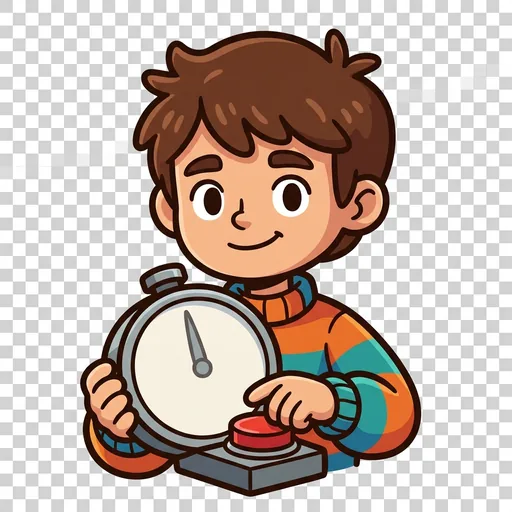
Tick
Speed-vs-accuracy — the buzzer-timer who trades a little speed to get the answer right
-
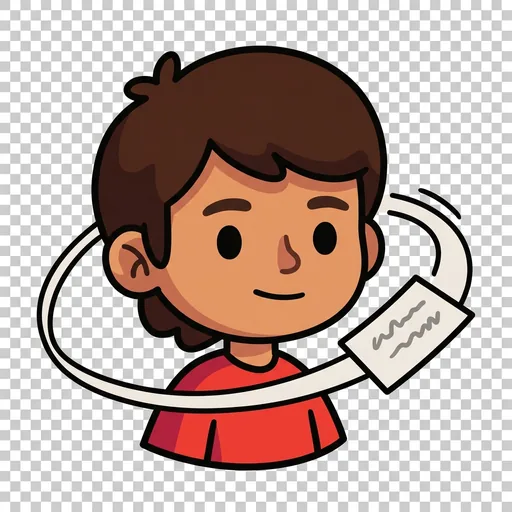
Encore
Spaced recall — brings a fact BACK a few rounds later so it moves into long-term memory
-

Facta
Fact vs. opinion — sorts what is checkable and true from what is only a view
-

Hinta
Clue-reading — reads the question stem for the hint hidden inside it before answering
-

Nuance
The almost-right answer — knows the close-but-not-complete answer and why the full answer is better