
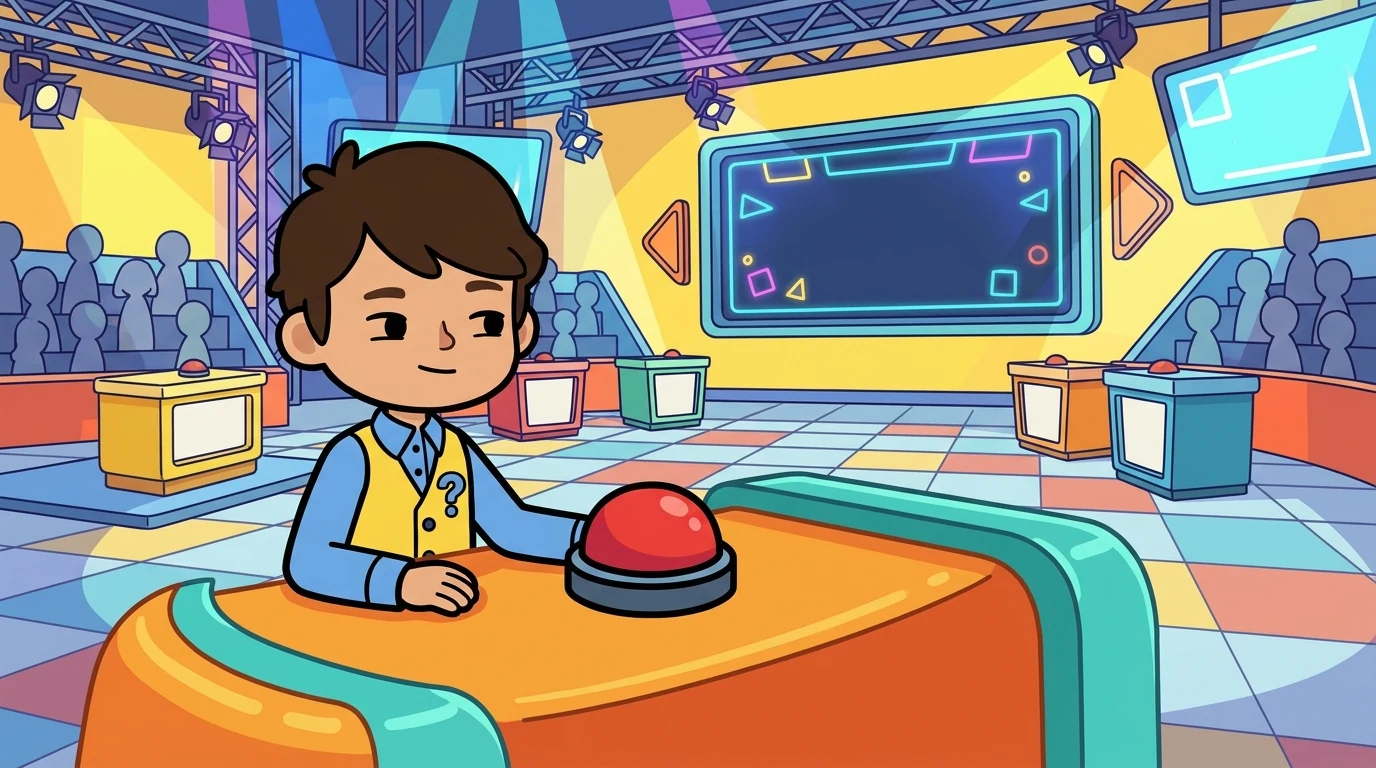
Tick
SPEED-VS-ACCURACY — under time pressure there is a trade-off between answering fast and answering right; rushing causes careless errors (misreading the question, skipping a word like NOT or EXCEPT). The skill is to spend the small amount of extra time needed to read fully and check, because an accurate answer a beat later almost always beats a fast wrong one.
Chapter — Tick and the Buzzer He Learned to Wait On
Tick loves the buzzer. On QuizQuest he’s the fastest hand on the set — he can slap that button before most people have finished blinking. For a long time, being fastest was his whole identity, and it cost him nearly every round.
“Here’s what nobody tells you about the buzzer,” he says now, resting his hand beside it instead of on it. “Fast feels like winning. But a fast wrong answer is worth exactly zero — less than zero, sometimes, if guessing wrong costs you. Meanwhile a right answer one second later is worth full points. So the real race isn’t ‘who buzzes first.’ It’s ‘who buzzes first with the right answer.’ And that second race is won by reading the whole question.”
Tick learned this by losing a round he absolutely should have won.
The question was easy — a fact he knew cold. But it was phrased with a little twist: “Which of these is NOT a planet?” Tick, buzzing at his usual lightning speed, had read “Which of these is a planet,” slapped the button, and named a planet — confidently, fast, and exactly wrong, because the question asked for the one that wasn’t. The single word “NOT” had flown right past his racing eyes.
Emcee didn’t tease him. He just circled the word “NOT” on the card. “You knew this one,” he said. “You lost it to speed. Your eyes were already reaching for the buzzer before they finished the sentence. The knowledge was there — the reading was rushed.” Tick stared at the little word that had cost him everything. “One more second,” Emcee said, “and you’d have seen it. The buzzer will always be there in a second. The word ‘NOT’ won’t wait for you to come back.”
So Tick built his speed-vs-accuracy move, and it’s almost embarrassingly simple: read the whole question — every word — before the hand moves.
He specifically hunts for the little traps that reward slowing down: the NOT, the EXCEPT, the LEAST, the always/never, the units, the small qualifier that flips the whole meaning. These are exactly the words a racing eye skips, and exactly the words that turn a known answer into a wrong buzz.
“I didn’t get slower at thinking,” Tick says. “I got slower at committing. One extra beat to finish reading. That beat catches the NOTs and the EXCEPTs, and those were most of my wrong answers. I trade one second for accuracy, and it’s the best trade on the whole set.”
A contestant named Diego had the opposite fear. “But if I slow down, I’ll lose the buzz to someone faster. Isn’t fast the whole point of a quiz show?” Tick grinned, because he’d believed that too.
“Watch a real round,” he said. “The fastest buzzer isn’t the top scorer — the fastest correct buzzer is. Bluff buzzes faster than all of us and he’s wrong half the time; his speed earns him nothing. You don’t have to be the slowest — you just have to be fast enough to finish reading. That’s usually about one extra second, and most questions give you far more time than you think.” He pointed at Diego’s hand, already hovering. “Your problem isn’t that you’re too slow. It’s that your hand starts moving before your eyes are done. Let the eyes finish. Then race.”
Diego tried it — read fully, caught an “EXCEPT” he’d have missed, buzzed a beat later than usual, and won the question. “I still felt fast,” he said, surprised. “You were fast,” said Tick. “You were just fast after reading instead of during.”
The deeper lesson came from Gauge, the calibration expert, who told Tick something he never forgot: “Speed feels like confidence, but it isn’t. Buzzing fast doesn’t mean you’re sure — it just means you’re fast. Some of your worst answers were your fastest.” Tick added that to his move: a fast urge to buzz is not evidence the answer is right. It’s just adrenaline. Read anyway.
That night Tick ran a timed deck full of trick-worded questions — the NOTs, the EXCEPTs, the sneaky units — the exact kind that used to wreck him. He kept his hand beside the buzzer, read every word to the end, hunted the little trap-words, and only then committed.
He was a hair slower per question. He was dramatically more right. And “more right” is the only speed that scores.
“Fast wrong is worth nothing,” Tick said, finally letting his hand rest on the buzzer — earned, this time. “Spend the one extra second to read the whole question, catch the NOT and the EXCEPT, and then buzz. A right answer a beat late beats a fast wrong one every single round.”
The QuizQuest ensemble
Tick is part of QuizQuest's distributed-narrative cast. Each character embodies a different curricular primitive; together they teach the full subject.
-

Recalla
Retrieval practice — pulls a fact from memory instead of re-reading it; recalling it (the testing effect) is what makes it stick
-
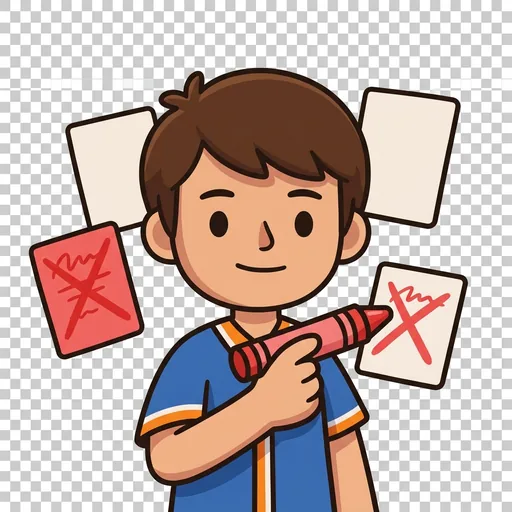
Nix
Elimination — crosses out the options that can't be right to narrow the field down to the answer
-
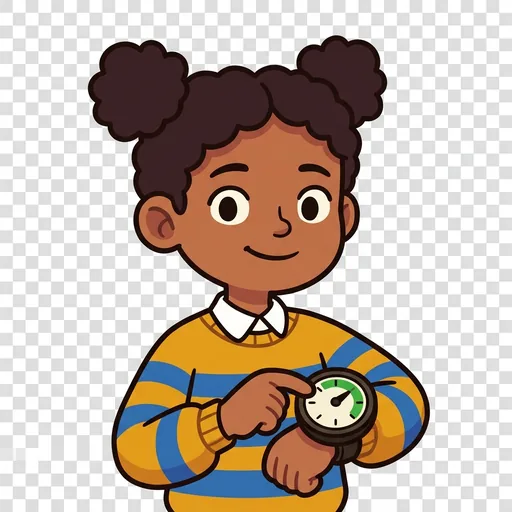
Gauge
Confidence calibration — checks HOW sure you are before you lock in, so your certainty matches your correctness
-

Bluff
The confident-wrong contestant — gives a fast, sure, WRONG answer; the one the host must catch (misconception-spotting)
-

Switcheroo
Interleaving — jumps between subjects round to round so recall stays flexible instead of crammed
-
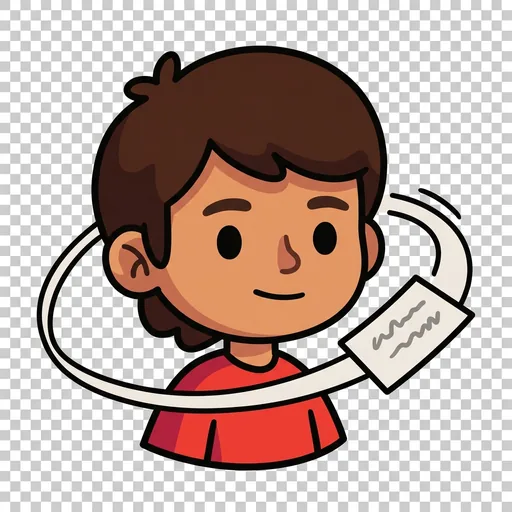
Encore
Spaced recall — brings a fact BACK a few rounds later so it moves into long-term memory
-

Facta
Fact vs. opinion — sorts what is checkable and true from what is only a view
-

Hinta
Clue-reading — reads the question stem for the hint hidden inside it before answering
-

Nuance
The almost-right answer — knows the close-but-not-complete answer and why the full answer is better