
Nuance
BEST-ANSWER DISCRIMINATION — on a good multiple-choice question, more than one option can seem true, but one is the BEST/most complete/most precise answer. The trap is the 'almost-right' option that's partly true or true-but-incomplete. The skill is to read ALL options and compare them, picking the fullest, most exact answer rather than grabbing the first one that isn't wrong.
Chapter — Nuance and the Answer That Was Almost Right
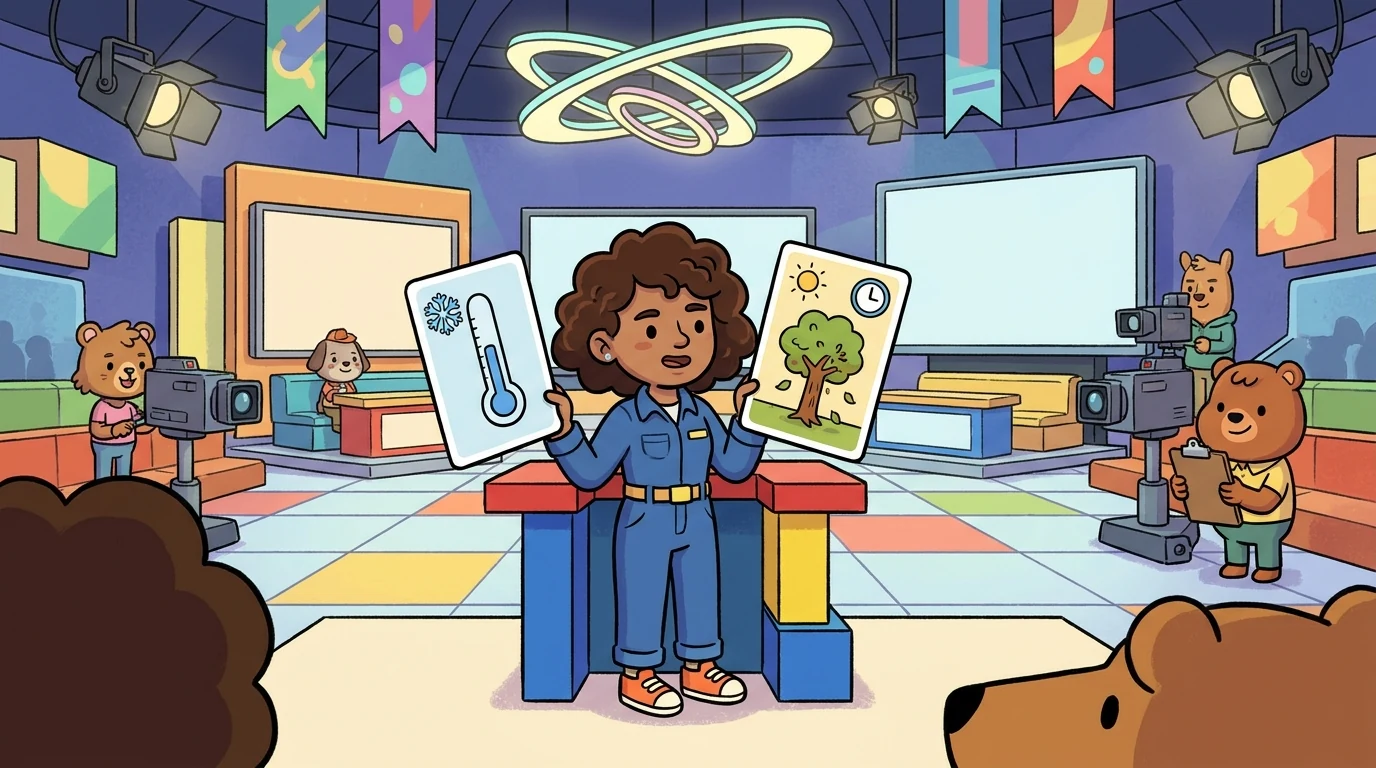
Nuance is the crew member who makes contestants read every single option, even after they’ve spotted one that looks good. “‘Looks good’ is where people lose,” she says. “The trap on a well-made question isn’t a wrong answer sitting next to a right one — you’d catch that. The trap is an almost-right answer sitting next to a more-right one. Both feel true. One is just… better. And if you grab the first true-ish one you see, you’ll never notice the better one was two lines down.”
She holds up two cards, nearly identical. “‘Why do leaves change color in fall?’ — Option: ‘because it gets cold.’ True-ish! Cold is involved. But the best answer is ‘because shorter days reduce sunlight, so trees stop making green chlorophyll.’ The first one isn’t wrong exactly — it’s incomplete. And incomplete is the sneakiest wrong there is.”
Nuance learned to fear the almost-right answer because it fooled her for years.
She was a fast, confident test-taker who’d spot a plausible option and lock it in immediately — and she got a surprising number wrong, which baffled her, because her answers weren’t ridiculous. They were close. Reasonable. True in some partial way. She’d pick “the answer that isn’t wrong” and lose to “the answer that’s most right,” never even reading the better option because she’d already committed to the good-enough one.
Emcee showed her her own answer sheet. “Look — you didn’t pick wrong answers. You picked second-best answers. Every one of these had a fuller, more exact option that you never read, because you stopped at the first one that sounded okay.” Nuance was stunned — she’d been losing not to ignorance but to impatience, to settling. “A good question,” Emcee said, “is designed so more than one answer tempts you. The whole test is whether you’ll compare them or just grab. You’ve been grabbing.”
So Nuance built her best-answer move: read ALL the options, then compare them against each other, and pick the fullest, most precise one — not the first one that isn’t wrong.
When two options both seem true, she asks: which is more complete? Which is more exact? Which actually answers the specific question asked, versus being generally true? The almost-right answer is usually true-but-vague, or true-but-partial, or true-of-something-slightly-different. The best answer is the one that survives the closest reading.
“Elimination gets you down to the plausible ones,” she says (with a nod to Nix). “But then you’re not done — you have to rank the survivors. Two true-sounding answers aren’t a coin flip. One is better, and finding out which is the last, hardest, most-skipped step. I never lock in until I’ve read every option and asked, ‘is there a more right one than this?’”
A contestant named Lena resisted. “If an answer is true, isn’t it right? How can a true answer be wrong?” Nuance loved this — the exact confusion that had cost her.
“Because the question doesn’t ask ‘which of these is true,’” she said. “It asks ‘which is the answer.’ Watch: ‘What is the primary reason for X?’ — an option can be a real reason, just not the primary one. It’s true! But it’s not the answer, because the question asked for the main one. ‘Almost right’ is often ‘true but not what was asked.’” She flipped a card. “‘What mainly causes tides?’ Option A: ‘the wind moves the water.’ Wind does move water — true! But it’s not what mainly causes tides. Option B: ‘the moon’s gravity.’ That’s the answer. A is the trap: true about water, wrong about tides.” Lena saw it. “So I have to read what the question is really asking, and pick the answer that fits that, not just any true thing.” “Now,” said Nuance, “you’re reading for best, not for okay.”
Nuance’s closest ally is Hinta, and together they make a rule: read the whole question (Hinta) and all the answers (Nuance) before committing to anything. “The question tells you exactly what’s being asked,” Nuance says. “The options include a trap that’s true-but-not-quite. Miss either and you’ll pick almost-right. Read both fully and almost-right loses its power — because now you can see it’s only almost.”
That night Nuance ran the crew’s trickiest deck — the one stuffed with almost-right decoys — and instead of grabbing the first plausible option, she read all four every time and ranked the survivors for completeness and precision. The almost-right answers, which used to catch her constantly, now stood out as obviously second-best once she actually compared them.
“The wrong answer you can spot,” she said, squaring the deck. “It’s the almost-right one that beats you — the true-but-incomplete, the reasonable-but-not-what-was-asked. So read every option and pick the best one, not the first okay one. ‘Not wrong’ was never the goal. Most right is.”
The QuizQuest ensemble
Nuance is part of QuizQuest's distributed-narrative cast. Each character embodies a different curricular primitive; together they teach the full subject.
-
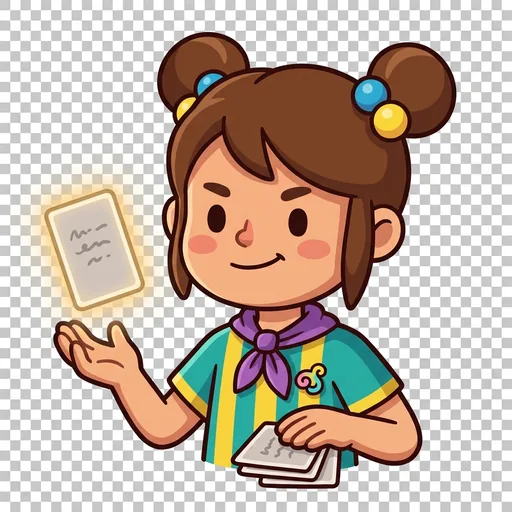
Recalla
Retrieval practice — pulls a fact from memory instead of re-reading it; recalling it (the testing effect) is what makes it stick
-
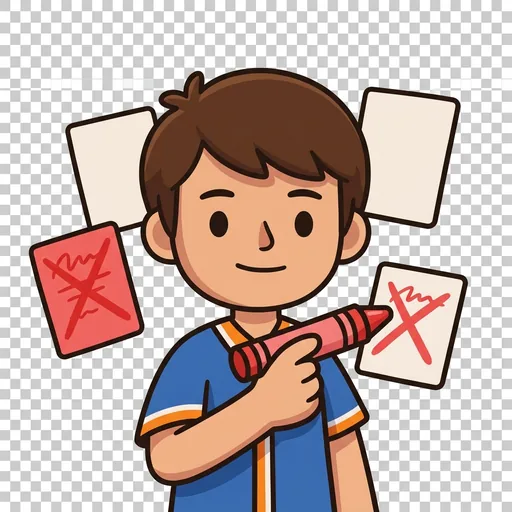
Nix
Elimination — crosses out the options that can't be right to narrow the field down to the answer
-
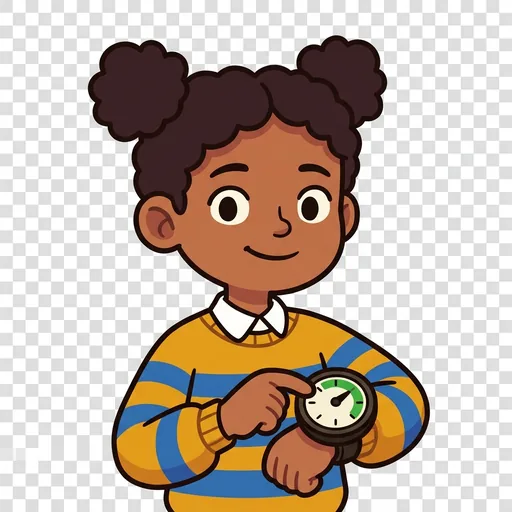
Gauge
Confidence calibration — checks HOW sure you are before you lock in, so your certainty matches your correctness
-
Bluff
The confident-wrong contestant — gives a fast, sure, WRONG answer; the one the host must catch (misconception-spotting)
-
Switcheroo
Interleaving — jumps between subjects round to round so recall stays flexible instead of crammed
-
Tick
Speed-vs-accuracy — the buzzer-timer who trades a little speed to get the answer right
-
Encore
Spaced recall — brings a fact BACK a few rounds later so it moves into long-term memory
-
Facta
Fact vs. opinion — sorts what is checkable and true from what is only a view
-
Hinta
Clue-reading — reads the question stem for the hint hidden inside it before answering