
Hinta
CLUE-READING (Advanced) — the stem still leaks clues, but the advanced reader must also handle clues that MISLEAD: the false-friend root (a familiar-looking word part that means something else), the deliberately planted decoy detail, and the clue that points at a distractor rather than the answer. The advanced move: gather MULTIPLE clues and cross-check them against each other (a single clue can be a plant; converging clues are trustworthy), and treat a too-easy in-the-stem 'gift' with suspicion — question-writers plant obvious-looking clues precisely to catch the skimmer who grabs the first one.
Chapter — Hinta and the Clue That Was Planted to Fool Her
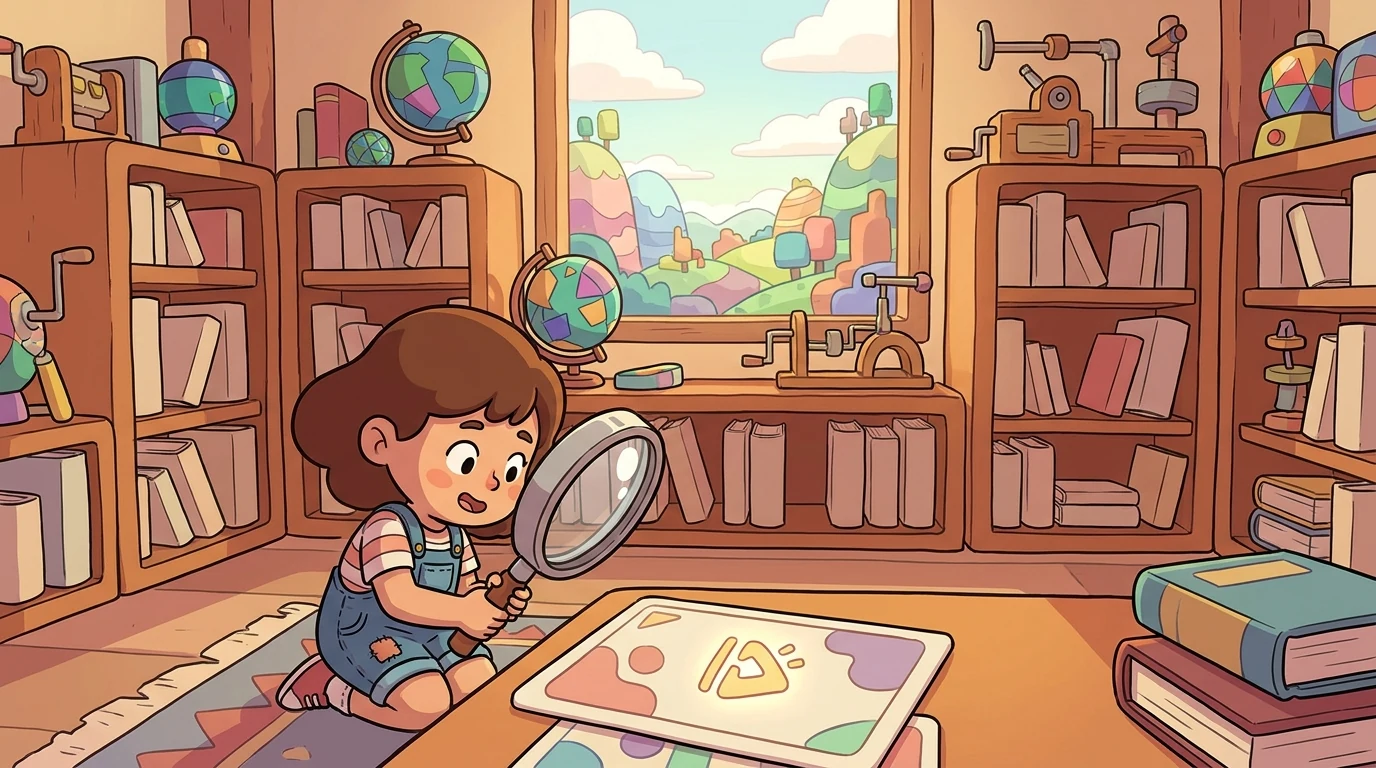
Hinta’s magnifying glass taught the beginners to mine the stem — the definition folded in, the familiar root, the narrowing date. The advanced contestants read closely already. What Hinta has to teach them now is the harder truth she learned the hard way: not every clue is a gift. Some are bait. A question-writer who knows people mine stems will plant an obvious-looking clue that points straight at the wrong answer — a trap built specifically for the clever reader who grabs the first hint she finds.
“The beginner’s danger is skimming — missing the clue,” she says, turning the glass over in her hand. “The advanced danger is the opposite: over-trusting a clue. Because once you know to look for hints, a good question-writer can use that against you. They plant a shiny, obvious clue that leads to a distractor, betting you’ll snatch it and stop looking. The magnifying glass makes you a better reader — and a better target, if you’re not careful.”
The clue that fooled her was a root she recognized instantly.
The question involved the word inflammable, and it asked which material was safest near fire. Hinta’s trained eye caught the root — in- means not, everyone knows that — so inflammable must mean not flammable, safe near fire. She grabbed it, confident, clue in hand. Wrong. Inflammable means easily catches fire — the in- here is an intensifier, not a negation; it’s a false friend. The clue she’d mined was real and pointed exactly the wrong way.
Emcee didn’t scold. “Your clue-reading worked,” he said. “You found a root and used it. The problem is you trusted one clue and it was a false friend. What would have saved you?” Hinta thought. “…Checking it against something else. The rest of the question, or another word I actually knew.” “Exactly. One clue can lie. Converging clues rarely do. The advanced move isn’t finding a clue — you can already do that. It’s cross-checking it.”
So advanced Hinta upgraded her craft from find the clue to find clues, and cross-check them:
Gather more than one. A single clue is a hypothesis; two or three clues that agree are near-proof. “If the root says X, and a date narrows to X, and the grammar fits X — that’s X. But if the root says X and everything else says Y, distrust the root — it may be a false friend.”
Suspect the too-easy gift. When a clue is suspiciously obvious — the answer seems to leap out of the stem — pause. “Real clues are usually quiet. A loud, obvious, gift-wrapped clue on a hard question is sometimes bait. Ask: would a question-writer really make it this easy — or did they make it LOOK this easy on purpose?”
Know the false-friend families. Roots that flip or mislead (in- can negate OR intensify; -less usually means without but not always). “A root is a strong hint, not a law. Treat it as evidence to be confirmed, not a verdict.”
The confident contestant handed Hinta a stem built to bait a clue-miner: “Which of these, despite its ‘peninsula’-like name, is actually completely surrounded by water — the word ‘insula’ inside it being your hint?”
Hinta put it under the glass — carefully, this time.
‘insula’ — she recognized the root; insula means island (as in peninsula, insular). A clue! It points at something surrounded by water. “But,” she said, “let me cross-check before I grab.” She read the whole stem: despite its ‘peninsula’-like name. “The writer is warning me — the name sounds like peninsula (almost-land, attached), but the thing is actually an island (surrounded by water). So the insula root and the word despite and the phrase completely surrounded by water all converge on: an island whose name misleadingly sounds peninsula-ish.” Three clues agreeing. “If I’d grabbed the first root and stopped, I might’ve picked the actual peninsula in the options — the decoy built for a lazy clue-reader. Cross-checking caught the convergence.”
“That’s the advanced read,” Emcee said. “You didn’t just find the clue. You found several, checked they agreed, and noticed the despite was doing warning-work. One clue would’ve been a coin flip. Three agreeing clues is an answer.”
An advanced contestant got paranoid. “If clues can be planted to fool me, should I just stop trusting the stem entirely?” Hinta laughed — the pendulum swinging too far, as always. “No. Most clues are honest gifts — question-writers aren’t all villains. Mining the stem is still your single best tool, and it’s right far more often than it’s baited.” She tapped the glass. “The advanced skill isn’t distrust all clues. It’s weight them: a lone clue is a lead, not a verdict; converging clues are strong; a suspiciously easy clue on a hard question earns a second look; a known false-friend root gets confirmed, not obeyed. You keep reading the stem — you just stop grabbing and start corroborating.” She handed him a card. “Find me two clues that agree before you answer. Not one. Two.”
The contestant found a root and a date that pointed the same way. “Now I’m not guessing on one hint,” he said. “Now you’re triangulating,” said Hinta. “Two honest clues that agree are almost never both wrong.”
That night Hinta ran a deck seeded with false-friend roots and planted decoy-clues — the exact traps that used to catch clever readers. She read every stem for multiple clues, cross-checked them for agreement, treated the too-obvious gifts with suspicion, and confirmed every familiar root against the rest of the question before trusting it. The planted clues, which were designed to catch a one-clue grabber, stood out as bait the moment she looked for a second clue and found it disagreeing.
“The answer is usually hiding in the question — that’s still true,” she said, lowering the glass. “But the advanced reader knows a clue can be a plant. So find more than one. Cross-check them. Suspect the gift that’s too easy. And when a familiar root points one way while everything else points another — trust the crowd of clues, not the lonely false friend.”
The QuizQuest ensemble
Hinta is part of QuizQuest's distributed-narrative cast. Each character embodies a different curricular primitive; together they teach the full subject.
-

Recalla
Retrieval practice — pulls a fact from memory instead of re-reading it; recalling it (the testing effect) is what makes it stick
-
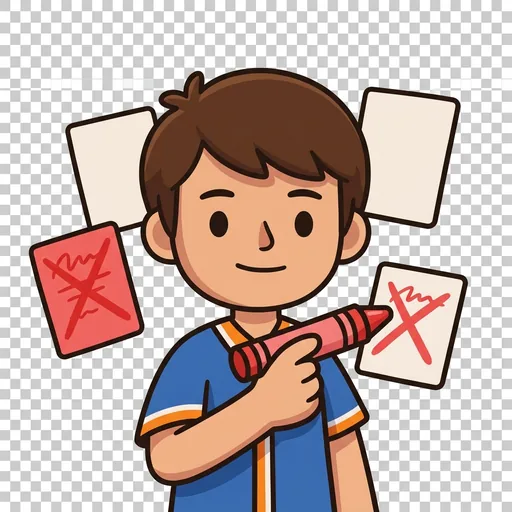
Nix
Elimination — crosses out the options that can't be right to narrow the field down to the answer
-
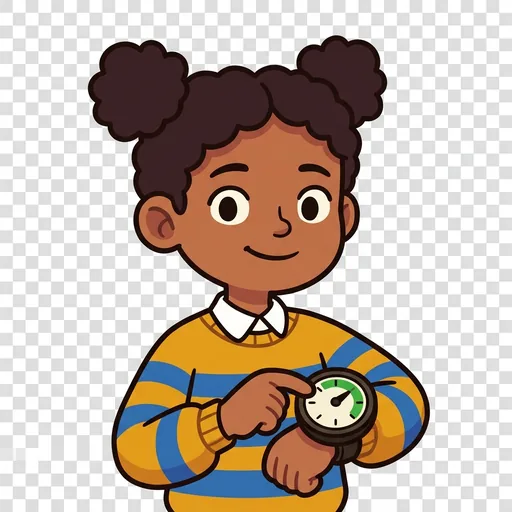
Gauge
Confidence calibration — checks HOW sure you are before you lock in, so your certainty matches your correctness
-

Bluff
The confident-wrong contestant — gives a fast, sure, WRONG answer; the one the host must catch (misconception-spotting)
-

Switcheroo
Interleaving — jumps between subjects round to round so recall stays flexible instead of crammed
-

Tick
Speed-vs-accuracy — the buzzer-timer who trades a little speed to get the answer right
-
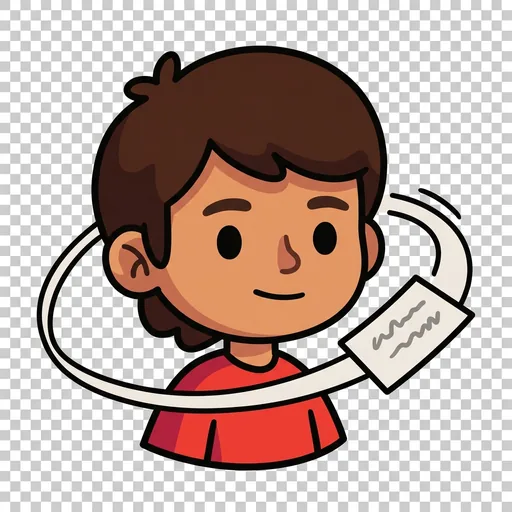
Encore
Spaced recall — brings a fact BACK a few rounds later so it moves into long-term memory
-

Facta
Fact vs. opinion — sorts what is checkable and true from what is only a view
-

Nuance
The almost-right answer — knows the close-but-not-complete answer and why the full answer is better