
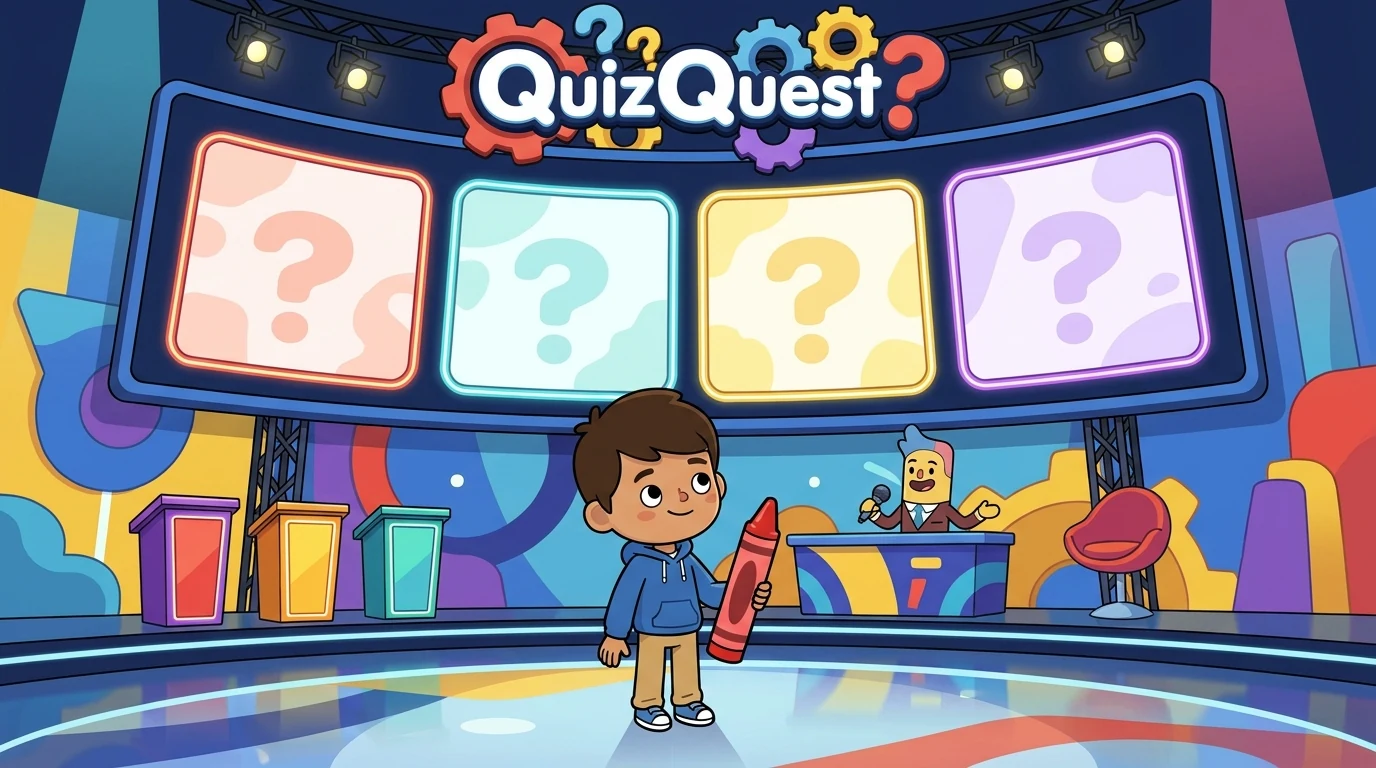
Nix
ELIMINATION (Advanced) — crossing out the impossible still works, but advanced elimination reads the OPTIONS AS EVIDENCE about each other: two opposite options often mean one of them is the answer (the writer built the tension on purpose); two nearly-identical options often mean both are wrong (they can't both be right, and a writer rarely splits the answer that finely); an option that's more specific/qualified is often crafted with care. The advanced danger: eliminating the RIGHT answer via a false premise (you 'knew' something that was itself wrong). The move: eliminate on FACTS you're sure of, use option-structure as a clue, and never cross out on a shaky premise.
Chapter — Nix and the Right Answer He Almost Crossed Out
Nix’s red crayon taught the beginners to find the answer by subtraction: cross out the impossible, and the truth stands alone in a smaller field. The advanced contestants eliminate fluently. What Nix teaches them now is two things the beginner never sees: that the options themselves are evidence about each other — not just four things to test one by one — and that elimination has a way of failure so quiet it feels like success: crossing out the right answer because you were sure of something that was itself wrong.
“Beginners eliminate each option against the world — is this too big, wrong category, contradicted by a fact I know,” he says, tapping the crayon. “That’s good. But the advanced eliminator also reads the options against each other. Four answers aren’t four separate claims — they’re a structure the writer built, and the structure leaks clues. And the advanced eliminator guards the one catastrophe: the eliminating fact that’s itself false. Cross out the truth with a lie, and you’ve talked yourself confidently into the wrong answer.”
The catastrophe that taught him: he crossed out the right answer and felt smart doing it.
The question asked which animal was the fastest over a short distance. One option was the cheetah — obvious, so Nix, ever the clever eliminator, got suspicious of the obvious and crossed it out: “too easy, it’s bait.” He eliminated toward a less-obvious option and got it wrong. The cheetah was the answer. “I crossed out the right answer,” he told Emcee, baffled, “because I was sure the obvious one had to be a trap.” Emcee nodded. “Your eliminating premise — ‘the obvious answer is always bait’ — was false. Sometimes the obvious answer is just correct. You eliminated with a bad rule, and a bad rule crosses out good answers with total confidence.” Nix went cold. “So elimination can remove the truth.” “Whenever the fact you eliminate with is wrong,” Emcee said, “yes. That’s the one failure mode that feels exactly like cleverness.”
So advanced Nix hardened his crayon-move with two upgrades:
Read the options as evidence about each other. Structure leaks: Two opposite options (X and not-X) often mean one is the answer — a writer builds that tension deliberately, and the truth is usually one of the poles, not the mild middle. Two nearly-identical options often mean both are wrong — a writer rarely splits the correct answer into two hair’s-breadth versions, so twin options are usually paired distractors. An oddly specific or carefully-qualified option was often written with care (sometimes because it’s true, sometimes as precise bait — a flag to examine, not a verdict).
Eliminate only on facts you’re SURE of — and check the premise. “Before you cross an option out, ask: what am I eliminating it WITH? Am I sure of THAT? Cross out on a rock-solid fact — a mountain isn’t measured in gallons. Never cross out on a shaky rule like ‘the obvious answer is always a trap’ — that rule is false often enough to cost you the truth. The eliminating belief must be stronger than the option you’re removing.”
The confident contestant handed Nix a four-option question built with structure: “A ___ number is divisible only by 1 and itself: (a) prime, (b) composite, (c) even, (d) not-prime.”
Nix read the structure first, crayon hovering.
“(a) prime and (d) not-prime are opposites,” he said. “That tension is built on purpose — the answer is very likely one of the poles, prime or not-prime, not the mild middle.” Then: “(b) composite and (d) not-prime are near-twins — composite basically means not-prime. Two options that mean nearly the same thing? A writer rarely makes both correct — they’re paired distractors. Cross both, cautiously.” That left (a) prime and (c) even. “Now eliminate on a fact I’m sure of: ‘divisible only by 1 and itself’ is the definition of prime — I’m certain of that. Even means divisible by 2, unrelated to the definition given. Cross (c).” Answer: (a) prime. “I didn’t test four options blind,” Nix said. “I read the structure — opposites and twins — to shrink the field, then eliminated the survivors on a fact I was certain of. And I checked my premise: I was sure ‘divisible only by 1 and itself = prime,’ so eliminating with it was safe. If I’d only half-remembered the definition, I’d have paused before crossing anything out with it.”
An advanced contestant pushed the deep worry. “If I can accidentally eliminate the right answer, isn’t elimination dangerous? Should I trust it less?” Nix shook his head. “Elimination is still your best friend on a question you don’t know cold. The danger isn’t elimination — it’s eliminating with bad ammunition.” He held up the crayon. “The fix isn’t ‘eliminate less.’ It’s ‘check what you’re eliminating with.’ Every cross-out is a little argument: this can’t be the answer BECAUSE [fact]. The cross-out is only as good as the because. Strong because — a fact you’re certain of — cross confidently. Weak because — a rule you’re only guessing at, like ‘obvious = trap’ — don’t cross, because you might be deleting the truth.” He tapped the deck. “Same crayon. Just aim it with facts you’d bet on, and read the option-structure for free clues before you start.”
The contestant looked at an option he’d eliminated “because it seemed too simple.” “That’s not a fact,” he admitted. “That’s a hunch about the writer.” “And hunches about the writer cross out right answers,” said Nix. “Cross out on the world, not on the writer’s supposed tricks.”
That night Nix ran the crew’s hardest deck — the ones he mostly didn’t know cold — with the upgraded crayon. He read each set of options as a structure first (spotting opposites to keep and twins to cut), then eliminated only on facts he’d stake money on, and every time he reached for a cross-out he checked the because behind it. The questions he “couldn’t do” fell to a smaller field again and again — and not once did a false premise talk him into deleting the truth.
“Cross out the impossible first — that’s the floor,” he said, capping the crayon. “But the advanced eliminator reads the options against each other — opposites point at the answer, twins are usually both wrong — and guards the one deadly mistake: never cross out the right answer with a fact that’s shaky. The crayon is only as sharp as the because behind each cut. Aim it with what you’re sure of.”
The QuizQuest ensemble
Nix is part of QuizQuest's distributed-narrative cast. Each character embodies a different curricular primitive; together they teach the full subject.
-

Recalla
Retrieval practice — pulls a fact from memory instead of re-reading it; recalling it (the testing effect) is what makes it stick
-
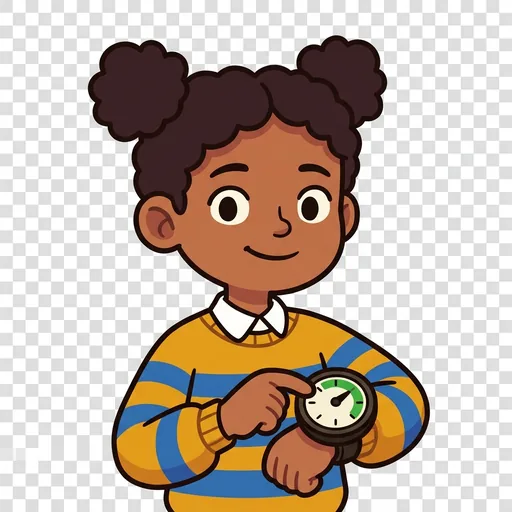
Gauge
Confidence calibration — checks HOW sure you are before you lock in, so your certainty matches your correctness
-

Bluff
The confident-wrong contestant — gives a fast, sure, WRONG answer; the one the host must catch (misconception-spotting)
-

Switcheroo
Interleaving — jumps between subjects round to round so recall stays flexible instead of crammed
-

Tick
Speed-vs-accuracy — the buzzer-timer who trades a little speed to get the answer right
-

Encore
Spaced recall — brings a fact BACK a few rounds later so it moves into long-term memory
-

Facta
Fact vs. opinion — sorts what is checkable and true from what is only a view
-

Hinta
Clue-reading — reads the question stem for the hint hidden inside it before answering
-

Nuance
The almost-right answer — knows the close-but-not-complete answer and why the full answer is better